
World
Understanding Afro-Cubans


From left, Dr. Carole Boyce-Davies, Henry Crespo and Andres Alburquerque are three of the panelists at Saturday’s Village Dialogue: “An invitation from the Afro-Cuban Community” by the Black Affairs Advisory Board. (David I. Muir/Miami Times)
The buzzwords at “A Village Dialogue: An Invitation from the Afro-Cuban Community” discussion are working together.
The spirit of Cubans and Blacks working together comes to the forefront now that last month President Barack Obama decided to open up communications between the United States and Cuba.
At the same time, panelists agreed that being Black should not be the thing that binds Blacks in America.
“Skin color alone is not enough to bind a people together. We need to find cultural ties. We have to find ways to make that happen,” said Dr. Marvin Dunn, who authored “Black Miami in the Twentieth Century.”
Convened by the Miami-Dade County Black Affairs Advisory Board last Saturday, the panel included four Black Americans: Cornell professor Dr. Carole Boyce Davies; 100 Black Men of South Florida secretary Basil Binns II; Black Artists Collective president Gene Tinnie; and attorney Rene Gordon. Five Afro-Cuban panelists participated: St. Louis Cardinal outfielder Jon Jay; founder and volunteer CEO of Urgent Inc. Henry Crespo; CBS4 executive producer Caridad Hernandez; Civic Awareness Inc. president Andres Alburquerque; and David Rosemond of Community Outreach Specialists Sunshine Health.
The panelists shared stories of how people view them as either Black or not Black, Cuban or not Cuban.
Hernandez said she was told she was Cuban all her life but realized there was a difference when her brother tried to date white Cubans and none of the white Cuban boys asked her out. Then when she tried to make friends with Blacks, they told her she wasn’t Black.
They agreed, however, that they share the same struggles as Black Americans.
In 1997, Crespo presented himself as a Black Cuban to fill a vacant Miami Commission seat.
He thought he could fill two slots but he was rejected.
In 2015, the Miami commission is majority Hispanic, with one Black and one white seated.
Today, Crespo is the president of the Democratic Black Caucus of Florida.
One attendee thought the dialogue needed to extend to Blacks from the Caribbean and other Latin American countries – not just Cuba. Nicole Gérgoire, who attends Florida International University, said she came to the presentation because she is conducting research on the African Diaspora in the United States.
She said she was very interested in the panel and the topic of the discussion, but was disappointed that two things haven’t been addressed at all.
“First, I think the panel should be [open] to the entire Black community in Miami, not only to Afro-Cubans and African-Americans. There are also Africans and other Caribbean people,” said Gérgoire. “I think everyone should be around the table. Second, something was announced but was not addressed, the ‘Black Lives Matter’ movement and the questions about black unity and black solidarity should have been addressed, I think, a bit more during the discussion, but maybe time was missing.”
Cubans are used to living with Blacks, though they treat them different based on skin tones, said attendees and people during a video-documentary.
Cuba’s population as of July 2014 is about 11 million people. From 2012 estimates the population includes 64 percent whites, 26 percent mulattos or people of mixed races and a little more than 9 percent Black.
A DVD entitled “Underground Cuba,” showed numerous Blacks in Cuba talking about being marginalized, stopped often to show identification and even ridiculed if or when a white Cuban wanted to date them. A Black woman in the video said that Black women were at the bottom of the food chain; another complained how Black woman are sexualized; and still another said Black women aren’t encouraged to learn skills.
The barrios of Blacks are markedly poorer and many complain of no work or opportunities.
The discussion was an eye-opener for Miami-Dade District 7 Commissioner Xavier L. Suarez.
“The insights I have heard here have been absolutely stunning to me,” Suarez said. “We need to do more to get the government, the corporations, the media and the nonprofits involved.”






Activism
African Union Group to Award Rev. Dr. Amos Brown for Bringing Civil Rights Movement to Global Stage
Dr. Macaulay Kalu, secretary general of AU6RG, will present Dr. Brown with the Global Peace Builder Award. Other presenters include Rev. Dr. Freddie Haynes, senior pastor of Friendship West Baptist Church in Dallas; Oakland Mayor Barbara Lee, long-time advocate for appropriations to Africa as a congressmember; Rick Callendar, California-Hawaii president of the NAACP; Dr. Ike Neliaku, president and chairman of the Nigerian Institute of Public Relations; Pastor Ituah Ighodalo, head of the African Leadership Group and Ambassador Thompson and John William Templeton, founder of the Journal of Black Innovation National Black Business Month®.

By Carla Thomas and John William Templeton
On Aug. 31, the Third Baptist Church of San Francisco will mark its 173rd anniversary with an event steeped in history and global significance. This year’s commemoration, themed “Achieving Dr. King’s Promised Land Together,” will honor the lifelong achievements of Dr. Amos C. Brown, Sr.— a towering figure in the Civil Rights Movement — on a day that also observes the International Day for People of African Descent.
Brown will be recognized by the African Union’s organ for Africans abroad for ‘planetizing’ the civil rights movement gains at San Francisco’s Third Baptist Church, 1399 McAllister St., at 3 p.m.
The African Union, made up of 54 countries on the African continent, consists of five regions. It created a sixth region, the African Union Sixth Region Global (AU6RG), for the 400 million Africans living abroad. On Sept. 7, the second AU-Caribbean Community Summit occurs in Addis Ababa, Ethiopia.
Dr. Macaulay Kalu, secretary general of AU6RG, will present Dr. Brown with the Global Peace Builder Award. Other presenters include Rev. Dr. Freddie Haynes, senior pastor of Friendship West Baptist Church in Dallas; Oakland Mayor Barbara Lee, long-time advocate for appropriations to Africa as a congressmember; Rick Callendar, California-Hawaii president of the NAACP; Dr. Ike Neliaku, president and chairman of the Nigerian Institute of Public Relations; Pastor Ituah Ighodalo, head of the African Leadership Group and Ambassador Thompson and John William Templeton, founder of the Journal of Black Innovation National Black Business Month®.
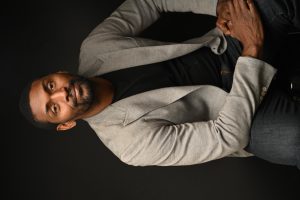
Held during the 173rd anniversary of the church, the event called “Africa-America: Achieving Dr. King’s Promised Land Together” is a Diaspora-wide discussion led by Dr. Brown on what Martin Luther King, Jr. would say today.
Galvanized by the horrific 1955 slaying of Emmett Till, Dr. Brown’s journey in activism began in Jackson, Mississippi, where a neighbor, Medgar Evers, the NAACP’s first field secretary in that state, encouraged Brown to found the Mississippi NAACP Youth Council.
In 1956, Evers personally drove Brown to the NAACP convention in San Francisco, where Brown would first hear Dr. Martin Luther King Jr. speak. Brown became a prominent Freedom Rider, later attending Morehouse College and taking the only class Dr. King ever taught there. Thirteen years after Evers was assassinated in Jackson, Brown arrived at Third Baptist Church in 1976, serving with distinction for 49 years before his recent retirement. Under his stewardship, the church solidified its commitment to social justice and international unity.
His Excellency Rev. Ladi Peter Thompson, deputy secretary general for peace and security of AU6RG, said, “As a mentee of Medgar Evers, Freedom Rider and student of Dr. Martin Luther King Jr., Dr. Brown is the perfect authority for the young people of the Diaspora on achieving the prophetic goal that Dr. King foresaw in Memphis.”
Lady Dentaa Amoateng, founder of Grow, Unite, Build Africa (GUBA), will also announce that Dr. Brown is an honoree at the GUBA Award in Bridgetown, Barbados in November. The popular actress in Ghana and the United Kingdom will attend in person.
Dr. Lezli Baskerville, president/counsel of the National Association for Equal Opportunity in Higher Education, which includes 105 Historically Black Colleges and Universities (HBCUs) and 90 predominantly Black institutions (PBIs), invites its students, faculty, and alumni to attend or join remotely.
“HBCUs produced both Dr. King and Dr. Kwame Nkrumah and are the fountainhead for Diaspora unity,” said Baskerville.
Templeton, author of “ReUNION: State of Black Business, 22d edition,” said “Our movement will advocate the continuance of tariff-free treatment for Africa and the Caribbean; respect for African-American and African elected officials and the 13th, 14th, and 15th Amendments and the strengthening of educational and research connections across the Diaspora.”
Templeton said Black institutions have been at the forefront of defining the image of 1.5 billion Black people globally, a mission that is even more important as African youth will be the majority of the world’s young people in the coming decades.
ABOUT THIRD BAPTIST CHURCH
Founded on West Indian Emancipation Day on Aug.1, 1852, Third Baptist said in its annual report in 1858 that its sole purpose was the elimination of American chattel slavery and took an active role among the California abolitionists who convinced President Abraham Lincoln to issue the Emancipation Proclamation. The current sanctuary is constructed with wood from the Goodall Mansion, where President U.S. Grant stayed after leaving the White House, and is the last place where Dr. W.E.B. DuBois spoke before leaving for Africa in 1958.
Activism
Newsom, Pelosi Welcome Election of First American Pope; Call for Unity and Compassion
“In his first address, he reminded us that God loves each and every person,” said Newsom. “We trust that he will shepherd us through the best of the Church’s teachings: to respect human dignity, care for the poor, and wish for the common good of us all.” Newsom also expressed hope that the pontiff’s leadership would serve as a unifying force in a time of global instability.

By Bo Tefu, California Black Media
Gov. Gavin Newsom and First Partner Jennifer Siebel Newsom on May 8 issued a statement congratulating Pope Leo XIV on his historic election as the first American to lead the Catholic Church.
The announcement has drawn widespread reaction from U.S. leaders, including former House Speaker Nancy Pelosi, who called the moment spiritually significant and aligned with the values of service and social justice.
In their statement, the Newsoms expressed hope that the newly elected pope would guide the Church with a focus on compassion, dignity, and care for the most vulnerable. Newsom said he and the First Partner joined others around the world in celebrating the milestone and were encouraged by the pope’s first message.
“In his first address, he reminded us that God loves each and every person,” said Newsom. “We trust that he will shepherd us through the best of the Church’s teachings: to respect human dignity, care for the poor, and wish for the common good of us all.”
Newsom also expressed hope that the pontiff’s leadership would serve as a unifying force in a time of global instability.
“May he remind us that our better angels are not far away — they’re always within us, waiting to be heard,” he said.

Pelosi, a devout Catholic, also welcomed the pope’s election and noted his symbolic connection to earlier church leaders who championed workers’ rights and social equality.
“It is heartening that His Holiness continued the blessing that Pope Francis gave on Easter Sunday: ‘God loves everyone. Evil will not prevail,’” said Pelosi.
Activism
Retired Bay Area Journalist Finds Success in Paris with Black History Tours
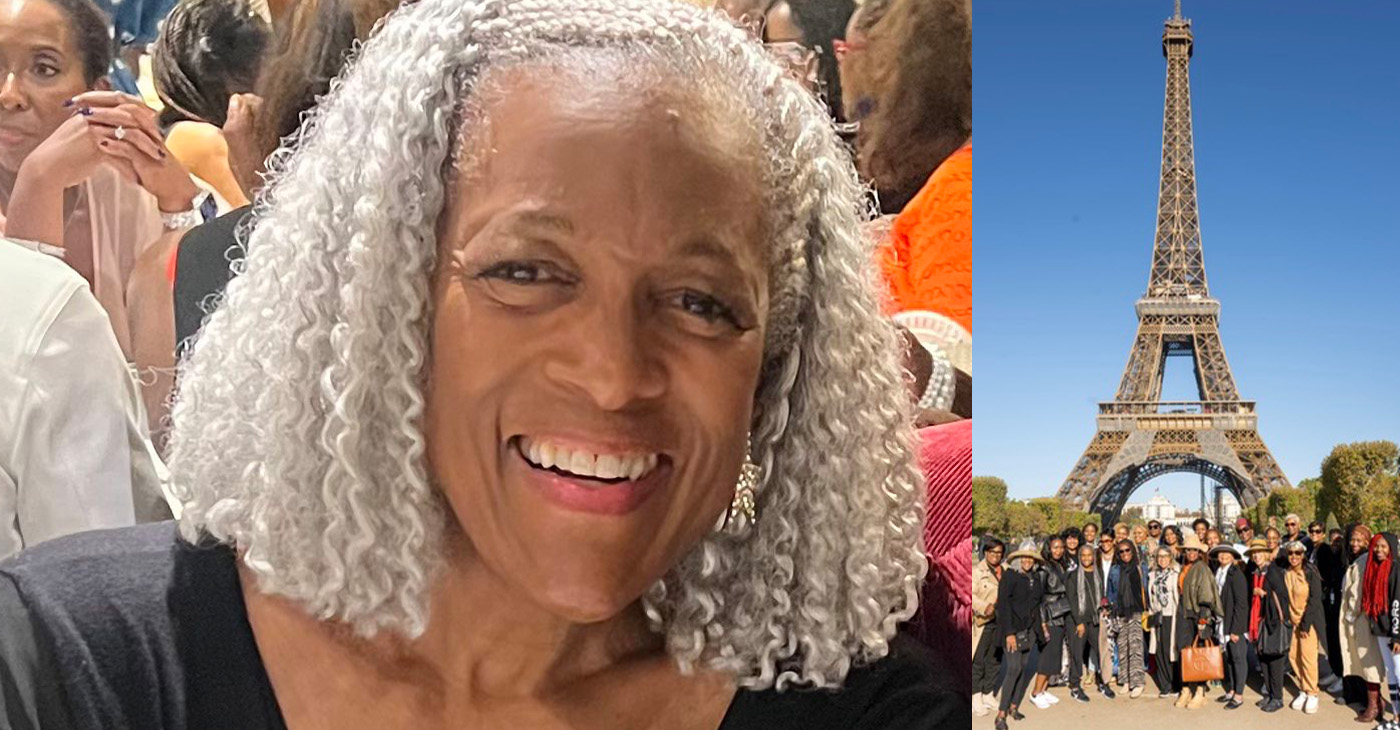
In the late 90s, Stevenson finally realized her dream of living in Paris, now with her daughter. She started exploring the history of Africans in the city and would go on to teach others the same. Her business, which she named Black Paris Tours (BPT), received a significant boost when a family friend gave her a stack of cash and encouraged her to expand on the knowledge that she had only started to share with people she knew.
By Post Staff
There were two things Oakland-born, East Palo Alto-raised Ricki Stevenson always dreamed of:
- Going to New York as a newscaster to tell the true story of Blacks in America.
- Living and working in Paris one day.
Her dreams of life in Paris began when she was three years old and her mother, a former professional dancer, took her to see Josephine Baker perform. She was 11 when her parents took her to the Stanford University campus to meet James Baldwin, who was speaking about his book, “The Fire Next Time.” Ricki says that’s when she knew she’d one day live in Paris, “the city of light!”
But before that would ever happen, she had a tumultuous career as a newscaster across the country that was inspired by her family’s history.
Stevenson recalls marching with Cesar Chavez as he fought for labor rights for farm workers in California.
“Are we Mexican too?” she asked her parents. “No, but we will fight for everyone’s human rights,” they responded to her.
Ironically, Ricki’s paternal family roots went back to Greenwood, Oklahoma, infamous for the 1921 bombing of Black Wall Street. A time when Black people had oil wells, banks, and a thriving business community.
This background would propel her into a 25-year journalism career that gave her the opportunity to interview greats like President Jimmy Carter, PLO leader Yassir Arafat, James Baldwin, Rev. Jesse Jackson, UN Ambassador Andrew Young, Miriam Makeba, and the leaders of South African liberation movements.
A job offer from KCBS radio brought her back to the Bay Area in the 1980s. Then came the switch to TV when she was hired as a Silicon Valley business reporter with KSTS TV, working at the first Black-owned television station in northern CA (created and owned by John Douglas). Along the way, Stevenson worked as an entertainment reporter with BET; coproduced, with her disc jockey brother Isaac, a Bay Area show called “Magic Number Video;” lived in Saudi Arabia; worked as an international travel reporter with News Travel Network; and worked at KRON TV a news anchor and talk show host.
In 1997, Stevenson realized her dream of living in Paris with her young daughter, Dedie. She started exploring the history of Africans in the city and would go on to teach others the same. Her business, which she named Black Paris Tours (BPT), received a significant boost when a family friend, Admiral Robert Toney put a chunk of money in her hand. He said, “Ricki, my wife and I have been coming to Paris for 20 years, but in just two days with you and Dedie, we’ve learned and seen more than we ever did before.”
Years after BPT took off, Ricki met Nawo Carol Crawford and Miguel Overton Guerra, who she recruited as senior scholar guides for Black Paris Tours.
Guerra says he is proud of his work with Black Paris Tours in that it provides a wealth of information about the rich legacy of African and African American history and influence in Paris and Europe.
“I tend to have a feeling for history always being a means of a reference point backwards … you start to understand the history, that it isn’t just the United States, that it began with African people,” Guerra says.
He said that it’s been a pleasure to watch people learn something they didn’t know before and to take them through the city to key points in Black history, like hangout spots for writers like Baldwin and Richard Wright, restaurants in the busiest parts of Paris, the home of Josephine Baker and so much more.
Although the tours are open to all, Guerra hopes that those of African descent from all over the world can embrace that they don’t have to just stay where they are because movies and media have portrayed cities like Paris to be only white, it’s multicultural and accepting to all.
“We’ve been here, and we’ve been there, going way back when. And we shouldn’t be considered or consider ourselves to be strangers in any place that we go to,” he said.
Stevenson notes they’ve had 150,000 people take their tour over the years, with notables like former NFL quarterback Colin Kaepernick, Smokey Robinson, Steve Harvey, Miriam Makeba, and more.
Friends and former media colleagues of Stevenson compliment the BPT crew on their knowledge of the city and their ability to always keep it interesting.
“He [Guerra] just had a deep, deep wealth of knowledge and he was constantly supplanting information with historical facts and the like. I love that it was demonstrating and showing how Black people have thrived in Paris or contributed to the culture in Paris,” Candice Francis said.
She toured in the summer of 2022 and stated that in the two weeks that they visited Paris, BPT was the highlight of her trip. She shared that she was proud of Stevenson and the life she’d managed to manifest and build for herself.
“Even if you’re visiting Paris for the tenth time, if you haven’t taken the tour, then by all means, take it,” Francis emphasized.
Magaly Muñoz, Gay Plair and Paul Cobb also contributed to this story. You can book your own adventure with Black Paris Tours at www.blackparistour.com.

WORK FROM HOME
Home-based business with potential monthly income of $10K+ per month. A proven training system and website provided to maximize business effectiveness. Perfect job to earn side and primary income. Contact Lynne for more details: Lynne4npusa@gmail.com 800-334-0540


CITY OF SAN LEANDRO STATE OF CALIFORNIA PUBLIC WORKS DEPARTMENT ENGINEERING DIVISION NOTICE TO BIDDERS FOR ANNUAL STREET OVERLAY/REHABILITATION 2019-21 – PHASE III

Oakland Post: Week of February 11 = 17, 2026

Rising Optimism Among Small And Middle Market Business Leaders Suggests Growth for California

Discrimination in City Contracts

COMMENTARY: The National Protest Must Be Accompanied with Our Votes

Congresswoman Simon Votes Against Department of Homeland Security, ICE Funding

Post Newspaper Invites NNPA to Join Nationwide Probate Reform Initiative

Community Celebrates Turner Group Construction Company as Collins Drive Becomes Turner Group Drive

New Bill, the RIDER Safety Act, Would Support Transit Ambassadors and Safety on Public Transit

Trump’s White House Pushes to Control California Wildfire Recovery

Gov. Newsom, AG Bonta to Local Law Enforcement: You Have Authority to Investigate Federal Agents

Dorothy Lee Bolden: Uniting Domestic Workers

Cracking Down on Human Trafficking, California DOJ Announces 120 Arrests

COMMENTARY: The Biases We Don’t See — Preventing AI-Driven Inequality in Health Care

California Launches Study on Mileage Tax to Potentially Replace Gas Tax as Republicans Push Back

Life Expectancy in Marin City, a Black Community, Is 15-17 Years Less than the Rest of Marin County

Oakland Post: Week of January 28, 2025 – February 3, 2026

Jefferson County (AL) Democrats Open Qualifying for 2026 Primary Elections

Skater Emmanuel Savary Sharpens Routines for the 2026 U.S. Championships

COMMENTARY: With Gratitude and Praise for 2026
Community Celebrates Turner Group Construction Company as Collins Drive Becomes Turner Group Drive
California Launches Study on Mileage Tax to Potentially Replace Gas Tax as Republicans Push Back

OP-ED: The Dream Cannot be Realized Without Financial Freedom

From Civil Rights to ICE Raids, Trump’s Unchecked Power Puts Every Community at Risk
From Civil Rights to ICE Raids, Trump’s Unchecked Power Puts Every Community at Risk

Oakland Post: Week of January 21 – 27, 2026

Travis Scott Teaches Us How to Give Forward

Four Stolen Futures: Will H-E-B Do The Right Thing?
Discrimination in City Contracts

After Don Lemon’s Arrest, Black Officials Raise Concerns About Independent Black Media

Hyundai Ioniq 5 Parking, Safety, and 360 View #shorts

2025 Ioniq 5 New Wiper & Powerful Performance! #shorts

Electric SUV Range: Is 259 Miles Enough? #shorts

EV Charging: How Fast Can You Charge an Electric Vehicle? #shorts

Biometric Cooling… Messaging Seats…Come on! 2025 Infiniti QX80 Autograph 4WD

Charged Up: Witness the Magic of a Fully Electric Car! #shorts

Range Rover Sport PHEV Included…: See What’s Inside This Luxury SUV! #shorts

Invisible Hood View: Perfect Parking with X-Ray Vision! #shorts

AI Is Reshaping Black Healthcare: Promise, Peril, and the Push for Improved Results in California

ESSAY: Technology and Medicine, a Primary Care Point of View

Sanctuary Cities

The RESISTANCE – FREEDOM NOW

STATE OF THE PEOPLE: Freddie

ECONOMIC BOYCOTT DAY!!!!!

I told You So
-
 Activism3 weeks ago
Life Expectancy in Marin City, a Black Community, Is 15-17 Years Less than the Rest of Marin County
-
 Activism3 weeks ago
Oakland Post: Week of January 28, 2025 – February 3, 2026
-
 Activism2 weeks ago
Community Celebrates Turner Group Construction Company as Collins Drive Becomes Turner Group Drive
-
 Business2 weeks ago
California Launches Study on Mileage Tax to Potentially Replace Gas Tax as Republicans Push Back
-
 Activism2 weeks ago
Discrimination in City Contracts
-
 Activism2 weeks ago
After Don Lemon’s Arrest, Black Officials Raise Concerns About Independent Black Media
-

 Activism3 weeks ago
Medi-Cal Cares for You and Your Baby Every Step of the Way
-
 Activism2 weeks ago
COMMENTARY: The Biases We Don’t See — Preventing AI-Driven Inequality in Health Care
