
Activism
The Rise East Project: Part 1 of 8 – Genesis of Oakland’s Black Cultural Zone and Rise East
The mission of the Black Panthers 10-point program, envisioned in 1966, germinated in 2000 at the first annual Malcolm Jazz Festival in San Antonio Park, hosted by Eastside Arts Alliance, a collective of multi-racial artists who, like Malcolm X, utilized the public platform to address racial inequities and organize a credible institution to create solutions.

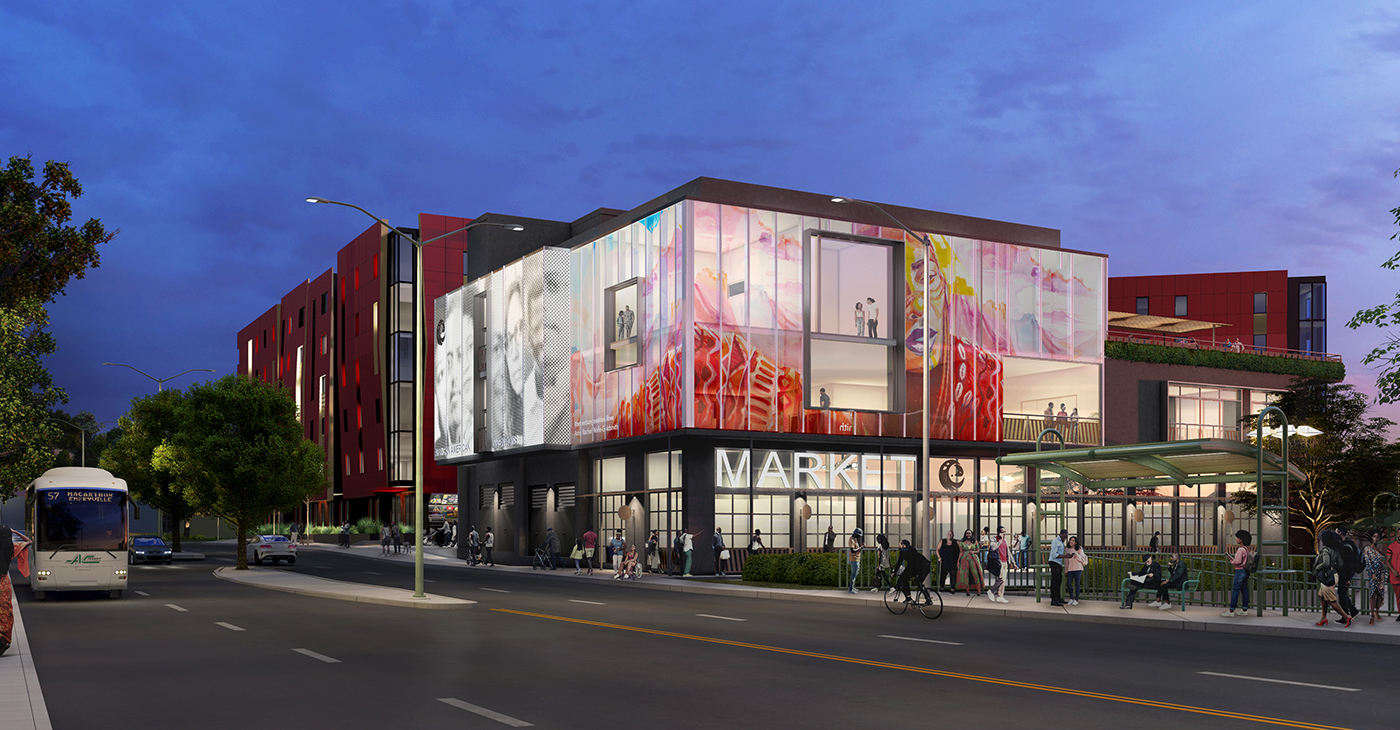
Rise East is a $100 million privately funded initiative that will rebuild Black neighborhoods in a 40 x 40 block area of East Oakland over 10 years. Project partners are Oakland Thrives, The 40 x 40 Council and Blue Meridian Partners.
By Tanya Dennis
The mission of the Black Panthers 10-point program, envisioned in 1966, germinated in 2000 at the first annual Malcolm Jazz Festival in San Antonio Park, hosted by Eastside Arts Alliance, a collective of multi-racial artists who, like Malcolm X, utilized the public platform to address racial inequities and organize a credible institution to create solutions.
Elena Serrano, an Eastside collective member who serves as its executive director says, “The Black Panthers captured hearts and minds through authentic guerrilla theater, inspiring people by how they presented themselves, dressing the same, on the same message making people believe they could create a society that benefited them.”
For nearly 30 years, Eastside Arts Alliance (EAA) has held down that Black Panther culture at 2277 International Blvd. and recently celebrated its 24th annual Malcolm X Festival.
“We created a Black arts movement in a neighborhood that is Black, Asian and Latinx, a movement where artists’ work and organizers come together to build power,” Serrano says. “We work with teenagers that want to be hip-hop stars, poets, and writers so they address power-building strategies in their music and words.”

The Black Cultural Zone, a strategic partner in the $10 million Rise East initiative credits their genesis to Eastside Arts Alliance. Rise East is a 10-year, privately funded initiative to help Black families thrive in a 40-square-block area of East Oakland.
“We connected to the Black Cultural Zone six or seven years ago when the Bus Rapid Transit (BRT) project was planned for International Boulevard, a project to improve rapid transit,” Serrano says. “BRT publicity was showing beautiful neighborhoods that didn’t even have Black folks in the picture. A concerned group, OSNI (Oakland Sustainable Neighborhood Initiative), pushed back saying they would love development, but development without displacement.”
EAA later joined that fight, urging that people need to have power over policy and jobs. “We put forth the neighborhood concept of cultural centers and space where neighborhoods come together to build power and decide how they can use their power with a cultural space where they can dream and plan, and that’s how the cultural zone got started.”
Carolyn Johnson, director of the Black Cultural Zone, was working for the Northern California Community Fund as a lender during the dot-com boom in San Francisco and Silicon Valley the late 1990s. Awash in venture capital, high-salaried workers were looking for places to live.
Able to afford more in a competitive market, dot-commers’ need for housing drove up rent prices and home prices in the East Bay. Johnson observed the impact of that boom with people coming over to Oakland to buy up property, setting off gentrification that would result in Black people displacement.
When BRT was approved in 2008, Johnson, aware of the history of infrastructure projects that gentrify and displace Black people, bought a building on a commercial corridor, acknowledging the need for a Black Cultural Zone in Oakland.
From 2010 thru 2014, Roots, another Rise East member, talked to the Black Cultural Zone about purchasing the Safeway building located at 5701 International Blvd. (East 14th Street at the time), with the intent to develop a large campus, ROOTS Community Health Center, as a part of the collaborative’s 40 blocks by 40 blocks project, a geographical area they wanted to focus on.
The building purchase did not pan out, but the beginning of a coalition that brought Allen Temple Baptist Church, the East Oakland Collective, Just Cities, East Oakland Building Healthy Communities into the mix to develop the 10-year program that started in 2013.
The California Endowment funded many of the organizations in the collaborative from 2014-16, driven by the need to help the collaborative secure real estate, address Black health and wellness, provide quality education, Black arts and culture, establish economic place-keeping, build a strong Black economy, and increase the quality of life for Black folks.
“Our initiative came to national attention while we were calling on local private funders to make strategic investments in the 40 by 40 project, an investment to restore the community that Blacks were redlined into for 40 years,” Johnson says. “Generally, the way that capital is being distributed, what we’re hearing is that it’s time for us to leave, and we’re saying no! We’re appreciative that Rise East will help catalyze our determination to stay deeply rooted in Oakland.”









Activism
Oakland Post: Week of March 18 – 24, 2026
The printed Weekly Edition of the Oakland Post: Week of March 18 – 24, 2026
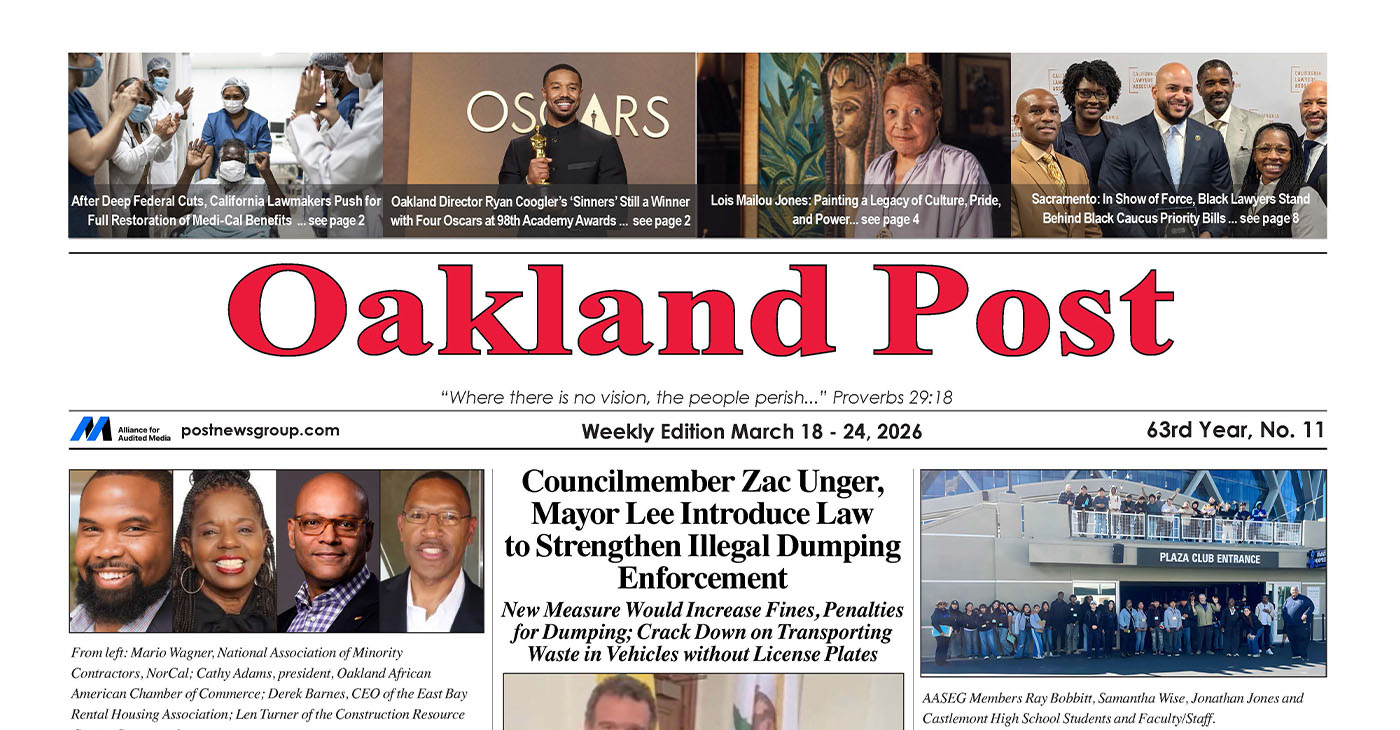
To enlarge your view of this issue, use the slider, magnifying glass icon or full page icon in the lower right corner of the browser window.
Activism
Oakland Post: Week of March 11 -17, 2026
The printed Weekly Edition of the Oakland Post: Week of March 11 – 17, 2026
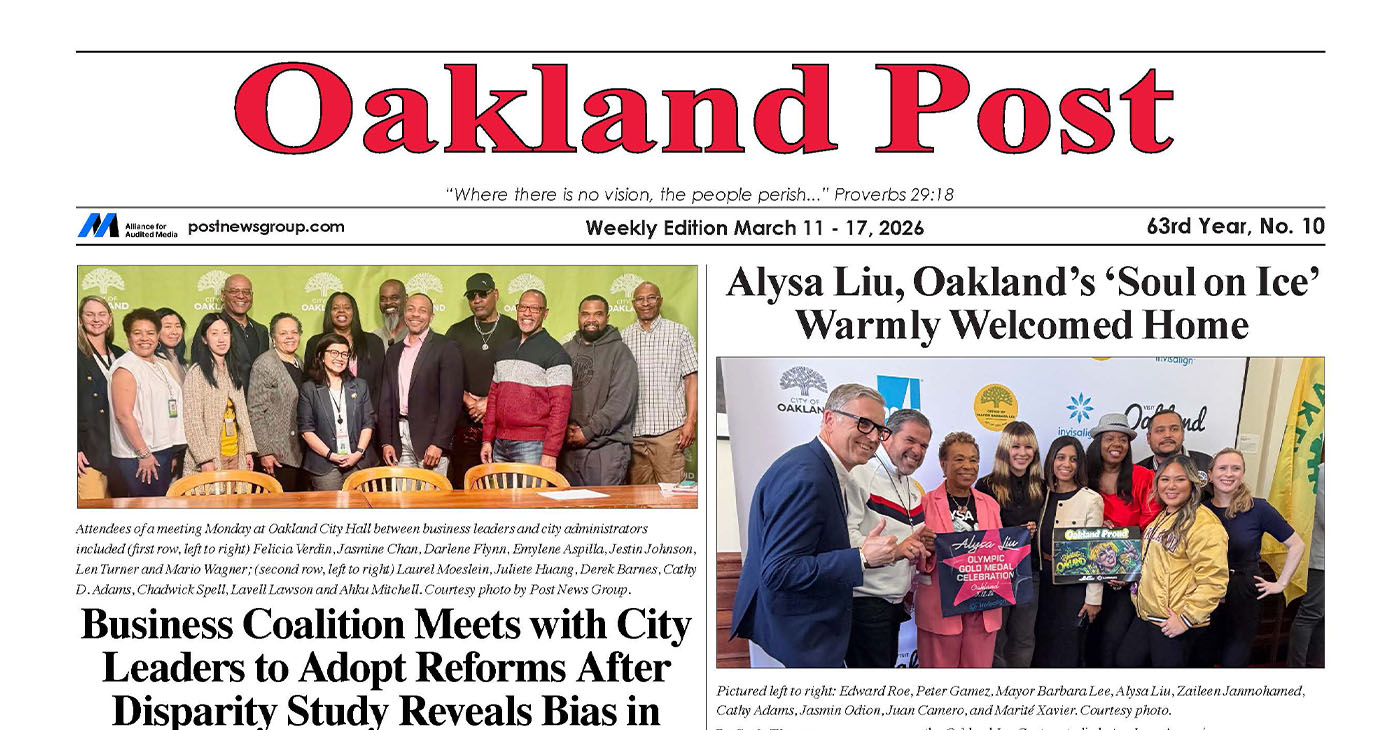
To enlarge your view of this issue, use the slider, magnifying glass icon or full page icon in the lower right corner of the browser window.
Activism
Oakland Post: Week of March 4 – 10, 2026
The printed Weekly Edition of the Oakland Post: Week of March 4 – 10, 2026
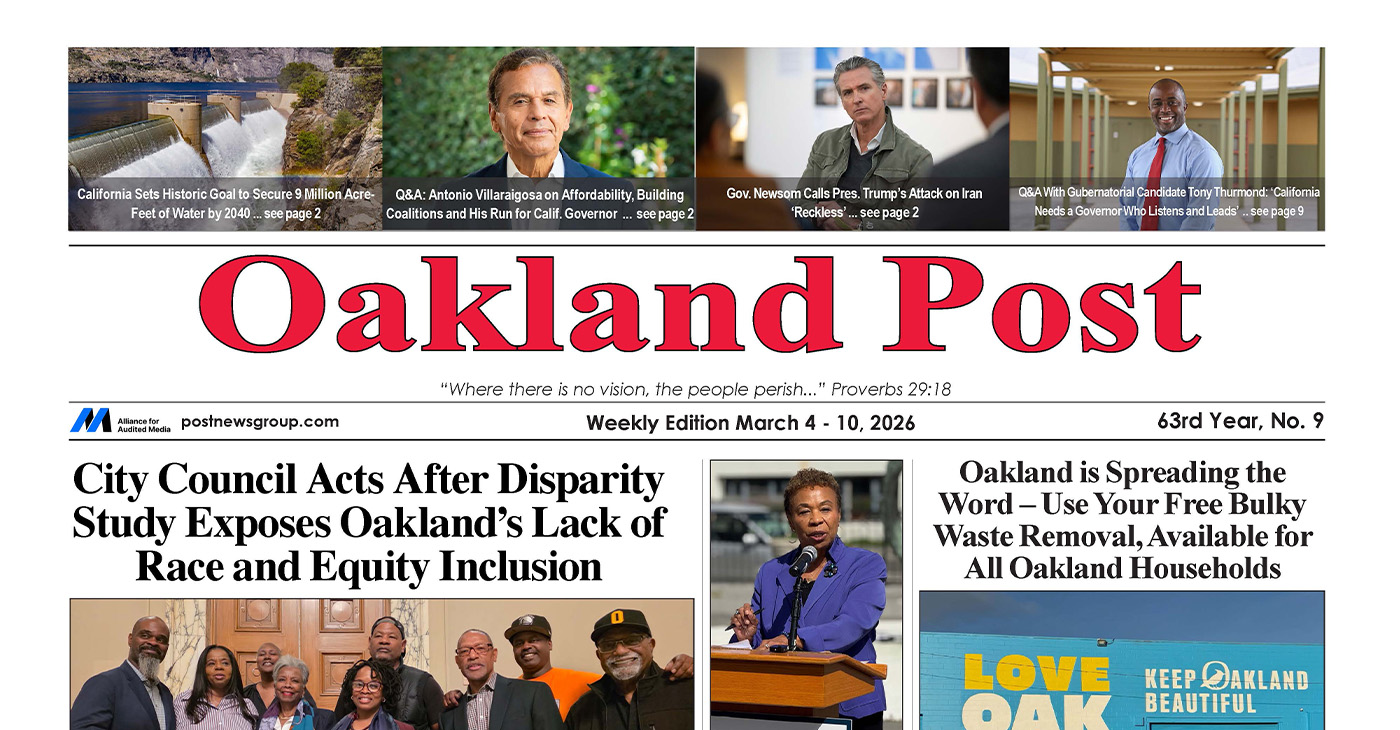
To enlarge your view of this issue, use the slider, magnifying glass icon or full page icon in the lower right corner of the browser window.


WORK FROM HOME
Home-based business with potential monthly income of $10K+ per month. A proven training system and website provided to maximize business effectiveness. Perfect job to earn side and primary income. Contact Lynne for more details: Lynne4npusa@gmail.com 800-334-0540


Black Artists in America, Installation Three Wraps at the Dixon Gallery and Gardens

Grief, Advocacy, and Education: A Counselor Reflects on Black Maternal Health

Future of Florida’s Black History Museum in Limbo

New Research Shows the Many Benefits of Early Learning

South Hampton K-8 Students Among Top 10 Finalists for Samsung’s ‘Solve for Tomorrow’ Competition

Cuba: No Negotiation with US on the President or Political System

Brooklyn Academy of Music Names Jamaican-Born Tamara McCaw as President

Trinidad & Tobego – U.S. Launches WhatsApp Channel for American Citizens in the Country

Oakland Post: Week of March 18 – 24, 2026

AI Innovation vs. Ethics and Environmental Impact

AI, Web3, and Digital Reparations

What If You Owned Your AI Agent?

Season 7, Episode 3 – January Reporter’s Roundtable 📱

Season 7, Episode 3 – January Reporter’s Roundtable

AI, Media, and Power | Part 2, Real-World Impacts and Tradeoffs

Oakland Post: Week of February 11 – 17, 2026

Reflecting on Black History Milestones in Birmingham AL

Rising Optimism Among Small And Middle Market Business Leaders Suggests Growth for California

CITY OF SAN LEANDRO STATE OF CALIFORNIA PUBLIC WORKS DEPARTMENT ENGINEERING DIVISION NOTICE TO BIDDERS FOR ANNUAL STREET OVERLAY/REHABILITATION 2019-21 – PHASE III

Oakland Post: Week of February 18 – 24, 2026

PRESS ROOM: NBA Hall of Fame Nominee Terry Cummings Joins 100 Black Men of DeKalb County to Launch Victory & Values Initiative

Oakland Post: Week of February 25 – March 3, 2026

Trump’s MAGA Allies are Creating Executive Order Plan to Steal the 2026 Midterms

U.S. manufacturing rebounds – how foundry services are adapting to rising demand

OP-ED: One Hundred Years of Black Workers Telling the Truth

Advancements in solar technology that are changing the way we power the world

Chase Oakland Community Center Hosts Alley-Oop Accelerator Building Community and Opportunity for Bay Area Entrepreneurs

Poll Shows Support for Policies That Help Families Afford Child Care

PRESS ROOM: Civil Rights TV Launches in Selma as the World’s First 24/7 Civil Rights Television Network

Oakland Post: Week of March 4 – 10, 2026

Hyundai Ioniq 5 Parking, Safety, and 360 View #shorts

2025 Ioniq 5 New Wiper & Powerful Performance! #shorts

Electric SUV Range: Is 259 Miles Enough? #shorts

EV Charging: How Fast Can You Charge an Electric Vehicle? #shorts

Biometric Cooling… Messaging Seats…Come on! 2025 Infiniti QX80 Autograph 4WD

Charged Up: Witness the Magic of a Fully Electric Car! #shorts

Range Rover Sport PHEV Included…: See What’s Inside This Luxury SUV! #shorts

Invisible Hood View: Perfect Parking with X-Ray Vision! #shorts

AI Is Reshaping Black Healthcare: Promise, Peril, and the Push for Improved Results in California

ESSAY: Technology and Medicine, a Primary Care Point of View

Sanctuary Cities

The RESISTANCE – FREEDOM NOW

STATE OF THE PEOPLE: Freddie

ECONOMIC BOYCOTT DAY!!!!!

I told You So
-
 Activism4 weeks ago
Oakland Post: Week of February 25 – March 3, 2026
-
 #NNPA BlackPress4 weeks ago
Poll Shows Support for Policies That Help Families Afford Child Care
-
 Activism3 weeks ago
Oakland Post: Week of March 4 – 10, 2026
-

 #NNPA BlackPress3 weeks ago
Woman’s Search for Family’s Roots Leads to Ancestor John T. Ward – A Successful Entrepreneur and Conductor on the Underground Railroad
-

 #NNPA BlackPress3 weeks ago
OP-ED: NNPA Launches 2026 “Leadership Matters” Video Series
-

 #NNPA BlackPress3 weeks ago
Advocates Raise Alarm Over ICE Operation, MOU and Detention Risks in Baltimore County
-

 #NNPA BlackPress3 weeks ago
COMMENTARY: Women of Color Shape Our Past and Future
-

 #NNPA BlackPress3 weeks ago
Pete Buttigieg to Join Mayor Randall Woodfin for Community Town Hall in Birmingham
