
Entertainment
The N*gga Project Experience


Mulemvo Nianda
by Kimetha Hill
Special to the NNPA from the San Diego Voice & Viewpoint
Nigger. A very abrasive word. A very volatile word. A very powerful word. A word that has caused generations of damage to an entire culture of people. The word comes from very dark roots, but has somehow “conformed” to the liking of many, many black folks. Now a “term of endearment” the word, “nigga” is thrown around like “hello” among circles of young people. Mulemvo Nianda, documentary filmmaker and sociology student, grew frustrated with the use of the word especially among the younger generations and developed a short documentary on the word.
“The motivation behind it was all the negativity I saw going on with the N-word,” said Nianda. He describes how the word is littered among popular rap songs of stars including Nicki Minaj and other artists who choose to utilize limited vocabulary in their expressions. “All of these songs are coming out and nobody was really saying anything or giving an alternative to it. So I felt that I should take it upon myself to put out an alternative for the young people to look at,” he added.
Inspired by his Black Studies class, Nianda set out to interview people at random in a “man on the street” type setting to capture reactions to the word “nigga” on camera. Thus, The Nigga Project Experience was birthed.
“I put out The Nigga Project by going around the city and asking different people how they felt about the word. And then it formulated into the first documentary, The Nigga Project Part I. The demand was high for it so I did Part II.”
The Nigga Project is an extension of a research project on which Nianda worked during his studies. Diving into the community and asking questions was something that came naturally to him. In Part I, Nianda felt it best to randomly select people for responses to the word. Some were classmates, some were old, very few were young, but his selection was random.
“I tried to target young men, but a lot of the younger men didn’t want to get on camera. The older generation was more willing to be on camera and talk about it and how they felt. In Part I, I only have one or two young people in it because they didn’t want that face time.” And though they may have still chosen to discuss their feelings with Nianda, they opted not to be interviewed on camera.
The reactions to the word were interesting, and Nianda points to the emotion the word provoked in many who were interviewed.
“The majority of the responses were not necessarily positive. But with the young people, I found that they were more accepting of it,” says Nianda as he cites the uses that can be heard in younger generation circles. “That’s my nigga, that’s my homie, that’s my brother.” But he says, “With the older generation, 35 and up, it’s more so like a negative word, a term that we shouldn’t be using. A lot of them want to eradicate the word, but they don’t really know how to.”
As the project grew, the generation divide was made clear to Nianda. The word provokes emotions, emotions of pain and hurt for older generations, emotions that seem to be lacking among the consciousness of youth. But Nianda felt instead of condemning the youth, education on the word must happen.
“A lot of them [youth] don’t know the history behind the word, and when they do know it’s still kind of like ‘That doesn’t have anything to do with me. That was then.’ They don’t really have an emotional connection to the word. And that was another goal of The Nigga Project – to emotionally connect the youth to the origin behind the word – the real intent behind the word. A lot of them don’t know that it’s negative. And if they do know it’s negative, they don’t really care that it’s negative. So if I could emotionally connect them to the original intent behind it, I felt that would give them a standpoint to go from.”
Nianda’s documentary has been shown at several venues around San Diego, as his aim is to spark as much discussion about the word as possible. He took his film everywhere including restaurants, beauty salons, the Urban League and the Jacobs Center.
“We try to go to different spots and have discussions afterwards. And it’s a mixed crowd, it’s not just blacks that come. I feel like everybody can chime in on the topic regardless of race, whether you agree with the word or not. I feel like everybody should have a voice. And that’s what happens at the discussions. We just give people the opportunity to share how they feel about the word,” says Nianda. “Maybe somebody in the room can be educated on a different perspective.” It is through these discussions that Nianda hopes to bridge the generation gap and enlighten the masses.
“I just want to give a voice to the younger generation. I feel like a lot of them do have a voice, but they don’t feel like the older generation is going to hear them. The older generation is focused in other things that they kind of lag behind in teaching us on how to carry ourselves, or how to be or do certain things.”
In Part III, Nianda says he will specifically target young black men since the word is used so heavily in those circles. He plans to hold a youth summit at the Malcolm X Library in July where his documentary will be shown.
What began as an extension of a research project on YouTube has grown to reach a large audience. “I’m just happy to see the people and educate our community,” he says.






Activism
Oakland Post: Week of March 11 -17, 2026
The printed Weekly Edition of the Oakland Post: Week of March 11 – 17, 2026
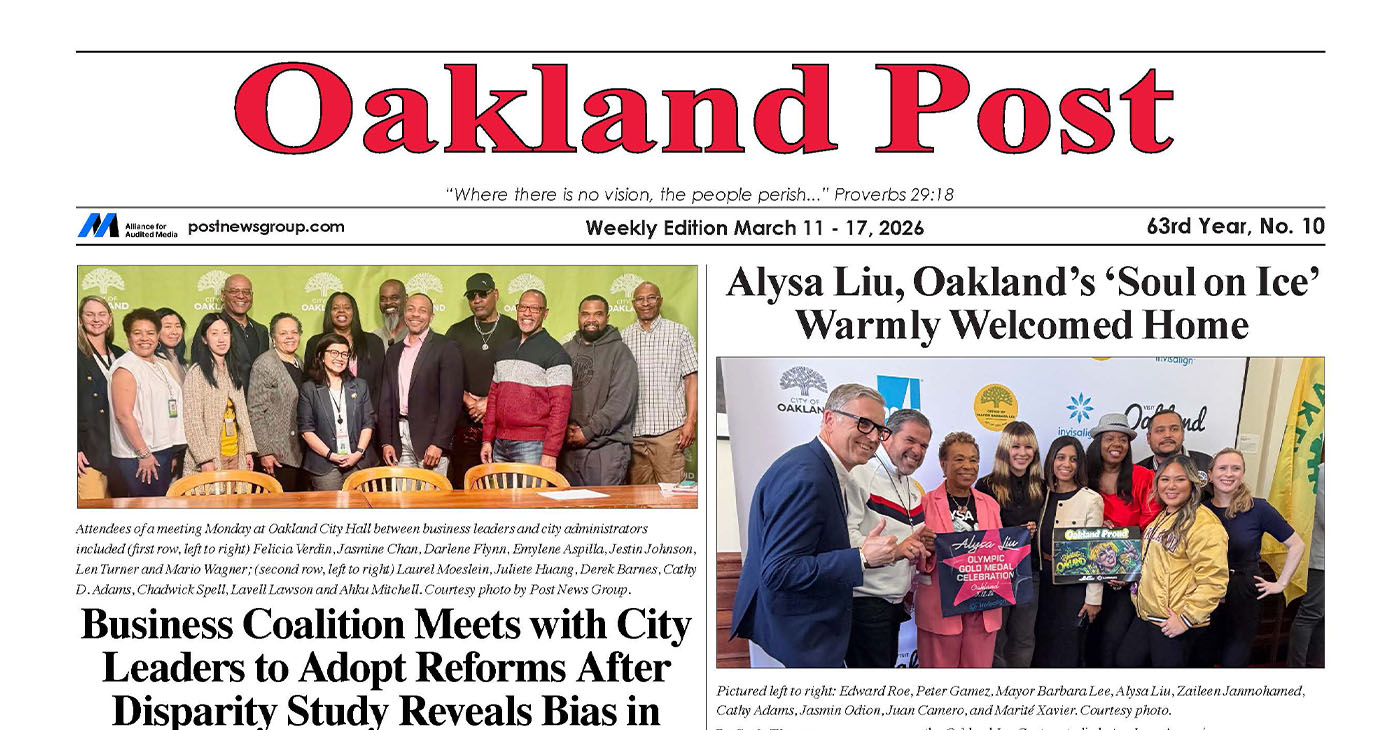
To enlarge your view of this issue, use the slider, magnifying glass icon or full page icon in the lower right corner of the browser window.
Activism
Oakland Post: Week of March 4 – 10, 2026
The printed Weekly Edition of the Oakland Post: Week of March 4 – 10, 2026
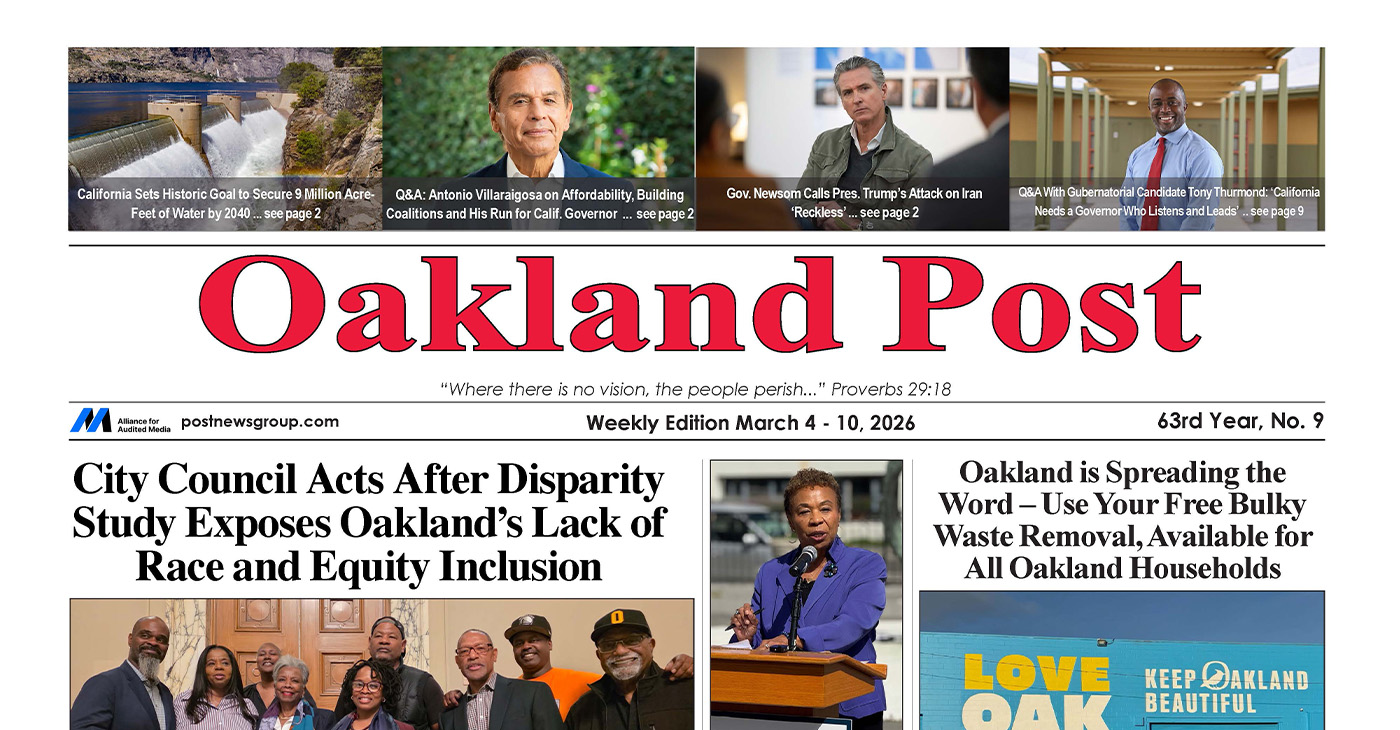
To enlarge your view of this issue, use the slider, magnifying glass icon or full page icon in the lower right corner of the browser window.
Activism
Oakland Post: Week of February 25 – March 3, 2026
The printed Weekly Edition of the Oakland Post: Week of – February 25 – March 3, 2026
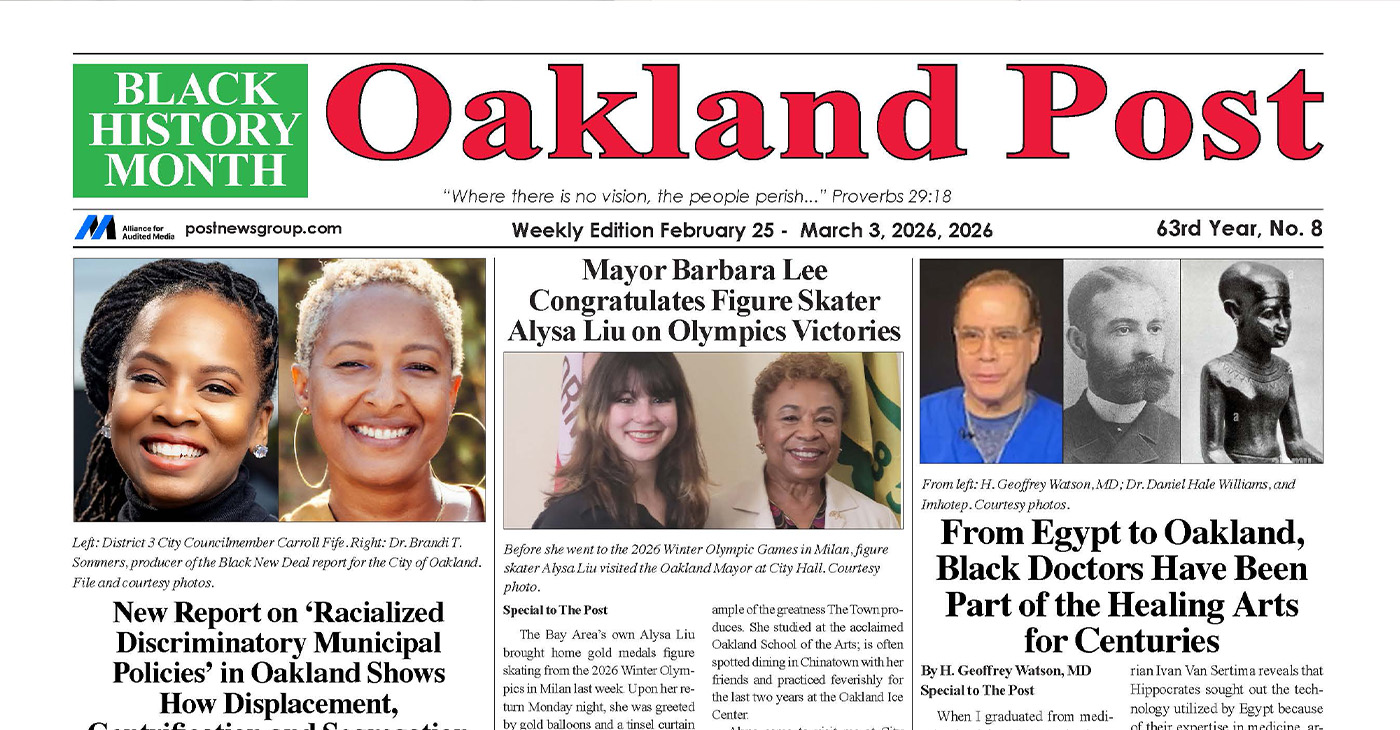
To enlarge your view of this issue, use the slider, magnifying glass icon or full page icon in the lower right corner of the browser window.

WORK FROM HOME
Home-based business with potential monthly income of $10K+ per month. A proven training system and website provided to maximize business effectiveness. Perfect job to earn side and primary income. Contact Lynne for more details: Lynne4npusa@gmail.com 800-334-0540


Financial Wellness and Mental Health: Managing Money Stress in College

Oakland Post: Week of March 11 -17, 2026

Women & Wealth: Tips for Navigating Your Lifelong Financial Journey

COMMENTARY: Women of Color Shape Our Past and Future

Woman’s Search for Family’s Roots Leads to Ancestor John T. Ward – A Successful Entrepreneur and Conductor on the Underground Railroad

Advocates Raise Alarm Over ICE Operation, MOU and Detention Risks in Baltimore County

Pete Buttigieg to Join Mayor Randall Woodfin for Community Town Hall in Birmingham

WATCH: Week One – NNPA’s “Leadership Matters” Video Series

Oakland Post: Week of March 4 – 10, 2026

OP-ED: NNPA Launches 2026 “Leadership Matters” Video Series

PRESS ROOM: PMG and Cranbrook Horizons-Upward Bound Launch Journey Fellowship Cohort 2

Los Angeles Summit Brings Together Leaders to Tackle Poverty and Affordability

Civil Rights TV Launches 24/7 Network Focused on Black History, Education and Equity

REVIEW: The Ultimate Hot Girl Summer Getaway: Sunseeker Resort Florida

COMMENTARY: How You Stop a Prescription Medicine is as Important as How You Start

Oakland Post: Week of January 28, 2025 – February 3, 2026

Life Expectancy in Marin City, a Black Community, Is 15-17 Years Less than the Rest of Marin County

Book Review: Books on Black History and Black Life for Kids

Community Celebrates Turner Group Construction Company as Collins Drive Becomes Turner Group Drive

California Launches Study on Mileage Tax to Potentially Replace Gas Tax as Republicans Push Back

Discrimination in City Contracts

COMMENTARY: The Biases We Don’t See — Preventing AI-Driven Inequality in Health Care

Post Newspaper Invites NNPA to Join Nationwide Probate Reform Initiative

Black History Events in the East Bay

Medi-Cal Cares for You and Your Baby Every Step of the Way

Art of the African Diaspora Celebrates Legacy and Community at Richmond Art Center

New Bill, the RIDER Safety Act, Would Support Transit Ambassadors and Safety on Public Transit

COMMENTARY: The National Protest Must Be Accompanied with Our Votes

Oakland Post: Week of February 4 – 10, 2026

Oakland Post: Week of February 11 – 17, 2026

Hyundai Ioniq 5 Parking, Safety, and 360 View #shorts

2025 Ioniq 5 New Wiper & Powerful Performance! #shorts

Electric SUV Range: Is 259 Miles Enough? #shorts

EV Charging: How Fast Can You Charge an Electric Vehicle? #shorts

Biometric Cooling… Messaging Seats…Come on! 2025 Infiniti QX80 Autograph 4WD

Charged Up: Witness the Magic of a Fully Electric Car! #shorts

Range Rover Sport PHEV Included…: See What’s Inside This Luxury SUV! #shorts

Invisible Hood View: Perfect Parking with X-Ray Vision! #shorts

AI Is Reshaping Black Healthcare: Promise, Peril, and the Push for Improved Results in California

ESSAY: Technology and Medicine, a Primary Care Point of View

Sanctuary Cities

The RESISTANCE – FREEDOM NOW

STATE OF THE PEOPLE: Freddie

ECONOMIC BOYCOTT DAY!!!!!

I told You So
-
 #NNPA BlackPress3 weeks ago
Reflecting on Black History Milestones in Birmingham AL
-
 Bay Area4 weeks ago
CITY OF SAN LEANDRO STATE OF CALIFORNIA PUBLIC WORKS DEPARTMENT ENGINEERING DIVISION NOTICE TO BIDDERS FOR ANNUAL STREET OVERLAY/REHABILITATION 2019-21 – PHASE III
-
 #NNPA BlackPress3 weeks ago
PRESS ROOM: NBA Hall of Fame Nominee Terry Cummings Joins 100 Black Men of DeKalb County to Launch Victory & Values Initiative
-
 Activism4 weeks ago
Oakland Post: Week of February 18 – 24, 2026
-

 #NNPA BlackPress3 weeks ago
U.S. manufacturing rebounds – how foundry services are adapting to rising demand
-

 #NNPA BlackPress3 weeks ago
OP-ED: One Hundred Years of Black Workers Telling the Truth
-

 #NNPA BlackPress3 weeks ago
Advancements in solar technology that are changing the way we power the world
-
 #NNPA BlackPress3 weeks ago
PRESS ROOM: Civil Rights TV Launches in Selma as the World’s First 24/7 Civil Rights Television Network
