
Community
Susan Burton shares personal journey with LMU students
WAVE NEWSPAPERS — For Susan Burton, helping formerly incarcerated women embrace a new way of life is a calling.

By Angela N. Parker
WESTCHESTER — For Susan Burton, helping formerly incarcerated women embrace a new way of life is a calling. As a formerly incarcerated woman herself, Burton is committed to giving back a little bit of what was given to her when she received her second chance.
With that commitment comes a desire to reach into the community and to tell her story to those whose time, talent and resources can make all the difference in the lives of the most vulnerable among us. One of those communities is Loyola Marymount University, a catholic university where Burton has formed a partnership with faculty and students.
On Feb. 5, Burton was the featured speaker at a conversation on incarceration, hosted on campus as part of Black History Month, where she challenged the 100 students and faculty members in attendance to rethink how they view incarcerated and formerly incarcerated women.
“We have been trained to think about people who are incarcerated in a certain way,” Burton said. “There is this idea that everyone in jail is a sexual predator (or a monster) when the truth is most people are in prison because we have criminalized mental health, we have criminalized poverty and those are the reasons most people are incarcerated.”
That is a message that Deanne Cooke, assistant clinical professor and director of engaged learning at LMU, wanted to impart to the students in attendance.
“Our university’s mission is to promote social justice and so we enact that mission by helping our communities understand the current system of justice and imagine what it might look like to have a system that is more just,” Cooke said. “The most powerful way I can envision educating students is to let people tell their own stories and connect their humanity to the humanity of our students and community members.”
According to the Bureau of Justice Statistics, one in 37 adults, 2.7 percent of the adult population in the United States, is under some form of correctional supervision. African Americans as a whole are incarcerated at a rate five times higher than their white counterparts, while African-American women are twice more likely to go jail than their white counterparts.
“We rarely think about how the individual and their extended families are impacted by incarceration,” Cooke said. “We rarely think about why, by far, America has the largest rate of incarceration in the world; why there has been a large increase in incarceration of women; what happens to people’s children or parents when individuals are incarcerated; how incarcerated people continue to be impacted by various policies well after their release; or how our policies create disproportionate enforcement and convictions for black, brown and poor people.”
The sentiment is shared by Nathan Sessoms, director of the office of black student services at LMU.
“Speaking about the need for justice is one thing; understanding that need and getting involved in the eradication of injustice is something totally different,” Sessoms said. “My hope is that today participants develop a better understanding of this justice-related issue, as well as the various ways they can get involved.”
Burton, who is the author of “Becoming Ms. Burton,” an autobiographical memoir in which she discusses her journey to become who she believes she was born to be, hopes that her speaking out will change how people think and act about the issue of mass incarceration.
“I was out of prison six different times,” said Burton, who became addicted to substances after attempting to self-medicate to cope with the death of her child. “Then somebody helped me, provided me with a safe place to live, provided me with food, showed me compassion and introduced me to Alcoholics Anonymous. That was the magic pill for me. But that help came out of Santa Monica and … I became driven to bring these types of services to my community.”
In 1998, Burton founded A New Way of Life Reentry Project, an organization that offers housing, legal services and leadership training to formally incarcerated women. Through her organization, she has provided a safety net and a chance for reunification for more than 1,000 women and children.
“In addition to the related and long-standing issue of police brutality, mass incarceration represents the critical justice issue of our time,” Sessoms said. “However, people’s knowledge about these issues is often derived from television shows and, perhaps, social media.
“So, the opportunity to hear about Ms. Burton’s experiences, as well as the amazing work that she’s done and continues to do, paints a much clearer picture of the bias and disparities present within the criminal justice system.”
Burton said that from the very beginning her organization was committed to going beyond providing shelter and was determined to eliminate the institutional obstacles that made succeeding post prison nearly impossible.
“According to the American Bar Association, more than 48,000 barriers to reentry have been documented,” Burton said. “These barriers included limited access to employment, inability to get a driver’s license or a student loan, inability to secure permanent housing, and inability to get public assistance.
“We are all human and we have all made mistakes whether we have been convicted of them or not,” Burton added. “It is not fair to continually punish someone for a crime they have already served the time for.”
One of the ways that Burton hopes to convey this message is through the Justice on Trial Film Festival, which features films that speak to the challenges of people navigating the criminal justice system. Held annually at LMU, the event is open to the public.
“It is important that we understand all the struggles that people who are incarcerated face … and that we focus more on restorative justice,” Burton said. “We need to start speaking to each other and working towards creating the type of close communities that look out for each other.”
This article originally appeared in Wave Newspapers.












Black History
IN MEMORIAM: Dolly Parton Dead at 80 — How She Built a Legacy of Love and Earned Her Place in Black Culture
BAYOU BEAT NEWS — For Black audiences, the bridge to Dolly will always run through Whitney Houston. Parton wrote “I Will Always Love You” as she prepared to leave Porter Wagoner’s television show and released it in 1974. The original was tender and restrained, a country goodbye delivered with grace. Then Whitney got hold of it.


Before some of us knew Dolly Parton as the Queen of Country Music, we knew her as the woman behind Whitney Houston’s song. We knew the blonde hair, the rhinestones, and that unmistakable Tennessee voice. But somewhere along the way, Black America came to understand something deeper about Dolly; when she said she loved people, she had the receipts to prove it.
The community is now left to mourn the icon who passed away at the age of 80, on Aug. 25, after dealing with an unknown medical condition. Known for her chart-topping country music hits, Dolly never felt as though she belonged only to one genre, or one kind of person. She showed up with humor, humility and a generosity that did not ask who you voted for before offering a helping hand. She made room for people, and in return, people from every corner of the culture made room for her.
The Song That Brought Dolly and Whitney Together
For Black audiences, the bridge to Dolly will always run through Whitney Houston. Parton wrote “I Will Always Love You” as she prepared to leave Porter Wagoner’s television show and released it in 1974. The original was tender and restrained, a country goodbye delivered with grace. Then Whitney got hold of it.
Houston’s 1992 rendition for “The Bodyguard” did not merely update the record. She took it to church, then carried it around the world. That opening a cappella moment, the controlled stillness and the key change that made everybody reach for a note they had no business trying to hit turned Parton’s country ballad into a global anthem. The single spent 14 consecutive weeks at No. 1 on the Billboard Hot 100, became the best-selling physical single by a woman and earned two Grammy Awards.
And instead of trying to deny contribution or rush to remind everyone who wrote the song, she celebrated the way Houston’s voice transformed it. In an industry with a long history of taking from Black artists while denying them proper credit, Dolly understood that acknowledging Whitney’s greatness did not diminish her own. One woman wrote an extraordinary song. Another woman revealed everything else that song could become.
“This is the house that Whitney built.”
— Dolly Parton
Parton later shared that she used some of the royalties from Houston’s recording to purchase commercial property in a predominantly Black Nashville neighborhood. She called it “the house that Whitney built.” There was something beautiful about that acknowledgment. Whitney’s voice had generated wealth, and Dolly wanted part of that wealth rooted among people she described as Whitney’s people, and her people, too.
Dolly’s relationship with Black America was not built on pretending she did not see color. She saw us. In a 2020 Billboard interview, she made her position plain: “Of course Black lives matter. Do we think our little white asses are the only ones that matter? No!”
It was blunt, funny, and completely on brand. But Dolly also understood that allyship could not stop with a quote. After learning why the word “Dixie” was offensive and painful to many people, she removed it from the name of her Civil War-themed dinner attraction. She called her previous understanding “innocent ignorance.” More important, she fixed it.
That willingness to listen mattered. Dolly did not perform perfection or become defensive when someone pointed out harm. She showed that loving people means caring enough to learn, change and do better. In a time when public figures often double down just to avoid admitting they were wrong, Dolly simply chose not to be cruel.
Dolly’s love also arrived in the mail. Inspired by her father, who could not read or write, she launched the Imagination Library in 1995. The program began in Sevier County, Tennessee, sending one free, age-appropriate book each month to enrolled children from birth to age 5. What started in the rural community that raised her grew into an international literacy movement. By the end of 2025, the program had distributed more than 300 million books and was mailing about 3.4 million books each month.
Those books found their way into homes in big cities as well as small towns. In New York City, the Imagination Library has been promoted through public schools and community organizations in the Bronx. For urban families navigating tight budgets, limited bookstore access or neighborhoods where children’s books are not always easy to find, a brand-new book addressed directly to a child can mean more than one package. It tells that child, “This belongs to you. Your imagination matters.”
That was Dolly’s kind of giving: personal, useful and rooted in dignity. She also funded scholarships, supported hospitals, invested in medical research and helped families recover from disasters. Her $1 million donation to Vanderbilt University Medical Center supported research connected to the Moderna COVID-19 vaccine. She turned the money she made entertaining people into opportunities to help them live, learn and rebuild.
A preschooler opening one of Dolly’s books in the Bronx did not need to know “Jolene.” A parent reading that book at bedtime did not need to be a country music fan. Her generosity crossed racial and economic lines because it met families in real life, at the mailbox, in a hospital room or after the unthinkable happened.
A Legacy That Felt Like Love
Dolly Parton leaves behind thousands of songs, beloved films, major businesses and enough rhinestones to keep heaven sparkling for a while. But her greatest legacy may be the way she made strength feel soft without ever making it weak. She knew exactly who she was, yet she never needed anyone else to become smaller so she could shine.
For Black listeners, her bond will always be part of that story. “I Will Always Love You” was never about choosing between the white woman who wrote it and the Black woman who took it somewhere new. Dolly gave the world the words. Whitney gave those words wings. Together, they created a piece of American music that refuses to stay inside one genre or belong to only one community.
That is why this loss feels personal, even to people who never met her. Dolly reminded us that tenderness can be powerful. She showed us that changing your mind can be a sign of character, that celebrating another woman’s brilliance does not steal your light and that love means very little if it never becomes action.
Country music will forever call Dolly Parton one of its queens. But Black culture recognized something in her, too: a woman who respected our greatness, spoke up for our humanity and invested in our children. She did not simply leave this world loved. In the ways that mattered most, Dolly loved us back.

Business
OPINION: 57,000 Empty Apartments and Not a Word of Apology – City Limits
BLACKPRESSUSA NEWSWIRE — “Short-term rental income was, for many of these families, not a luxury. It was the margin between keeping the house and losing it. Local Law 18 closed that door, and the people who closed it are now waving away 57,000 empty apartments as statistical noise.”
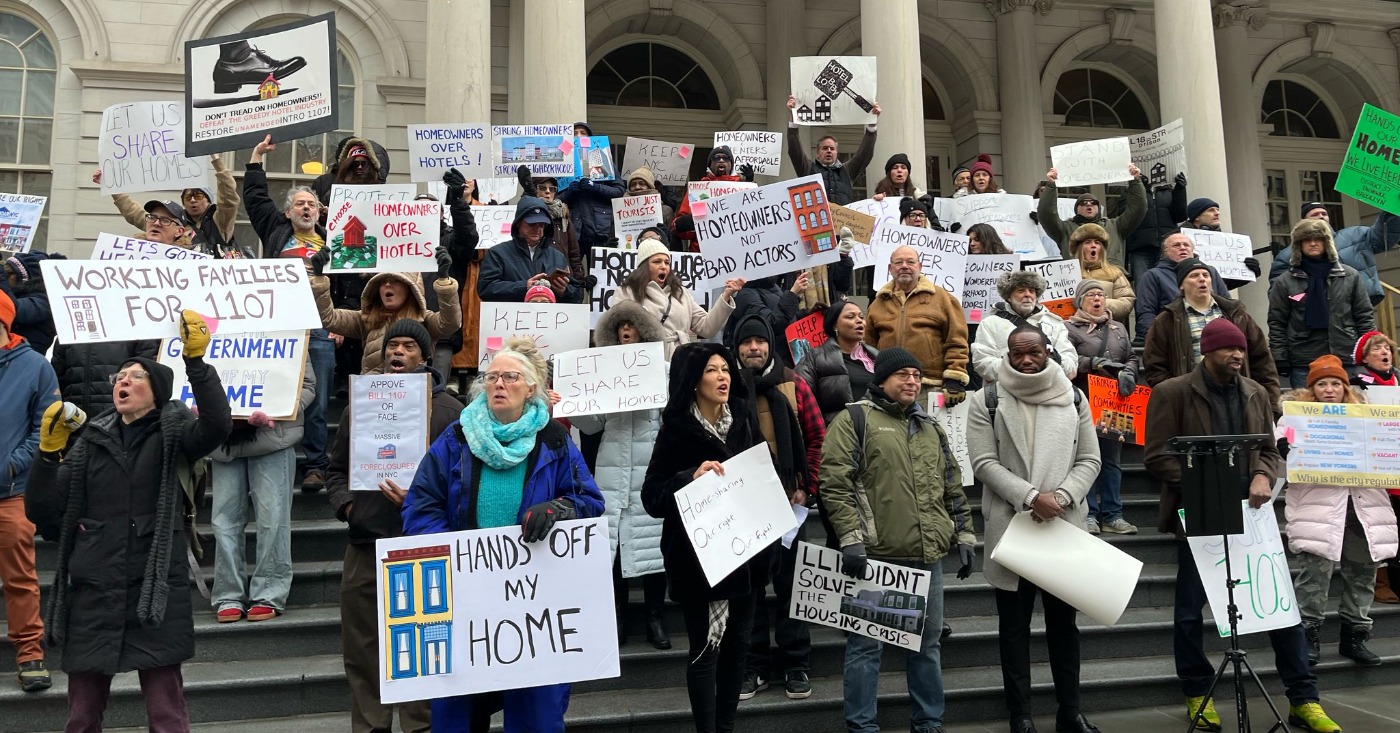
Every indicator in New York City’s housing market is pointing in the wrong direction.
Rents are at historic highs. Foreclosure notices are climbing in Black and brown neighborhoods that never fully recovered from the last crisis. Deed theft, the predatory stripping of generational wealth from families who built their equity over decades, continues to devastate communities from Brownsville to Jamaica.
On top of all these factors, there were more than 57,000 rent-stabilized apartments sitting completely empty as of April last year. That number grew by 8,000 units in a single year, with the sharpest increases hitting Brooklyn and Queens hardest.
Brooklyn and Queens. My neighborhoods. Your neighborhoods.
You would think that news of 57,000 empty affordable apartments in the middle of a housing emergency would produce outrage, emergency hearings, and demands for accountability. Instead, New Yorkers got a collective shrug from opinion leaders.
Read that again: 57,000 families could be housed in those apartments. Households currently paying market rent, doubled up, couch-surfing, or one missed paycheck away from the street could have relief. And silence from the city’s housing leadership, activists, and coalitions.
In my experience as chair of the Subcommittee on Affordable Housing in the Assembly, that is not advocacy. That is surrender.
These are the same voices, the same institutions, the same political class that successfully lobbied to effectively ban short-term rentals in New York City through Local Law 18. At its peak, Airbnb had roughly 20,000 listings in New York City, nearly a third the number of apartments currently sitting vacant and padlocked in the rent-stabilized system. The campaign against those listings was relentless, loud, and wrapped in the language of affordability and housing justice.
Where is that energy now?
Where are the press conferences about landlords warehousing stabilized units while families sleep in shelters? Where is the legislation with teeth? Where is the outrage that was apparently plentiful when a Black homeowner in Bed Stuy wanted to rent out her spare bedroom to make ends meet?
Because that is exactly who Local Law 18 hit hardest. Not the corporate bad actors. Not the hedge funds. The struggling homeowner, disproportionately Black, disproportionately in Brooklyn and Queens, who used their home as a small economic engine to survive in a city that grows more expensive by the month.
Those families were told their activity was destabilizing the housing market. Those families were fined, delisted, and legislated out of a livelihood. And now we learn that 57,000 stabilized units are sitting empty while rents spiral and foreclosures mount, and the response from housing advocates is essentially: that’s just how big numbers work.
This is not sound policy. This is politics. And the communities paying the price know the difference.
I have spoken with homeowners across Central Brooklyn who are barely holding on. They bought their homes, sometimes one generation removed from the Great Migration, and they have watched the equity they built become both their greatest asset and their greatest vulnerability. Predatory lenders, deed theft schemes, and rising property taxes all circle that equity like wolves.
Short-term rental income was, for many of these families, not a luxury. It was the margin between keeping the house and losing it. Local Law 18 closed that door, and the people who closed it are now waving away 57,000 empty apartments as statistical noise.
Everyone in this fight knows what needs to happen but will not say it out loud: Local Law 18 needs reform. Common sense reform. The kind that distinguishes between an investor running a ghost hotel and a homeowner renting a room. The kind that actually targets bad actors instead of penalizing the most economically vulnerable property owners in the city.
I hear it in private conversations with elected officials, with housing attorneys, with planners. The consensus is there. The political will is not, because the same advocacy groups and political donors who pushed the original law are still in the room, and nobody wants to take their call.
What this moment requires is courage, not calculation.
Every month that passes with 57,000 empty stabilized apartments is a month of families in crisis, of shelter costs ballooning, of neighborhoods destabilizing. Every month that Local Law 18 remains unreformed is another month a Black homeowner in Flatbush or Hollis faces impossible choices that wealthier New Yorkers simply never have to make.
You cannot ban the small and ignore the large. You cannot mobilize armies of lobbyists against a homeowner’s spare bedroom while shrugging at tens of thousands of warehoused affordable units. You cannot claim to stand for housing justice and then tell 57,000 families worth of empty apartments that the math just works out this way.
The hypocrisy has to stop. Politics have to give way to people. And the officials and advocates who have the power to fix this, who know what needs to be done, have to decide which side they are actually on.
Because from where I stand, in the communities I have served for decades, it is very clear who is being left out in the cold.
Dr. Annette Robinson is a former member of both the State Assembly and City Council in Brooklyn.
Black History
Oakland Protesters Rally to Defend Haitian Immigrants and TPS
The Haiti Action Committee traces its roots to the international movement that emerged following Haiti’s 1991 military coup, which overthrew the nation’s first democratically elected president, Jean-Bertrand Aristide. Political violence sent thousands of Haitians fleeing the country, while U.S. policies resulted in refugees being intercepted at sea, repatriated, or detained at Guantanamo Bay.
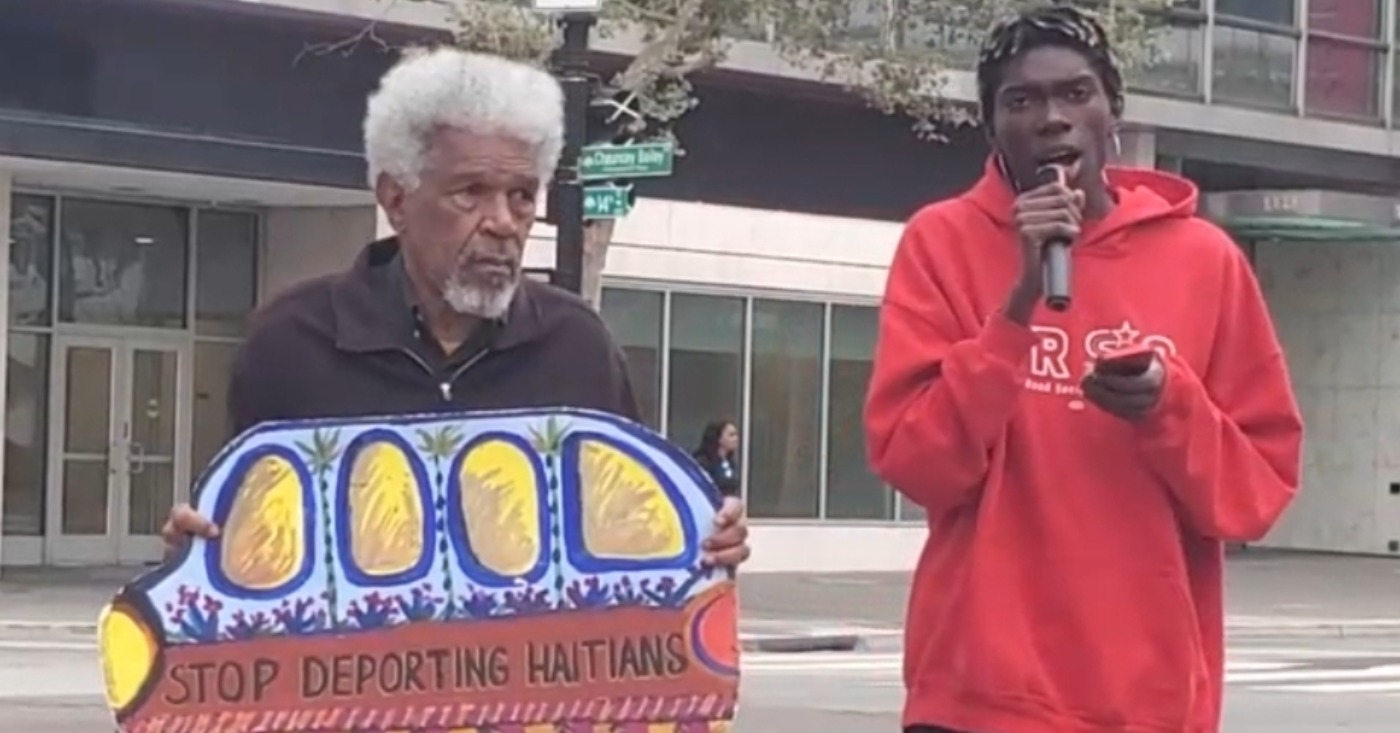
Protesters gathered in downtown Oakland near City Hall at 14th Street and Broadway on Thursday, Aug. 13, calling for protections for Haitian immigrants and an end to deportation policies affecting Haitian communities across the United States.
Organized as a call to action by the Legalization for All Network and supported by the Haiti Action Committee and other community organizations, the demonstration carried a clear message: “Defend TPS! Legalization, Not Deportation!”
Participants focused attention on the termination of Temporary Protected Status, or TPS, for Haiti and immigration policies protesters described as continuing attacks on Haitian immigrants under the Trump administration.
Haitian Romaine Charite of the Freedom Road Socialist Organization urged demonstrators to stand with Haitian families and led chants:
“When Haitians are under attack, what do we do? We fight back.”
Injustice to one is an injustice to us all.”
“Dump Trump!”
Charite and other protesters condemned the federal government’s treatment of Haitian immigrants, describing the policies as an attack on a population already facing extraordinary hardship.
Haiti’s TPS designation was terminated effective July 27, 2026, removing temporary deportation protections and work authorization for hundreds of thousands of Haitian beneficiaries who lacked another legal basis to remain in the United States.
Gerald Smith, a protester and former member of the Black Panther Party during the 1970s, said Haitians were being unfairly targeted and warned that ending TPS would have a devastating impact on Haitian families and communities.
“These policies are racially motivated and unfair,” Smith said. “Everyone deserves the right to self-determination and protection from persecution.”
The Haiti Action Committee cited the continuing political, economic and humanitarian crisis in Haiti as evidence that returning large numbers of immigrants to the country could place already vulnerable people at greater risk.
The Oakland gathering, which drew about 20 participants, reflected a decades-long history of Bay Area activism surrounding Haitian democracy, refugee rights and U.S. immigration policy.
The Haiti Action Committee traces its roots to the international movement that emerged following Haiti’s 1991 military coup, which overthrew the nation’s first democratically elected president, Jean-Bertrand Aristide. Political violence sent thousands of Haitians fleeing the country, while U.S. policies resulted in refugees being intercepted at sea, repatriated or detained at Guantanamo Bay.
Those policies sparked protests involving Haitian communities, Black activists, artists, college students, churches, labor organizations and human rights advocates. Prominent figures, including dancer and activist Katherine Dunham, tennis champion Arthur Ashe, and TransAfrica leader Randall Robinson, joined campaigns challenging the treatment of Haitian refugees.
In 1992, Haiti Action Committee joined other Bay Area organizations in a dramatic demonstration on San Francisco Bay. Boats carrying Haitian participants were intercepted by the U.S. Coast Guard while supporters gathered along the waterfront and reportedly chanted, “Let Them Land!”
More than three decades later, protesters have returned to the streets of Oakland, centering on protecting Haitian immigrants, opposing deportation and pressing for immigration policies that provide families with a pathway toward permanent legal residency.
For more information, visit Haitisolidarity.net.

WORK FROM HOME
Home-based business with potential monthly income of $10K+ per month. A proven training system and website provided to maximize business effectiveness. Perfect job to earn side and primary income. Contact Lynne for more details: Lynne4npusa@gmail.com 800-334-0540


IN MEMORIAM: Dolly Parton Dead at 80 — How She Built a Legacy of Love and Earned Her Place in Black Culture

OPINION: 57,000 Empty Apartments and Not a Word of Apology – City Limits

Oakland Protesters Rally to Defend Haitian Immigrants and TPS

First 5 Alameda County Celebrates First Year of Measure C’s Implementation

From Palestine to Oakland: Seeds for Liberation Examines Shared Struggles for Freedom

NABJ Convention Brings Black Journalists, Civic Leaders Together in Atlanta

At Sacramento Summit, Becerra Discusses Policy; Uses “Family” Metaphor to Frame Case for National Political Unity

$5 Billion Coliseum Vision Puts Oakland Jobs, Businesses at Center

Gov. Newsom Nominates 3 Black Women Judges to Serve on State Courts of Appeal

Oakland Observes Black August with Block Parties, Film Showings, Workshops

NPRC Elder Justice Symposium Invites Community to Join Effort to Protect Alameda County Elders
Episode 4: Grow Stronger After 50
Episode 4: Grow Stronger After 50

Four Candidates, Including Incumbent Barbara Lee, Qualify for Oakland Mayor’s Race

Oakland Observes Black August with Block Parties, Film Showings, Workshops

Department of Homeland Security Demands California Secretary of State Shirley N. Weber Scrub Voter Rolls

New Judge Could Decide if Karmelo Anthony Gets a New Trial

Oakland Children’s Hospital Workers and Patients Rally for Pediatric Medical Care

“The Power to See Threats Sooner”: Gov. Newsom, Safety Officials Showcase California’s Investments in Hi-Tech Wildfire Prevention

Alpha Kappa Alpha Sorority, Inc. Celebrates New North Atlantic Regional Director

Surveillance Pricing Fight: State Senate Debates Bill Banning Retailers from Using AI to Set Prices Based on a Buyer’s Profile

Mount Zion MBC, Church of Jesus Christ of Latter-day Saints Partner to Bring 29,000 Meals to Alameda County

California Sen. Padilla Joins Colleagues to Introduce Bill Imposing Term Limits on Supreme Court Justices

Less Affluent School Districts, Including Sacramento City, Face Threat of State Takeover

Car Wash Workers Cope with Lingering Impacts of ICE Raids

Starting This Summer, California Car Buyers Can Get an Instant $3500 Off the Cost of Electric Vehicles

COMMENTARY: You Are Already Paying for the AI Boom

California Bill Would Let Abuse Victims Use Trauma as Legal Defense for Violent Crime

Fed Court to Decide Landmark First Amendment Case

Gov. Gavin Newsom Signs Law Streamlining Affordable Housing Rules

The Conversation With Al McFarlane 6/23/26

Media Monday 6/22/26

LIVE! ASK ALMA! — TUES. 6.23.26 7PM EST

Car Buying Secrets: 4 Hidden Checks Before You Sign!

Is This 550 HP Charger Worth YOUR Money? AutoNetwork Review

Celebrating Juneteenth – Frederick Douglass on education and resistance

LIVE! — ASK ALMA! — TUES. 6.19.26 7PM EST

Hyundai Ioniq 5 Parking, Safety, and 360 View #shorts

2025 Ioniq 5 New Wiper & Powerful Performance! #shorts

Electric SUV Range: Is 259 Miles Enough? #shorts

EV Charging: How Fast Can You Charge an Electric Vehicle? #shorts

Biometric Cooling… Messaging Seats…Come on! 2025 Infiniti QX80 Autograph 4WD

Charged Up: Witness the Magic of a Fully Electric Car! #shorts

Range Rover Sport PHEV Included…: See What’s Inside This Luxury SUV! #shorts

Invisible Hood View: Perfect Parking with X-Ray Vision! #shorts
-
 Featured3 weeks ago
Department of Homeland Security Demands California Secretary of State Shirley N. Weber Scrub Voter Rolls
-
 #NNPA BlackPress4 weeks ago
New Judge Could Decide if Karmelo Anthony Gets a New Trial
-
 Environment3 weeks ago
“The Power to See Threats Sooner”: Gov. Newsom, Safety Officials Showcase California’s Investments in Hi-Tech Wildfire Prevention
-
 Black History3 weeks ago
Alpha Kappa Alpha Sorority, Inc. Celebrates New North Atlantic Regional Director
-
 Featured3 weeks ago
California Sen. Padilla Joins Colleagues to Introduce Bill Imposing Term Limits on Supreme Court Justices
-
 Community2 weeks ago
Less Affluent School Districts, Including Sacramento City, Face Threat of State Takeover
-
 Business2 weeks ago
Car Wash Workers Cope with Lingering Impacts of ICE Raids
-
 #NNPA BlackPress4 weeks ago
COMMENTARY: You Are Already Paying for the AI Boom
