
Crime
Surviving Sexual Abuse: April ‘7even Rich’ Richardson, taking back your power
THE BIRMINGHAM TIMES — The mental and emotional aftermath of sexual abuse can last a lifetime.

By Je’Don Holloway Talley
Gone are the days of silence and shame in the face of sexual assault and misconduct. America is slowly adapting to a new narrative for survivors of sexual abuse—one that empowers, vocalizes, and offers cathartic relief.
With there being strength in numbers and solace in solidarity, the country has taken a stance in support of the growing movement to lift the veil of secrecy and denial surrounding sexual abuse and sexual predators. #TimesUp, say African-American artists, such as actresses Kerry Washington and Viola Davis, film director Ava Duvernay, and mogul Oprah Winfrey. #MeToo, says activist Tarana Burke.
As silence now equates complicity, silence further cultivates a society ignorant of how sexual assault is so deeply woven into the fabric of America and the lives of women and children. In the wake of “Surviving R. Kelly”—a six-hour television documentary that aired on Lifetime earlier this month, revealing the accounts of several women who have accused the R&B singer of abuse, including keeping them secluded in a house and controlling them with fear and intimidation—women across the country and here in Birmingham have expressed how some of the victim’s stories brought back painful memories of their own traumatic pasts.
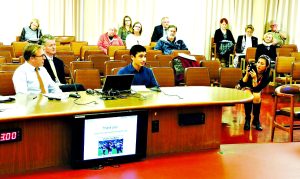
The impact is undeniable.
Social conversations continue to expose the need for social change to challenge the norms of yesteryear regarding child molestation, sexual assault, predatory behavior, and statutory rape. The Birmingham Times recently spoke with a group of survivors who have endured the trauma of sexual abuse and courageously stepped forward to share their stories as they navigate the road to recovery.
This is the first of two parts. The second part, which will be published on Thursday, February 7, will feature interviews with counselors and therapists about the impact of sexual abuse and assault on the individual and society.
“I can identify with young girls wanting to be in the industry and attaching to somebody in the industry 100 percent because I was that person,” said Richardson, who often goes by the name “7even Rich.”
In the summer of 1997 Richardson was raped by “a fellow church member who was also a recording artist,” she said.
“He begged and begged my mother to work with me for a long time, saying he knew people he could hook me up with, he could get me in the studio, and things like that. … One day, [my mother] finally gave in.”
Her rapist, an up-and-coming gospel rapper at the time, who would be twice convicted for his crimes, had devised a plan to gain the trust of Richardson and her mother to lure Richardson into his care under the guise of getting her more exposure for her career.
“He picked me up with the intent of going to a gospel concert at a local church, but when we got there the concert was over,” Richardson said. “He said he had people at his home that he wanted to introduce me to and that we should go back there, … grill out, and meet some people.
“We went to his house, and that’s when things got weird.
“No one ever showed up, and he began to sexually assault me. First, he had me on the sofa, and then he dragged me to his bedroom. I felt his body weight pressing on mine. He felt like dead weight on top of me. He was this big, 6-foot-5, 200-pound man, and I was really small and thin. … I was a child.”
Richardson, now 35, said she fought with all her might for as long as she could.
“I felt like I failed myself because I’d always been a fighter from growing up in the hood and fighting all the time, and here I am in a situation where I can’t win,” she said. “I really felt helpless. After I saw I couldn’t fight him, I just kind of surrendered. … I laid there and cried.
“After it was over, he tried to get me to take a shower with him, I guess to wash away any evidence, but I wouldn’t. At this point, it was over. I guess he was trying to be nice so I wouldn’t do anything crazy in the moment. … I was like, ‘I’d just appreciate it if you would take me home.’ He said, ‘Listen, don’t tell anybody. This is only between me and you.’”
Once Richardson made it to safety, she told her brother, who was 16 at the time.
“He was in shock and angry,” she said. “He called our mom, [she was at work], and told her she needed to come home.”
Richardson’s mom called the police and took her daughter to the hospital: “The police came, and they did a rape kit.”
Nightmare
For Richardson, the nightmare did not end. The leadership of the church was notified, the members of the congregation found out, and yet her abuser was still welcomed at the church.
“When it happened, I was still going back to that church, and he was, too,” she said. “So, there would literally be times when my rapist was in the sanctuary with me. Because certain people knew what happened, they would try to come get me and warn me that he was there.
“I’m not saying that people have to shun people. I understand that it’s a house of God, but this is where I was around my rapist. He gets to come back with his wife and kids, and literally sit in front of me, laugh, and smirk at me as if it was a joke, like, ‘Ha ha. I got you, and I’m still here.’
“I will never forget the smirk. It’s the same smirk he had when he was on top of me raping me, wiping my tears away, asking why I was crying.”
Richardson’s church offered therapy and counseling sessions, but coming to the very place where she was around her rapist was not conducive to her healing. Asked if she felt coerced into silence, she said, “more like forgiveness. It wasn’t a big deal to [the church leaders].”
“I wouldn’t say [anyone] coerced me into silence, but [they] definitely tried to lead me to believe [the rapist] was empathetic, … trying to make me believe it wasn’t what it was, telling me things like, ‘He’s really sorry for what he did.”
The therapy sessions at her home church only made things worse, she said: “It’s like, if someone witnessed a loved one’s murder and then you take that person back to the murder scene for counseling. How’s that gonna help? “I was shy and withdrawn after that for sure. I didn’t really trust being around a lot of people or being open to meeting new people.”
Aftermath
The mental and emotional aftermath of sexual abuse can last a lifetime, said Richardson, adding that one of the things that helped her cope is knowing that she did not keep silent.
“I actually felt relieved because I just couldn’t see myself living like that and going through that self-torture,” she said. “Something in me just said, ‘I have to tell. I can’t keep quiet about it.’”
The trauma of sexual assault has had an effect on Richardson’s adult relationships.
“It definitely made me feel like sex wasn’t something I had to have,” she said. “I kind of felt like, ‘Eh, I’m good on that.’ I had boyfriends and stuff in school, so it wasn’t that I didn’t trust men, but I could really do without intimacy.”
Richardson said she began to heal when she testified against her rapist after he raped his 18-year-old daughter.
“[For] my offense he got only two years for rape one and sexual abuse,” she said. “Then he got out and reoffended; this time he raped his daughter. … That’s when they gave him 18 years with the possibility of parole in 2022. … I went to the trial. I had to testify.”
Testimony
“Testifying was empowering,” Richardson said. “By that point, I had done a lot of soul searching, and I was a little older. It felt good to look him in the eye and take my power back.”
Richardson said she felt vindicated after people had doubted her.
“When it happened, I wasn’t really believed,” she said. “[Testifying in court] was my moment. It was like, ‘See, I told you.’ That was the most freeing. Just to get an apology from some people who didn’t believe me the first time.”
Richardson said the trauma has given her a way of “digging deeper into my purpose and turning that experience into a positive.”
It also adds to her layers as an artist.
“I’ve put the details of what happened into my music, and some people have come and said, ‘Thanks for being real and honest.’ That helped me, too,” she said.
The song “Labor Pains,” on her 2009 mixtape compilation, touches on her experience and healing, which doesn’t come without prayer and purging feelings: “Deep prayer and actually writing down my feelings, [which come out in the music], was all very therapeutic at that time … and actually still is.”
Counseling
For years, Richardson did not seek help, but that has changed.
“It was fairly recent,” she said. “I didn’t seek professional counseling until my 30s. Praying is great, going to church is great, but sometimes there are things you just need to talk about to somebody who’s not in the church. The older I got, I realized that [seeking counseling] doesn’t make you crazy; it actually makes you sane because you know something is wrong.”
Asked how she feels about the #MeToo and #TimesUp movements, Richardson said, “I love it. At the same time, I feel sorry for a lot of the women that have come out because then people say, ‘Oh, they just want money.’ Still, I love the fact that women are feeling powerful enough to speak up and say #MeToo. I think it’s awesome.”
“Thriving”
Watching the recently aired Lifetime TV docuseries “Surviving R. Kelly,” Richardson said she empathized with the R&B singer’s alleged victims: “First, I just felt anger.”
“I know an ‘R. Kelly.’ This is somebody that was supposed to be guiding and mentoring you. … It made me angry to hear some of the things people were saying about the girls, victimizing them all over again,” calling them liars, saying they knew what they were getting themselves into and they should have left if they wanted to, she said.
As for Richardson, she continues to heal.
“I think my healing process is a journey,” she said. “Will I ever forget? No. I have forgiven him, though, and I told him that personally. One day [before he was re-incarcerated in 2004], he was in my neighborhood. His truck had broken down, and I passed by him. Then something said, ‘Turn around.’ So, I did. I pulled up and said, ‘Hey, I forgive you.’ He was surprised to see me. … He actually mentioned hearing my song on the radio and said, ‘I see you’re doing good with your music.’ … Then I drove off.”
Richardson said she’s doing more than just surviving.
“Survival is taking your power back and using it for the greater good,” she said. “I’m a survivor because I didn’t let that take over my life or end my life. … I’m thriving and surviving.”
This article originally appeared in The Birmingham Times.










Activism
Oakland Post: Week of March 18 – 24, 2026
The printed Weekly Edition of the Oakland Post: Week of March 18 – 24, 2026
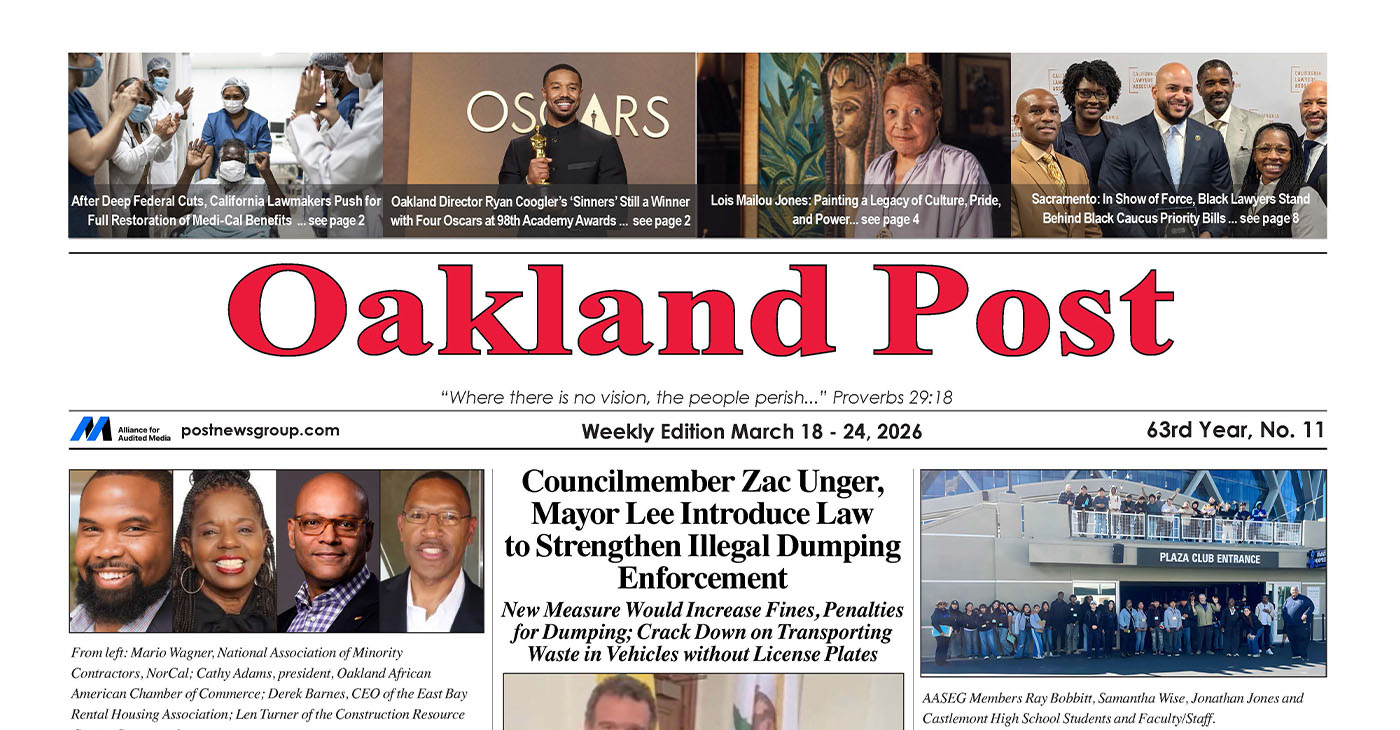
To enlarge your view of this issue, use the slider, magnifying glass icon or full page icon in the lower right corner of the browser window.
Activism
Oakland Post: Week of March 11 -17, 2026
The printed Weekly Edition of the Oakland Post: Week of March 11 – 17, 2026
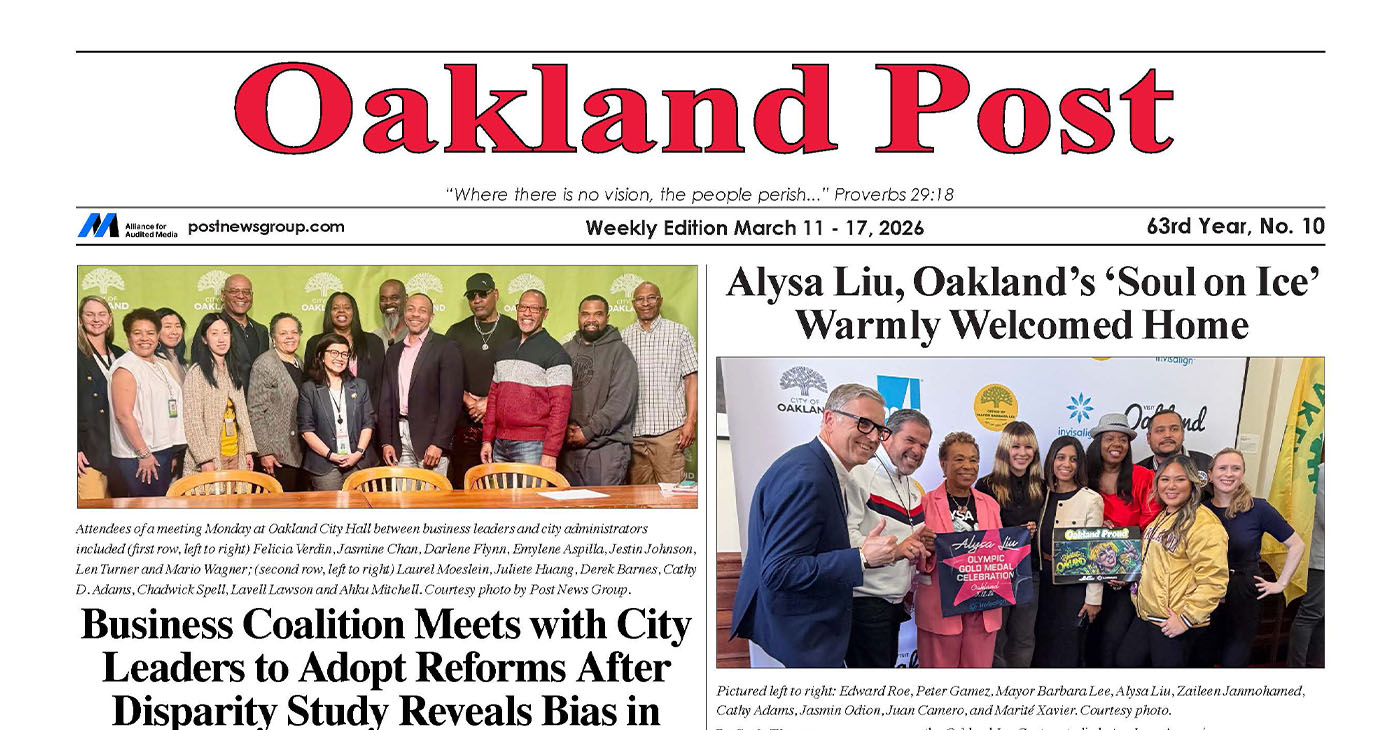
To enlarge your view of this issue, use the slider, magnifying glass icon or full page icon in the lower right corner of the browser window.
Activism
Oakland Post: Week of March 4 – 10, 2026
The printed Weekly Edition of the Oakland Post: Week of March 4 – 10, 2026
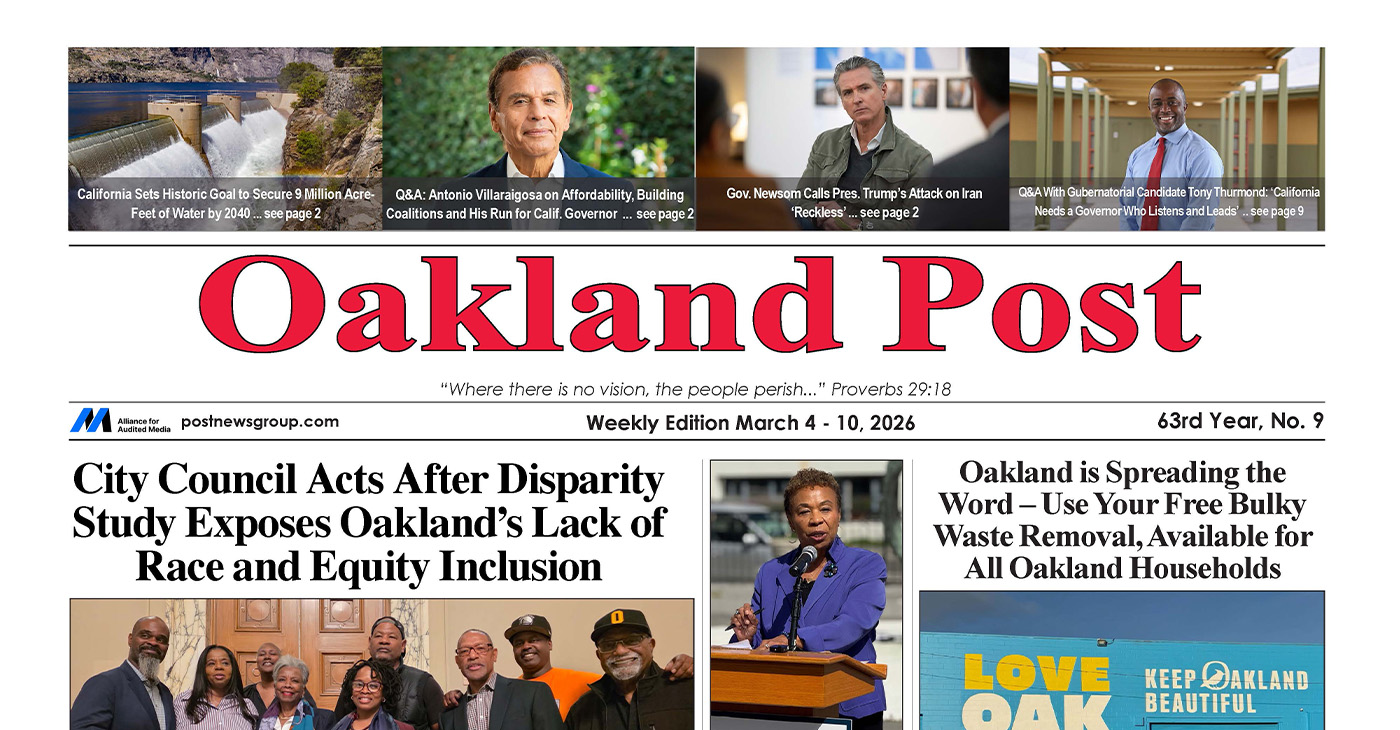
To enlarge your view of this issue, use the slider, magnifying glass icon or full page icon in the lower right corner of the browser window.


WORK FROM HOME
Home-based business with potential monthly income of $10K+ per month. A proven training system and website provided to maximize business effectiveness. Perfect job to earn side and primary income. Contact Lynne for more details: Lynne4npusa@gmail.com 800-334-0540


Black Artists in America, Installation Three Wraps at the Dixon Gallery and Gardens

Grief, Advocacy, and Education: A Counselor Reflects on Black Maternal Health

Future of Florida’s Black History Museum in Limbo

New Research Shows the Many Benefits of Early Learning

South Hampton K-8 Students Among Top 10 Finalists for Samsung’s ‘Solve for Tomorrow’ Competition

Cuba: No Negotiation with US on the President or Political System

Brooklyn Academy of Music Names Jamaican-Born Tamara McCaw as President

Trinidad & Tobego – U.S. Launches WhatsApp Channel for American Citizens in the Country

Oakland Post: Week of March 18 – 24, 2026

AI Innovation vs. Ethics and Environmental Impact

AI, Web3, and Digital Reparations

What If You Owned Your AI Agent?

Season 7, Episode 3 – January Reporter’s Roundtable 📱

Season 7, Episode 3 – January Reporter’s Roundtable

AI, Media, and Power | Part 2, Real-World Impacts and Tradeoffs

Oakland Post: Week of February 11 – 17, 2026

Reflecting on Black History Milestones in Birmingham AL

CITY OF SAN LEANDRO STATE OF CALIFORNIA PUBLIC WORKS DEPARTMENT ENGINEERING DIVISION NOTICE TO BIDDERS FOR ANNUAL STREET OVERLAY/REHABILITATION 2019-21 – PHASE III

Oakland Post: Week of February 18 – 24, 2026

PRESS ROOM: NBA Hall of Fame Nominee Terry Cummings Joins 100 Black Men of DeKalb County to Launch Victory & Values Initiative

Oakland Post: Week of February 25 – March 3, 2026

Trump’s MAGA Allies are Creating Executive Order Plan to Steal the 2026 Midterms

U.S. manufacturing rebounds – how foundry services are adapting to rising demand

OP-ED: One Hundred Years of Black Workers Telling the Truth

Chase Oakland Community Center Hosts Alley-Oop Accelerator Building Community and Opportunity for Bay Area Entrepreneurs

Advancements in solar technology that are changing the way we power the world

Poll Shows Support for Policies That Help Families Afford Child Care

Oakland Post: Week of March 4 – 10, 2026

PRESS ROOM: Civil Rights TV Launches in Selma as the World’s First 24/7 Civil Rights Television Network

Woman’s Search for Family’s Roots Leads to Ancestor John T. Ward – A Successful Entrepreneur and Conductor on the Underground Railroad

Hyundai Ioniq 5 Parking, Safety, and 360 View #shorts

2025 Ioniq 5 New Wiper & Powerful Performance! #shorts

Electric SUV Range: Is 259 Miles Enough? #shorts

EV Charging: How Fast Can You Charge an Electric Vehicle? #shorts

Biometric Cooling… Messaging Seats…Come on! 2025 Infiniti QX80 Autograph 4WD

Charged Up: Witness the Magic of a Fully Electric Car! #shorts

Range Rover Sport PHEV Included…: See What’s Inside This Luxury SUV! #shorts

Invisible Hood View: Perfect Parking with X-Ray Vision! #shorts

AI Is Reshaping Black Healthcare: Promise, Peril, and the Push for Improved Results in California

ESSAY: Technology and Medicine, a Primary Care Point of View

Sanctuary Cities

The RESISTANCE – FREEDOM NOW

STATE OF THE PEOPLE: Freddie

ECONOMIC BOYCOTT DAY!!!!!

I told You So
-
 #NNPA BlackPress4 weeks ago
Poll Shows Support for Policies That Help Families Afford Child Care
-
 Activism4 weeks ago
Oakland Post: Week of March 4 – 10, 2026
-
 #NNPA BlackPress3 weeks ago
Woman’s Search for Family’s Roots Leads to Ancestor John T. Ward – A Successful Entrepreneur and Conductor on the Underground Railroad
-

 #NNPA BlackPress4 weeks ago
OP-ED: NNPA Launches 2026 “Leadership Matters” Video Series
-

 #NNPA BlackPress3 weeks ago
Advocates Raise Alarm Over ICE Operation, MOU and Detention Risks in Baltimore County
-

 #NNPA BlackPress3 weeks ago
COMMENTARY: Women of Color Shape Our Past and Future
-

 #NNPA BlackPress3 weeks ago
Pete Buttigieg to Join Mayor Randall Woodfin for Community Town Hall in Birmingham
-
 Activism2 weeks ago
Oakland Post: Week of March 11 -17, 2026
