
Politics
Sudden Fall: Illinois Rep. Aaron Schock is Resigning


In this Feb. 6, 2015 file photo, Rep. Aaron Schock, R-Ill. speaks to reporters in Peoria, Ill. Schock announced Tuesday his resignation amid questions about spending. (AP Photo/Seth Perlman, File)
ERICA WERNER, Associated Press
WASHINGTON (AP) — Illinois Rep. Aaron Schock abruptly resigned Tuesday following a monthlong cascade of revelations about his business deals and lavish spending on everything from overseas travel to office decor in the style of “Downton Abbey.”
“I do this with a heavy heart,” Schock said in a statement. He said he had given the people of his Peoria-area district his all since his election in 2008, “but the constant questions over the last six weeks have proven a great distraction that has made it too difficult for me to serve the people of the 18th District with the high standards that they deserve and which I have set for myself.”
Schock, 33, a young, media-savvy Republican, had drawn attention for his physical fitness and fundraising prowess. But more recently he has come under scrutiny for extravagant spending, payments to donors for flights on private jets and improperly categorized expenses.

The questions raised have included Associated Press investigations of his real estate transactions, air travel and Instagram use. On Monday, the AP confirmed that the Office of Congressional Ethics had reached out to Schock’s associates as it apparently began an investigation.
In a statement, House Speaker John Boehner said: “With this decision, Rep. Schock has put the best interests of his constituents and the House first. I appreciate Aaron’s years of service, and I wish him well in the future.”
Schock did not inform any House leaders before making his decision, and the announcement took Republicans by surprise. Although the questions around his spending had begun to attract attention and raise concerns, he was not yet facing concerted public pressure from party members to step down.
He is the second House Republican to give up his seat this year under unfavorable circumstances. Michael Grimm, who pleaded guilty on tax evasion charges, resigned his New York seat in early January.
Illinois Gov. Bruce Rauner will have five days from the March 31 effective date of Schock’s resignation to schedule a special election, which must be held within 120 days of the vacancy.
GOP state Sen. Darin LaHood, considered the front-runner to replace Schock in the heavily Republican district, will announce his candidacy Wednesday, Republican officials in Washington said. LaHood is the son of Ray LaHood, who served in Congress and later as President Barack Obama’s transportation secretary.
Schock, an energetic real estate investor who catapulted from the Illinois Legislature to win a congressional seat at the age of 26, touted his status as the House’s first millennial lawmaker. He posed shirtless for Men’s Health magazine to promote fitness, and used Instagram the way older politicians rely on press releases, photo bombing his growing fan base from London to the Florida beach scene. He was an in-demand fundraising force and visited more than 40 congressional districts in the lead-up to November’s elections.
Last June, he was brought into the House leadership and named a senior deputy whip.
But Schock’s fall was even swifter. Only weeks ago, a Washington Post report about his “Downton Abbey”-style office decor led to questions about his handling of expenses. The ornate redecoration, replete with 1920s-era touches, cost $40,000 and was charged to his office; faced with questions, Schock repaid the expense.
Since Schock doesn’t plan to formally resign until March 31, the Office of Congressional Ethics could still refer its findings before then to the Justice Department’s Office of Public Integrity or the Federal Election Commission. Once his resignation becomes final, congressional investigators would lose jurisdiction.
The office-redecoration expenses prompted an ethics complaint from a private Washington watchdog group and set off a flurry of reporting on Schock’s spending and reliance on political donors.
An AP examination of Schock’s frequent flights around his central Illinois district found that he spent more than $40,000 from his House expenses for travel on planes owned by a group of donors. AP also used metadata associated with Schock’s Instagram account to track his reliance on donor flights and his attendance at concerts and festivals where a Super PAC supporting his campaign spent more than $24,000 for tickets.
A separate AP story detailed how Schock has relied on several political donors for almost all of the Peoria-based real estate deals that have provided much of his personal wealth, estimated at about $1.4 million in 2013.
Even so, until last week, Schock thought he could weather the controversy and had turned to a team of communications strategists and lawyers to head off any more embarrassments.
But then The Chicago Sun-Times and Politico began questioning discrepancies between mileage reimbursements that Schock was paid and the number of miles on his SUV when he sold it. The gap suggested Schock was billing taxpayers and his campaign for miles that were never driven.
Schock and his advisers realized they had a situation that could not be called an error or misunderstanding, according to a Schock adviser who demanded anonymity to discuss internal deliberations. It proved to be the deciding factor pushing Schock to leave Congress. On Tuesday a spokesman said Schock had repaid all mileage expenses incurred since he joined Congress, “out of an abundance of caution.”
___
Associated Press writers Stephen Braun, Jack Gillum, Matthew Daly, Philip Elliott, Alan Fram and Donna Cassata in Washington and Kerry Lester in Springfield, Illinois, contributed to this report.
Copyright 2015 The Associated Press. All rights reserved. This material may not be published, broadcast, rewritten or redistributed.






Activism
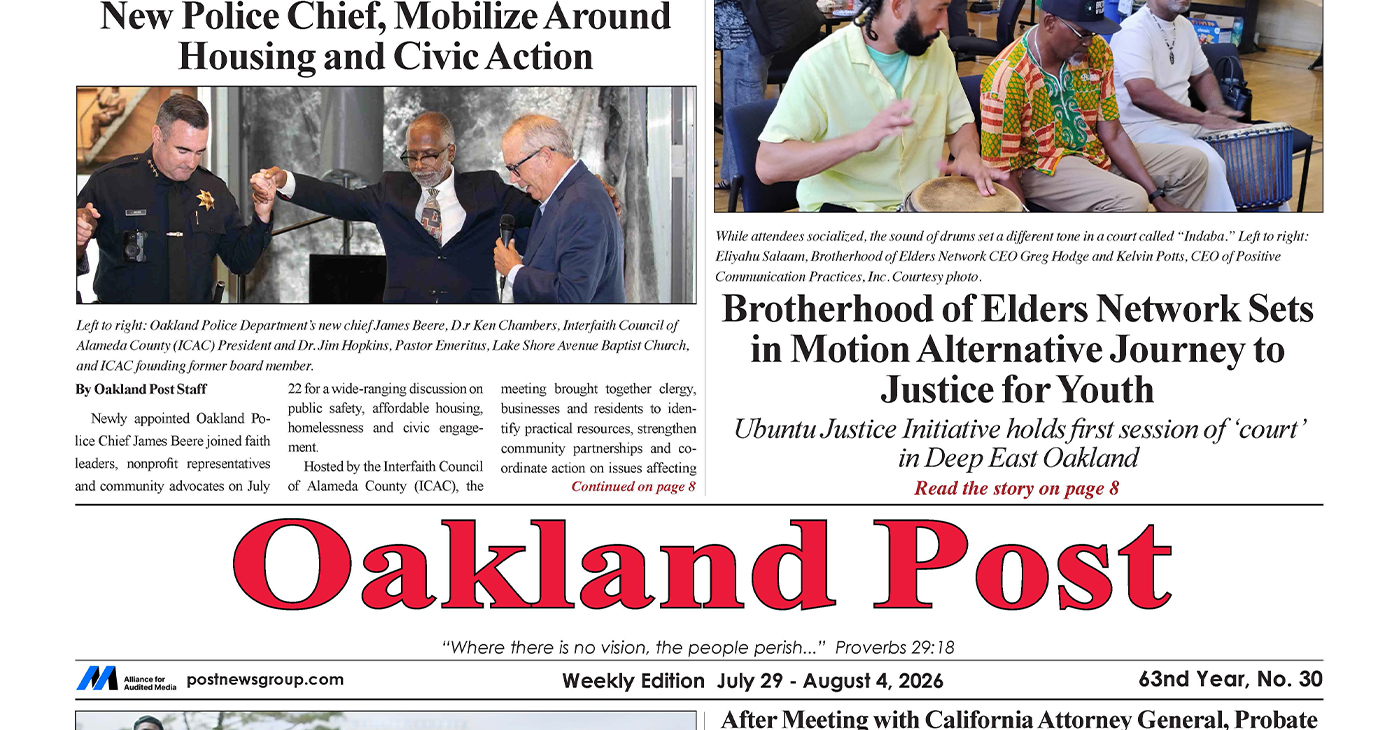
Oakland Post: Week of July 29 – August 4, 2026
The printed Weekly Edition of the Oakland Post: Week of July 29 – August 4, 2026
To enlarge your view of this issue, use the slider, magnifying glass icon or full page icon in the lower right corner of the browser window.
Black History
OP-ED: ‘The Trusted Messenger’ and the Black Vote
BLACKPRESSUSA NEWSWIRE — Now, as we approach one of the most important Midterm elections in the history of this nation, it appears that, once again, the Black Press will be expected to carry the message about voter turnout, while political and campaign dollars go to the White mainstream media.

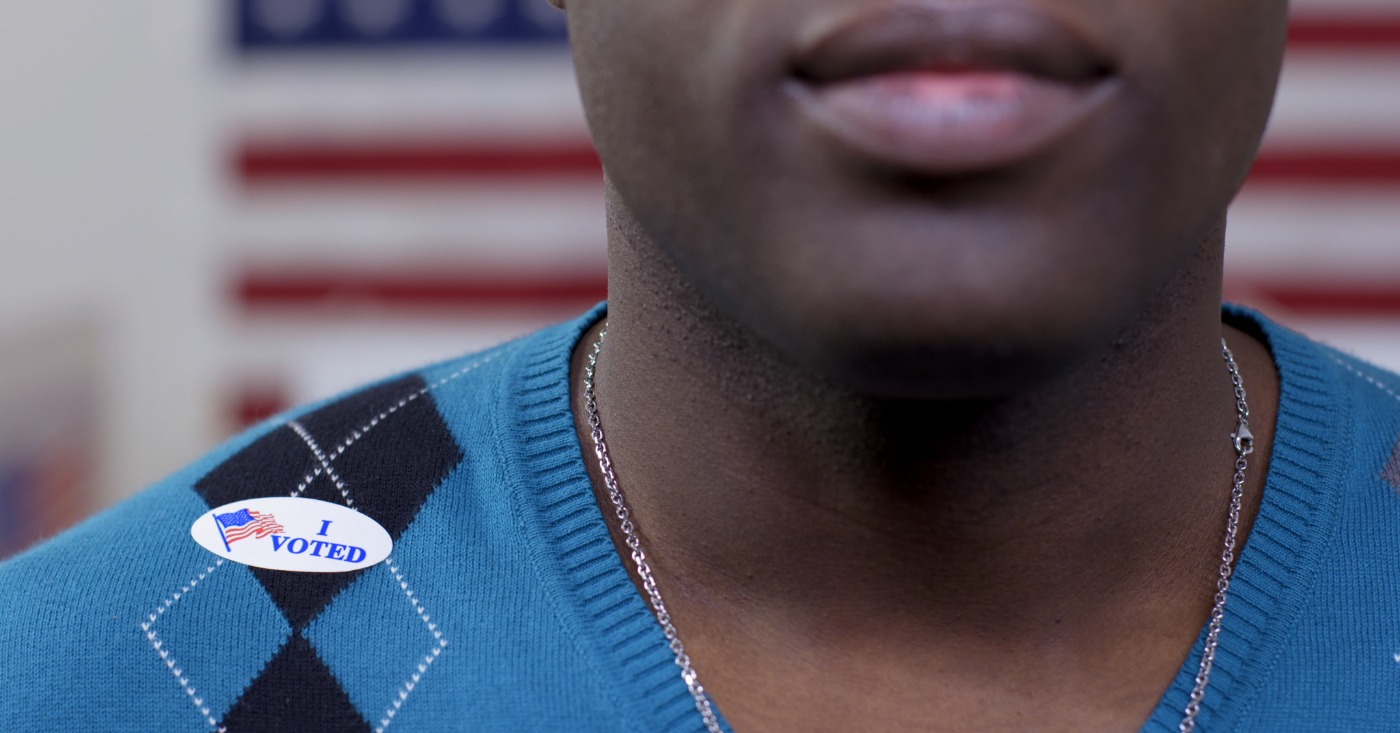
It is a well-established fact that the Black Press is and always has been the “Trusted Messenger” of the Black community. With that being said, it is also very interesting that when many political organizations and donors decided to support Voter Registration and Get Out The Vote, those donors gave their dollars predominantly to Black organizations like the Urban League, the NAACP, the League of Voters, and other nonprofit groups. Those groups will prepare and send out press releases about such voter participation efforts since Black people were responsible primarily for the Voting Rights Act of 1965.
What is most interesting is that those press releases rarely find their way onto CNN or the major news networks. Those press releases and calls to Black voter participation are carried in the Black Press. However, the dollars that support those press releases being written, nor the ads that carry the message of those releases, reach the Black Press. Historically, the dollars behind those messages do not find their way to the very Black Press that carries those messages.
Now, as we approach one of the most important Midterm elections in the history of this nation, it appears that, once again, the Black Press will be expected to carry the message about voter turnout, while political and campaign dollars go to the White mainstream media.
Those who are spending the billions of dollars that will go to Campaign Finance appear to have forgotten that elections are won and lost on a single vote.
Now is the time to remind the candidates, the political Initiatives and Propositions that will appear on the ballots across this nation, that the Black Vote must not be taken for granted. It does not belong to any particular political party or interest group. It can not be judged by whether it exists in a Blue or Red State.
The Democrats, Republicans, Independents, and supporters of Initiatives should not assume that our votes are unimportant.
Elections are won on a single vote.
The United States Supreme Court in Reynolds vs. Sims, 1964. That case established the ‘One Person, One Vote” rule. The rule in that case made it mandatory to base legislative seats on population within districts rather than on geography, and guaranteed Equal Protection coverage under the Fourteenth Amendment to the Constitution.
That principle has not been abolished, and neither should we act as if our one vote does not count. Let us not forget our own values, and we look toward the Midterm elections. The “Trusted Messenger” can make the difference.

Activism
Oakland Post: Week of July 22 – 28, 2026
The printed Weekly Edition of the Oakland Post: Week of July 22 – 28, 2026

To enlarge your view of this issue, use the slider, magnifying glass icon or full page icon in the lower right corner of the browser window.
WORK FROM HOME
Home-based business with potential monthly income of $10K+ per month. A proven training system and website provided to maximize business effectiveness. Perfect job to earn side and primary income. Contact Lynne for more details: Lynne4npusa@gmail.com 800-334-0540


How Oakland’s Courtsmith is Scaling its Business and Local Impact

Oakland Post: Week of July 29 – August 4, 2026

OP-ED: ‘The Trusted Messenger’ and the Black Vote

Oakland Post: Week of July 22 – 28, 2026

Fed Court to Decide Landmark First Amendment Case

Jordan Walker Leads Call for More Black Youth in Baseball

How Black WNBA Players Became Collateral Damage in the Caitlin Clark Culture War

NAACP Announces $20m Voter Registration Drive at National Convention in Chicago

Starting This Summer, California Car Buyers Can Get an Instant $3500 Off the Cost of Electric Vehicles

Surveillance Pricing Fight: State Senate Debates Bill Banning Retailers from Using AI to Set Prices Based on a Buyer’s Profile

Oakland Children’s Hospital Workers and Patients Rally for Pediatric Medical Care

Opinion: When Politicians Start Sanitizing One Chapter of History, They’re Coming After The Whole Book

Beyond Politics: California Legislators Across Party Lines Celebrate Lori Wilson at 50

NPRC to Meet with California Attorney General’s Office on to Urge Guardianship Reform

Mount Zion MBC, Church of Jesus Christ of Latter-day Saints Partner to Bring 29,000 Meals to Alameda County
Oakland Children’s Hospital Workers and Patients Rally for Pediatric Medical Care
Mount Zion MBC, Church of Jesus Christ of Latter-day Saints Partner to Bring 29,000 Meals to Alameda County
Surveillance Pricing Fight: State Senate Debates Bill Banning Retailers from Using AI to Set Prices Based on a Buyer’s Profile
Starting This Summer, California Car Buyers Can Get an Instant $3500 Off the Cost of Electric Vehicles

Gov. Gavin Newsom Signs Law Streamlining Affordable Housing Rules
Fed Court to Decide Landmark First Amendment Case

NPRC Heads to Washington to Elevate Adult Guardianship Reform at National Whistleblower Summit

Saving Black Mothers Starts Outside the Hospital

Oakland Celebrates $125 Million Coliseum Sale

IN MEMORIAM: Oakland Dance Legend Reginald Ray-Savage, 67

Agricultural Engineer Effie Gant Plans Bay Area Farmers Market Initiative
OP-ED: ‘The Trusted Messenger’ and the Black Vote


The Part of Buying a Home That No Real Estate Show Ever Prepares You For
NPRC to Meet with California Attorney General’s Office on to Urge Guardianship Reform

The Conversation With Al McFarlane 6/23/26

Media Monday 6/22/26

LIVE! ASK ALMA! — TUES. 6.23.26 7PM EST

Car Buying Secrets: 4 Hidden Checks Before You Sign!

Is This 550 HP Charger Worth YOUR Money? AutoNetwork Review

Celebrating Juneteenth – Frederick Douglass on education and resistance

LIVE! — ASK ALMA! — TUES. 6.19.26 7PM EST

Hyundai Ioniq 5 Parking, Safety, and 360 View #shorts

2025 Ioniq 5 New Wiper & Powerful Performance! #shorts

Electric SUV Range: Is 259 Miles Enough? #shorts

EV Charging: How Fast Can You Charge an Electric Vehicle? #shorts

Biometric Cooling… Messaging Seats…Come on! 2025 Infiniti QX80 Autograph 4WD

Charged Up: Witness the Magic of a Fully Electric Car! #shorts

Range Rover Sport PHEV Included…: See What’s Inside This Luxury SUV! #shorts

Invisible Hood View: Perfect Parking with X-Ray Vision! #shorts
-
 Business1 week ago
Oakland Children’s Hospital Workers and Patients Rally for Pediatric Medical Care
-
 Business1 week ago
Mount Zion MBC, Church of Jesus Christ of Latter-day Saints Partner to Bring 29,000 Meals to Alameda County
-
 Business1 week ago
Surveillance Pricing Fight: State Senate Debates Bill Banning Retailers from Using AI to Set Prices Based on a Buyer’s Profile
-
 Business1 week ago
Starting This Summer, California Car Buyers Can Get an Instant $3500 Off the Cost of Electric Vehicles
-
 Business1 week ago
Gov. Gavin Newsom Signs Law Streamlining Affordable Housing Rules
-
 Black History7 days ago
Fed Court to Decide Landmark First Amendment Case
-
 Community2 weeks ago
NPRC Heads to Washington to Elevate Adult Guardianship Reform at National Whistleblower Summit
-
 Black History2 weeks ago
Saving Black Mothers Starts Outside the Hospital
