
Transportation
STEM Majors Awarded $25,000 Per Year for College


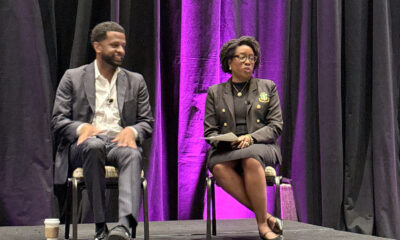
Morgan Grayned, a recipient of the Buick Achievers scholarship from Hampton University (Freddie Allen/NNPA Photo)
By Freddie Allen
NNPA Senior Washington Correspondent
WASHINGTON (NNPA) – When Morgan Grayned opened the envelope from the Buick Achievers’ scholarship program and learned that she would receive $24,000 a year to attend college, she screamed and danced and ran around her house with the letter.
She posted it on Facebook. Her mom called the scholarship a blessing.
Grayned applied for the scholarship less than a week before high school graduation with limited expectations. That was four years ago. Recently, Grayned, 22, graduated magna cum laude with a bachelor’s degree in finance from Hampton University on Mother’s Day, a great gift for her mom, a single parent who had wholeheartedly supported her throughout her entire academic career.
“Coming from a single parent household, I just knew that I needed assistance to [pay] for college,” said Grayned. “I knew that I was going to go regardless, I just wasn’t sure how I was going to pay for it. The biggest thing for me with having the Buick Achievers’ scholarship is the fact that I didn’t have financial stress.”
Grayned joined the Sigma Beta Delta Business Honor Society and Ebony Fire, Hampton’s dance troupe, where she was team captain her senior year.
The Stone Mountain, Ga. native said that traveling with the football team and performing with the band were great experiences and provided a creative outlet while helping her to hone her leadership skills.
Those experiences may not have been possible without the Buick Achievers’ scholarship she received four years ago. The General Motors Foundation started the scholarship program in 2011 in an effort to increase the pipeline of students flowing into careers in science, technology, engineering and mathematics (STEM). A 2013 study on STEM jobs conducted by the Census Bureau reported that Blacks account for just 6 percent of the STEM workforce even though they make up 11 percent of the labor market in the U.S.
Karen Nicklin, the manager of educational initiatives at the GM Foundation said that the group targeted first generation students, veterans and children of veterans, children from diverse backgrounds and students from low-income households in an effort ensure that that a quality education was affordable and accessible to more students. Since the program’s inception, 3400 students have received nearly $28 million in scholarships to attend college.
“Students can receive up $25,000 dollars and the scholarships are renewable for up to five years for some eligible majors,” said Nicklin. “Those eligible majors are all STEM or automotive-related majors.”
Last year, 15 percent of the Buick Achievers scholarship class was Black. Applicants for the scholarship have to enroll full-time at an accredited four-year college or university based in the United States or Puerto Rico for the entire 2015–16 academic year. There are more than 40 majors that are eligible through the program, including computers science, graphic design, finance and chemical engineering. A full list of majors and eligibility requirements is available at www.BuickAchievers.com.
“Awards are renewable for the given years noted above or until a bachelor’s degree is earned, whichever occurs first. Renewal is contingent upon maintaining a cumulative 3.0 grade point average (on a 4.0 scale), full-time enrollment and continuing to major in an eligible field of study,” according to the program’s website.
Grayned credited the program for providing opportunities for Black students to attend historically, Black colleges and universities (HBCUs) continuing a legacy started by their parents or starting a new one in a nurturing and culturally-rich environment unique to Black colleges.
She said that she was able to find a lot of minority scholarships to attend predominately White institutions (PWIs), but resources for an African American student to go to historically Black colleges and universities (HBCUs) were harder to come by.
Grayned also said that HBCUs provided students Black students the opportunity to grow in a nurturing environment and experience campus life unique to Black colleges. Grayned’s mother, who graduated from Spelman College in 1989 with an economics degree, encouraged her to go into an HBCU. Although she was accepted to Spelman, she chose Hampton University instead.
She stumbled across the scholarship days before she finished high school said that she was grateful to have the opportunity to be in the first wave of Buick Achievers to graduate.
Nicklin said that the GM Foundation and the Buick Achievers Scholarship program has worked with the White House Initiative on Historically Black Colleges and Universities and the United Negro College Fund to get the word out about the scholarship program.
Paulette Jackson, the vice president of development at UNCF, said that General Motors was one of the original sponsors for group, supporting a number of events across the nation including an “Evening with the Stars” and also which was once known as “The Lou Rawls Parade of Stars.”
Jackson said that the Buick Achievers Scholarship is a need-based scholarship and students that come to UNCF often have extreme needs. Jackson said that students can find more information about the Buick Achievers scholarship and more than 400 other plans managed by the nonprofit group at www.UNCF.org.
The group also promotes the unique scholarship opportunity through their traveling “Empower Me Tour” that provides high school students with tips for succeeding in college and career readiness exercises for undergraduates.
As the country’s infrastructure ages and the global technology industry continues to evolve, Jackson said that the U.S. needs more people getting into STEM-related fields. The country is going to need more people to getting involved in STEM-related fields.
The Leadership Conference on Civil and Human Rights, a coalition of more than 200 advocacy and outreach groups, reported that that less than 3 percent of Blacks have earned STEM-related degrees by the age of 24.
“The students will have to be able to function, not just in the U.S. but abroad as well,” said Jackson. “Opportunities are going to be massive, but students have to have the education in order to meet those challenges. STEM is going to be a major way that African American students can get viable jobs that are going to be around for a long, long time.”








Business
Port of Oakland, Army Corps Sign Historic Harbor Design Agreement
OAKLAND POST — Oakland Port Commission President Stephanie Dominguez Walton called the agreement a historic milestone that will support thousands of jobs. “Today marks a historic occasion for the Port as we sign the inaugural Design Agreement for the Turning Basin Widening Project, which will keep Oakland competitive,” said Walton.

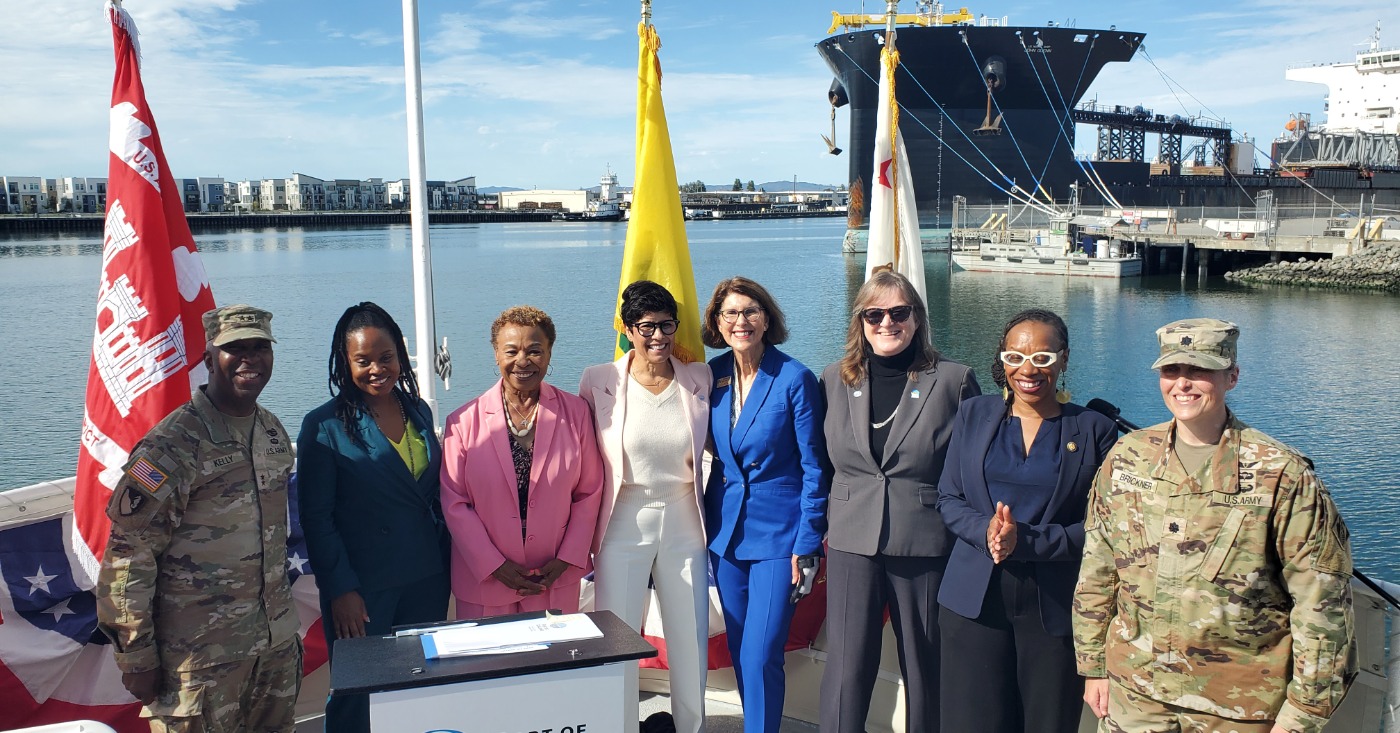
A $642 million project designed to accommodate larger cargo ships and strengthen the Port of Oakland’s position as a major Pacific trade gateway moved a significant step closer to construction on Aug. 27.
The U.S. Army Corps of Engineers (USACE) San Francisco District and the Port of Oakland commemorated the signing of the inaugural Design Agreement for the Oakland Harbor Turning Basins Widening Project during a ceremony aboard the USS Potomac, the presidential yacht once used by President Franklin D. Roosevelt.
The project will widen the Port’s Inner and Outer Harbor turning basins, allowing today’s increasingly larger and longer vessels more space to safely maneuver and turn around. The current basins are narrow, creating delays and operational inefficiencies.
Oakland Port Commission President Stephanie Dominguez Walton called the agreement a historic milestone that will support thousands of jobs.
“Today marks a historic occasion for the Port as we sign the inaugural Design Agreement for the Turning Basin Widening Project, which will keep Oakland competitive,” said Walton.
The agreement advances the project into its preconstruction engineering and design phase following years of planning and collaboration.

Lt. Col. Virginia Brickner, commander of the USACE San Francisco District, said the signing represented tangible progress toward construction.
“We are moving forward. We are showing progress,” Brickner said.
Major General Jason Kelly, USACE Deputy Commanding General for Civil and Emergency Operations, said dredging is critical for maritime dominance, supply chains, and economic competitiveness.
“Dredging sustains our national economic infrastructure,” he said. “The future demands more, the taxpayer deserves more, and together we’re going to deliver.”
For U.S. Representative Congresswoman Lateefah Simon (D-CA-12), the Port project will support jobs beyond its completion. “This will impact workers and businesses, and every shipping container represents multiple jobs.”
Oakland Mayor Barbara Lee described Oakland as a gateway to international markets and spoke on earlier efforts to deepen Oakland’s shipping channel to 50 feet. While serving in the California Legislature, Lee helped bring together labor, business, environmental advocates and Port officials to resolve disputes surrounding dredging and environmental protections.
“We want the Port to remain competitive economically,” Lee said, excited about both protecting the environment and generating sustainable jobs in the region. “We want to make sure that we create good-paying union jobs, and that the Port continues to not just survive, but thrive.”
Port of Oakland Executive Director Kristi McKenney said economic growth is dependent on investments in the Oakland Harbor’s infrastructure.
“This investment and staying competitive will fuel our economy for years to come,” said McKenney.
The Port of Oakland, with its partners, supports more than 98,000 regional jobs and $174 billion in annual economic activity. The Port oversees the Oakland Seaport, the Oakland San Francisco Bay Airport (OAK), and nearly 20 miles of waterfront, including Jack London Square.

Business
Gubernatorial Candidate Steve Hilton Blasts California New Tire Rules; Newsom Hits Back
Newsom defended the regulations Aug. 19, citing the commission’s projected savings for consumers. “I think it was a good choice,” said Newsom. “Save a billion dollars a year in fuel. Talk about an affordability agenda, that makes sense to me.”
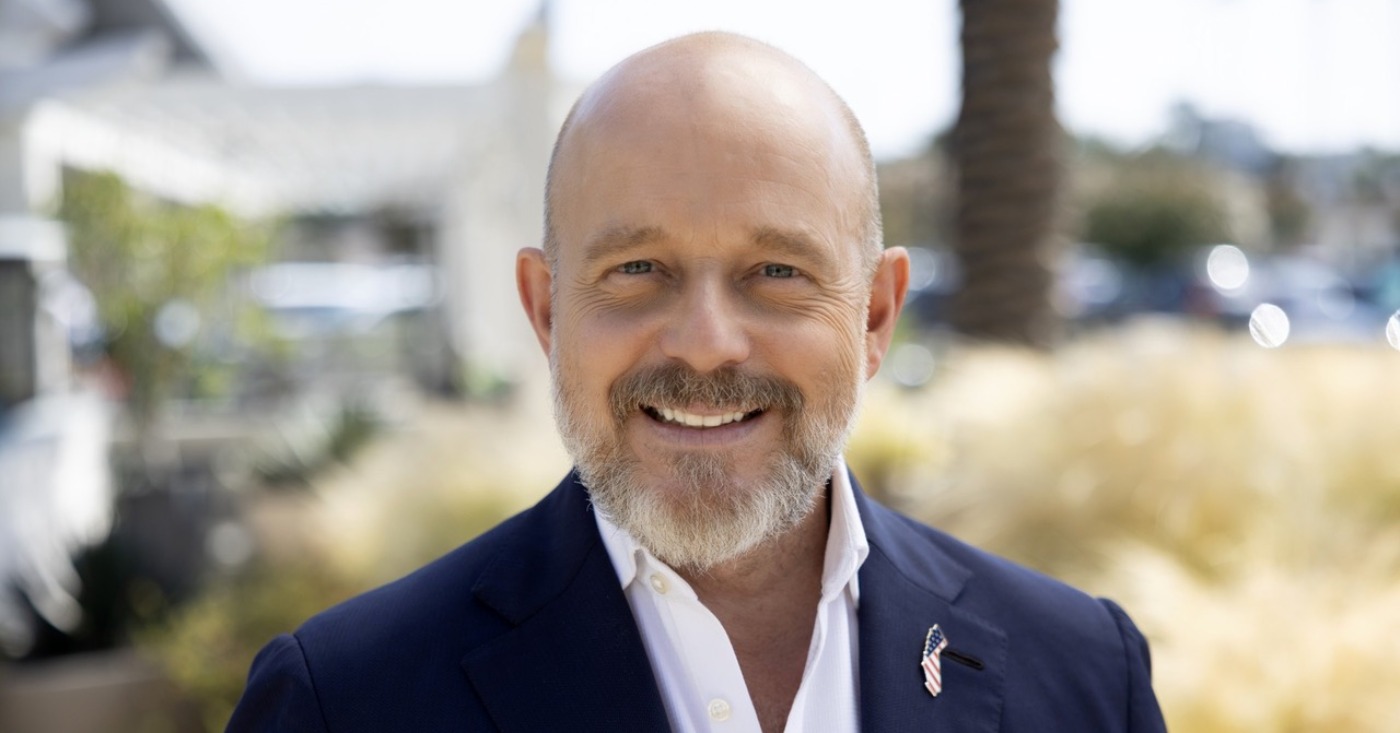
Republican gubernatorial candidate Steve Hilton is criticizing California’s new replacement-tire efficiency standards, arguing they will limit consumer choice and increase costs for drivers.
Gov. Gavin Newsom, however, says the regulations will save consumers money.
Hilton protested the standards Aug. 20 outside the California Energy Commission in Sacramento, where he and supporters chanted, “Hands off our tires.” The commission unanimously approved the regulations Aug. 17, making California the first state to adopt energy-efficiency standards for replacement tires.
“We are done with these bureaucrats and these politicians in our state, making everything so insanely expensive,” Hilton said at the protest.
Hilton said that, if elected governor, he would eliminate or defund the Energy Commission. His opposition to the tire standards is part of his broader criticism of California’s high cost of living.
Newsom defended the regulations Aug. 19, citing the commission’s projected savings for consumers.
“I think it was a good choice,” said Newsom. “Save a billion dollars a year in fuel. Talk about an affordability agenda, that makes sense to me.”

The Replacement Tire Efficiency Program sets limits on rolling resistance, which measures how much energy a tire requires to move along a road. Tires with lower rolling resistance can improve a gasoline-powered vehicle’s fuel economy or extend an electric vehicle’s driving range.
The first phase will take effect in 2029, setting a maximum rolling resistance of 9.1 newtons per kilonewton. A stricter limit of 7.2 newtons per kilonewton will take effect in 2033.
The Energy Commission says the standards will ensure that replacement tires are, on average, at least as energy efficient as those installed on new vehicles. The agency estimates the regulations will save Californians nearly $1 billion annually in gasoline and electricity costs while reducing carbon dioxide emissions by two million metric tons a year.
Some tire manufacturers, however, have raised concerns about the effect on prices and product availability. Goodyear estimates that about 70% of replacement tires currently sold in California would not meet the 2033 standard and argues that the regulations could increase costs for consumers.
The Energy Commission estimates the standards will add about $1.50 to the cost of each tire during the first phase and $6.50 per tire beginning in 2033. The commission projects that a driver with a gasoline-powered vehicle could save about $179 in fuel costs over the life of a set of tires meeting the 2033 standard.
The regulations exempt several specialty products, including competition, winter, used, retreaded, motorcycle and certain off-road tires.
Business
Frontier Airlines’ Return to Oakland Airport Brings Flights, Jobs and Opportunity
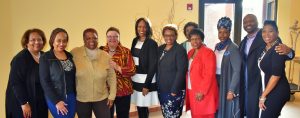
The inaugural celebration brought together elected officials, airport executives and Frontier Airlines leadership. Participants included U.S. Representative Lateefah Simon (D-CA-12), Oakland Mayor Barbara Lee, Port of Oakland Board President Stephanie Dominguez Walton, Port of Oakland Executive Director Kristi McKenney and Frontier Airlines Vice President of Public and Consumer Affairs Tyri Squyres.
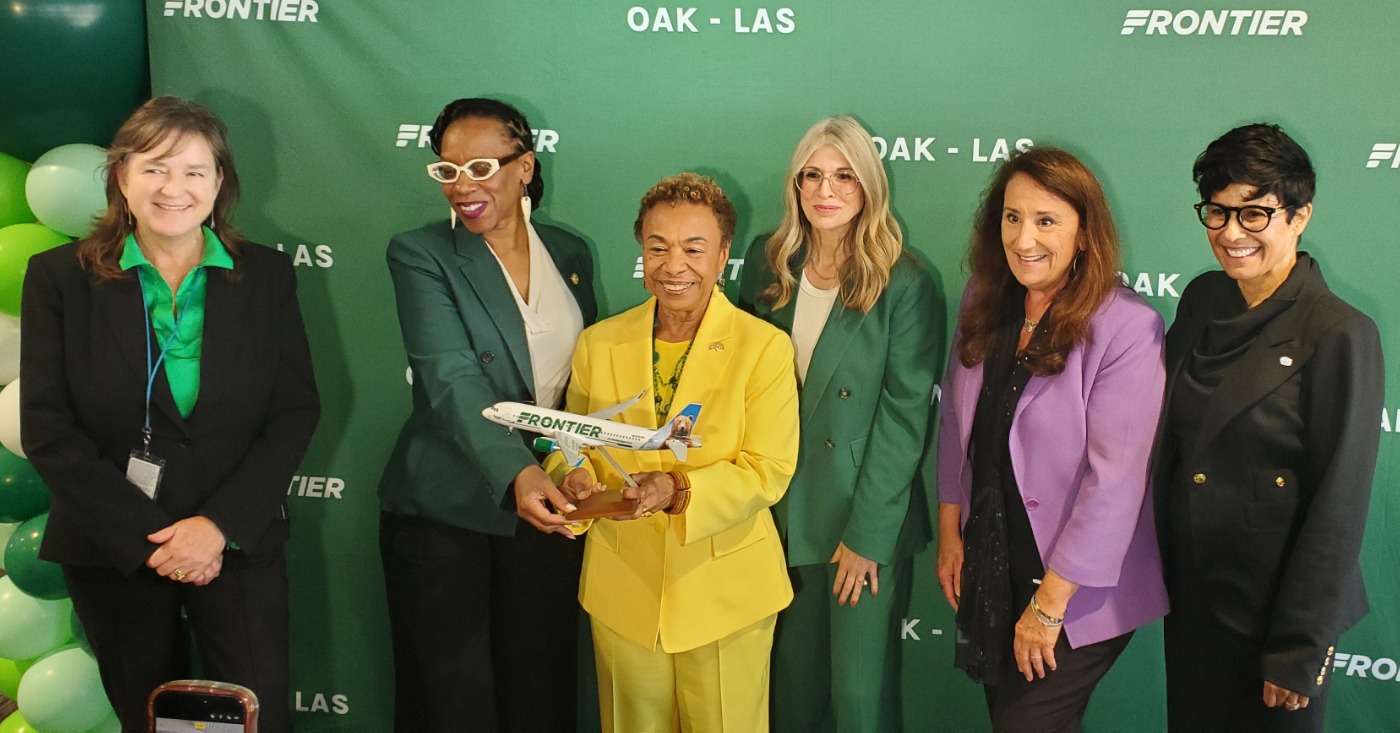
Oakland San Francisco Bay Airport welcomed Frontier Airlines back on Aug. 20, with a ribbon-cutting celebration marking the launch of new nonstop service between Oakland and Las Vegas.
The celebration, held in Terminal 1, highlighted Frontier’s return to the East Bay airport after last serving OAK in 2023.
The airline’s new Las Vegas service expands travel choices for Bay Area passengers headed to one of the airport’s most popular destinations.
The new route is scheduled to operate 11 times weekly, including daily service, strengthening connections between Oakland and Las Vegas for both leisure and business travelers.
The inaugural celebration brought together elected officials, airport executives and Frontier Airlines leadership. Participants included U.S. Representative Lateefah Simon (D-CA-12), Oakland Mayor Barbara Lee, Port of Oakland Board President Stephanie Dominguez Walton, Port of Oakland Executive Director Kristi McKenney and Frontier Airlines Vice President of Public and Consumer Affairs Tyri Squyres.
“We’re excited to restart our service in Oakland,” said Squyres. “The early reaction and response have been great.”
“I’m so glad to have Frontier back,” said McKenney. “I appreciate the partnership we have. We work on it every day with our airlines, community, and our leadership. As your public agency, that’s what we’re here for; to create jobs and opportunities for our community.”
Dominguez Walton also chimed in.
“Today we are celebrating the inaugural flight from OAK to Las Vegas on Frontier Airlines. Oakland is the best way to and from the Bay,” she said.
Squyres highlighted the economic impact.
“Oakland is a critical gateway for the Bay Area moving nearly 10 million travelers each year. OAK is driving local and regional growth keeping the City of Oakland moving forward, moving ahead and also competitive,” she said. “Expanding travel opportunities means not only more options for residents but also opening more high-quality jobs. And when travelers arrive through OAK, they directly support our neighborhoods, businesses, hotels, restaurants, and our cultural attractions.”
Simon broke down what the airline’s reopening means to Oaklanders.
“It’s the grandmother heading to the family reunion at a price she can afford. It’s the small business owner who gets to go to the industry tradeshow and be back by dinner. And it’s the family being able to come from Nevada to get excellent cancer care at our Children’s Hospital at a price they can afford,” she said.
Oakland San Francisco Bay Airport serves as the primary airport for much of the East Bay and provides connections to the region through highways and BART. Operated by the Port of Oakland, the airport is part of a broader transportation and economic network that also includes the Oakland seaport and approximately 20 miles of East Bay waterfront.
According to the Port of Oakland, its operations and business partners support nearly 100,000 regional jobs and generates nearly $175 billion in economic impact.
Simon also emphasized the flights’ potential to create well-paying jobs in the local community.
“More flights means more work for real people in the community, in East Oakland. We know aviation work is steady, and it pays well. It’s work that brings in good labor jobs and prevailing wages.”



Asm. Corey Jackson Announces Launch of 24-Hour Childcare in His District

IN MEMORIAM: The Rev. Leon “Sonny” Clark, Longtime Orange County Pastor and Community Leader, Dies at 72

Poll: Becerra Widens His Lead Over Hilton; Californians Split on Wealth Tax

From Historic Memories to New Possibilities: Oakland Celebrates Coliseum 60

County Office of Education Says OUSD Finances Are Getting Healthier, Materially Stronger

LIVE FREE Sunday Dinner Brings Faith, Fellowship and Civic Conversation to Oakland

Remembering Chauncey Bailey as Student Journalists Face Threats to Truth-Telling

BLACspace Cooperative Invites Bay Area to Experience Oakland’s Black Cultural Ecosystem Through a BLAC Map Tour + Party

In Wake of Death on Doorstep, Williams Chapel Baptist Church Calls for Better Care, Funding for Unhoused

Oakland Centenarian Nuna McKee Honored!

Caribbean Nations Produce Action Plan Calling for UK Reparations Over Slavery

Oakland Post: Week of September 23 – 29, 2026

Doulas Are Helping Black California Moms Navigate Pregnancy–Even as High Mortality Rates Persist

Newsom Signs Addictive Social Media Law to Protect Kids

On Your November Ballot: Prop 38 Would Allocate $8.4 Billion to Immunology and Immunotherapy Funding

Standoff for Justice: Our Homes Are Worth Fighting For

Oakland Post: Week of August 26 – September 1, 2026

Frontier Airlines’ Return to Oakland Airport Brings Flights, Jobs and Opportunity

Gubernatorial Candidate Steve Hilton Blasts California New Tire Rules; Newsom Hits Back

Chef Sharon Lee Blends Culinary Excellence, Education and Empowerment

Jackie Wright Champions Bay Area Stories, Filmmakers and Cultural Institutions

Big City Mayors Ask for “Yes” Vote on Housing Bond Measure; Conservatives Say “No”

Oakland Coliseum Project Opens Door for Small Businesses to Build Bigger

Gov. Newsom’s Latest Appointees Include Sacramento Advocate for Formerly Incarcerated Students; State’s New Tech Chief

Misnamed ‘Parent’ PAC Seeks to Influence Oakland School Board Elections

Longtime BWOPA Member Brendalyn Goodall Appointed to California Workforce Development Board

Gov. Newsom Signs Law Shielding Immigration Aid Workers From Doxing Threats

Secretary of State Shirley N. Weber Urges Californians to Vote Early as Voter ID Battle Intensifies

From Palestine to Oakland: Seeds for Liberation Examines Shared Struggles for Freedom

IN MEMORIAM: Dolly Parton Dead at 80 — How She Built a Legacy of Love and Earned Her Place in Black Culture

The Conversation With Al McFarlane 6/23/26

Media Monday 6/22/26

LIVE! ASK ALMA! — TUES. 6.23.26 7PM EST

Car Buying Secrets: 4 Hidden Checks Before You Sign!

Is This 550 HP Charger Worth YOUR Money? AutoNetwork Review

Celebrating Juneteenth – Frederick Douglass on education and resistance

LIVE! — ASK ALMA! — TUES. 6.19.26 7PM EST

Hyundai Ioniq 5 Parking, Safety, and 360 View #shorts

2025 Ioniq 5 New Wiper & Powerful Performance! #shorts

Electric SUV Range: Is 259 Miles Enough? #shorts

EV Charging: How Fast Can You Charge an Electric Vehicle? #shorts

Biometric Cooling… Messaging Seats…Come on! 2025 Infiniti QX80 Autograph 4WD

Charged Up: Witness the Magic of a Fully Electric Car! #shorts

Range Rover Sport PHEV Included…: See What’s Inside This Luxury SUV! #shorts

Invisible Hood View: Perfect Parking with X-Ray Vision! #shorts
-
 Community3 weeks ago
Misnamed ‘Parent’ PAC Seeks to Influence Oakland School Board Elections
-

 Activism4 weeks ago
Oakland Post: Week of September 2 – 8, 2026
-

 Community3 weeks ago
Richmond Tiny House Village Farm & Garden Set to Open Gates on Sept. 26
-

 Activism3 weeks ago
Oakland Post: Week of September 9 – 15, 2026
-

 Black History3 weeks ago
Latest Massacre in Haiti Reveals Cruelty U.S. Deportations
-

 Black History3 weeks ago
OPINION: Nolan Wells’ Death One of Several Signifying Racial Terror Lives on in U.S. South
-

 Community3 weeks ago
Democratic Clubs Interview Candidates for Oakland School Board
-

 Business2 weeks ago
Mayor Lee Announces $1 Million Kaiser Permanente Grant for Pilot Program to Address Homelessness, Clean Up Public Spaces throughout Oakland
