
Activism
State Education Chief Thurmond Weighs Successes, Setbacks
Regarding commentary about his public visibility during the COVID-19 crisis, Tony Thurmond, State Superintendent of Public Instruction (SSPI)’s view is, “The way this job works, there’s a piece of it that people will never see. But I’d like to think that we have been the glue between school leaders, legislators, and the governor. In my role, we’ve had to be that glue between those entities, and that interplays on how decision-making happens.”


By Joe W. Bowers Jr. | California Black Media
When Tony Thurmond, State Superintendent of Public Instruction (SSPI) was elected in 2018, he became the second African American in the office since the 1849 California Constitution established it. Wilson Riles was California’s and the nation’s first Black SSPI. In 1970, he also was the first African American voted to hold any statewide office in California.
Recently, Thurmond spoke to California Black Media (CBM) about his experience as the state’s highest elected Education official. He says the COVID-19 pandemic has been the defining challenge of his tenure.
It affected everything — from requiring him to suddenly draft a revised strategy for supporting schools to keeping students and staff safe. He did this while taking steps to improve the overall quality of public education.
“March 13, 2020. March 13, I’ll never forget it,” Thurmond told CBM. He was in his office when he started to receive calls “asking ‘what are we going to do?’ as school districts announced that they were closing to mitigate the spread of the virus.
Responding to the COVID-19 pandemic forced Thurmond to delay action on the initiatives he identified as priorities when he entered office.
Opening schools safely and dealing with the specific systemic inequities, particularly experienced by students of color, had to be tackled first.
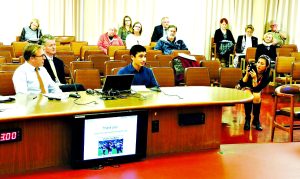
The California Department of Education’s (CDE) action plan included securing 2 million masks for schools and working with the governor’s office to obtain five million rapid COVID tests.
While schools were closed, the state’s education department supplied over 500 million meals to students and families. When vaccinations became available, CDE developed a campaign that encouraged staff and students to get vaccinated.
While it was up to each school district to decide how it would deal with the COVID-19 crisis, Thurmond hosted weekly meetings with all county superintendents to talk through plans for reopening schools safely.
As distance learning became necessary, inequities in access to technology were exposed. One-fifth of California students lacked the resources to continue their education from home, either due to no internet connectivity or not owning a computer at home — or both.
To find a solution to the problem, Thurmond assembled a committee he named “Closing the Digital Divide Task Force.”
“We put legislators on that committee by design. We knew that in order to get the attention of the internet providers, they need to see legislators,” Thurmond said.
As a result, the state was able to provide computers and hotspots, enhancing internet connectivity to over 400 school districts across nearly all of California’s 58 counties. According to Thurmond, “There is about $6 billion for building out broadband in this year’s state budget. The task force helped to lay the foundation for that.”
Thurmond points out that state law grants the SSPI limited authority over California’s public education policies, funding and infrastructure. But despite his restricted power, Thurmond views the SSPI role as much more than being a figurehead. As one of only eight statewide elected officials, voters have given him a prominent bully pulpit from which he can influence education policy.
“They said the office doesn’t have a lot of tools to get things done directly, but I felt very confident using my relationships with the Legislature and the governor that I could find a way to put a spotlight on big problems and find ways to influence them even though it would have to happen in an indirect way,” Thurmond said.
The governor and the Legislature determine state funding for education and set policy direction. The State Board of Education determines academic standards, curriculum, instructional materials, assessments, and accountability.
The SSPI has no legal authority over the 1,000 local school districts in the state. Each of the state’s 58 county offices of education — not the SSPI — approve school districts’ budgets and provide assistance and instruction on how they can improve their educational programs.
Thurmond’s main job is to run the day-to-day operations of the CDE, which has about 2,600 employees and enforces California’s education laws and regulations. It also administers federal and state education programs and oversees federal education grant compliance.
In addition, it performs certain administrative tasks, such as collecting and compiling statewide data on district spending and student performance.
In 2018, Thurmond decided to not to seek another Assembly term and run to be SSPI instead. That way, he could work full time on education issues. At the time, he was a two-term Assemblymember representing the 51st Assembly District in the Bay Area.
A popular politician among his constituents, Thurmond received 90% of the vote during his last Assembly election.
For Thurmond, education is the great equalizer. He says it allows children to overcome challenging circumstances and it provides paths to opportunities for all of California’s kids. He started his term as SSPI by proposing an ambitious eight-year plan to significantly boost school funding and expand early childhood education.
Beginning with his first month in office, Thurmond formed 13 transition teams with over 1,000 people. Those teams focused on his top priority: closing racial and economic achievement and opportunity gaps in a state where African American and Latino kids score below statewide standards on achievement tests.
Town halls and webinars focused on Black and Brown student achievement became the genesis for his initiative supporting funding to diversify the teacher workforce.
Now that school districts have adopted the safety protocols like masking, vaccinations, and testing necessary to stay open for in-person learning, Thurmond says he has again turned his attention to pursuing pre-pandemic initiatives.
In September, he launched a literacy goal to make sure all third-graders are able to read by 2026. He also appointed the Task Force to Improve Black Student Achievement.
Thurmond told CBM, “I feel like I’m in a place now where, like Maxine Waters says, ‘I’m reclaiming my time.’ I came to the department thinking I’d have eight years to work on third-grade literacy, and that got undercut because of the pandemic.”
Funding from the state and federal government for California’s public education is at a historic high. As a result, money is available for initiatives advocated by Thurmond like universal Pre-K and universal meals, community schools, family engagement and mental health services for students.
At his inauguration, Thurmond told the audience, “This job is the type of job where you get all the blame for what goes wrong, but you don’t have the resources to fix what needs to be fixed.”
Although at the time Thurmond was speaking generally, his observation could apply to recent criticisms leveled at him in the media about the high turnover of his senior staff.
Thurmond thinks that CDE is underfunded and insufficiently staffed to be able to handle its bureaucratic responsibilities and support the initiatives that he sees as public education priorities. He says, “I’ve taken some time to think about how to structure the organization and how to restructure it.”
Regarding commentary about his public visibility during the COVID-19 crisis, Thurmond’s view is, “The way this job works, there’s a piece of it that people will never see. But I’d like to think that we have been the glue between school leaders, legislators, and the governor. In my role, we’ve had to be that glue between those entities, and that interplays on how decision-making happens.”
Thurmond does not have a button he can push to make something happen in California public schools. But he does have a microphone to broadcast where problems are and the good news is because he has the relationships he is in a position to influence education policy for the benefit of California’s public education students.











Activism
Oakland Post: Week of March 18 – 24, 2026
The printed Weekly Edition of the Oakland Post: Week of March 18 – 24, 2026

To enlarge your view of this issue, use the slider, magnifying glass icon or full page icon in the lower right corner of the browser window.
Activism
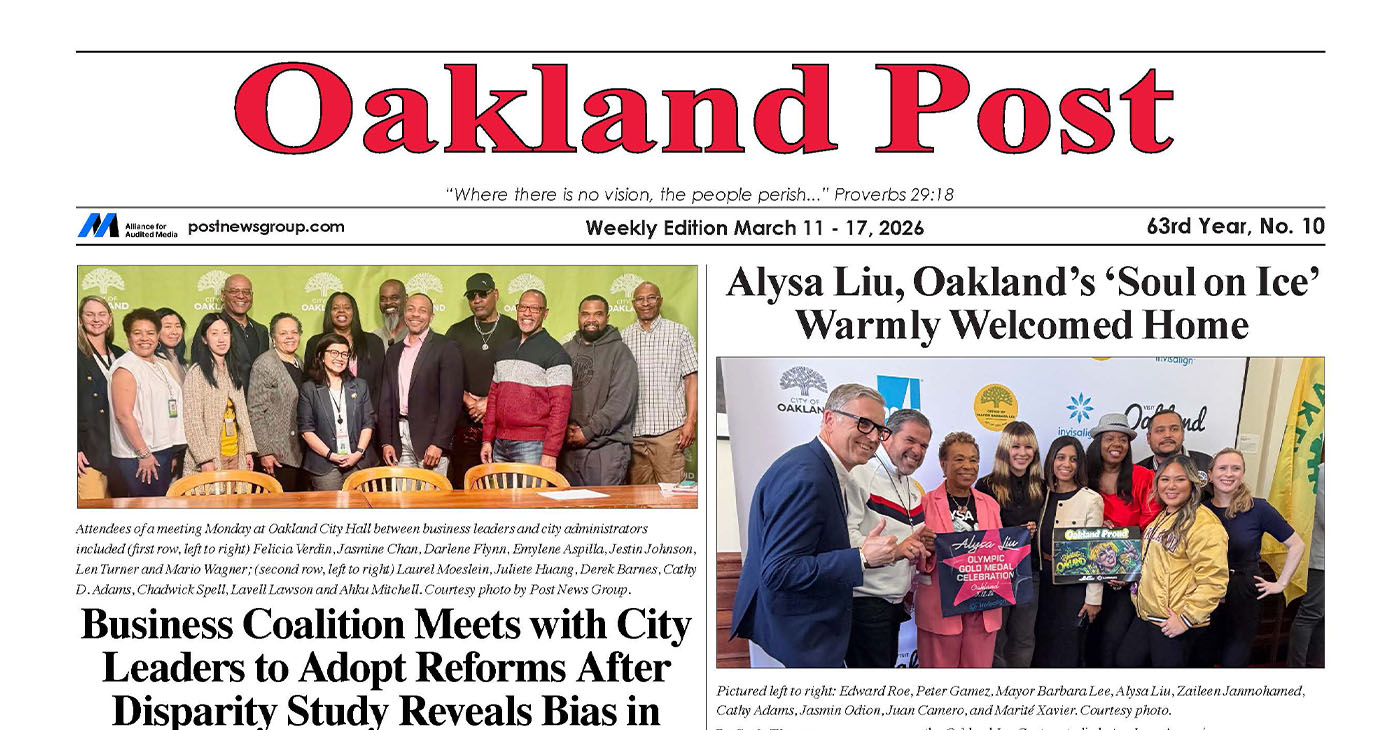
Oakland Post: Week of March 11 -17, 2026
The printed Weekly Edition of the Oakland Post: Week of March 11 – 17, 2026
To enlarge your view of this issue, use the slider, magnifying glass icon or full page icon in the lower right corner of the browser window.
Activism
Oakland Post: Week of March 4 – 10, 2026
The printed Weekly Edition of the Oakland Post: Week of March 4 – 10, 2026

To enlarge your view of this issue, use the slider, magnifying glass icon or full page icon in the lower right corner of the browser window.

WORK FROM HOME
Home-based business with potential monthly income of $10K+ per month. A proven training system and website provided to maximize business effectiveness. Perfect job to earn side and primary income. Contact Lynne for more details: Lynne4npusa@gmail.com 800-334-0540


Black Artists in America, Installation Three Wraps at the Dixon Gallery and Gardens

Grief, Advocacy, and Education: A Counselor Reflects on Black Maternal Health

Future of Florida’s Black History Museum in Limbo

New Research Shows the Many Benefits of Early Learning

South Hampton K-8 Students Among Top 10 Finalists for Samsung’s ‘Solve for Tomorrow’ Competition

Cuba: No Negotiation with US on the President or Political System

Brooklyn Academy of Music Names Jamaican-Born Tamara McCaw as President

Trinidad & Tobego – U.S. Launches WhatsApp Channel for American Citizens in the Country

Oakland Post: Week of March 18 – 24, 2026

AI Innovation vs. Ethics and Environmental Impact

AI, Web3, and Digital Reparations

What If You Owned Your AI Agent?

Season 7, Episode 3 – January Reporter’s Roundtable 📱

Season 7, Episode 3 – January Reporter’s Roundtable

AI, Media, and Power | Part 2, Real-World Impacts and Tradeoffs

Oakland Post: Week of February 11 – 17, 2026

Reflecting on Black History Milestones in Birmingham AL

CITY OF SAN LEANDRO STATE OF CALIFORNIA PUBLIC WORKS DEPARTMENT ENGINEERING DIVISION NOTICE TO BIDDERS FOR ANNUAL STREET OVERLAY/REHABILITATION 2019-21 – PHASE III

Oakland Post: Week of February 18 – 24, 2026

PRESS ROOM: NBA Hall of Fame Nominee Terry Cummings Joins 100 Black Men of DeKalb County to Launch Victory & Values Initiative

Oakland Post: Week of February 25 – March 3, 2026

Trump’s MAGA Allies are Creating Executive Order Plan to Steal the 2026 Midterms

U.S. manufacturing rebounds – how foundry services are adapting to rising demand

OP-ED: One Hundred Years of Black Workers Telling the Truth

Chase Oakland Community Center Hosts Alley-Oop Accelerator Building Community and Opportunity for Bay Area Entrepreneurs

Poll Shows Support for Policies That Help Families Afford Child Care

Advancements in solar technology that are changing the way we power the world

Oakland Post: Week of March 4 – 10, 2026

PRESS ROOM: Civil Rights TV Launches in Selma as the World’s First 24/7 Civil Rights Television Network

Woman’s Search for Family’s Roots Leads to Ancestor John T. Ward – A Successful Entrepreneur and Conductor on the Underground Railroad

Hyundai Ioniq 5 Parking, Safety, and 360 View #shorts

2025 Ioniq 5 New Wiper & Powerful Performance! #shorts

Electric SUV Range: Is 259 Miles Enough? #shorts

EV Charging: How Fast Can You Charge an Electric Vehicle? #shorts

Biometric Cooling… Messaging Seats…Come on! 2025 Infiniti QX80 Autograph 4WD

Charged Up: Witness the Magic of a Fully Electric Car! #shorts

Range Rover Sport PHEV Included…: See What’s Inside This Luxury SUV! #shorts

Invisible Hood View: Perfect Parking with X-Ray Vision! #shorts

AI Is Reshaping Black Healthcare: Promise, Peril, and the Push for Improved Results in California

ESSAY: Technology and Medicine, a Primary Care Point of View

Sanctuary Cities

The RESISTANCE – FREEDOM NOW

STATE OF THE PEOPLE: Freddie

ECONOMIC BOYCOTT DAY!!!!!

I told You So

-
 Activism4 weeks ago
Oakland Post: Week of March 4 – 10, 2026
-
 #NNPA BlackPress3 weeks ago
Woman’s Search for Family’s Roots Leads to Ancestor John T. Ward – A Successful Entrepreneur and Conductor on the Underground Railroad
-

 #NNPA BlackPress4 weeks ago
OP-ED: NNPA Launches 2026 “Leadership Matters” Video Series
-

 #NNPA BlackPress3 weeks ago
Advocates Raise Alarm Over ICE Operation, MOU and Detention Risks in Baltimore County
-

 #NNPA BlackPress3 weeks ago
COMMENTARY: Women of Color Shape Our Past and Future
-

 #NNPA BlackPress3 weeks ago
Pete Buttigieg to Join Mayor Randall Woodfin for Community Town Hall in Birmingham
-

 Activism2 weeks ago
Oakland Post: Week of March 11 -17, 2026
-

 #NNPA BlackPress4 weeks ago
PRESS ROOM: PMG and Cranbrook Horizons-Upward Bound Launch Journey Fellowship Cohort 2
