
#NNPA BlackPress
Spoken Word Artists Use Words For Change
NEW ORLEANS DATA NEWS WEEKLY — The artist showcase organized by the International Arts Foundation of New Orleans with the Center for African and African American Studies at Southern University at New Orleans took place on Friday, Oct. 4, 2019, at the Arts, Humanities and Social Sciences Auditorium on the campus.

By Lacee Ancar
The artists needed no introduction.
“I wear an exclamation point as my name,” proclaimed Poet Asali DeVan Ecclesiastes, one of the featured performers at “A Night of Spoken Word.”
The artist showcase organized by the International Arts Foundation of New Orleans with the Center for African and African American Studies at Southern University at New Orleans took place on Friday, Oct. 4, 2019, at the Arts, Humanities and Social Sciences Auditorium on the campus.
“This is our first time hosting this event, but we’ve been hosting affairs and programs for quite some time,” said Dr. Clyde Robertson, an Associate Professor of Humanities at SUNO who organized the event. Robertson said the event was part of a series of activities offered by SUNO to engage the community on educational, civic, cultural, and social action. The university will offer upcoming programs in a year-long series featuring keynote speakers from across the African Diaspora. Future events include a celebration of Nigerian Independence, and a Multi-Disciplinary Art Exhibition this month and in November.Nigerian poet Wana “WanaWana” Udobang performs at “A Night of Spoken Word” on Oct. 4, 2019.
The spoken word event celebrated the African Diaspora through poetry and featured spoken word and poetry artists. Jamaican Poet Allan “Mutabaruka” Hope and Nigerian Poet Wana “WanaWana” Udobang, joined New Orleans poets: Chuck Perkins, Asali DeVan Ecclesiastes, and Michael “Quess?” Moore. The works of the spoken word artists reflect activist poetry that speaks to the struggles and experiences of people of African descent. They also aim to uplift and empower Black people and connect them to their heritage and dignity.

Moore, who is better known for his stage name, “Quess?” he is a poet and educator from Brooklyn, N.Y., but since moving to New Orleans has been at the forefront of social activism. He is a co-founder of Team SNO, which stands for Slam New Orleans, the first New Orleans Slam Team since Hurricane Katrina. He said he fell in love with the craft of writing at the age of six and was introduced to spoken word at age 10. He said he draws inspiration mostly from everyday injustices that Black people face.
“I was introduced to poetry by way of activism,” Moore said. He tackles this topic from the point of view of a Black man in America, and he said he’s lived experiences naturally provides him with lots to write about.
“I can’t imagine not reacting to injustice through poetry,” Moore said.
Moore said he was inspired by the early nineties Hip Hop influences like the Rap Duo A Tribe Called Quest, which inspired his name. As a young writer, Moore was completely sure of how he wanted to identify himself. So, he merged the word “guess” and “quest” to form “Quess?” because he wasn’t sure where his journey would lead him.
Like Moore, Asali DeVan Ecclesiastes uses spoken word as a form of activism. The New Orleans native who is a poet and educator has been performing since 1997. She has taught the spoken word, social justice, and service-learning at Tulane University. Her pieces are inspired by injustices but from the point of view of Black women. She was a featured on TEDx Women in 2012, for an installment of TED Talks, performing a piece titled, “The Rising,” where she talks about the “innate danger of womanhood.” A second piece called “Chasms” was featured by TED talk in 2018 where she offers uplifting narrative through her poetry. Ecclesiastes said she also likes to write pieces that celebrate the essence of African people.
The power of words to call for action inspired those who attended to use their voices to educate others about their experiences or to uplift a community. Ed’Dijah Bridges, a local singer-songwriter attended the event and is pursuing a major in mathematics at SUNO. Bridges said she related to spoken word the same way she relates to writing and performing music. “It’s the way that you feel about the words you’re singing,” she said of the power of the spoken word.
This article originally appeared in New Orleans Data News Weekly.







#NNPA BlackPress
Study: Waiting Lists for Child Care Assistance Nearly Doubled
BLACKPRESS USA NEWSWIRE — “Since the expiration of tens of billions of dollars in federal child care funding in 2023 and 2024, an already fragile child care system has been pushed even closer to the brink.”
The post Study: Waiting Lists for Child Care Assistance Nearly Doubled appeared first on BlackPressUSA.

By National Women’s Law Center
The National Women’s Law Center released its annual State Child Care Assistance Policies report, finding that the number of children placed on waiting lists for federally funded child care assistance nearly doubled between 2024 and 2025 — and that number has only continued to grow.
The report serves as a key resource for state lawmakers, advocates, and policymakers by tracking state child care assistance policies and identifying where states are strengthening support for families and early educators — or falling behind.
“This deeply troubling increase in the number of children on child care waiting lists is the result of a failure to invest in this crucial sector,” said Karen Schulman, senior director of state child care policy and author of the report. “Since the expiration of tens of billions of dollars in federal child care funding in 2023 and 2024, an already fragile child care system has been pushed even closer to the brink.”
Key findings in the report related to waiting lists for child care assistance include:
• 17 states had waiting lists or a freeze on intake for child care assistance in February 2025, up from 13 states in February 2024.
• Approximately 106,700 children nationwide were added to waiting lists between February 2024 and February 2025, bringing the total to 225,500 children in February 2025 — a 90 percent increase compared to February 2024.
• The numbers climbed even further between February 2025 and summer/fall 2025, with more than 175,000 additional children added to state waiting lists in just a few months — a 78 percent increase.
• At least seven states newly began placing families on waiting lists or freezing intake, while at least 10 additional states saw their waiting lists grow, after February 2025.
The report also includes state-by-state data on key child care assistance policies, including income eligibility limits, parent copayments, provider payment rates, and eligibility policies for parents searching for work.
Click the link to learn more: Warning Signs: State Child Care Assistance Policies 2025.
The post Study: Waiting Lists for Child Care Assistance Nearly Doubled appeared first on BlackPressUSA.
#NNPA BlackPress
Venus Williams Calls a Sabalenka Exit a Tragedy
ROLLING OUT — Crucially, Williams did not read the comment as a real farewell. She said she did not believe Sabalenka truly wanted to leave, calling such an outcome a loss for both the player and the sport.
The post Venus Williams Calls a Sabalenka Exit a Tragedy appeared first on BlackPressUSA.

The seven-time major champion read frustration, not a real goodbye, in the world No. 1’s words
By David Kesiena | Rolling Out
When the world’s top-ranked player said she wanted to walk away from the sport, Venus Williams chose empathy over alarm.
Aryna Sabalenka’s blunt remark after her French Open quarterfinal collapse rattled plenty of fans, but Williams heard something different in it. The seven-time Grand Slam champion treated the comment as the raw reaction of a hurting athlete rather than a serious signal about her future.
The collapse that triggered the comment
Sabalenka looked headed for a routine win over Diana Shnaider. She took the opening set 6-3 and built a commanding lead in the second, climbing to 4-1 and later serving for the match at 5-4 while sitting just two points from victory.
Then everything unraveled. Shnaider stormed back to steal the second set 7-5 and bageled the world No. 1 in the third, with Sabalenka dropping 12 of the final 13 games in gusty conditions that reached around 26 mph. The 3-6, 7-5, 6-0 result sent Shnaider into her first Grand Slam semifinal and extended Sabalenka’s long wait for a maiden Roland Garros title.

In the aftermath, Sabalenka did not soften her feelings. She told reporters she had no thoughts and no emotions left and felt like quitting on the spot. She described being stuck in a deep, dark mental hole during the match, unable to find her way back.
What Venus Williams said about Sabalenka
Williams reacted with understanding. She admitted the moment made her sad and said she had been swept up in Sabalenka’s emotions, feeling a surge of empathy for her. She praised the Belarusian for laying everything bare on court, where every feeling shows.
Crucially, Williams did not read the comment as a real farewell. She said she did not believe Sabalenka truly wanted to leave, calling such an outcome a loss for both the player and the sport. Rather than scold her, Williams offered a gentle observation about the rhythm of professional tennis. She suggested players might benefit from a little more time to gather themselves before stepping in front of the cameras, a quiet acknowledgment that athletes are routinely asked to dissect painful defeats before the sting has faded.
Sabalenka walks it back
The story did not end on that bleak note. Within days, Sabalenka signaled she was not actually quitting, framing the press-conference outburst as heat-of-the-moment honesty rather than a plan. At the time of the loss she had also left the door open, saying she would see how she felt in a few days and hoped to get back on track mentally. The walk-back lined up with how Williams had read the situation from the start.
It is not the first time a Paris quarterfinal has pushed Sabalenka to her limit. In 2024 she exited at the same stage and skipped her press conference entirely because of illness, with the tour later releasing her quotes on her behalf. The pattern underscores how heavily this particular tournament has weighed on her despite deep runs in recent years.
For now, attention shifts to the grass. Wimbledon offers Sabalenka a quick chance to reset, and a strong showing there would turn this French Open meltdown into a footnote rather than a turning point.
Originally published by Rolling Out — https://rollingout.com.
The post Venus Williams Calls a Sabalenka Exit a Tragedy appeared first on BlackPressUSA.
#NNPA BlackPress
COMMENTARY: Using Art, Healing, And Community to Transform Mental Health Dialogue
THE CAROLINIAN — Operating at the intersection of the arts and mental health, Darkness RISING uses music, storytelling, wellness programming, and community engagement to inspire healing while addressing barriers that have historically prevented many Black Americans from accessing mental health support.
The post COMMENTARY: Using Art, Healing, And Community to Transform Mental Health Dialogue appeared first on BlackPressUSA.
By Judaea Ingram | Special to The Carolinian
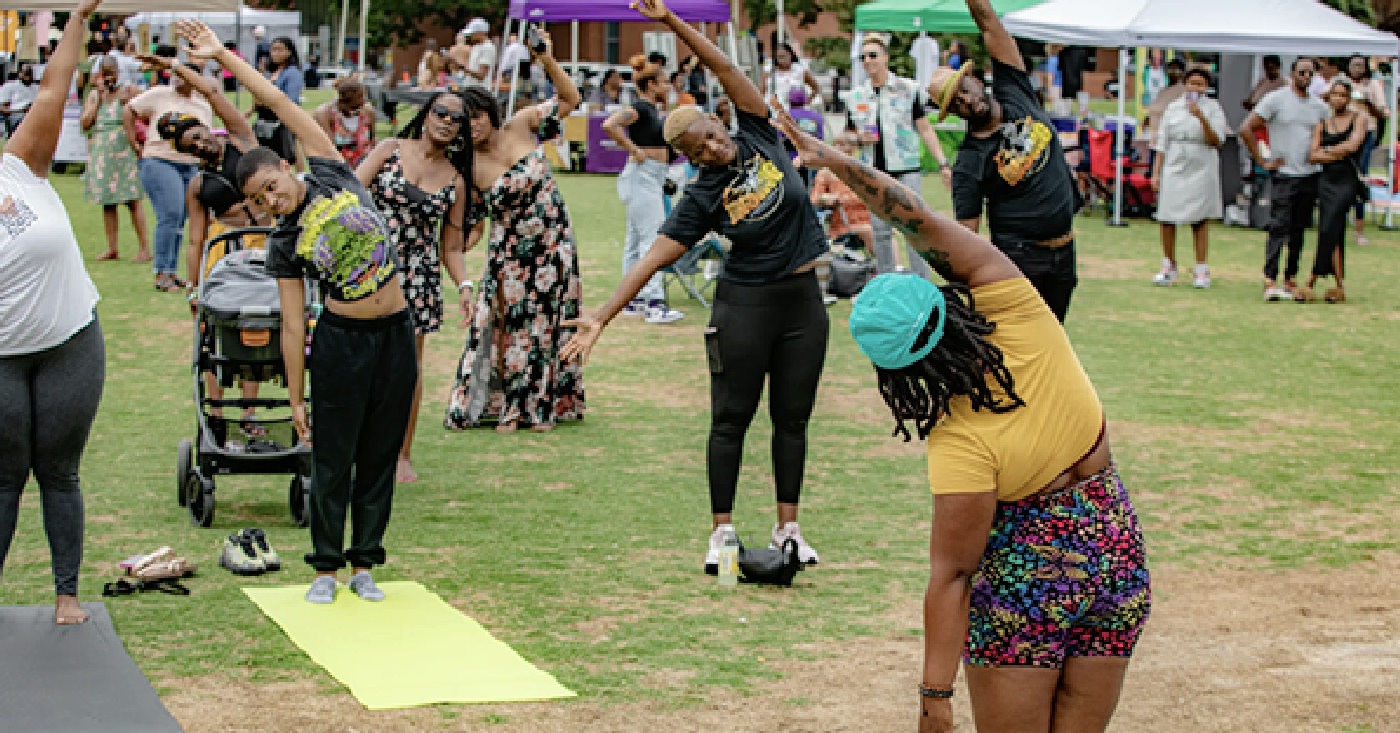
RALEIGH, N.C. – Music filled the air as families danced through the crowd, children gathered around activity stations, and community members explored wellness resources from local organizations. Black-owned businesses lined the streets while people stopped for chair massages, conversations, and moments of connection inside the wellness suite.
At the center of the event stood a simple but powerful reminder:
“You Matter.”
For Darkness RISING, those words represent far more than a slogan. They reflect the organization’s mission to break the stigma surrounding mental health in the Black community while creating spaces centered on healing, honesty, and hope.
Operating at the intersection of the arts and mental health, Darkness RISING uses music, storytelling, wellness programming, and community engagement to inspire healing while addressing barriers that have historically prevented many Black Americans from accessing mental health support.
The organization hosts a variety of programs and events throughout the year, including block parties, wellness workshops, mixers, kickoff events, community classes, and Darkness RISING: Live — a free annual arts and wellness festival now celebrating its ninth year.
The festival combines entertainment with healing-centered resources, featuring live music, dancing, singing, food trucks, Black vendors, children’s activities, mental health resources, wellness spaces, and opportunities for open conversations about mental health.
While the events may feel celebratory on the surface, organizers say the deeper purpose is creating safe spaces where people can feel comfortable discussing mental health without fear of judgment.
Darkness RISING also provides free nationwide resources, including a Black Mental Health Resource Packet, a Black Mental Health Provider Database, and its “Find Me a Therapist” initiative, which helps connect individuals with culturally competent care.
The organization’s work is rooted in addressing longstanding inequities that continue impacting mental health access within Black communities.
Historically, segregation, redlining, racial discrimination, incarceration, poverty, and unequal healthcare access have contributed to higher rates of behavioral health challenges while simultaneously limiting access to proper treatment and support. Darkness RISING approaches those issues through what organizers describe as a transformative justice lens, focusing on healing rather than punishment and creating equitable wellness opportunities for marginalized communities.
Its REBUILD program specifically supports justice-involved and formerly incarcerated people of color through free therapy and wellness support, while the REBUILD Youth program focuses on young people impacted by Adverse Childhood Experiences, also known as ACEs.
For Rudolph, therapy became life-changing after decades of incarceration and years of rejection after returning home.
“Came home in 2015, started my own computer company, investing in real estate, did the normal thing and got some jobs here and there and was met with rejection after rejection and people telling me I am not a good person,” Rudolph shared. “Even had a rejection in church.”
He said one of the hardest battles became overcoming the mental barriers created during incarceration.
“I got in touch with a couple of friends, and they explained to me how I had to get over the mental hurdles and get rid of the way my prison mindset was in order to survive and become successful,” he said.
Rudolph later moved to North Carolina hoping for a fresh start, but the struggle continued.
“Things were looking bad,” he said. “Could not get a job. The struggle was real.”
Eventually, therapy and support through organizations like Darkness RISING helped begin his healing process. He said working alongside other justice-involved men through therapy gave him the ability to rebuild mentally while finding community with people who understood his experiences.
Stories like Rudolph’s reflect the foundation behind Darkness RISING’s mission: ensuring people feel seen, supported, and worthy of healing regardless of their background or circumstances.
Community members who attend the organization’s events often describe them as emotionally transformative.
Some participants say Darkness RISING encouraged them to seek therapy for the first time, while others say the organization gave them a safe space to openly discuss struggles they previously kept hidden.
“I have been encouraged by the beautiful, generous, brave and open individuals who come together and use their talents to create art, share personal experiences and provide hope to those who may be struggling with mental health,” one participant shared.
By combining art, wellness, education, and community outreach, Darkness RISING continues changing how mental health conversations happen within the Black community.
Not through silence.
But through healing, honesty, connection, and joy.
Originally published by The Carolinian — https://caro.news.
The post COMMENTARY: Using Art, Healing, And Community to Transform Mental Health Dialogue appeared first on BlackPressUSA.

WORK FROM HOME
Home-based business with potential monthly income of $10K+ per month. A proven training system and website provided to maximize business effectiveness. Perfect job to earn side and primary income. Contact Lynne for more details: Lynne4npusa@gmail.com 800-334-0540


COMMENTARY: Black Music is the Sound of Black Freedom: Let Us Reclaim Both This Juneteenth

Oakland Post: Week of June 3 – 9, 2026

Study: Waiting Lists for Child Care Assistance Nearly Doubled

Venus Williams Calls a Sabalenka Exit a Tragedy

COMMENTARY: Using Art, Healing, And Community to Transform Mental Health Dialogue

Uptown Music Theatre Summer Camp Returns to Inspire the Next Generation of Performers

5 Cleveland Police Officers Injured, Gunfire Erupts During East Side Pursuit

15-YEAR-OLD COLUMBUS GIRL DIES, Community Mourns as Authorities Urge Water Safety Awareness

Let’s Talk Karmelo Anthony!

2026 World Cup is Here and Atlanta is Ready For It

COMMENTARY: What Andrew Young Reminded Me About Baltimore

COMMENTARY: When Politics Intersects with Professional Sports

K4: Crucial Driving Advice BEFORE You Buy! #shorts
The Conversation with Al McFarlane – MINNESOTANS ORGANIZING FOR CHANGE
Negotiate Car Add-Ons: Don’t Get Ripped Off! #shorts

Book Review: Books for College-Bound Students

Against All Odds: Mary Jackson’s Journey to NASA Engineer

Up to the Job: How San Francisco’s PRC Is Providing Work Opportunities That Turn Into Lasting Stability

Q&A with Steven Bradford: Why He Wants Your Vote for California Insurance Commissioner

OPINION: The Fire of Oakland’s Justin Jones

The Marin City Flea Market Is Back

California Launches Free Diaper Program for Newborns Statewide

EBMUD Enshrines the Legacy of its First Black Board Member William ‘Bill’ Patterson

OP-ED: Small Businesses Need Minnesota to Act on Pass-Through Tax Policy

The Ladies of Delta Sigma Theta Hold Day of Advocacy at the Capitol in Sacramento

Snoop Dogg Celebrates 10 Til’ Midnight at the Compound

Oakland Post: Week of May 6 – 12, 2026

2026 Lucid Air Grand Touring Review — Is This $136K EV Sedan Worth It?

Oakland Mayor Pushes Charter Overhaul to Clarify Roles in City Government, Increase Accountability and Improve Service Delivery

Marin City Public Housing Residents Demand a Voice in County’s Renovation Plans

Hyundai Ioniq 5 Parking, Safety, and 360 View #shorts

2025 Ioniq 5 New Wiper & Powerful Performance! #shorts

Electric SUV Range: Is 259 Miles Enough? #shorts

EV Charging: How Fast Can You Charge an Electric Vehicle? #shorts

Biometric Cooling… Messaging Seats…Come on! 2025 Infiniti QX80 Autograph 4WD

Charged Up: Witness the Magic of a Fully Electric Car! #shorts

Range Rover Sport PHEV Included…: See What’s Inside This Luxury SUV! #shorts

Invisible Hood View: Perfect Parking with X-Ray Vision! #shorts

AI Is Reshaping Black Healthcare: Promise, Peril, and the Push for Improved Results in California

ESSAY: Technology and Medicine, a Primary Care Point of View

Sanctuary Cities

The RESISTANCE – FREEDOM NOW

STATE OF THE PEOPLE: Freddie

ECONOMIC BOYCOTT DAY!!!!!

I told You So
-
 Advice3 weeks ago
Book Review: Books for College-Bound Students
-
 Arts and Culture4 weeks ago
Against All Odds: Mary Jackson’s Journey to NASA Engineer
-
 Bay Area3 weeks ago
Q&A with Steven Bradford: Why He Wants Your Vote for California Insurance Commissioner
-
 Activism3 weeks ago
OPINION: The Fire of Oakland’s Justin Jones
-
 Alameda County4 weeks ago
The Marin City Flea Market Is Back
-
 Activism3 weeks ago
California Launches Free Diaper Program for Newborns Statewide
-
 Activism4 weeks ago
EBMUD Enshrines the Legacy of its First Black Board Member William ‘Bill’ Patterson
-
 Activism3 weeks ago
The Ladies of Delta Sigma Theta Hold Day of Advocacy at the Capitol in Sacramento
