
Uncategorized
Softening Rhetoric on Homosexuality


The Rev. Robert Jeffress, of First BaptistChurch, Dallas. (Photo by First Baptist Church, Luke Edmonson).
By Tiffany Owens
Engaging a younger generation about the biblical teachings on homosexuality may be today’s greatest challenge for the evangelical church.
In a 2011 survey by the Public Religion Research Institute, 62 percent of adults between 18 and 29 years old said they supported gay “marriage,” and 71 percent supported civil unions. Among adults 65 and older, only 31 percent favored same-sex “marriage,” and 51 percent supported civil unions.
As young Christians become increasingly supportive of homosexual relationships, many of them are leaving the church. According to a 2011 study published by the Barna Group, respondents listed judgmental attitudes toward sexuality as one of the top five reasons 59 percent of Christian youth disconnect from church after they turn 15.
In an effort to stay “relevant,” some churches have bowed to cultural pressure and now preach acceptance of homosexual relationships. But others stand on biblical orthodoxy and point out sin while opposing “homophobia.”
Most older people have a biblically orthodox view on issues of sexuality, said political columnist and talk show host Dr. Michael Brown, author of the book “A Queer Thing Happened to America,” but he said they also have “homophobic tendencies” and caricature all gay people as predators.
In contrast, younger people are more open to homosexuality, since many of them know gay people personally. But the danger, Brown warned, is that many young evangelicals also lack a biblical worldview, leading to a more subjective view of sexuality. If they leave the church, the church is to blame, Brown said: “Many … have failed to combine truth with compassion.”
Evangelical leaders like Passion conference speakers John Piper and Francis Chan are accepting the challenge and engaging younger believers with biblical teachings about sexuality. Evangelical college ministries also maintain orthodox beliefs, a position that often gets them in trouble on secular campuses. Last year, students at the State University of New York in Buffalo suspended a chapter of campus ministry InterVarsity Christian Fellowship after an openly gay student resigned from leadership. The school’s Student Government Association accused the group of discrimination.
This type of pressure has pastors wrestling with how to address the issue. Many are choosing not to talk about it at all, said Rev. Robert Jeffress, pastor of First Baptist Dallas.
“My sense is that people are just avoiding the subject,” he said during a recent interview with the Associated Press. “They are so bent on trying to add to the numbers of their churches that they don’t want to disenfranchise new members or be characterized as unfriendly.”
Jeffress is taking a softer approach with his 11,000-member congregation, which includes some gays and lesbians. He hasn’t stopped preaching homosexuality is a sin, but he doesn’t single it out for special condemnation.
“It would be the height of hypocrisy to condemn homosexuality and not adultery or unbiblical divorce,” he said. “We cannot pick and choose what parts of God’s word we are called to share. … God gave it to us, not to hurt people, but to help people.”
Brown predicted more compromise as marginalization and cultural pressure increases. He warned a softer message and silence would be a mistake. “There has been no new discovery to change what scripture says,” he said.
Instead of becoming silent, churches should teach holiness, resist gay activism, and extend love to the gay community, he said: “If we’re opposing same sex marriage [politically], we need at the same time to speak a message of God’s love.”


Uncategorized
NBA All-Star Damian Lillard Returns Home for 15th Annual Backpack Giveaway
OAKLAND POST — “I know what it is to grow up here and be here in Oakland,” shared Lillard. “I do feel like it’s my responsibility to be present and supportive and be a resource and be an example for the kids and right now as somebody from Oakland that’s well positioned, with a big platform, I’m always trying to find ways to use that platform and serve our youth and community.”

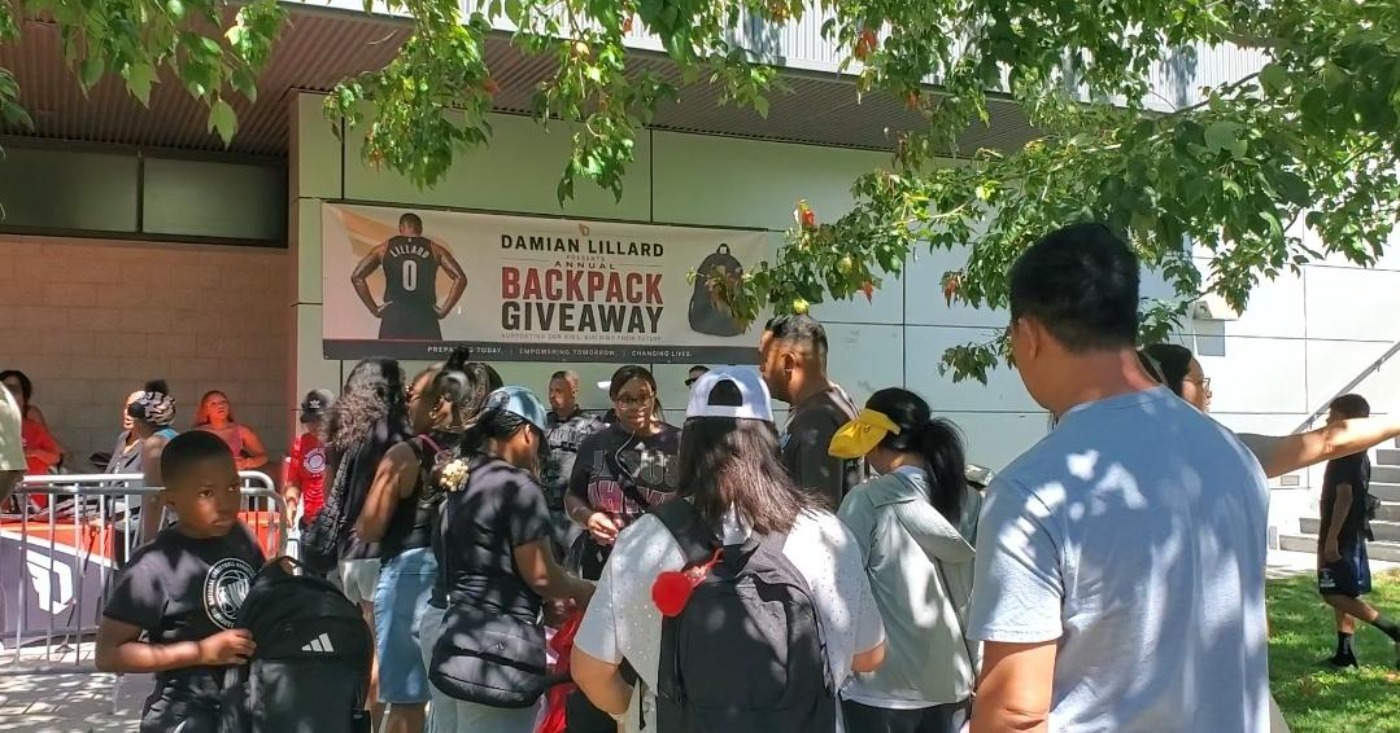
Music, food trucks, bouncers, and rock climbing turned Ira Jinkins Park into a neighborhood block party on Saturday, Sept. 5, as nine-time NBA All-Star Damian Lillard hosted his 15th annual back-to-school backpack giveaway in Deep East Oakland.
The Portland Trail Blazers point guard, an Oakland High School alum, returned to the recreation center where he trained as a kid and distributed backpacks stuffed with school supplies to nearly 400 children. Lillard was joined by family, friends, and former Oakland City Councilmember Desley Brooks in an event that has become a fixture of the neighborhood.
“I know what it is to grow up here and be here in Oakland,” shared Lillard. “I do feel like it’s my responsibility to be present and supportive and be a resource and be an example for the kids and right now as somebody from Oakland that’s well positioned, with a big platform, I’m always trying to find ways to use that platform and serve our youth and community.”
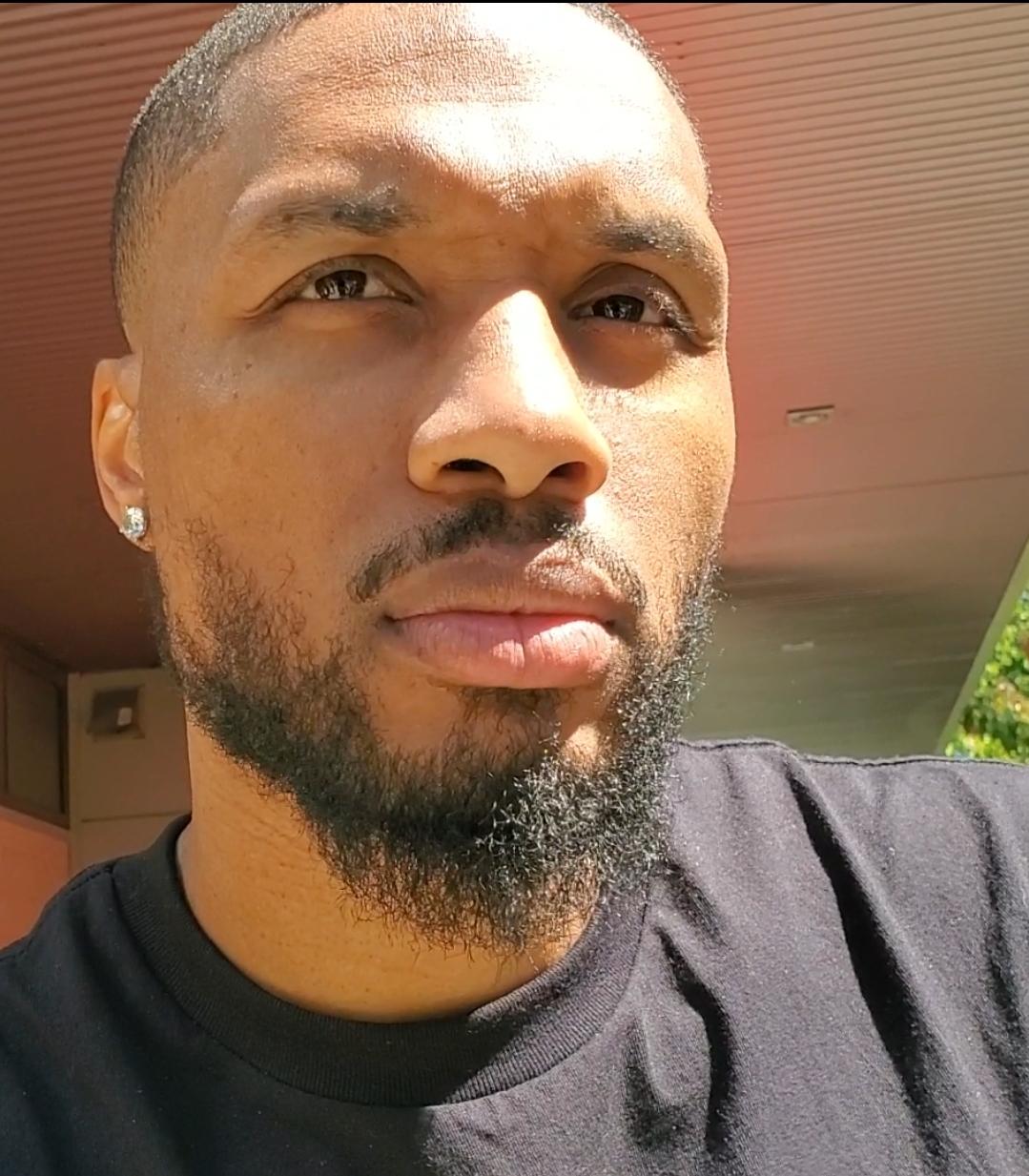
While watching children play inflatable basketball and roll a giant beach ball on the grass, Lillard took in the scene.

“Doing something positive makes me feel great,” said Lillard. “I remember attending cookouts like this as a child and it was always a lot of fun. It feels great to not only show youth a great time, but to be of service to them.”
Beyond the giveaway, Lillard is funding renovations to the Ira Jinkins Recreation Center, including major upgrades to its basketball courts, the same courts he once used daily before heading to play recreation league games across town. Last Christmas, he provided gifts to more than 400 local families.
Sports agent Aaron Goodwin, who has represented Lillard throughout his career, described the tradition as core to who Lillard is: someone who consistently looks for ways to give back, uses his platform to inspire youth, and treats events like this as more than a handout, but a chance to be a genuine resource and example for kids from his hometown.
“That’s who Damian is,” said Goodwin. “He always wants to give back. He does this every summer, and he also has an annual Christmas giveaway. He wants to inspire youth that they too can achieve.”
Lillard grew up traveling to the Ira Jinkins Center to train before playing at Rainbow Recreation Center, and he went on to star at Oakland High before his college and NBA career took off.
Lillard who has built a life legacy hosted the event within a center carrying its own historical weight.
The facility is named for Ira Jinkins, a civil rights organizer who helped lead West Coast marches honoring Martin Luther King Jr. and pushed for the creation of the MLK Regional Shoreline Park.
Its building sits within the William “Bill” Patterson Park complex, beside the East Oakland Sports Center that opened in 2011. Patterson was known for his civic impact and work with EBMUD East Bay Municipal Utility District, Merritt College, and the NAACP, among other organizations. A film on Patterson’s life debuted at the Oakland International Film Festival this week.
Last year, before the NBA All-Star Weekend in the Bay Area, the City of Oakland dedicated a court at the center in Lillard’s honor, and Lillard launched a $25,000-per-year scholarship with Portland State University for high school students across nine East Bay schools. He also sponsors camps and other programming throughout the nation.
Lillard sat out of the 2025-2026 NBA season due to an Achilles tendon injury incurred as a Milwaukee Buck. The year of healing will allow him to return to the Portland Trail Blazers.
“This is a great event,” said Shawn, watching his grandchild enjoying the activities. “I’ve been to every single one of them (backpack giveaways); I’ve been knowing Dame (Damian) since he was 8 years old. You don’t have many people that give back the way Damian does. There’s no better guy to do this. His whole family is awesome from the top down.”
For Lillard, the annual tradition, held in memory of his late grandfather, Albert Johnson, remains a way of reinvesting in the community that shaped him.

Uncategorized
Not Just a Southern Issue: Advocates Say SCOTUS Voting Rights Decision Has Already Started to Reshape Black Political Power
OAKLAND POST — Following the Civil War and Reconstruction, constitutional amendments expanded Black citizenship and voting rights across the South, leading to dramatic increases in Black political representation. But those gains were quickly met with violent backlash and the rise of Jim Crow laws designed to suppress Black voting through poll taxes, literacy tests, and other “race-neutral” restrictions.
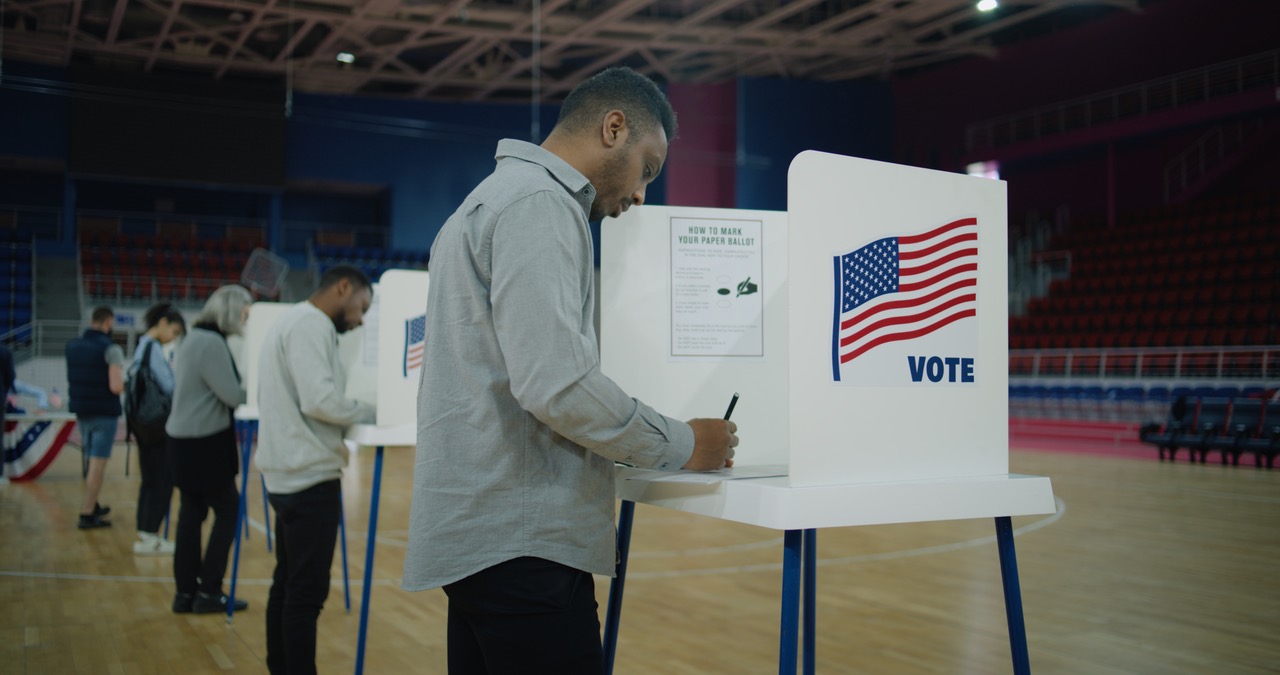
By Edward Henderson, California Black Media
U.S. Rep. Sydney Kamlager-Dove (D-CA-37), a member of the Congressional Black Caucus (CBC) whose district spans parts of Los Angeles County, joined fellow CBC member U.S. Rep. Troy Carter (D-LA-2) for a May 21 briefing with Black media outlets in California.
The lawmakers highlighted what they describe as a mounting threat to Black political representation resulting from an April 29 U.S. Supreme Court ruling that weakened key protections under the federal Voting Rights Act.
Kamlager-Dove and Carter warned that the decision, which narrowed the role of race in redistricting, is already reshaping congressional districts across the South and undermining Black voters’ ability to elect candidates of their choice.
“While we are a super blue state, we have far to go when it comes to Black representation; we tend to take that for granted,” Kamlager-Dove said of California, noting that the Golden State has the fifth largest Black population in the country and only has three Black members of Congress.
“While I support building coalitions, we have to make sure that as a Black community we are not yielding our power,” she added.
Calling the fight “not unique to the South,” Carter urged Black communities nationwide to recognize the broader implications of the legal and political battles unfolding in Southern legislatures and courtrooms.
The Supreme Court ruling centers on Section 2 of the Voting Rights Act of 1965, the portion of the law that prohibits voting systems or district maps that dilute the voting strength of racial minorities. For decades, Section 2 allowed civil rights groups to challenge district maps that weakened Black political representation even when lawmakers did not openly state discriminatory intent.
Now, advocates fear that standard has fundamentally changed.
“You have to have smoking gun evidence,” said Mitchell Brown, senior voting rights counsel at the Southern Coalition for Social Justice, during a recent media briefing hosted by American Community Media on May 15. “Legislators are not going to say the quiet part out loud.”
The implications could stretch far beyond congressional elections, Brown said.
Section 2 protections have historically applied not only to U.S. House districts, but also to state legislatures, school boards, county commissions, judgeships, and local governing bodies. Voting rights advocates warn that weakening those protections could reshape political representation throughout the South, particularly in states with large Black populations.
“This is not just a Southern issue,” said Amir Badat, manager of Black Voters on the Rise and voting special counsel at the NAACP Legal Defense and Educational Fund.
Badat described the current moment as part of a much longer historical pattern.
Following the Civil War and Reconstruction, constitutional amendments expanded Black citizenship and voting rights across the South, leading to dramatic increases in Black political representation. But those gains were quickly met with violent backlash and the rise of Jim Crow laws designed to suppress Black voting through poll taxes, literacy tests, and other “race-neutral” restrictions.
“This is the same move,” Badat said.
Advocates also emphasized that the consequences of weakened voting protections extend into everyday life.
Local elected offices such as school boards, city councils, county commissions, and judgeships often determine funding priorities, public safety policy, education standards, and infrastructure investments.
“These are not abstract numbers,” Badat said. “These have real political consequences and policy consequences on people’s day-to-day lives.”
Uncategorized
Rest in Peace: A.M.E. Pastor and L.A Civil Rights Icon Cecil “Chip” Murray Passes
The Rev. Dr. Cecil L. “Chip” Murray, former pastor of First African Methodist Episcopal Church (FAME) in Los Angeles, died of natural causes April 6 at his Windsor Hills Home. He was 94. “Today, we lost a giant. Reverend Dr. Cecil Murray dedicated his life to service, community, and putting God first in all things. I had the absolute honor of working with him, worshiping with him, and seeking his counsel,” said Los Angeles Mayor Karen Bass of the dynamic religious leader whose ministry inspired and attracted millionaires as well as former gang bangers and people dealing with substance use disorder (SUD).
The Rev. Dr. Cecil L. “Chip” Murray, former pastor of First African Methodist Episcopal Church (FAME) in Los Angeles, died of natural causes April 6 at his Windsor Hills Home. He was 94.
“Today, we lost a giant. Reverend Dr. Cecil Murray dedicated his life to service, community, and putting God first in all things. I had the absolute honor of working with him, worshiping with him, and seeking his counsel,” said Los Angeles Mayor Karen Bass of the dynamic religious leader whose ministry inspired and attracted millionaires as well as former gang bangers and people dealing with substance use disorder (SUD).
Murray oversaw the growth of FAME’s congregation from 250 members to 18,000.
“My heart is with the First AME congregation and community today as we reflect on a legacy that changed this city forever,” Bass continued.
Murray served as Senior Minister at FAME, the oldest Black congregation in the city, for 27 years. During that time, various dignitaries visited and he built strong relationships with political and civic leaders in the city and across the state, as well as a number of Hollywood figures. Several national political leaders also visited with Murray and his congregation at FAME, including Presidents George W. Bush and Bill Clinton.
Murray, a Florida native and U.S. Air Force vet, attended Florida A&M University, where he majored in history, worked on the school newspaper and pledged Alpha Phi Alpha Fraternity. He later attended Claremont School of Theology in Los Angeles County, where he earned his doctorate in Divinity.
Murray is survived by his son Drew. His wife Bernadine, who was a committed member of the A.M.E. church and the daughter of his childhood pastor, died in 2013.


Port of Oakland, Army Corps Sign Historic Harbor Design Agreement

Democratic Clubs Interview Candidates for Oakland School Board

Nuna Phillips-McKee Celebrates 100 Years: ‘A Century of Faith, Family and God’s Amazing Grace!’

D.A. Ursula Jones Dickson: Terminix to Pay $3.15 Million Over Illegal Disposal of Pesticides, Customer Records

REPORT: Community Level Policy Is Impacting Homelessness and Drug Abuse in California

OPINION: AI Needs to Know Who Is the Boss
Goldi-Locs and Two (or Three) Bears in the Forest in California Hills

Election Watch 2026: 85% of Eligible Voters in California Are Registered

Don’t Let scammers Crash Your School Year

BOOK REVIEW — Curved Air: A Biography of Sickle Cell Anemia and the Quest to Cure the First Molecular Disease

California’s Legal Cannabis Market Hits $8 Billion as State Touts Progress on Fighting Drugs, Crime

Blacks and Latinos Clash Over LA’s Barrio Run; Mayor Karen Bass Calls for Dialogue Across Racial, Neighborhood Lines

Asm. Smallwood-Cuevas’s Bill Repealing ‘Racist’ CalWORKs ‘Man-in-the-House’ Rule Clears Legislature

Asm. Smallwood-Cuevas’s Bill Repealing ‘Racist’ CalWORKs ‘Man-in-the-House’ Rule Clears Legislature

‘Ready to See These Bills Become Law’: Sen. Weber’s Package of 15 Bills Advance to Gov. Newsom’s Desk

Department of Homeland Security Demands California Secretary of State Shirley N. Weber Scrub Voter Rolls

“The Power to See Threats Sooner”: Gov. Newsom, Safety Officials Showcase California’s Investments in Hi-Tech Wildfire Prevention

California Sen. Padilla Joins Colleagues to Introduce Bill Imposing Term Limits on Supreme Court Justices

Less Affluent School Districts, Including Sacramento City, Face Threat of State Takeover

Car Wash Workers Cope with Lingering Impacts of ICE Raids

ESSAY: California Can Close Its Colorectal Cancer Gap

Oakland Post: Week of August 5 – 11, 2026

As Part of Your Back-to- School Checklist, Vaccinate

Oakland ‘Port Serves as a Powerful Engine for Good Jobs and Economic Development

Gov. Newsom Announces $109.6 Million in Funding for 278 Supportive Homes in Bakersfield, Contra Costa, Sacramento and Fresno

California Hispanic Chambers of Commerce Unveils: ‘Powering the Future’ Theme for 47th Annual Statewide Convention

Closing the Gap: What the Data and Frontline Experiences Reveal About Cancer in Black California

Congresswoman Simon Demands Investigation into Trump’s Abuse of Emergency Powers for Coal Export Terminal in West Oakland

Four Candidates, Including Incumbent Barbara Lee, Qualify for Oakland Mayor’s Race

Oakland Post: Week of August 12 – 18, 2026

The Conversation With Al McFarlane 6/23/26

Media Monday 6/22/26

LIVE! ASK ALMA! — TUES. 6.23.26 7PM EST

Car Buying Secrets: 4 Hidden Checks Before You Sign!

Is This 550 HP Charger Worth YOUR Money? AutoNetwork Review

Celebrating Juneteenth – Frederick Douglass on education and resistance

LIVE! — ASK ALMA! — TUES. 6.19.26 7PM EST

Hyundai Ioniq 5 Parking, Safety, and 360 View #shorts

2025 Ioniq 5 New Wiper & Powerful Performance! #shorts

Electric SUV Range: Is 259 Miles Enough? #shorts

EV Charging: How Fast Can You Charge an Electric Vehicle? #shorts

Biometric Cooling… Messaging Seats…Come on! 2025 Infiniti QX80 Autograph 4WD

Charged Up: Witness the Magic of a Fully Electric Car! #shorts

Range Rover Sport PHEV Included…: See What’s Inside This Luxury SUV! #shorts

Invisible Hood View: Perfect Parking with X-Ray Vision! #shorts
-

 Commentary3 weeks ago
Standoff for Justice: Our Homes Are Worth Fighting For
-

 Business3 weeks ago
Gubernatorial Candidate Steve Hilton Blasts California New Tire Rules; Newsom Hits Back
-

 Activism3 weeks ago
Oakland Post: Week of August 26 – September 1, 2026
-

 Business3 weeks ago
Frontier Airlines’ Return to Oakland Airport Brings Flights, Jobs and Opportunity
-

 Business3 weeks ago
Chef Sharon Lee Blends Culinary Excellence, Education and Empowerment
-

 Education3 weeks ago
Gov. Newsom’s Latest Appointees Include Sacramento Advocate for Formerly Incarcerated Students; State’s New Tech Chief
-

 Business3 weeks ago
Oakland Coliseum Project Opens Door for Small Businesses to Build Bigger
-

 Community3 weeks ago
Big City Mayors Ask for “Yes” Vote on Housing Bond Measure; Conservatives Say “No”
