
Activism
Sen. Steven Bradford Brings Strength and Reason to Police Reform Fight
SB 2 would strengthen the Tom Bane Civil Rights Act. Enacted in 1987, that legislation prevents law enforcement abuses and other civil rights violations.


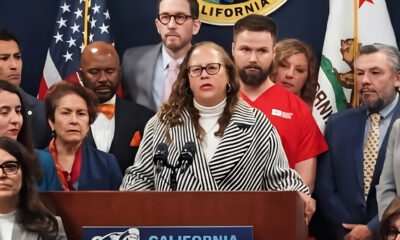
California State Sen. Steven Bradford (D-Gardena), chair of the California Legislative Black Caucus (CLBC), admits that he will meet challenges along the way as he fights for police reform in California.
Last week, at a Senate Judiciary Committee hearing he defended a bill he introduced in the Legislature that, if passed, would decertify cops for inappropriate behavior. During that appearance, Bradford made a persuasive case for police reform that was, at turns, forceful and thoughtful, bringing a cool head but passionate voice to a topic that has created a bitter divide in the California electorate, pitting advocates of police reform violently against people who support law enforcement.
“This is a tough issue but it’s a righteous issue,” Bradford told his colleagues.
“And we want to be intentional about what we are doing here in California when it comes to police reform,” he continued during his passionate closing argument for police reform on April 27. “That’s what this bill does. It’s intentional in what we are trying to achieve. This is a fair measure and far better than any that exist today.”
Co-authored by Senate President Pro Tem Toni G. Atkins (D-San Diego), Senate Bill (SB) 2 passed out of the Senate Judiciary Committee with a 7-2 vote that same day. Also known as the Kenneth Ross Jr. Police Decertification Act of 2021, the legislation aims to increase accountability for law enforcement officers that commit serious misconduct and illegally violate a person’s civil rights.

SB 2 will create a statewide process to revoke the certification of a peace officer following the conviction of serious crimes or termination from employment due to misconduct.
Bradford praised the judiciary committee’s majority vote, describing it as progress that would put California on the “right side of history.”
Atkins agrees.
“The passage of SB 2 (April 27) is another step toward the goal of achieving much-needed accountability in policing, and I thank Senator Bradford for his steadfast commitment to achieving critical and necessary reforms,” said Atkins. “As with anything this big, there is a lot of work ahead, and I remain committed to working with my colleagues to get this bill in the position to cross the finish line.”
The California Peace Officer Association (CPOA) believes that Bradford’s bill would turn the California Committee on Police Officer Standards and Training (POST) into an investigative agency. A sticking point for the group is that the people who would be given the authority to probe police misconduct would primarily be non-peace officers.
“We, of course, know that not all reform is a good reform, and CPOA among others is open to ‘reimagining public safety in California,” Shaun Rundle, CPOA’s deputy director said in a written statement about several police reform and public safety bills scheduled for hearings. “What we didn’t imagine, however, was the continued attacks against a noble profession who have proven to improve and drive down crime in this state year after year.”
With the passage of SB 2 out of committee, the legislation will move on to the Senate Appropriations Committee for consideration. If it advances out of that committee, SB 2 could head to a Senate floor vote.
During the Judiciary Committee hearing, which lasted for nearly three hours, a few senators expressed their support but asked Bradford to modify language pertaining to the Bane Act.
SB 2 would strengthen the Tom Bane Civil Rights Act. Enacted in 1987, that legislation prevents law enforcement abuses and other civil rights violations. Authored by California State Assemblymember Tom Bane, the legislation was created to allow victims to seek compensatory and punitive damages, attorney’s fees, and civil penalties.
Supporters of police reform in California say the Bane Act has been undercut by bad court decisions over the years. They argue that it was once an effective law intended to protect the civil rights of people in the state but has since been weakened as an effective check against police excessive use of force.
The California State Sheriffs’ Association views SB 2 as problematic, in terms of hiring, recruiting, and maintaining employees.
“We are concerned that the language removing employee immunity from state civil liability will result in individual peace officers hesitating or failing to act out of fear that actions they believe to be lawful may result in litigation and damages. In so doing, SB 2 will very likely jeopardize public safety and diminish our ability to recruit, hire, and retain qualified individuals,” the California State Sheriffs’ Association said in a written statement.
But Bradford says his bill essentially addresses rogue policing and hinders the ability of fired officers to find employment at other agencies even when they have a record of misconduct that got them terminated.
Among states that do not have a process to decertify cops for criminal behavior are Hawaii, New Jersey, Rhode Island, and California.
“We lead in technology, we lead in the environment, we lead in all those things that are important except for criminal justice reform,” Bradford said, referring to California’s reputation as a political trailblazer on several fronts.
People of color live in the communities where the majority of police misconduct incidents take place, Bradford said, adding that SB 2 will save Black and Brown lives.
“How many more people, regardless of color need to lose their lives because of the callous acts of law enforcement?” Bradford asked his colleagues. “There are two systems of justice in this country. But you’ll never know, and really understand. Its far different than anything any of you guys have encountered or will encounter.”






Activism
Oakland Post: Week of February 11 = 17, 2026
The printed Weekly Edition of the Oakland Post: Week of – February 11 – 17, 2026


To enlarge your view of this issue, use the slider, magnifying glass icon or full page icon in the lower right corner of the browser window.

Activism
Discrimination in City Contracts
The report was made public by Councilmember Carroll Fife, who brought it this week to the Council’s Life Enrichment Committee, which she chairs. Councilmembers, angry at the conditions revealed, unanimously approved the informational report, which is scheduled to go to an upcoming council meeting for discussion and action. The current study covers five years, 2016-2021, roughly overlapping the two tenures of Libby Schaaf, who served as mayor from January 2015 to January 2023.

Disparity Study Exposes Oakland’s Lack of Race and Equity Inclusion
Part 1
By Ken Epstein
A long-awaited disparity study funded by the City of Oakland shows dramatic evidence that city government is practicing a deeply embedded pattern of systemic discrimination in the spending of public money on outside contracts that excludes minority- and woman-owned businesses, especially African Americans.
Instead, a majority of public money goes to a disproportionate handful of white male-owned companies that are based outside of Oakland, according to the 369-page report produced for the city by Mason Tillman Associates, an Oakland-based firm that performs statistical, legal and economic analyses of contracting and hiring.
The report was made public by Councilmember Carroll Fife, who brought it this week to the Council’s Life Enrichment Committee, which she chairs. Councilmembers, angry at the conditions revealed, unanimously approved the informational report, which is scheduled to go to an upcoming council meeting for discussion and action.
The current study covers five years, 2016-2021, roughly overlapping the two tenures of Libby Schaaf, who served as mayor from January 2015 to January 2023.
The amount of dollars at stake in these contracts was significant in the four areas that were studied, a total of $486.7 million including $214.6 million on construction, $28.6 million on architecture, and engineering, $78.9 million on professional services, and $164.6 million on goods and services.

While the city’s policies are good, “the practices are not consistent with policy,” said Dr. Eleanor Ramsey, founder and CEO of Mason Tillman Associates.
There have been four disparity studies during the last 20 years, all showing a pattern of discrimination against women and minorities, especially African Americans, she said. “You have good procurement policy but poor enforcement.”
“Most minority- and women-owned businesses did not receive their fair share of city-funded contracts,” she continued. “Over 50% of the city’s prime contract dollars were awarded to white-owned male businesses that controlled most subcontracting awards. And nearly 65% of the city’s prime contracts were awarded to non-Oakland businesses.”
As a result, she said, “there is a direct loss of revenue to Oakland businesses and to business tax in the city… There is also an indirect loss of sales and property taxes (and) increased commercial office vacancies and empty retail space.”
Much of the discrimination occurs in the methods used by individual city departments when issuing outside contracts. Many departments have found “creative” ways to circumvent policies, including issuing “emergency” contracts for emergencies that do not exist and providing waivers to requirements to contract with women- and minority-owned businesses, Ramsey said.
Many of the smaller contracts – 59% of total contracts issued – never go to the City Council for approval.
Some people argue that the contracts go to a few big companies because small businesses either do not exist or cannot do the work. But the reality is that a majority of city contracts are small, under $100,000, and there are many Black-, woman- and minority-owned companies available in Oakland, said Ramsey.
“Until we address the disparities that we are seeing, not just in this report but with our own eyes, we will be consistently challenged to create safety, to create equity, and to create the city that we all deserve,” said Fife.
A special issue highlighted in the disparity report was the way city departments handled spending of federal money issued in grants through a state agency, Caltrans. Under federal guidelines, 17.06%. of the dollars should go to Disadvantaged Business Enterprises (DBEs).
“The fact is that only 2.16% of all the dollars awarded on contracts (went to) DBEs,” Ramsey said.
Speaking at the committee meeting, City Councilmember Ken Houston said, “It’s not fair, it’s not right. If we had implemented (city policies) 24 years ago, we wouldn’t be sitting here (now) waiving (policies).”
“What about us? We want vacations. We want to have savings for our children. We’re dying out here,” he said.
Councilmember Charlene Wang said that she noticed when reading the report that “two types of business owners that are consistently experiencing the most appalling discrimination” are African Americans and minority females.
“It’s gotten worse” over the past 20 years, she said. “It’s notable that businesses have survived despite the fact that they have not been able to do business with their own city.”
Also speaking at the meeting, Brenda Harbin-Forte, a retired Alameda County Superior Court judge, and chair of the Legal Redress Committee for the Oakland NAACP, said, “I am so glad this disparity study finally was made public. These findings … are not just troubling, they are appalling, that we have let these things go on in our city.”
“We need action, we need activity,” she said. “We need for the City Council and others to recognize that you must immediately do something to rectify the situation that has been allowed to go on. The report says that the city was an active or inactive or unintentional or whatever participant in what has been going on in the city. We need fairness.”
Cathy Adams, president of the Oakland African American Chamber of Commerce, said, “The report in my opinion was very clear. It gave directions, and I feel that we should accept the consultant Dr. Ramsey’s recommendations.
“We understand what the disparities are; it’s going to be upon the city, our councilmembers, and our department heads to just get in alignment,” she said.
Said West Oakland activist Carol Wyatt, “For a diverse city to produce these results is a disgrace. The study shows that roughly 83% of the city contracting dollars went to non-minority white male-owned firms under so-called race neutral policies
These conditions are not “a reflection of a lack of qualified local firms,” she continued. “Oakland does not have a workforce shortage; it has a training, local hire, and capacity-building problem.”
“That failure must be examined and corrected,” she said. “The length of time the study sat without action, only further heightens the need for accountability.”
#NNPA BlackPress
COMMENTARY: The National Protest Must Be Accompanied with Our Votes
Just as Trump is gathering election data like having the FBI take all the election data in Georgia from the 2020 election, so must we organize in preparation for the coming primary season to have the right people on ballots in each Republican district, so that we can regain control of the House of Representatives and by doing so, restore the separation of powers and balance that our democracy is being deprived of.
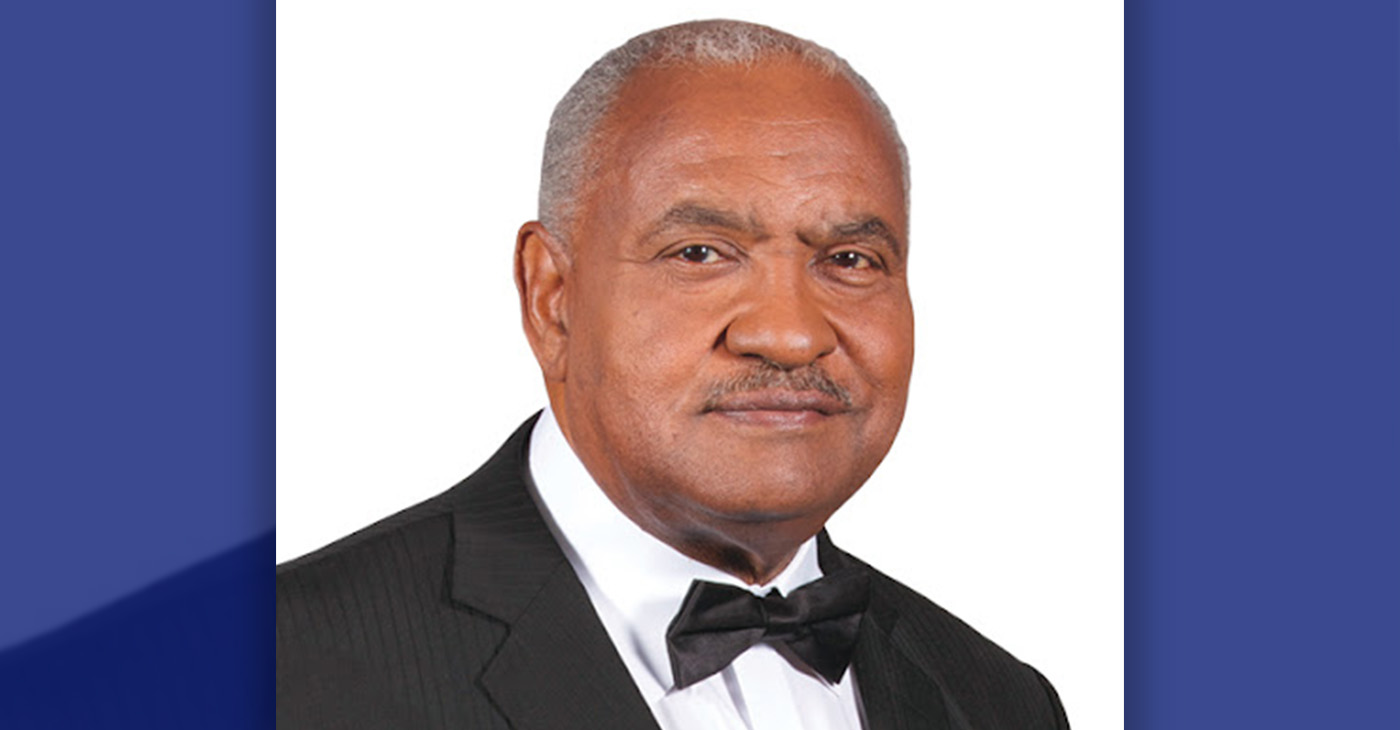
By Dr. John E. Warren, Publisher San Diego Voice & Viewpoint Newspaper
As thousands of Americans march every week in cities across this great nation, it must be remembered that the protest without the vote is of no concern to Donald Trump and his administration.
In every city, there is a personal connection to the U.S. Congress. In too many cases, the member of Congress representing the people of that city and the congressional district in which it sits, is a Republican. It is the Republicans who are giving silent support to the destructive actions of those persons like the U.S. Attorney General, the Director of Homeland Security, and the National Intelligence Director, who are carrying out the revenge campaign of the President rather than upholding the oath of office each of them took “to Defend The Constitution of the United States.”
Just as Trump is gathering election data like having the FBI take all the election data in Georgia from the 2020 election, so must we organize in preparation for the coming primary season to have the right people on ballots in each Republican district, so that we can regain control of the House of Representatives and by doing so, restore the separation of powers and balance that our democracy is being deprived of.
In California, the primary comes in June 2026. The congressional races must be a priority just as much as the local election of people has been so important in keeping ICE from acquiring facilities to build more prisons around the country.
“We the People” are winning this battle, even though it might not look like it. Each of us must get involved now, right where we are.
In this Black History month, it is important to remember that all we have accomplished in this nation has been “in spite of” and not “because of.” Frederick Douglas said, “Power concedes nothing without a struggle.”
Today, the struggle is to maintain our very institutions and history. Our strength in this struggle rests in our “collectiveness.” Our newspapers and journalists are at the greatest risk. We must not personally add to the attack by ignoring those who have been our very foundation, our Black press.
Are you spending your dollars this Black History Month with those who salute and honor contributions by supporting those who tell our stories? Remember that silence is the same as consent and support for the opposition. Where do you stand and where will your dollars go?

WORK FROM HOME
Home-based business with potential monthly income of $10K+ per month. A proven training system and website provided to maximize business effectiveness. Perfect job to earn side and primary income. Contact Lynne for more details: Lynne4npusa@gmail.com 800-334-0540


CITY OF SAN LEANDRO STATE OF CALIFORNIA PUBLIC WORKS DEPARTMENT ENGINEERING DIVISION NOTICE TO BIDDERS FOR ANNUAL STREET OVERLAY/REHABILITATION 2019-21 – PHASE III

Oakland Post: Week of February 11 = 17, 2026

Rising Optimism Among Small And Middle Market Business Leaders Suggests Growth for California

Discrimination in City Contracts

COMMENTARY: The National Protest Must Be Accompanied with Our Votes

Congresswoman Simon Votes Against Department of Homeland Security, ICE Funding

Post Newspaper Invites NNPA to Join Nationwide Probate Reform Initiative

Community Celebrates Turner Group Construction Company as Collins Drive Becomes Turner Group Drive

New Bill, the RIDER Safety Act, Would Support Transit Ambassadors and Safety on Public Transit

Trump’s White House Pushes to Control California Wildfire Recovery

Gov. Newsom, AG Bonta to Local Law Enforcement: You Have Authority to Investigate Federal Agents

Dorothy Lee Bolden: Uniting Domestic Workers

Cracking Down on Human Trafficking, California DOJ Announces 120 Arrests

COMMENTARY: The Biases We Don’t See — Preventing AI-Driven Inequality in Health Care

California Launches Study on Mileage Tax to Potentially Replace Gas Tax as Republicans Push Back

Life Expectancy in Marin City, a Black Community, Is 15-17 Years Less than the Rest of Marin County

Oakland Post: Week of January 28, 2025 – February 3, 2026

Jefferson County (AL) Democrats Open Qualifying for 2026 Primary Elections

Skater Emmanuel Savary Sharpens Routines for the 2026 U.S. Championships

COMMENTARY: With Gratitude and Praise for 2026
Community Celebrates Turner Group Construction Company as Collins Drive Becomes Turner Group Drive
California Launches Study on Mileage Tax to Potentially Replace Gas Tax as Republicans Push Back

Oakland Post: Week of January 21 – 27, 2026
Discrimination in City Contracts

OP-ED: The Dream Cannot be Realized Without Financial Freedom

From Civil Rights to ICE Raids, Trump’s Unchecked Power Puts Every Community at Risk

After Don Lemon’s Arrest, Black Officials Raise Concerns About Independent Black Media
From Civil Rights to ICE Raids, Trump’s Unchecked Power Puts Every Community at Risk

Travis Scott Teaches Us How to Give Forward

Four Stolen Futures: Will H-E-B Do The Right Thing?

Hyundai Ioniq 5 Parking, Safety, and 360 View #shorts

2025 Ioniq 5 New Wiper & Powerful Performance! #shorts

Electric SUV Range: Is 259 Miles Enough? #shorts

EV Charging: How Fast Can You Charge an Electric Vehicle? #shorts

Biometric Cooling… Messaging Seats…Come on! 2025 Infiniti QX80 Autograph 4WD

Charged Up: Witness the Magic of a Fully Electric Car! #shorts

Range Rover Sport PHEV Included…: See What’s Inside This Luxury SUV! #shorts

Invisible Hood View: Perfect Parking with X-Ray Vision! #shorts

AI Is Reshaping Black Healthcare: Promise, Peril, and the Push for Improved Results in California

ESSAY: Technology and Medicine, a Primary Care Point of View

Sanctuary Cities

The RESISTANCE – FREEDOM NOW

STATE OF THE PEOPLE: Freddie

ECONOMIC BOYCOTT DAY!!!!!

I told You So
-
 Activism3 weeks ago
Life Expectancy in Marin City, a Black Community, Is 15-17 Years Less than the Rest of Marin County
-
 Activism3 weeks ago
Oakland Post: Week of January 28, 2025 – February 3, 2026
-
 Activism2 weeks ago
Community Celebrates Turner Group Construction Company as Collins Drive Becomes Turner Group Drive
-
 Business2 weeks ago
California Launches Study on Mileage Tax to Potentially Replace Gas Tax as Republicans Push Back
-
 Activism2 weeks ago
Discrimination in City Contracts
-
 Activism3 weeks ago
After Don Lemon’s Arrest, Black Officials Raise Concerns About Independent Black Media
-

 Activism3 weeks ago
Medi-Cal Cares for You and Your Baby Every Step of the Way
-
 Activism2 weeks ago
COMMENTARY: The Biases We Don’t See — Preventing AI-Driven Inequality in Health Care
