
Housing
Schaaf Finally Pledges Homeless Resources After Sharp Questions


The Oakland Post contacted the Mayor’s Office Wednesday morning seeking comments on allegations that Mayor Libby Schaaf has been “indifferent” to Interfaith Council of Alameda County’s proposal for the city to provide resources to urgently address the needs of Oakland’s homeless population.
ICAC President Pastor Ken Chambers told the Post Mayor Schaaf called him late Wednesday afternoon to find out what “ICAC needs to move the safe car park and tiny home program forward.”
“She verbally committed to recommend that the City of Oakland sole source (the funding) to the ICAC program (if it committed to serving) 500 people in tiny homes and or safe car parking on faith-based parking lots with wrap-around services,” said Pastor Chambers.











Black History
In Wake of Death on Doorstep, Williams Chapel Baptist Church Calls for Better Care, Funding for Unhoused
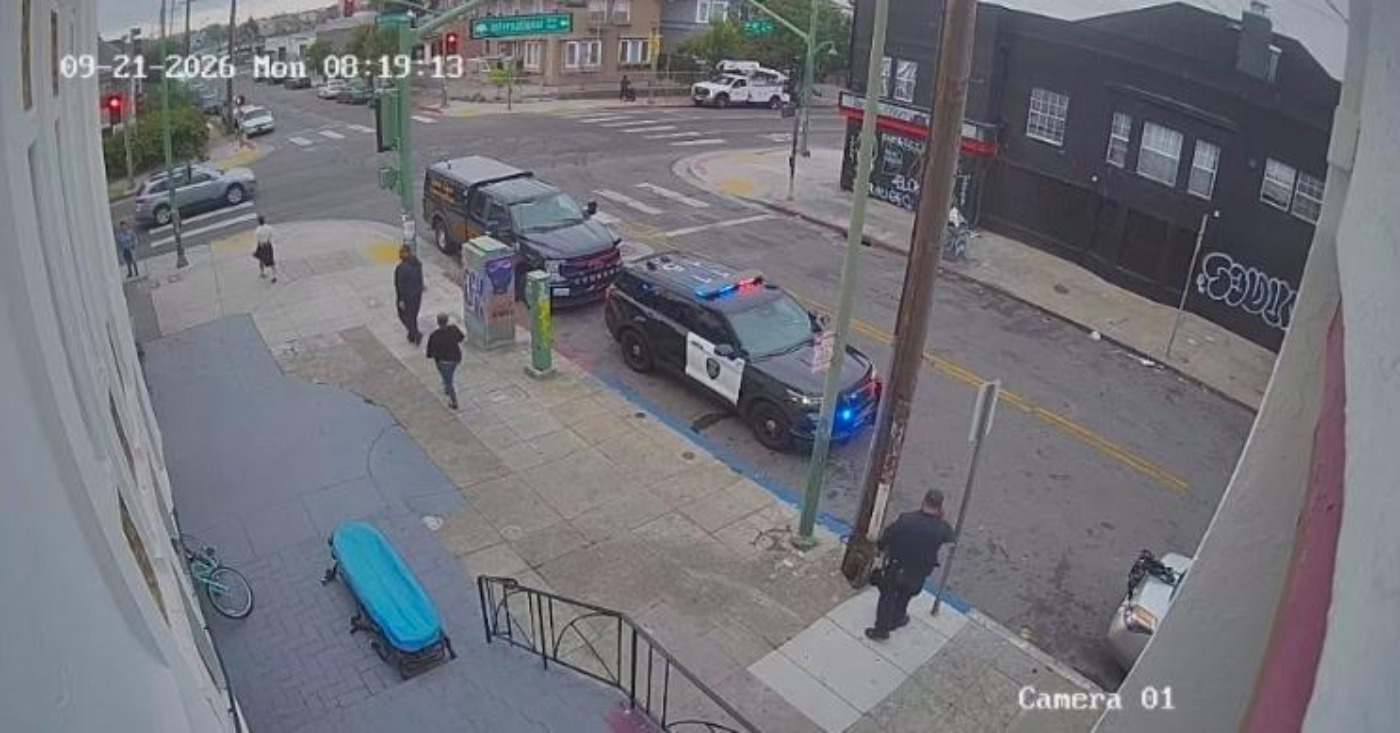
An unhoused individual was found deceased on the steps of Williams Chapel Baptist Church in East Oakland at approximately 6:30 a.m. Monday. The church, located at 1410 10th Ave., extended condolences to the individual’s family, noting the tragedy reflects a broader crisis. Williams Chapel Baptist Church provides shelter and referral services, working with West Side Missionary Baptist Church. They call for increased funding and collaboration to expand services for unhoused individuals. Read more to learn about the church’s efforts and the call for solutions.

Church extends condolences to individual’s family and loved ones
At approximately 6:30 a.m. Monday, an unhoused individual was found deceased on the steps of Williams Chapel Baptist Church, located at 1410 10th Ave. on the corner of 10th and International in East Oakland.
The individual appears to have come to the church seeking safety and may have needed medical support. We extend our deepest condolences and prayers to the individual’s family and loved ones.
This tragedy reflects a broader crisis affecting unhoused individuals and families throughout the Bay Area. Too many people are living without reliable shelter or timely access to medical care, mental health support, and other essential services. Limited funding and insufficient resources continue to leave vulnerable people without the help they need.
Williams Chapel Baptist Church, a member of the Interfaith Council of Alameda County, works alongside West Side Missionary Baptist Church to provide safe-haven overnight parking, tiny-home emergency shelter, and wraparound referral services to the unhoused.
With funding, both East and West Oakland sites can increase to full capacity and extend to other congregations, creating more safe places for people living on the streets to seek shelter, support, and connection to services.
We invite government agencies, nonprofit organizations, interfaith communities, businesses, and neighbors to join us in this work. By working together with compassion and purpose, we can develop meaningful solutions and help more people experiencing homelessness receive care, stability, and dignity.

Commentary
Community Action Group ‘Friends of Zakiya’ Ask Sheriff for Time
“Friends and Neighbors of Zakiya,” a community group of more than 60 neighbors, friends and community activists, is standing strong with Jendayi. The group holds weekly vigils every Tuesday from 6 p.m.-7p.m. at Jendayi’s residence at 3614 Randolph Ave. in Oakland.
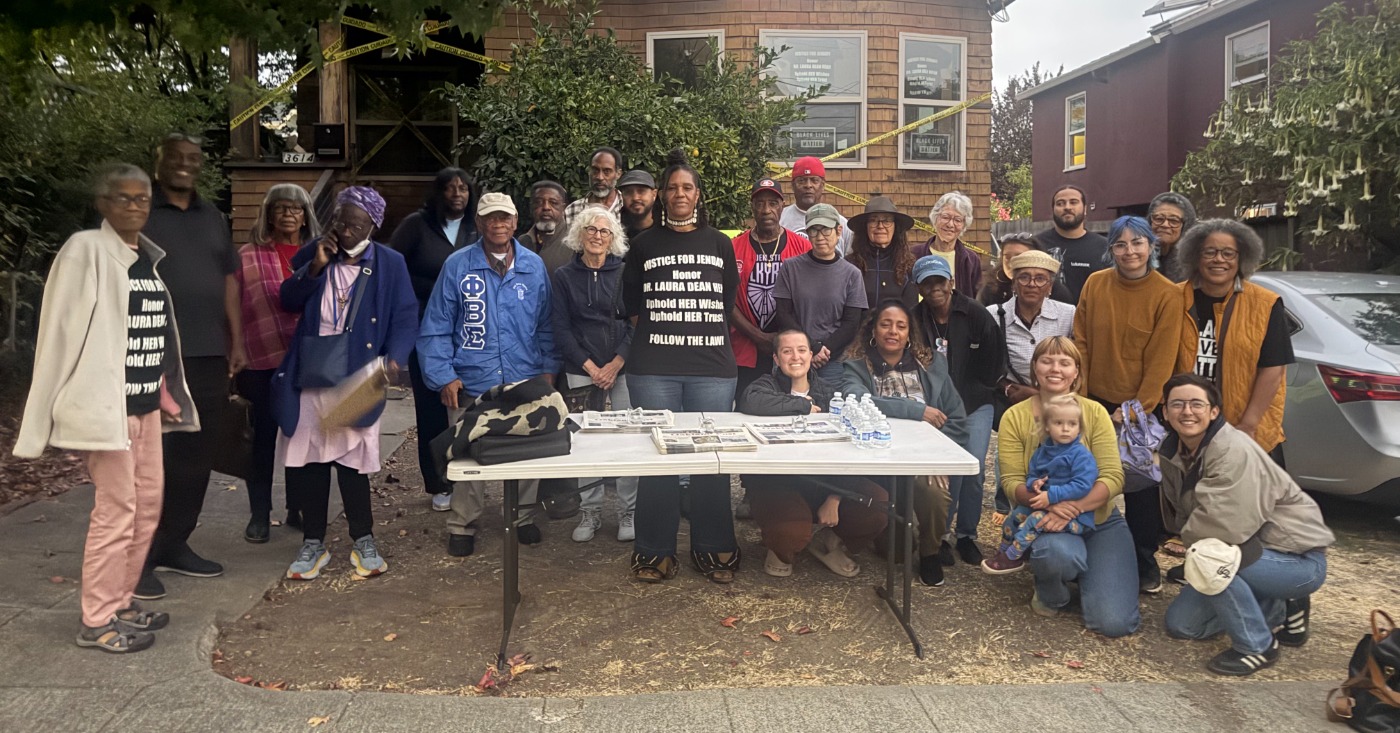
Zakiya Jendayi received good news Monday, Sept. 14, when the appellate court ruled in her favor in the Hamlin v. Jendayi case, agreeing to hear the case on its merits regarding her motion to have Judge Sandra K. Bean’s ruling invalidated based upon Laura Dean Head’s living trust.
The bad news is that, at the time of this writing, the Sheriff’s Department was scheduled to evict Jendayi from her home yesterday.
“Friends and Neighbors of Zakiya,” a community group of more than 60 neighbors, friends and community activists, is standing strong with Jendayi. The group holds weekly vigils every Tuesday from 6 p.m.-7p.m. at Jendayi’s residence at 3614 Randolph Ave. in Oakland.
The group is asking the community to join them and to make calls to Congresswoman Lateefah Simon, Attorney General Rob Bonta, Sheriff Yesenia Sanchez and DA Ursula Jones Dickson to stop what they deem the illegal eviction of Jendayi from her home of 13 years.
“I would hope that the Sheriff listens because, unlike the courts, my friends and neighbors have read the transcripts and seen for themselves the 42 findings that result in 35 false, six misleading, and one that is an error, which unbelievably the appeals court upheld.” says Jendayi. “With this new appeal, the court quite possibly will return my home to me, and so this makes no sense. The Sheriff is threatening to move forward to remove me before my appeal is heard.”
“This makes no sense,” says group member Rev. Raymond Langford. “She’s not a criminal, and she’s never had a criminal record. This situation has been horribly impactful on her physical and mental health. She’s now medically compromised due to all this stress, and all we’re asking for is time to see if the courts are in error. She should be given the opportunity for the appeal to be heard. That’s called justice, nothing more, nothing less.”.
Friends and Neighbors of Zakiya are organizing future protest actions to secure more time for Jendayi. They will be seen in front of the offices of Bonta, Simon and Sanchez, demanding that she have the opportunity for her case to be heard.
The Post is asking that the public join Friends and Neighbors of Zakiya and use the information listed to join in this fight for justice.
Friends and Neighbors of Zakiya asks you to sign the petition by activating the QR code below to enact a stay in Jendayi’s pending eviction from her home and to pursue a full and independent investigation into the ruling that invalidated Dr. Head’s trust.

Business
Mayor Lee Announces $1 Million Kaiser Permanente Grant for Pilot Program to Address Homelessness, Clean Up Public Spaces throughout Oakland
Achieving these goals requires unified City operations backed by new philanthropic and private sector investments. With Kaiser Permanente’s support, this project brings together the Mayor’s office, City Administrator’s office, Office of Homelessness Solutions, Housing and Community Development, Human Services, and Economic and Workforce Development.

Innovative initiative combines employment, housing support, job training, and case management to create permanent pathways out of homelessness
Mayor Barbara Lee announced on Tuesday a $1 million grant from a Kaiser Permanente fund at the East Bay Community Foundation to launch the Workforce Development and Interim Housing Pilot Project. The initiative combines low-barrier employment with housing support to strengthen Oakland’s homelessness response while cleaning public spaces throughout the city.
Grant funding provides recipients with:
- Part-time paid work focused on citywide sanitation and trash clean up, with pathways to permanent, full-time employment
- One year of interim housing support
- Comprehensive job training and wrap-around supportive services
- Tailored case management designed to transition participants into permanent housing
“This pilot program gives us an essential tool to drive change for all of our neighbors affected by homelessness, including our Black and African American population who are disproportionately impacted,” said Lee.
Data show that having a job is critical to housing stability and preventing homelessness. This pilot provides unhoused residents with job opportunities that keep public spaces throughout the City clean, directly supporting the mayor’s goal to reduce unsheltered homelessness in Oakland by 50%.
Achieving these goals requires unified City operations backed by new philanthropic and private sector investments. With Kaiser Permanente’s support, this project brings together the Mayor’s office, City Administrator’s office, Office of Homelessness Solutions, Housing and Community Development, Human Services, and Economic and Workforce Development.
The pilot is modeled after a similar program in Portland, Oregon, that offers low-barrier employment in sanitation services and housing support to people experiencing homelessness. Program results include a high percentage of participants moving to temporary or permanent housing and cleaner public spaces.
“We’re proud to support this innovative project because it creates meaningful opportunities for people experiencing homelessness while strengthening the health and vitality of the entire Oakland community,” said Yvette Radford, vice president of external and community affairs for Kaiser Permanente Northern California. “By providing job training, paid employment, supportive services, and a pathway to stable housing, this program offers people the tools to move forward with dignity and hope—while creating cleaner, safer, and healthier public spaces for everyone.”
The Communications Department of the Oakland Mayor’s office is the source of this report.



Asm. Corey Jackson Announces Launch of 24-Hour Childcare in His District

IN MEMORIAM: The Rev. Leon “Sonny” Clark, Longtime Orange County Pastor and Community Leader, Dies at 72

Poll: Becerra Widens His Lead Over Hilton; Californians Split on Wealth Tax

From Historic Memories to New Possibilities: Oakland Celebrates Coliseum 60

County Office of Education Says OUSD Finances Are Getting Healthier, Materially Stronger

LIVE FREE Sunday Dinner Brings Faith, Fellowship and Civic Conversation to Oakland

Remembering Chauncey Bailey as Student Journalists Face Threats to Truth-Telling

BLACspace Cooperative Invites Bay Area to Experience Oakland’s Black Cultural Ecosystem Through a BLAC Map Tour + Party

In Wake of Death on Doorstep, Williams Chapel Baptist Church Calls for Better Care, Funding for Unhoused

Oakland Centenarian Nuna McKee Honored!

Caribbean Nations Produce Action Plan Calling for UK Reparations Over Slavery

Oakland Post: Week of September 23 – 29, 2026

Doulas Are Helping Black California Moms Navigate Pregnancy–Even as High Mortality Rates Persist

Newsom Signs Addictive Social Media Law to Protect Kids

On Your November Ballot: Prop 38 Would Allocate $8.4 Billion to Immunology and Immunotherapy Funding

Standoff for Justice: Our Homes Are Worth Fighting For

Oakland Post: Week of August 26 – September 1, 2026

Frontier Airlines’ Return to Oakland Airport Brings Flights, Jobs and Opportunity

Gubernatorial Candidate Steve Hilton Blasts California New Tire Rules; Newsom Hits Back

Chef Sharon Lee Blends Culinary Excellence, Education and Empowerment

Jackie Wright Champions Bay Area Stories, Filmmakers and Cultural Institutions

Big City Mayors Ask for “Yes” Vote on Housing Bond Measure; Conservatives Say “No”

Oakland Coliseum Project Opens Door for Small Businesses to Build Bigger

Gov. Newsom’s Latest Appointees Include Sacramento Advocate for Formerly Incarcerated Students; State’s New Tech Chief

Misnamed ‘Parent’ PAC Seeks to Influence Oakland School Board Elections

Longtime BWOPA Member Brendalyn Goodall Appointed to California Workforce Development Board

Gov. Newsom Signs Law Shielding Immigration Aid Workers From Doxing Threats

Secretary of State Shirley N. Weber Urges Californians to Vote Early as Voter ID Battle Intensifies

From Palestine to Oakland: Seeds for Liberation Examines Shared Struggles for Freedom

IN MEMORIAM: Dolly Parton Dead at 80 — How She Built a Legacy of Love and Earned Her Place in Black Culture

The Conversation With Al McFarlane 6/23/26

Media Monday 6/22/26

LIVE! ASK ALMA! — TUES. 6.23.26 7PM EST

Car Buying Secrets: 4 Hidden Checks Before You Sign!

Is This 550 HP Charger Worth YOUR Money? AutoNetwork Review

Celebrating Juneteenth – Frederick Douglass on education and resistance

LIVE! — ASK ALMA! — TUES. 6.19.26 7PM EST

Hyundai Ioniq 5 Parking, Safety, and 360 View #shorts

2025 Ioniq 5 New Wiper & Powerful Performance! #shorts

Electric SUV Range: Is 259 Miles Enough? #shorts

EV Charging: How Fast Can You Charge an Electric Vehicle? #shorts

Biometric Cooling… Messaging Seats…Come on! 2025 Infiniti QX80 Autograph 4WD

Charged Up: Witness the Magic of a Fully Electric Car! #shorts

Range Rover Sport PHEV Included…: See What’s Inside This Luxury SUV! #shorts

Invisible Hood View: Perfect Parking with X-Ray Vision! #shorts
-
 Community3 weeks ago
Misnamed ‘Parent’ PAC Seeks to Influence Oakland School Board Elections
-

 Activism4 weeks ago
Oakland Post: Week of September 2 – 8, 2026
-

 Community3 weeks ago
Richmond Tiny House Village Farm & Garden Set to Open Gates on Sept. 26
-

 Activism3 weeks ago
Oakland Post: Week of September 9 – 15, 2026
-

 Black History3 weeks ago
Latest Massacre in Haiti Reveals Cruelty U.S. Deportations
-

 Black History3 weeks ago
OPINION: Nolan Wells’ Death One of Several Signifying Racial Terror Lives on in U.S. South
-

 Community3 weeks ago
Democratic Clubs Interview Candidates for Oakland School Board
-

 Business2 weeks ago
Mayor Lee Announces $1 Million Kaiser Permanente Grant for Pilot Program to Address Homelessness, Clean Up Public Spaces throughout Oakland
