Connect with us

Activism

San Bernardino County Voting to Leave California; Establish 51st State

According to real estate developer Jeff Burum, a member of the group, San Bernardino County is not getting its fair share from the state of California. The movement is supported by some local mayors such as Acquanetta Warren, mayor of Fontana, and Bill Velto, mayor of Upland.


Published

on

Over the years, there have been several efforts led by various groups to partition California — or secede from the state. So far, none of them have succeeded.

Manny Otiko | California Black Media

On Nov. 8, San Bernardino County voters will be presented with a choice on their ballot — leave the state of California and create the 51st state or remain the largest county in the nation.

A consortium in San Bernardino is the latest group of people proposing to alter the boundaries of the state of California. The group wants the county to secede from California and create a 51st state that would be called Empire.

According to real estate developer Jeff Burum, a member of the group, San Bernardino County is not getting its fair share from the state of California. The movement is supported by some local mayors such as Acquanetta Warren, mayor of Fontana, and Bill Velto, mayor of Upland.

“We cannot continue to beg, and crawl … to get resources for our county … Let’s step out and be bold about it and let the people decide what they want to do.” Fontana Mayor Acquanetta Warren told the San Bernardino Board of Supervisors.

Board of Supervisors Chairman Curt Hagman said, “I’m frustrated, too. I’m frustrated with the state of California. It’s becoming, more and more, ‘one size fits all’ for the greatest state in the nation.”

Burum claimed the move has “overwhelming” support. But he is basing his assessment on a survey of 400 San Bernardino County residents by Wallin Opinion Research.

There are more than 2.1 million people living in the county. San Bernardino is the fifth-most populous county in California and the largest in the nation by area. Geographically, it is larger than Connecticut, Delaware, New Jersey and Rhode Island combined.

The issue was first brought up at a meeting of the San Bernardino County Board of Supervisors. And it has continued to be discussed at Board of Supervisors meetings over the past few months.

While Board Chair Hagman supports the move, Supervisor Joe Baca Jr., said he disagrees with the effort.

During public comment at a recent Board of Supervisors meeting, Jane Hunt-Ruble, a San Bernardino County resident, said she opposed the move. But she said it would be popular with people who held anti-government feelings.

“It’s never going to happen,” she said.

A group of Inland Empire-area legislators blasted the move in a joint letter.

“We are shocked with the reasoning behind this initiative, concerned about the cost to taxpayers to essentially ask local officials to do their jobs, and disappointed in the narrative being created regarding our community,” according to a letter signed by Assembly Majority Leader Eloise Gómez Reyes (D-Colton,) State Sen. Connie Leyva (D-Chino,) and Assemblymember Freddie Rodriguez (D-Pomona.)

The Inland Empire legislators also pointed out that in 2020, one-third of the county’s revenue came from state dollars.

However, the San Bernardino Board of Supervisors agreed to put the issue on the ballot. The county’s Board of Supervisors voted 4-0 to put the secession measure on the 2022 ballot. One supervisor was absent.

According to a press statement, the question will be put on the November ballot.

It asks, “Do the people of San Bernardino County want San Bernardino County elected representatives to study and advocate for all options to obtain the county’s fair share of State funding up to and including secession from the State of California?”

Over the years, there have been several efforts led by various groups to partition California — or secede from the state. So far, none of them have succeeded.

The San Bernardino group’s move isn’t the only recent secession movement. In 2020, a group in northern California lobbied to leave the state and merge with parts of Oregon and Idaho. That group was motivated by dissatisfaction with California’s “liberal policies.”

Also, in 2017, there was gathering momentum for a movement calling for California to leave the Union and create its own country. That movement, labeled Calexit, was headed by Louis Marinelli, an American citizen who lived in Russia. According to Bloomberg, the campaign received financial backing from the Russian government. Marinelli later returned to America, renounced Calexit, and ran for a State Assembly seat. He received 6.4% of the vote.

Creating a new state is a complicated process. For example, secession from California would require approval from state legislatures, Congress and a signature from the president of the United States.

The last states to join the union were Hawaii and Alaska, which were admitted in 1959. And the last state to be formed by splitting away from another state was West Virginia, which was created in 1863.

Activism

As California Hits Aging Milestone, State Releases Its Fifth Master Plan for Aging

“California’s Master Plan for Aging started a powerful movement that is shaping the future of aging in our state for generations to come,” Gov. Gavin Newsom said in a statement, calling the initiative a “future-forward” model delivering real results for older adults, people with disabilities, and their families.

Published

on

iStock.
iStock.

By Bo Tefu, California Black Media  

On Jan. 27, California released its Fifth Master Plan for Aging Annual Report,titled “Focusing on What Matters Most,” outlining the state’s progress and priorities as its population rapidly grows older.

The report, issued by the California Health and Human Services Agency (CalHHS), provides updates on the Master Plan for Aging’s “Five Bold Goals”: housing, health, inclusion and equity, caregiving, and affordability.

The report comes as Californians aged 60 and older now outnumber those under 18 for the first time, a demographic shift expected to accelerate over the next decade.

“California’s Master Plan for Aging started a powerful movement that is shaping the future of aging in our state for generations to come,” Gov. Gavin Newsom said in a statement, calling the initiative a “future-forward” model delivering real results for older adults, people with disabilities, and their families.

Launched in 2021, the Master Plan for Aging takes a “whole-of- government” and “whole-of-society” approach, coordinating state agencies, local governments, community organizations, and private partners. The annual report highlights significant milestones, including more than 100 California communities joining AARP’s Age-Friendly Network and $4 million in state funding awarded to local organizations to develop aging and disability action plans in 30 communities statewide.

The report also underscores California’s leadership at the national level, noting that dozens of states have followed its example and that federal legislation inspired by the plan was reintroduced in the U.S. Senate in December 2025.

CalHHS Secretary Kim Johnson emphasized the plan’s focus on equity and resilience amid ongoing challenges.

“The Master Plan for Aging continues to provide a vision, a focus, and a platform for collaboration,” Johnson said. “Equity is at the center of all that we do.”

Looking ahead, the report notes that by 2030, one in four Californians will be age 60 or older, positioning the Master Plan for Aging as a central framework for meeting the state’s long-term social, economic, and health needs.

Continue Reading

Activism

After Don Lemon’s Arrest, Black Officials Raise Concerns About Independent Black Media

Elected leaders joining the call included U.S. Rep. Sydney Kamlager-Dove (D-CA-37), Los Angeles County Supervisor Holly Mitchell (2nd District), Assemblymembers Tina McKinnor (D-Inglewood), Mike Gipson (D-Carson), and Sade Elhawary (D-Los Angeles), and State Sen. Lola Smallwood-Cuevas (D-Los Angeles). While the meeting was prompted by Lemon’s arrest, the discussion quickly moved beyond him, turning to growing concerns about the vulnerability of Black journalists covering protests and dissent. 

Published

on

Don Lemon. Shutterstock.

By Joe W. Bowers Jr., California Black Media 

On Jan. 30, Los Angeles Mayor Karen Bass attended independent journalist Don Lemon’s federal court appearance at the Edward R. Roybal Federal Courthouse following his arrest in Los Angeles by federal authorities for conduct tied to his reporting on a protest nearly 2,000 miles away in St. Paul, Minnesota.

Shortly afterward, Bass convened a Zoom roundtable of Black elected leaders, city officials, and journalists to discuss what the case signaled — not just for Lemon, but for journalism more broadly.

Elected leaders joining the call included U.S. Rep. Sydney Kamlager-Dove (D-CA-37), Los Angeles County Supervisor Holly Mitchell (2nd District), Assemblymembers Tina McKinnor (D-Inglewood), Mike Gipson (D-Carson), and Sade Elhawary (D-Los Angeles), and State Sen. Lola Smallwood-Cuevas (D-Los Angeles). While the meeting was prompted by Lemon’s arrest, the discussion quickly moved beyond him, turning to growing concerns about the vulnerability of Black journalists covering protests and dissent.

While Lemon was being arrested, Georgia Fort, an award-winning Minneapolis journalist, was also arrested and charged in connection with her coverage of the protest inside the Cities Church in St. Paul reportedly targeted because a pastor worked as field director for Immigration and Customs Enforcement (ICE).

Both Fort and Lemon have said they were reporting.

However, prosecutors allege conspiracy and violations of the Freedom of Access to Clinic Entrances (FACE) Act — a federal law that prohibits force, threats, or obstruction at reproductive health facilities and places of worship.

In a public statement issued after the arrest, Bass said the case “is about the First Amendment and the right of journalists to do their jobs without fear of intimidation or retaliation,” adding that journalists “must be able to cover events of public concern without being treated as criminals.”

That framing set the tone for the Zoom discussion. Participants raised concerns that Lemon’s speech and presence were being used to transform journalistic activity into evidence of criminal intent. Several warned that such an approach places journalists working outside major institutions at heightened risk.

Kamlager-Dove said the arrests cut to the heart of democratic accountability.

“Journalists must be able to report on protests, government actions, and civil rights issues without fear of arrest or retaliation,” she said. “When reporters are targeted for doing their jobs, it threatens the public’s right to know and undermines our democracy.”

As the discussion continued, the roundtable’s participants also made clear why Fort’s arrest mattered. Unlike Lemon, she is not a national television figure, a distinction participants said shows how independent journalists without major institutional backing are often the most vulnerable.

McKinnor said that reality cannot be ignored. “Black journalists have long played a critical role in documenting what others overlook or avoid,” she said. “When reporters are arrested for covering protests, it sends a message that truth-telling itself is being criminalized.”

Participants noted that the Minnesota protest space was multiracial, yet Black journalists were among those arrested — a pattern several described as familiar when Black reporters cover protests, immigration enforcement, policing, or civil rights issues.

Smallwood-Cuevas called the arrests “deeply troubling” and warned that “when journalists are arrested for documenting protests, it sends a chilling message not just to the press, but to the public.”

Continue Reading

Activism

“Victory” for Voting Rights: Weber and Bonta Hail Judge’s Decision on Huntington Beach I.D. Law

“Today’s victory makes one thing crystal clear: No city in our state, charter and non-charter alike, is above the law,” Bonta said. “All along, Secretary of State Weber and I have maintained that Huntington Beach’s voter ID policy is illegal, and now, the state’s highest court has weighed in and agreed with us. Measure A won’t be taking effect — ever.”

Published

on

iStock.
iStock.

By Bo Tefu, California Black Media

California Attorney General Rob Bonta and Secretary of State Shirley N. Weber hailed a major legal victory for voting rights after the California Supreme Court declined to review a challenge brought by the City of Huntington Beach against the state, effectively ending the city’s attempt to impose voter identification requirements in municipal elections.

The high court’s action leaves intact a Fourth District Court of Appeal ruling that struck down Huntington Beach’s voter ID law, known as Measure A, finding it unlawful and preempted by state law. By rejecting the city’s petition for review, the Supreme Court has fully resolved the case in favor of the state, concluding litigation initiated by Bonta and Weber on April 15, 2024.

Measure A amended the Huntington Beach city charter to purportedly authorize voter identification requirements at polling places for municipal elections beginning in 2026. State officials argued the measure conflicted with California election law and was adopted without evidence of voter fraud in the city. Courts at every level agreed, rejecting the city’s claims that such requirements were necessary to protect election integrity.

“Today’s victory makes one thing crystal clear: No city in our state, charter and non-charter alike, is above the law,” Bonta said. “All along, Secretary of State Weber and I have maintained that Huntington Beach’s voter ID policy is illegal, and now, the state’s highest court has weighed in and agreed with us. Measure A won’t be taking effect — ever.”

Bonta also criticized city leaders for promoting unfounded concerns about election security. “Huntington Beach’s leaders have been parroting the Trump Administration’s talking points by questioning the integrity of our elections,” he said. “In court, the City’s allegations were resoundingly rejected. I remain fully committed to protecting the right to vote from baseless attacks.”

Weber emphasized the broader implications of the ruling for voters statewide.

“Today the California Supreme Court declined to review the Fourth District Court of Appeal’s decision prohibiting the City of Huntington Beach from implementing illegal voter identification requirements,”

Weber said. “As California Secretary of State, I have a responsibility to ensure that every eligible Californian can exercise their constitutional right to vote, and I take that duty seriously.”

Weber added that state law clearly supersedes local efforts to impose additional voting barriers.

“Attorney General Bonta and I have held steadfast that state law preempts the City’s attempts to impose illegal voting requirements on eligible voters and that Huntington Beach’s Measure A is unlawful,” she said. “This is another victory for California, for voters, and for democracy.”

Continue Reading

Subscribe to receive news and updates from the Oakland Post

* indicates required

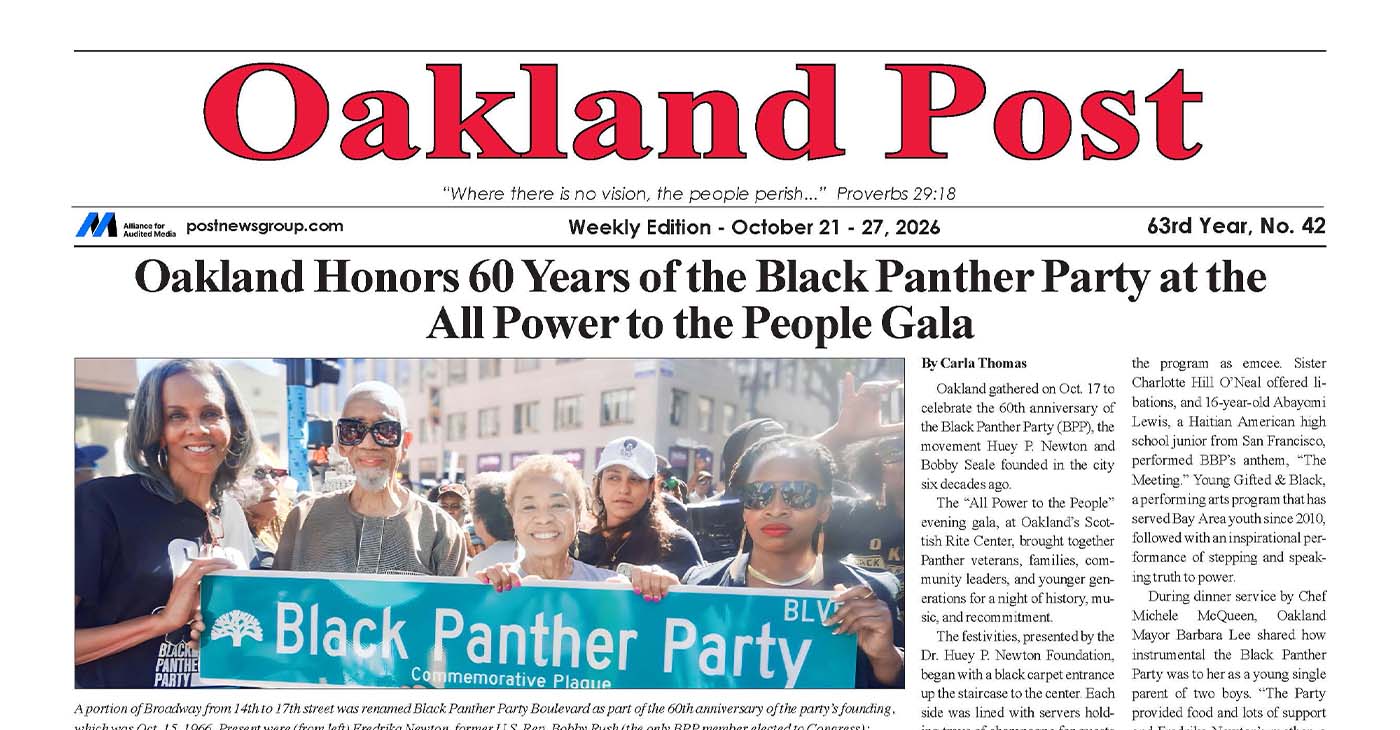
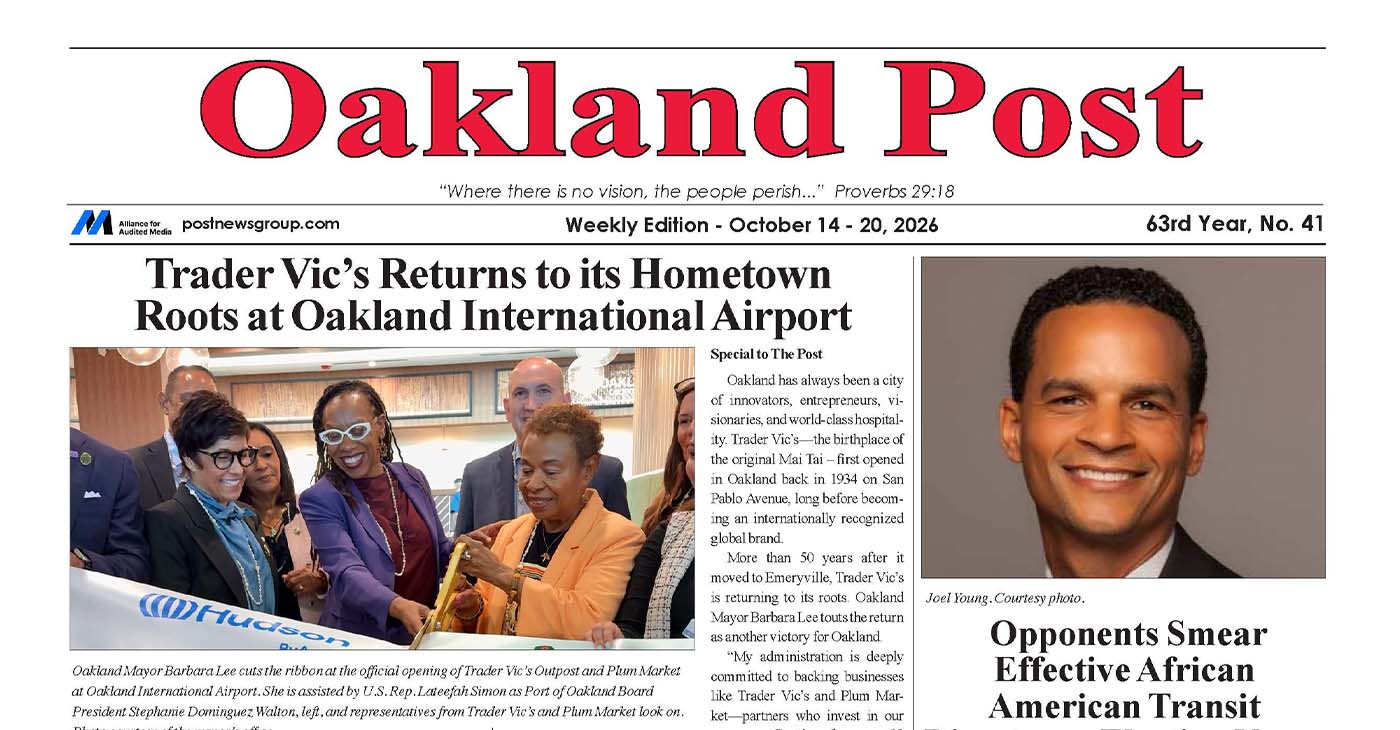
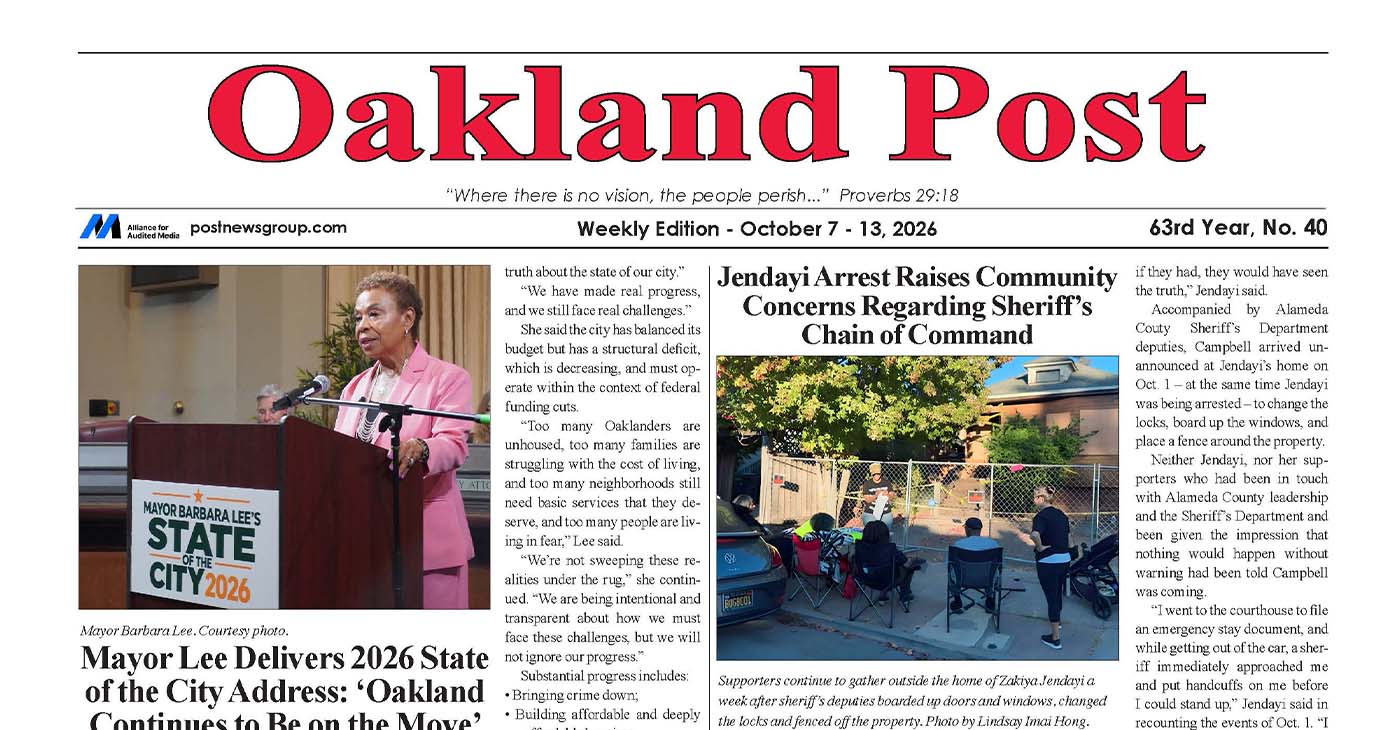
CHECK OUT THE LATEST ISSUE OF THE OAKLAND POST

ADVERTISEMENT

WORK FROM HOME

Home-based business with potential monthly income of $10K+ per month. A proven training system and website provided to maximize business effectiveness. Perfect job to earn side and primary income. Contact Lynne for more details: Lynne4npusa@gmail.com 800-334-0540

Facebook

iStock.
Activism15 hours ago

As California Hits Aging Milestone, State Releases Its Fifth Master Plan for Aging

Don Lemon. Shutterstock.
Activism15 hours ago

After Don Lemon’s Arrest, Black Officials Raise Concerns About Independent Black Media

iStock.
Activism16 hours ago

“Victory” for Voting Rights: Weber and Bonta Hail Judge’s Decision on Huntington Beach I.D. Law

Tiffany Duvernay-Smith.
Activism16 hours ago

Can You Afford a Mortgage but Not the Down Payment? Dream For All Offers Up to $150K

The AI and Business moderator and panelists at CAACC's 2026 Economy Summit. Shown left to right: Vic Baker, Equitify; Cathy Adams, President and CEO of the Oakland African American Chamber of Commerce; Kevin Harbour, BizFed Institute; Ahmad Holmes, CAACC President and CEO; Sarah Harris, Black Business Association; Angela Shell, California Department of General Services; Edwin Lombard, ELM Strategies; Christine Shelby, Digital Strategist, Sacramento Observer; and Patricia Watts, CAACC Chairperson. CBM photo by Antonio Ray Harvey.
Activism16 hours ago

At Sac Summit, California African American Chamber of Commerce Shows Growing Clout; Lays Out Top Goals

‘Be Still...’ by Virginia Jourdan is on display at the Richmond Art Center (RAC), in Richmond, CA. Photo by Carla Thomas.
Activism16 hours ago

Art of the African Diaspora Celebrates Legacy and Community at Richmond Art Center

The gubernatorial debate was hosted by KTVU’s Greg Lee, KTTV’s Marla Tellez and KTVU’s Andre Senior. The candidates are (l.-r.): Xavier Becerra, Steve Hilton, Matt Mahan, Tom Steyer, Tony Thurmond, Antonio Villaraigosa, and Betty Yee.
Community16 hours ago

Candidates Vying for Governor’s Seat Debate at Ruth Williams–Bayview Opera House in San Francisco

The Oakland Black Cowboys Association will hold an event to teach children the love of riding at Fairyland on Feb. 14. Here, a member of the OBCA high-fives a young rider at an event in 2021. Facebook photo.
Alameda County16 hours ago

Black History Events in the East Bay

Activism18 hours ago

Oakland Post: Week of February 4 – 10, 2026

Shuttterstock.
Activism7 days ago

Medi-Cal Cares for You and Your Baby Every Step of the Way

Marin City community leaders (l.-r.): Terrie Green, executive director of Marin City Climate Resilience (MCCR); Wambua Musyoki, Stanford University; Khamil Callahan, Santa Rosa Junior College; Serenity Allen, Xavier University; and Chinaka Green, MCCR associate director.
Activism7 days ago

Life Expectancy in Marin City, a Black Community, Is 15-17 Years Less than the Rest of Marin County

Uncategorized7 days ago

Rest in Peace: A.M.E. Pastor and L.A Civil Rights Icon Cecil “Chip” Murray Passes

Uncategorized7 days ago

Court Throws Out Law That Allowed Californians to Build Duplexes, Triplexes and RDUs on Their Properties

Uncategorized7 days ago

Funds for Down Payments and Credit Repair Given to Black First Time Homebuyers

Uncategorized7 days ago

Black Leadership Council Honors California’s Three Black Constitutional Officers

Bishop Joseph Simmons, Senior Pastor, Greater St. Paul Baptist Church, Oakland
Activism1 month ago

OP-ED: AB 1349 Puts Corporate Power Over Community

A rendering of Alfred L. Cralle’s ice cream scoop. Public domain.
Black History1 month ago

Alfred Cralle: Inventor of the Ice Cream Scoop

Costco. Courtesy image.
Activism1 month ago

First 5 Alameda County Distributes Over $8 Million in First Wave of Critical Relief Funds for Historically Underpaid Caregivers

Activism1 month ago

Oakland Post: Week of December 31, 2025 – January 6, 2026

Gnae Dismuske and her children.
Activism4 weeks ago

Protecting California’s Black Moms and Babies: Policies and Programs Struggle to Fix Deep-Rooted Maternal Health Inequities

Assemblymember Lori D. Wilson (D-Suisun City). File photo.
Activism1 month ago

2025 in Review: Seven Questions for Assemblymember Lori Wilson — Advocate for Equity, the Environment, and More

Nikki Helms is a midwife and full-spectrum birthing care advocate.
Activism4 weeks ago

Why Peace on Earth Begins with Birth, a Q&A with Midwife Nikki Helms

From top left: Pastor David Hall asking the children what they want to be when they grow up. Worship team Jake Monaghan, Ruby Friedman, and Keri Carpenter. Children lining up to receive their presents. Photos by Godfrey Lee.
Activism1 month ago

Big God Ministry Gives Away Toys in Marin City

Assemblymember Tina McKinnor (D-Inglewood). File photo.
Activism1 month ago

2025 in Review: Seven Questions for Assemblymember Tina McKinnor, Champion of Reparations, Housing and Workers’ Rights

Book cover of Let Me Be Real With You and author Arshay Cooper. Courtesy of HarperOne.
Advice1 month ago

BOOK REVIEW: Let Me Be Real With You

Sen. Laura Richardson (D-San Pedro). File photo.
Activism1 month ago

2025 in Review: Seven Questions for Sen. Laura Richardson, Who Made Legislative History This Year

Sen. Lola Smallwood-Cuevas (D-Los Angeles). File photo.
Activism1 month ago

2025 in Review: Seven Questions for Sen. Lola Smallwood-Cuevas – an Advocate for Jobs and Justice

#NNPA BlackPress4 weeks ago

Jefferson County (AL) Democrats Open Qualifying for 2026 Primary Elections

#NNPA BlackPress4 weeks ago

COMMENTARY: With Gratitude and Praise for 2026

#NNPA BlackPress4 weeks ago

Skater Emmanuel Savary Sharpens Routines for the 2026 U.S. Championships

Trending

Copyright ©2021 Post News Group, Inc. All Rights Reserved.