
Activism
Report Offers Policies, Ideas to Improve the Workplace Experiences of Black Women in California
The “Invisible Labor, Visible Struggles: The Intersection of Race, Gender, and Workplace Equity for Black Women in California” report by the California Black Women’s Collective Empowerment Institute (CBWCEI), unveiled the findings of a December 2024 survey of 452 employed Black women across the Golden State. Three-fifths of the participants said they experienced racism or discrimination last year and 57% of the unfair treatment was related to incidents at work.


By McKenzie Jackson, California Black Media
Backed by data, a report released last month details the numerous hurdles Black women in the Golden State must overcome to effectively contribute and succeed in the workplace.
The “Invisible Labor, Visible Struggles: The Intersection of Race, Gender, and Workplace Equity for Black Women in California” report by the California Black Women’s Collective Empowerment Institute (CBWCEI), unveiled the findings of a December 2024 survey of 452 employed Black women across the Golden State. Three-fifths of the participants said they experienced racism or discrimination last year and 57% of the unfair treatment was related to incidents at work.
CBWCEI President and CEO Kellie Todd Griffin said Black women have been the backbone of communities, industries, and movements but are still overlooked, underpaid, and undervalued at work.
“The data is clear,” she explained. “Systemic racism and sexism are not just historical injustices. They are active forces shaping the workplace experiences of Black women today. This report is a call to action. it demands intentional polices, corporate accountability, and systemic changes.”
The 16-page study, conducted by the public opinion research and strategic consulting firm EVITARUS, showcases the lived workplace experiences of Black women, many who say they are stuck in the crosshairs of discrimination based on gender and race which hinders their work opportunities, advancements, and aspirations, according to the report’s authors, Todd Griffin and CBWCEI researcher Dr. Sharon Uche.
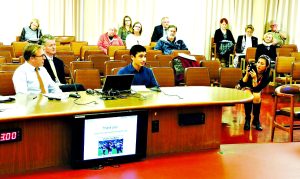
“We wanted to look at how Black women are experiencing the workplace where there are systematic barriers,” Todd Griffin told the media during a press conference co-hosted by Ethnic Media Services and California Black Media. “This report is focused on the invisible labor struggles of Black women throughout California.”
The aspects of the workplace most important to Black women, according to those surveyed, are salary or wage, benefits, and job security.
However, only 21% of the survey’s respondents felt they had strong chances for career advancement into the executive or senior leadership ranks in California’s job market; 49% felt passed over, excluded from, or marginalized at work; and 48% felt their accomplishments at work were undervalued. Thirty-eight percent said they had been thought of as the stereotypical “angry Black woman” at work, and 42% said workplace racism or discrimination effected their physical or mental health.
“These sentiments play a factor in contributing to a workplace that is unsafe and not equitable for Black women in California,” the report reads.
Most Black women said providing for their families and personal fulfillment motivated them to show up to work daily, while 38% said they were dissatisfied in their current job with salary, supervisors, and work environment being the top sources of their discontent.
When asked if they agree or disagree with a statement about their workplace 58% of Black women said they feel supported at work, while 52% said their contributions are acknowledged. Forty-nine percent said they felt empowered.
Uche said Black women are paid $54,000 annually on average — including Black single mothers, who averaged $50,000 — while White men earn an average of $90,000 each year.
“More than half of Black families in California are led by single Black women,” said Uche, who added that the pay gap between Black women and White men isn’t forecasted to close until 2121.










Activism
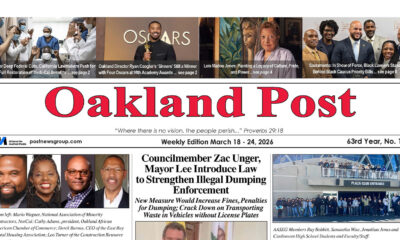
Oakland Post: Week of March 18 – 24, 2026
The printed Weekly Edition of the Oakland Post: Week of March 18 – 24, 2026
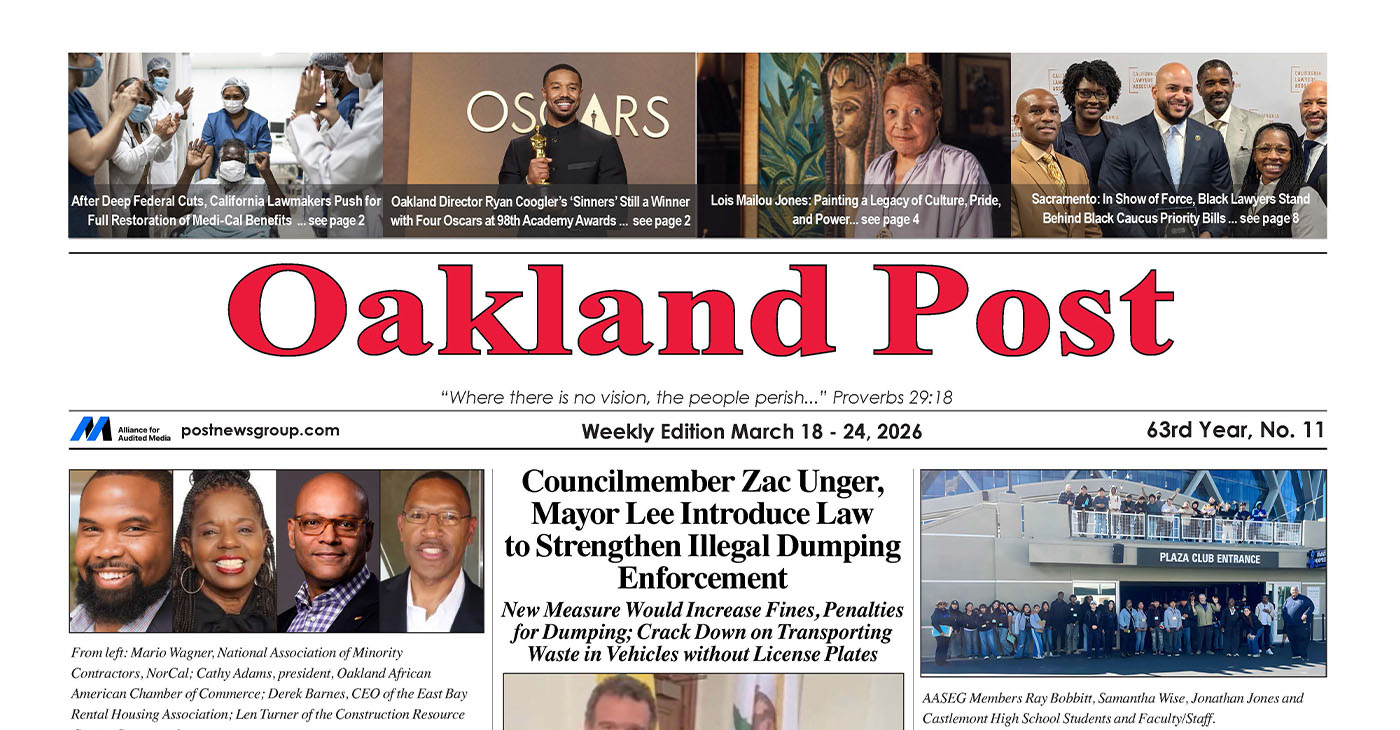
To enlarge your view of this issue, use the slider, magnifying glass icon or full page icon in the lower right corner of the browser window.
Activism
Oakland Post: Week of March 11 -17, 2026
The printed Weekly Edition of the Oakland Post: Week of March 11 – 17, 2026
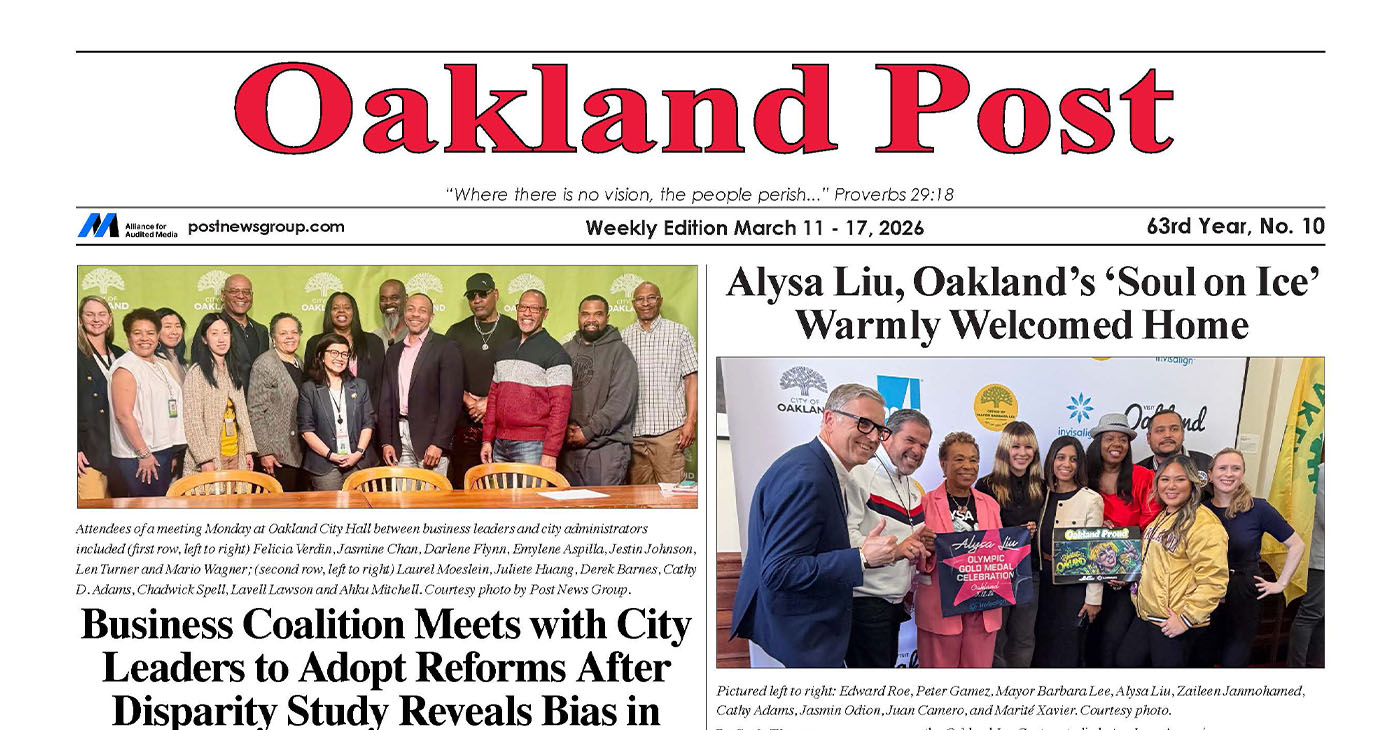
To enlarge your view of this issue, use the slider, magnifying glass icon or full page icon in the lower right corner of the browser window.
Activism
Oakland Post: Week of March 4 – 10, 2026
The printed Weekly Edition of the Oakland Post: Week of March 4 – 10, 2026
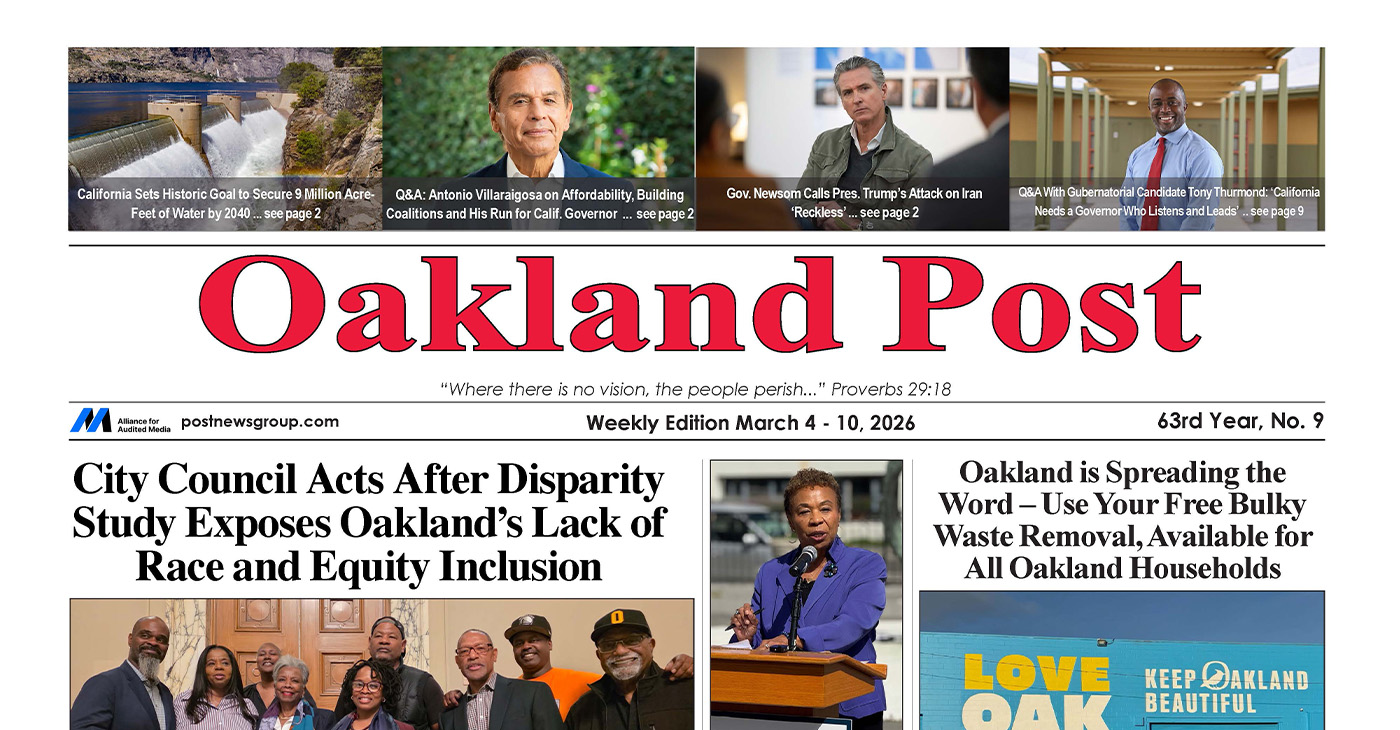
To enlarge your view of this issue, use the slider, magnifying glass icon or full page icon in the lower right corner of the browser window.

WORK FROM HOME
Home-based business with potential monthly income of $10K+ per month. A proven training system and website provided to maximize business effectiveness. Perfect job to earn side and primary income. Contact Lynne for more details: Lynne4npusa@gmail.com 800-334-0540


Black Artists in America, Installation Three Wraps at the Dixon Gallery and Gardens

Grief, Advocacy, and Education: A Counselor Reflects on Black Maternal Health

Future of Florida’s Black History Museum in Limbo

New Research Shows the Many Benefits of Early Learning

South Hampton K-8 Students Among Top 10 Finalists for Samsung’s ‘Solve for Tomorrow’ Competition

Cuba: No Negotiation with US on the President or Political System

Brooklyn Academy of Music Names Jamaican-Born Tamara McCaw as President

Trinidad & Tobego – U.S. Launches WhatsApp Channel for American Citizens in the Country

Oakland Post: Week of March 18 – 24, 2026

AI Innovation vs. Ethics and Environmental Impact

AI, Web3, and Digital Reparations

What If You Owned Your AI Agent?

Season 7, Episode 3 – January Reporter’s Roundtable 📱

Season 7, Episode 3 – January Reporter’s Roundtable

AI, Media, and Power | Part 2, Real-World Impacts and Tradeoffs

Reflecting on Black History Milestones in Birmingham AL

CITY OF SAN LEANDRO STATE OF CALIFORNIA PUBLIC WORKS DEPARTMENT ENGINEERING DIVISION NOTICE TO BIDDERS FOR ANNUAL STREET OVERLAY/REHABILITATION 2019-21 – PHASE III

Oakland Post: Week of February 18 – 24, 2026

Oakland Post: Week of February 25 – March 3, 2026

PRESS ROOM: NBA Hall of Fame Nominee Terry Cummings Joins 100 Black Men of DeKalb County to Launch Victory & Values Initiative

Trump’s MAGA Allies are Creating Executive Order Plan to Steal the 2026 Midterms

Oakland Post: Week of March 4 – 10, 2026

Chase Oakland Community Center Hosts Alley-Oop Accelerator Building Community and Opportunity for Bay Area Entrepreneurs

U.S. manufacturing rebounds – how foundry services are adapting to rising demand

Poll Shows Support for Policies That Help Families Afford Child Care

OP-ED: One Hundred Years of Black Workers Telling the Truth

Advancements in solar technology that are changing the way we power the world

Woman’s Search for Family’s Roots Leads to Ancestor John T. Ward – A Successful Entrepreneur and Conductor on the Underground Railroad

Oakland Post: Week of March 11 -17, 2026

COMMENTARY: Women of Color Shape Our Past and Future

Hyundai Ioniq 5 Parking, Safety, and 360 View #shorts

2025 Ioniq 5 New Wiper & Powerful Performance! #shorts

Electric SUV Range: Is 259 Miles Enough? #shorts

EV Charging: How Fast Can You Charge an Electric Vehicle? #shorts

Biometric Cooling… Messaging Seats…Come on! 2025 Infiniti QX80 Autograph 4WD

Charged Up: Witness the Magic of a Fully Electric Car! #shorts

Range Rover Sport PHEV Included…: See What’s Inside This Luxury SUV! #shorts

Invisible Hood View: Perfect Parking with X-Ray Vision! #shorts

AI Is Reshaping Black Healthcare: Promise, Peril, and the Push for Improved Results in California

ESSAY: Technology and Medicine, a Primary Care Point of View

Sanctuary Cities

The RESISTANCE – FREEDOM NOW

STATE OF THE PEOPLE: Freddie

ECONOMIC BOYCOTT DAY!!!!!

I told You So
-
 Activism4 weeks ago
Oakland Post: Week of March 4 – 10, 2026
-
 #NNPA BlackPress4 weeks ago
Woman’s Search for Family’s Roots Leads to Ancestor John T. Ward – A Successful Entrepreneur and Conductor on the Underground Railroad
-
 Activism3 weeks ago
Oakland Post: Week of March 11 -17, 2026
-
 #NNPA BlackPress4 weeks ago
COMMENTARY: Women of Color Shape Our Past and Future
-

 #NNPA BlackPress4 weeks ago
Advocates Raise Alarm Over ICE Operation, MOU and Detention Risks in Baltimore County
-

 Advice3 weeks ago
Financial Wellness and Mental Health: Managing Money Stress in College
-

 #NNPA BlackPress4 weeks ago
Pete Buttigieg to Join Mayor Randall Woodfin for Community Town Hall in Birmingham
-
 Activism2 weeks ago
Oakland Post: Week of March 18 – 24, 2026
