
Politics
Rand Paul Blames GOP Hawks for Rise of Islamic State Group


STEVE PEOPLES, Associated Press
WASHINGTON (AP) — Republican presidential candidate Rand Paul is blaming his own party for the rise of the Islamic State group.
The freshman senator from Kentucky said Wednesday that the GOP’s foreign policy hawks “created these people.”
The Islamic State group, commonly referred to as ISIS, has seized one-third of Iraq and Syria and in recent days made gains in central Iraq.
“ISIS exists and grew stronger because of the hawks in our party who gave arms indiscriminately,” Paul said on MSNBC’s “Morning Joe.” He continued: “They created these people. ISIS is all over Libya because these same hawks in my party loved — they loved Hillary Clinton’s war in Libya. They just wanted more of it.”
Foreign policy has emerged as a central debate in the 2016 Republican presidential primary.
Many of Paul’s Republican colleagues have offered aggressive rhetoric, but few specifics when asked about IS.
Paul favors less military intervention abroad, wants a dramatic reduction in U.S. money to foreign governments and stands in opposition to the Patriot Act and the U.S. policy behind drone strikes. It all makes him something of an outlier on foreign policy and national security in the GOP field.
He stood apart from many in his party in opposing U.S. military action in Syria before the ascension of the Islamic State group.
Sensitive to being branded an isolationist in the race, he has scaled back some of his positions — no longer calling for deep cuts in the Pentagon budget, for example, and no longer proposing the elimination of foreign aid, including to Israel.
On the Islamic State, he wants coalitions of Arab troops — instead of U.S. troops — to take the lead on the ground.
Former Florida Gov. Jeb Bush said Wednesday that U.S. military leadership is key to stabilizing Iraq, although with American advisers and intelligence, not combat forces.
“Most particularly the United States needs to regain its position militarily in Iraq to bring some order to the Iraqi military,” he told Republicans during a call to GOP activists in Alabama.
In addition, the U.S. must also lead an international coalition to create support within Iraq to rid it of IS for the long term, Bush said. “You have to do this militarily and build on that with a political solution,” he said.
Paul’s comments underscore the challenge for Bush, whose brother launched the invasion of Iraq more than a decade ago.
Bush faced pointed questions two weeks ago from a college student in Nevada who said former President George W. Bush “created ISIS.”
Jeb Bush blamed the Obama administration for not negotiating to keep more troops in Iraq, creating a vacuum that was ultimately filled by the Islamic State group.
Louisiana Gov. Bobby Jindal said Paul’s comments Wednesday were “a perfect example of why Senator Paul is unsuited to be commander in chief.”
“We have men and women in the military who are in the field trying to fight ISIS right now, and Senator Paul is taking the weakest, most liberal Democrat position,” said Jindal, a potential rival for the GOP presidential nomination. “We should all be clear that evil and radical Islam are at fault for the rise of ISIS, and people like President Obama and Hillary Clinton exacerbate it.”
In his interview earlier, Paul described Iraq as “a failed state” and criticized Republicans who condemn his foreign policy as weak.
“Everything that they have talked about in foreign policy, they have been wrong about for 20 years, and yet they have somehow the gall to keep saying and pointing fingers otherwise,” Paul said.
___
Associated Press writer Thomas Beaumont contributed to this report from Des Moines, Iowa.
Copyright 2015 The Associated Press. All rights reserved. This material may not be published, broadcast, rewritten or redistributed.



Activism
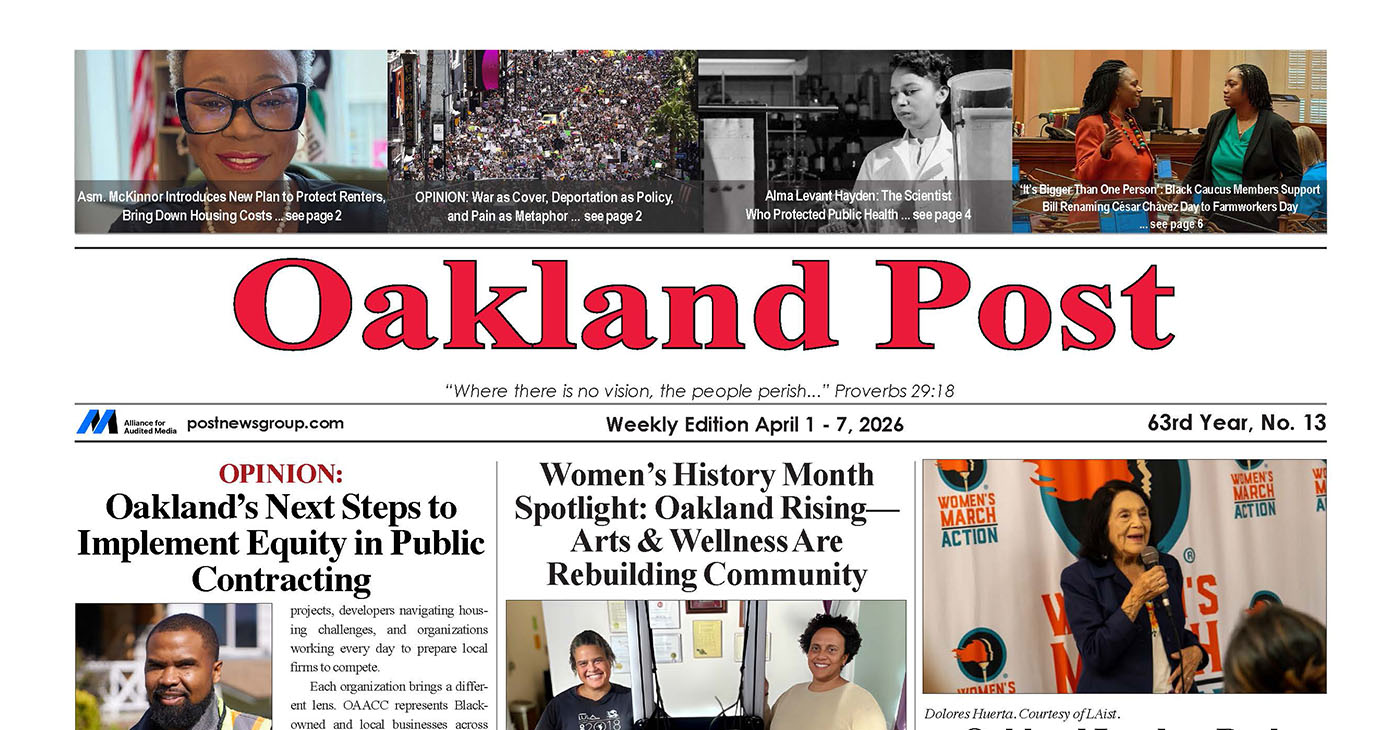
Oakland Post: Week of April 1 – 7, 2026
The printed Weekly Edition of the Oakland Post: Week of April 1 – 7, 2026
To enlarge your view of this issue, use the slider, magnifying glass icon or full page icon in the lower right corner of the browser window.
Activism
Oakland Post: Week of March 18 – 24, 2026
The printed Weekly Edition of the Oakland Post: Week of March 18 – 24, 2026

To enlarge your view of this issue, use the slider, magnifying glass icon or full page icon in the lower right corner of the browser window.
Activism
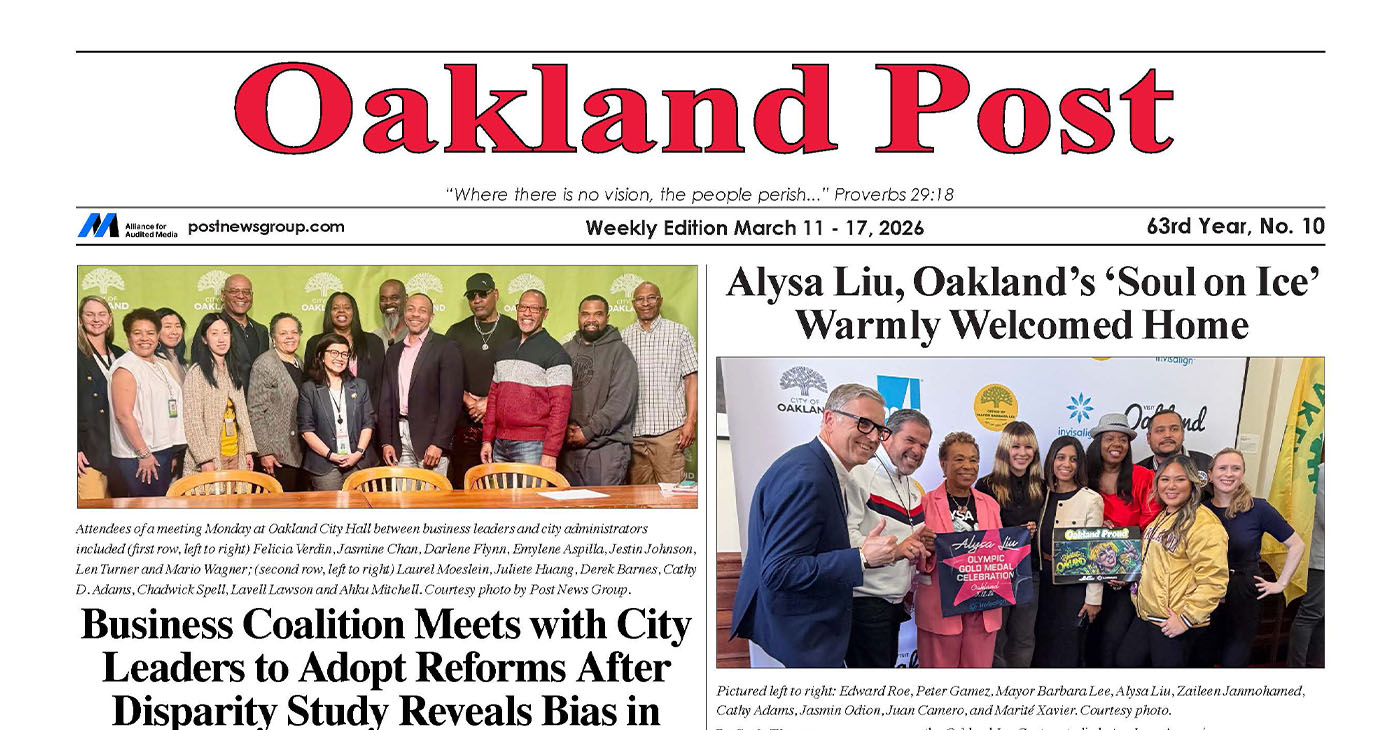
Oakland Post: Week of March 11 -17, 2026
The printed Weekly Edition of the Oakland Post: Week of March 11 – 17, 2026
To enlarge your view of this issue, use the slider, magnifying glass icon or full page icon in the lower right corner of the browser window.

WORK FROM HOME
Home-based business with potential monthly income of $10K+ per month. A proven training system and website provided to maximize business effectiveness. Perfect job to earn side and primary income. Contact Lynne for more details: Lynne4npusa@gmail.com 800-334-0540


Oakland Post: Week of April 1 – 7, 2026

Black Artists in America, Installation Three Wraps at the Dixon Gallery and Gardens

Grief, Advocacy, and Education: A Counselor Reflects on Black Maternal Health

Future of Florida’s Black History Museum in Limbo

New Research Shows the Many Benefits of Early Learning

South Hampton K-8 Students Among Top 10 Finalists for Samsung’s ‘Solve for Tomorrow’ Competition

Cuba: No Negotiation with US on the President or Political System

Brooklyn Academy of Music Names Jamaican-Born Tamara McCaw as President

Trinidad & Tobego – U.S. Launches WhatsApp Channel for American Citizens in the Country

Oakland Post: Week of March 18 – 24, 2026

AI Innovation vs. Ethics and Environmental Impact

AI, Web3, and Digital Reparations

What If You Owned Your AI Agent?

Season 7, Episode 3 – January Reporter’s Roundtable 📱

Season 7, Episode 3 – January Reporter’s Roundtable

Reflecting on Black History Milestones in Birmingham AL

Oakland Post: Week of February 25 – March 3, 2026

PRESS ROOM: NBA Hall of Fame Nominee Terry Cummings Joins 100 Black Men of DeKalb County to Launch Victory & Values Initiative

Oakland Post: Week of March 4 – 10, 2026

Trump’s MAGA Allies are Creating Executive Order Plan to Steal the 2026 Midterms

U.S. manufacturing rebounds – how foundry services are adapting to rising demand

Poll Shows Support for Policies That Help Families Afford Child Care

OP-ED: One Hundred Years of Black Workers Telling the Truth

Oakland Post: Week of March 11 -17, 2026

Advancements in solar technology that are changing the way we power the world
Oakland Post: Week of March 18 – 24, 2026

Woman’s Search for Family’s Roots Leads to Ancestor John T. Ward – A Successful Entrepreneur and Conductor on the Underground Railroad

COMMENTARY: Women of Color Shape Our Past and Future

PRESS ROOM: Civil Rights TV Launches in Selma as the World’s First 24/7 Civil Rights Television Network

Financial Wellness and Mental Health: Managing Money Stress in College

Hyundai Ioniq 5 Parking, Safety, and 360 View #shorts

2025 Ioniq 5 New Wiper & Powerful Performance! #shorts

Electric SUV Range: Is 259 Miles Enough? #shorts

EV Charging: How Fast Can You Charge an Electric Vehicle? #shorts

Biometric Cooling… Messaging Seats…Come on! 2025 Infiniti QX80 Autograph 4WD

Charged Up: Witness the Magic of a Fully Electric Car! #shorts

Range Rover Sport PHEV Included…: See What’s Inside This Luxury SUV! #shorts

Invisible Hood View: Perfect Parking with X-Ray Vision! #shorts

AI Is Reshaping Black Healthcare: Promise, Peril, and the Push for Improved Results in California

ESSAY: Technology and Medicine, a Primary Care Point of View

Sanctuary Cities

The RESISTANCE – FREEDOM NOW

STATE OF THE PEOPLE: Freddie

ECONOMIC BOYCOTT DAY!!!!!

I told You So
-
 Activism3 weeks ago
Oakland Post: Week of March 11 -17, 2026
-
 Activism2 weeks ago
Oakland Post: Week of March 18 – 24, 2026
-
 #NNPA BlackPress4 weeks ago
Woman’s Search for Family’s Roots Leads to Ancestor John T. Ward – A Successful Entrepreneur and Conductor on the Underground Railroad
-
 #NNPA BlackPress4 weeks ago
COMMENTARY: Women of Color Shape Our Past and Future
-
 Advice3 weeks ago
Financial Wellness and Mental Health: Managing Money Stress in College
-

 #NNPA BlackPress4 weeks ago
Advocates Raise Alarm Over ICE Operation, MOU and Detention Risks in Baltimore County
-

 #NNPA BlackPress4 weeks ago
Pete Buttigieg to Join Mayor Randall Woodfin for Community Town Hall in Birmingham
-
 #NNPA BlackPress2 weeks ago
Brooklyn Academy of Music Names Jamaican-Born Tamara McCaw as President
