Connect with us

Black History

Philippa Duke Schuyler: Pianist Received National Prominence at Young Age

Americans were in awe of young Philippa Duke Schuyler’s genius. The media often reported on her progress, specifically the Pittsburgh Courier. She received guidance, mostly from her mother, into adulthood. But as she became an adult, white America’s fascination with her talent waned. What she had been shielded from throughout her life became reality: racial prejudice. And this altered the trajectory of her career.

Published

on

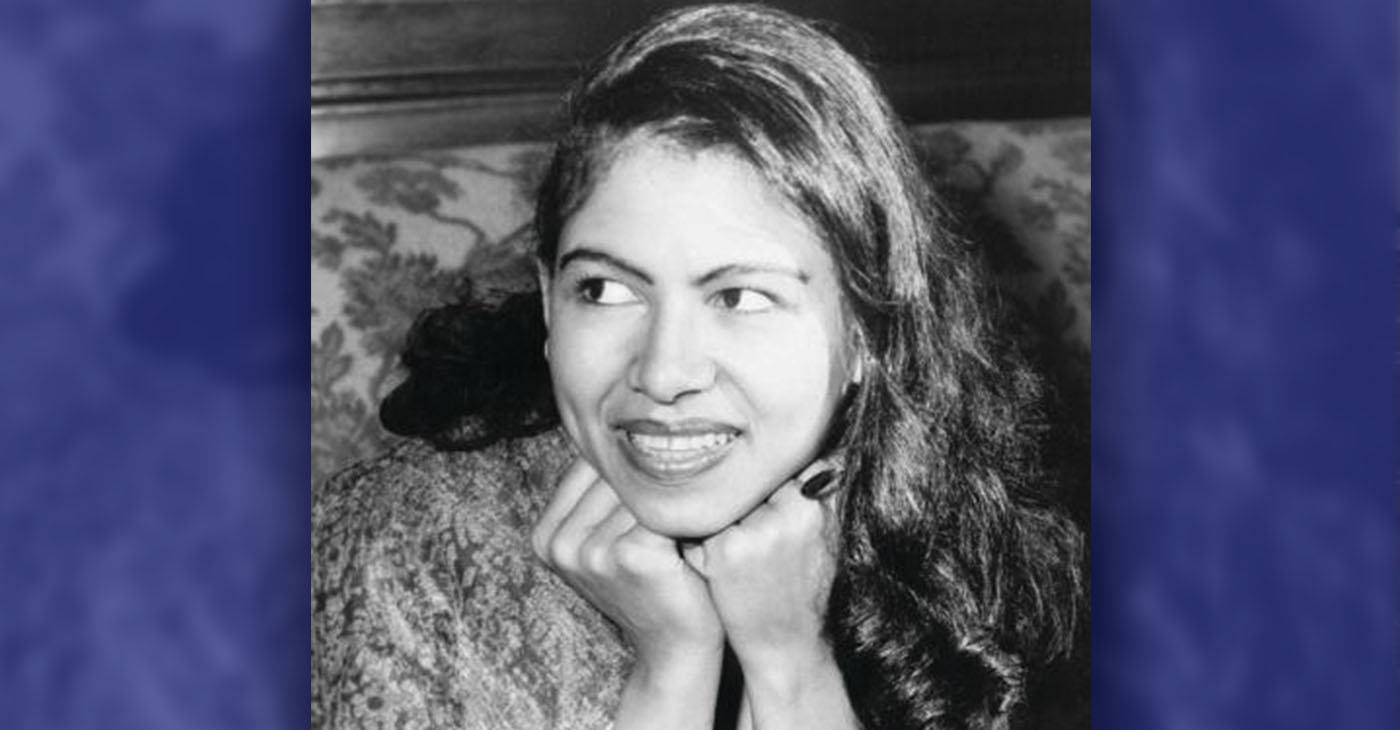
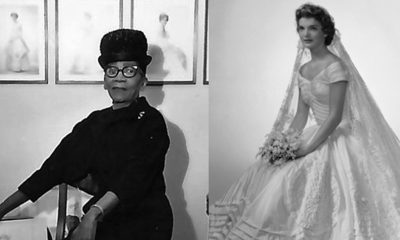
Philippa Duke Schuyler in 1959. Wikipedia.org photo.

By Tamara Shiloh

African American author and journalist George Schuyler and white artist and journalist Josephine Cogdell’s marriage was dubbed “the most celebrated interracial marriage of the Harlem Renaissance.”

The couple had one child, Philippa Duke Schuyler (1931–1967). From Philippa’s birth, both Schuyler and Cogdell felt that racism in the U.S. “could be rectified through creating interracial children,” thereby setting high expectations for their daughter.

Because Philippa was biracial, the Schuylers considered her a “superior offspring known as a hybrid vigor.” Nevertheless, Philippa was a child prodigy with extraordinary talents who received tutoring while isolated from her peers.

Before age 3, Philippa was taught to read and write and had begun to play the piano. At 4, she was composing, and at 5, performed on the radio. By 11, she was touring. Despite her high IQ at age 8 (185), the Schuylers consistently rejected Philippa being known as a prodigy, attributing her talent to “hybrid genetics, proper nutrition, and intensive education.”

Philippa had a close relationship with her father, thereby absorbing his conservative beliefs in educational advancement, self-help, and introspection. But despite her being a part of the Black intelligentsia, “her precocity was fed on notions and conceits of the white milieu; and her passion for classical music would essentially reflect the same bias.”

Americans were in awe of young Philippa’s genius. The media often reported on her progress, specifically the Pittsburgh Courier. She received guidance, mostly from her mother, into adulthood. But as she became an adult, white America’s fascination with her talent waned. What she had been shielded from throughout her life became reality: racial prejudice. And this altered the trajectory of her career.

Schuyler then began playing in concerts overseas, traveling to more than 80 countries, performing for international leaders including Haile Selassie and Queen Elisabeth of Belgium. Her fame attracted worldwide attention, yet she was never invited to perform for leaders in the U.S. Disillusioned with the racial and gender prejudice she encountered, she moved to Latin America, where people of mixed races were more common.

About this decision, she said: “I had 30 miserable years in the U.S.A. because of having the taint of being a ‘strange curiosity’ applied to me.”

In the late 1950s, Schuyler performed for white audiences in apartheid-era South Africa. She briefly toured in Europe as Felipa Monterro, no longer identifiable as the “daughter of a Negro journalist.” Between 1960 and 1966, she published five books about her life and travels.

Just before her death, Schuyler had begun a career as a news correspondent, publishing articles in several languages including French and German. She died at the age of 35 in a helicopter crash during the Vietnam War while attempting to rescue Catholic schoolchildren from a war zone in Da Nang.

Learn more about Schuyler’s life through previously unpublished letters and diary entries that reveal her extraordinary and complex personality in the unauthorized biography, “Composition in Black and White” by Kathryn Talalay.

Tamara Shiloh

Tamara Shiloh


About Tamara Shiloh


Tamara Shiloh has published the first two books in her historical fiction chapter book series, Just Imagine…What If There Were No Black People in the World is about African American inventors, scientists and other notable Black people in history. The two books are Jaxon’s Magical Adventure with Black Inventors and Scientists and Jaxon and Kevin’s Black History Trip Downtown. Tamara Shiloh has also written a book a picture book for Scholastic, Cameron Teaches Black History, that will be available in June, 2022.

Tamara Shiloh’s other writing experiences include: writing the Black History column for the Post Newspaper in the Bay area, Creator and Instruction of the black History Class for Educators a professional development class for teachers and her non-profit offers a free Black History literacy/STEM/Podcast class for kids 3d – 8th grade which also includes the Let’s Go Learn Reading and Essence and tutorial program.   She is also the owner of the Multicultural Bookstore and Gifts, in Richmond, California,

Previously in her early life she was the /Editor-in-Chief of Desert Diamonds Magazine, highlighting the accomplishments of minority women in Nevada; assisting with the creation, design and writing of a Los Angeles-based, herbal magazine entitled Herbal Essence; editorial contribution to Homes of Color; Editor-in-Chief of Black Insight Magazine, the first digital, interactive magazine for African Americans; profile creations for sports figures on the now defunct PublicFigure.com; newsletters for various businesses and organizations; and her own Las Vegas community newsletter, Tween Time News, a monthly publication highlighting music entertainment in the various venues of Las Vegas.

She is a member of:

  • Society of Children’s Book Writers and Illustrators (SCBWI)

  • Richmond Chamber of Commerce

  • Point Richmond Business Association

  • National Association of Professional Women (NAPW)

  • Independent Book Publishers Association (IPBA)

  • California Writers Club-Berkeley & Marin

  • Richmond CA Kiwanis

  • Richmond CA Rotary

  • Bay Area Girls Club


Tamara Shiloh, a native of Northern California, has two adult children, one grandson and four great-grand sons. She resides in Point Richmond, CA with her husband, Ernest.

www.multiculturalbookstore.com

About Tamara Shiloh

Tamara Shiloh has published the first two books in her historical fiction chapter book series, Just Imagine…What If There Were No Black People in the World is about African American inventors, scientists and other notable Black people in history. The two books are Jaxon’s Magical Adventure with Black Inventors and Scientists and Jaxon and Kevin’s Black History Trip Downtown. Tamara Shiloh has also written a book a picture book for Scholastic, Cameron Teaches Black History, that will be available in June, 2022. Tamara Shiloh’s other writing experiences include: writing the Black History column for the Post Newspaper in the Bay area, Creator and Instruction of the black History Class for Educators a professional development class for teachers and her non-profit offers a free Black History literacy/STEM/Podcast class for kids 3d – 8th grade which also includes the Let’s Go Learn Reading and Essence and tutorial program.   She is also the owner of the Multicultural Bookstore and Gifts, in Richmond, California, Previously in her early life she was the /Editor-in-Chief of Desert Diamonds Magazine, highlighting the accomplishments of minority women in Nevada; assisting with the creation, design and writing of a Los Angeles-based, herbal magazine entitled Herbal Essence; editorial contribution to Homes of Color; Editor-in-Chief of Black Insight Magazine, the first digital, interactive magazine for African Americans; profile creations for sports figures on the now defunct PublicFigure.com; newsletters for various businesses and organizations; and her own Las Vegas community newsletter, Tween Time News, a monthly publication highlighting music entertainment in the various venues of Las Vegas. She is a member of:
  • Society of Children’s Book Writers and Illustrators (SCBWI)
  • Richmond Chamber of Commerce
  • Point Richmond Business Association
  • National Association of Professional Women (NAPW)
  • Independent Book Publishers Association (IPBA)
  • California Writers Club-Berkeley & Marin
  • Richmond CA Kiwanis
  • Richmond CA Rotary
  • Bay Area Girls Club
Tamara Shiloh, a native of Northern California, has two adult children, one grandson and four great-grand sons. She resides in Point Richmond, CA with her husband, Ernest. www.multiculturalbookstore.com

Continue Reading
Click to comment

Leave a Reply

Your email address will not be published. Required fields are marked *

Art

After 10-Year Wait, Fillmore Heritage Center Reopens in San Francisco

After serving as the economic and cultural hub of the Fillmore’s historically Black community for more than a decade, the center’s closure ended what was called the “Rebirth of the Cool,” referring to the neighborhood’s role during the height of Black Jazz in the United States.

Published

on

Rev. Amos Brown of Third Baptist Church addresses community members at the Fillmore Heritage Center ribbon cutting. Photo by Linda Parker Pennington.

By Linda Parker Pennington, Special to The Post

Last Saturday morning, the cloudy skies cleared just as the highly anticipated ribbon-cutting ceremony began, marking the reopening of the Fillmore Heritage Center at 1330 Fillmore and Eddy.

The complex – which had once included Yoshi’s Jazz Club, the Lush Life Art Gallery, the Koret Heritage Lobby, a 54-seat microcinema, and the Black-owned 1300 On Fillmore restaurant – shuttered in 2015.

After serving as the economic and cultural hub of the Fillmore’s historically Black community for more than a decade, the center’s closure ended what was called the “Rebirth of the Cool,” referring to the neighborhood’s role during the height of Black Jazz in the United States.

San Francisco Mayor Daniel Lurie announcing the reopening of the Fillmore Heritage Center. Erika Scott, owner of Honey Art Studio, looks on with pride. Photo by Linda Parker Pennington.

San Francisco Mayor Daniel Lurie announcing the reopening of the Fillmore Heritage Center. Erika Scott, owner of Honey Art Studio, looks on with pride. Photo by Linda Parker Pennington.

“The Fillmore is the most important neighborhood in San Francisco’s history for centering Black culture, music, business, and community, and has shaped this City and influenced the entire country,” said San Francisco Mayor Daniel Lurie to the gathering of more than 100 community leaders, business owners, and public officials. “This building reflects the deep roots of the Fillmore. Urban renewal left deep scars that are still felt today. This Center celebrates a strong Black community that continues to shape San Francisco. I am proud to join the community as we reopen the Fillmore Heritage Center.”

Although the previous stakeholders will not be returning to the center, spaces are available for nonprofit organizations and ventures, such as Fillmore native Ericka Johnson’s Honey Art Studio.

“This Center will be an economic engine and a thriving venue that shines a light on the Black-owned businesses in this neighborhood and lifts the entire district,” Lurie continued. “Our City is committed to this community for the long term.”

“We’re excited to collaborate with the City to finally reopen these doors,” said Ken Johnson, a videographer and community leader who’d been lobbying for the reopening of the center. “It’s an opportunity to showcase the entrepreneurship and creative spirit of this ‘Harlem of the West’ and the ‘Rebirth of the Cool,’ grounded in our uniquely gifted Fillmore community.”

This month, through its Office of Economic and Workforce Development, the city will begin renting the building’s noncommercial spaces for pop-up events celebrating local talent, arts, and entertainment primarily centered in the Fillmore.

Continue Reading

Arts and Culture

COMMENTARY: Black Music is the Sound of Black Freedom: Let Us Reclaim Both This Juneteenth

Black Music Month started when Black Music Association members Ed Wright, Kenny Gamble and his wife, journalist and radio host Dyanna Williams were able to persuade President Jimmy Carter to establish the observation on June 7, 1979.

Published

on

Robert Johnson (1911-1938) is thought of as the godfather of blues music, especially Delta blues. The 29 songs recorded by him during his short life have been of massive inspiration to guitarists and musicians over the last 80 years. Public domain photo.

By Wanda Ravernell

Black Music Month and Juneteenth are inextricably linked – Black music is the sound of our freedom.

From the plaintive moans of the enslaved Africans’ ‘sorrow songs,’ to the fields of Civil War battle where Black soldiers picked up abandoned bugles, to the upright piano played in juke joints on Saturday night and churches come Sunday morning, our ancestors’ innovation in the face of want, fear, degradation, and hopelessness has yielded genres of music imitated ’round the world.

Black Music Month started when Black Music Association members Ed Wright, Kenny Gamble and his wife, journalist and radio host Dyanna Williams were able to persuade President Jimmy Carter to establish the observation on June 7, 1979.

In 2000, Congress made it official. In 2009, Pres. Barack Obama changed the name to African American Music Heritage Month and in 2023, Pres. Joe Biden changed it back to Black Music Month, two years after he declared Juneteenth a national holiday, the result of a movement led by Opal Lee.

Our ancestors battle for freedom over these last 400 years and the music that allowed them expression of their humanity deserved to be honored.

But we may be losing sight of the value of their sacrifices.

‘Sing a Song Full of the Faith That the Dark past Has Taught Us…’

Along with the long-known exploitation of Black musicians whose recordings were stolen by record companies, the commercialization of Juneteenth feels like another kind of theft.

I had never heard of Juneteenth until I moved to the Bay Area from my hometown of Philadelphia. I didn’t know it was one of many freedom festivals celebrated by descendants of enslaved people in the United States.

Emancipation Day was Jan. 1 in Pennsylvania, April 16 in Wash., D.C., May 20 in Florida, and Aug. 8 in Kentucky. But Juneteenth, June 19, has the most renown, known in Texas as the ‘colored peoples’ Fourth of July.’

It was marked by parades, beauty pageants, rodeos, backyard barbecues and church picnics.

Yes, church.

The formerly enslaved began the day praying in thanks for their freedom just as they had prayed for Jubilee – the day of freedom – when they had chains on their feet and hands. They ‘testified’ about their past suffering and how they had managed to overcome.

And they sang.

Although, we will not hold it this year, Omnira Institute’s Juneteenth Ritual of Remembrance recalled this part of Juneteenth with prayers in the languages of the African captives. In the middle of the ceremony, a soloist would lead us in singing “Many Thousand Gone” while we took turns reciting portions of the Emancipation Proclamation, the news of freedom that took more than two years to reach Texas – two months after the Civil War ended.

“Many Thousand Gone” was famously recorded by Black luminary Paul Robeson in 1947:

“No more auction block for me,

No more, no more

No more auction black for me

Many thousand gone.”

Other verses refer to the ‘pint of salt’ and the ‘driver’s lash,’ the realities of enslavement that they had survived.

‘Sing a Song Full of the Hope That the Present has Brought Us’

All of the genres of African American music have at their root songs like that, the essence being, as Stevie Wonder, wrote, “the joy inside our pain.” So Black music is not just music. It is our story, our history, our very strength.

During the Civil Rights Movement, which peaked 100 years after slavery ended, the people testified that it was the freedom songs – based on spirituals – that gave them the heart to march, face attack dogs, fire hoses, beatings, and shootouts with vigilantes.

The music reminded them that power was in the people. That music, our music, can do so again. We don’t have to accept the commodification of the products of our culture.

The power of those songs is showing a resurgence across the South as we battle again for the right to self-determination through the ballot box.

Those songs are the voices of our ancestors, voices forged in their blood, their sweat, their tears, joy and, above all, faith.  Those songs, those prayers live in our blood and our very breath.

This Juneteenth, let us reclaim those holy voices expressed in Black music for ourselves. It is our birthright. It can neither be bought nor sold.  No more. Never again.

Wanda Ravernell is the executive director of Omnira Institute, sponsor for 18 years of the Juneteenth Ritual of Remembrance and Oakland’s 11th Annual Black-Eyed Pea Festival, which will take place on Sept. 12.

Continue Reading

Activism

Oakland Post: Week of June 3 – 9, 2026

The printed Weekly Edition of the Oakland Post: Week of June 3 – 9, 2026

Published

on

To enlarge your view of this issue, use the slider, magnifying glass icon or full page icon in the lower right corner of the browser window.

Continue Reading

Subscribe to receive news and updates from the Oakland Post

* indicates required

CHECK OUT THE LATEST ISSUE OF THE OAKLAND POST

ADVERTISEMENT

WORK FROM HOME

Home-based business with potential monthly income of $10K+ per month. A proven training system and website provided to maximize business effectiveness. Perfect job to earn side and primary income. Contact Lynne for more details: Lynne4npusa@gmail.com 800-334-0540

Facebook

Trending

Copyright ©2021 Post News Group, Inc. All Rights Reserved.