
Black History
Philip Bell Downing: Black Creativity Seen in Everyday Objects
The Providence, R.I.–born Philip Bell Downing was creative from childhood, always looking for ways to improve on the routines of daily life. As the son of abolitionist George T. Downing, also manager of the US House of Representatives’ dining room in Wash., D.C., and entrepreneur Serena L. deGrasse, young Philip was exposed to influential leaders all of his life. In fact, in the mid-1830s, his grandfather Thomas Downing was a key player in the United Anti-Slavery Society of the City of New York. Later, Phillip would always be at his side, watching and learning.

By Tamara Shiloh
During the early 19th century, pieces of mail and packages could only be posted at the town’s post office. For many, this meant traveling long distances and delays due to inclement weather.
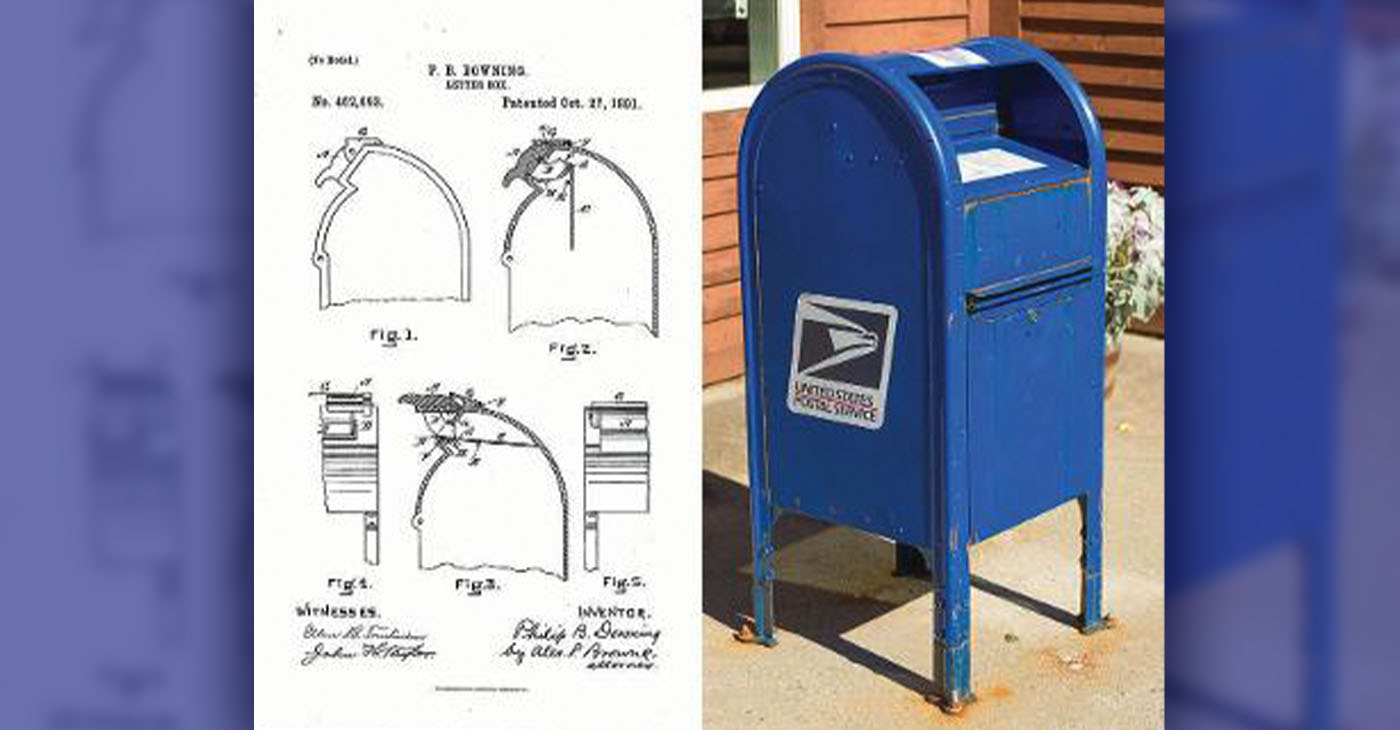
A more convenient solution was presented in October 1891, when Philip Downing’s (1857–1934) patent for the Street Letter Box made it possible for residents to leave their mail inside a tall metal box for the postman to pick up and take to their home post office.
The letter box was constructed of metal, had four legs and a self-closing hinge door that kept mail safe from the elements and potential thefts. That same year (1891), Downing received another patent for a design with a chute that would unload mail into a postal worker’s bag.
The Providence, R.I.–born Downing was creative from childhood, always looking for ways to improve on the routines of daily life. As the son of abolitionist George T. Downing, also manager of the US House of Representatives’ dining room in Wash., D.C., and entrepreneur Serena L. deGrasse, young Philip was exposed to influential leaders all of his life. In fact, in the mid-1830s, his grandfather Thomas Downing was a key player in the United Anti-Slavery Society of the City of New York. Later, Phillip would always be at his side, watching and learning.

Downing’s idea for the letter box came about because his family relocated often. In what seemed to have been every city, they too had to travel far to post mail. Like all great inventors, he saw a gap in progress, became creative and filled it.
Downing’s letter box (known today as a mailbox) has since gone through several improvements. During the early 20th century, the U.S. Postal Service approved the design of a locking curbside mailbox. Also introduced were specifications for installing curbside mailboxes that included placing the letter box 6-8 inches back from the curb.
Still, many features stemming from Downing’s invention have remained intact.
Although best known for the letter box, Downing received patents for other inventions. His first, the ‘New and Useful Improvements in Street Railway Switches’ (June 1890), was for an improvement in streetcar and train switches that allowed the switch to be opened or closed by the brakeman from the platform of the car. This patent ultimately led to the light switch. Later, in January 1917, he would, using a roller and an attached water tank, create and receive a patent for an envelope moistener.
During the late 19th and early 20th centuries, Downing successfully filed at least five patents with the U.S. Patent Office. None, however, were more widely used than the letter box. After a long career as a postal clerk, he died in Boston in 1934. He was 77. Perhaps one day his face will appear on a postage stamp.
Read with the young ones about items used in our everyday lives, including the mailbox, created by African American men and women in Charron Monaye’s “Imagine Life Without African-American Inventors.”






Activism
Oakland Post: Week of March 18 – 24, 2026
The printed Weekly Edition of the Oakland Post: Week of March 18 – 24, 2026
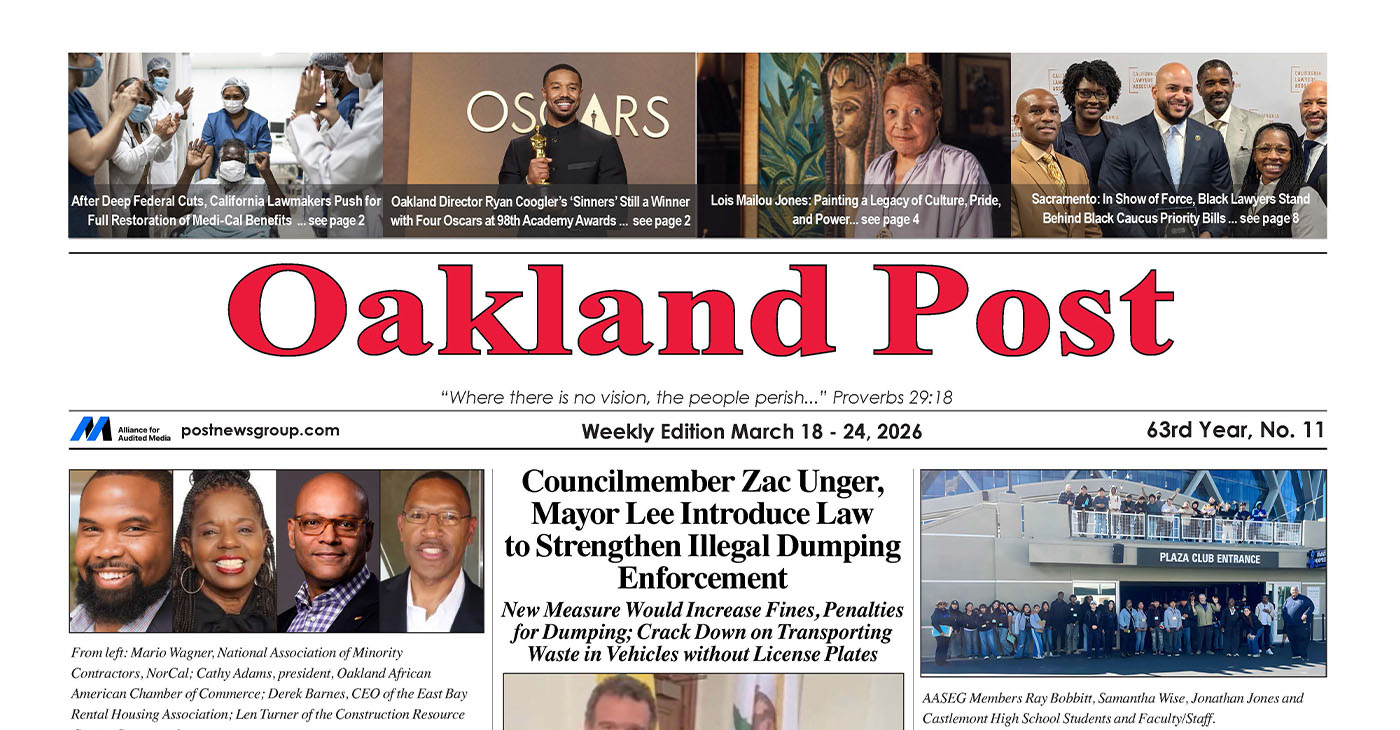
To enlarge your view of this issue, use the slider, magnifying glass icon or full page icon in the lower right corner of the browser window.
Activism
Oakland Post: Week of March 11 -17, 2026
The printed Weekly Edition of the Oakland Post: Week of March 11 – 17, 2026
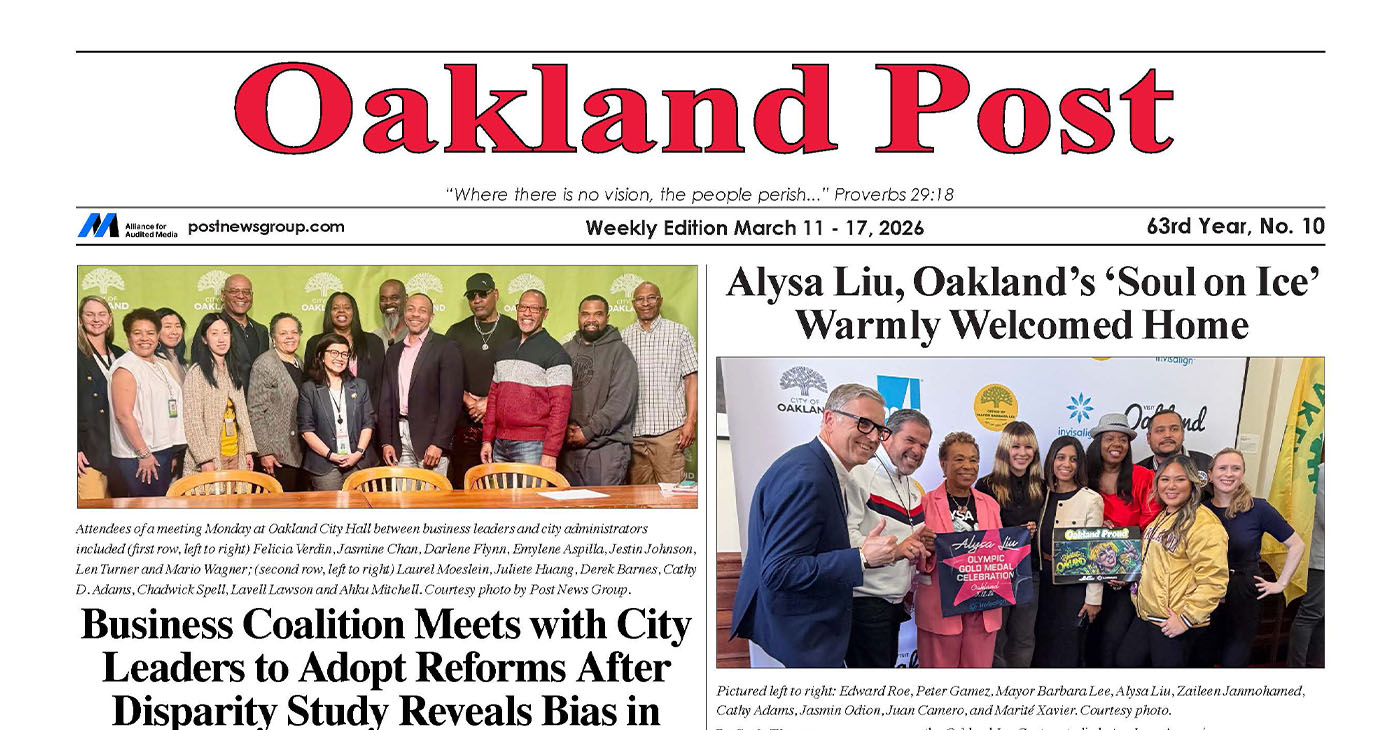
To enlarge your view of this issue, use the slider, magnifying glass icon or full page icon in the lower right corner of the browser window.
Activism
Oakland Post: Week of March 4 – 10, 2026
The printed Weekly Edition of the Oakland Post: Week of March 4 – 10, 2026
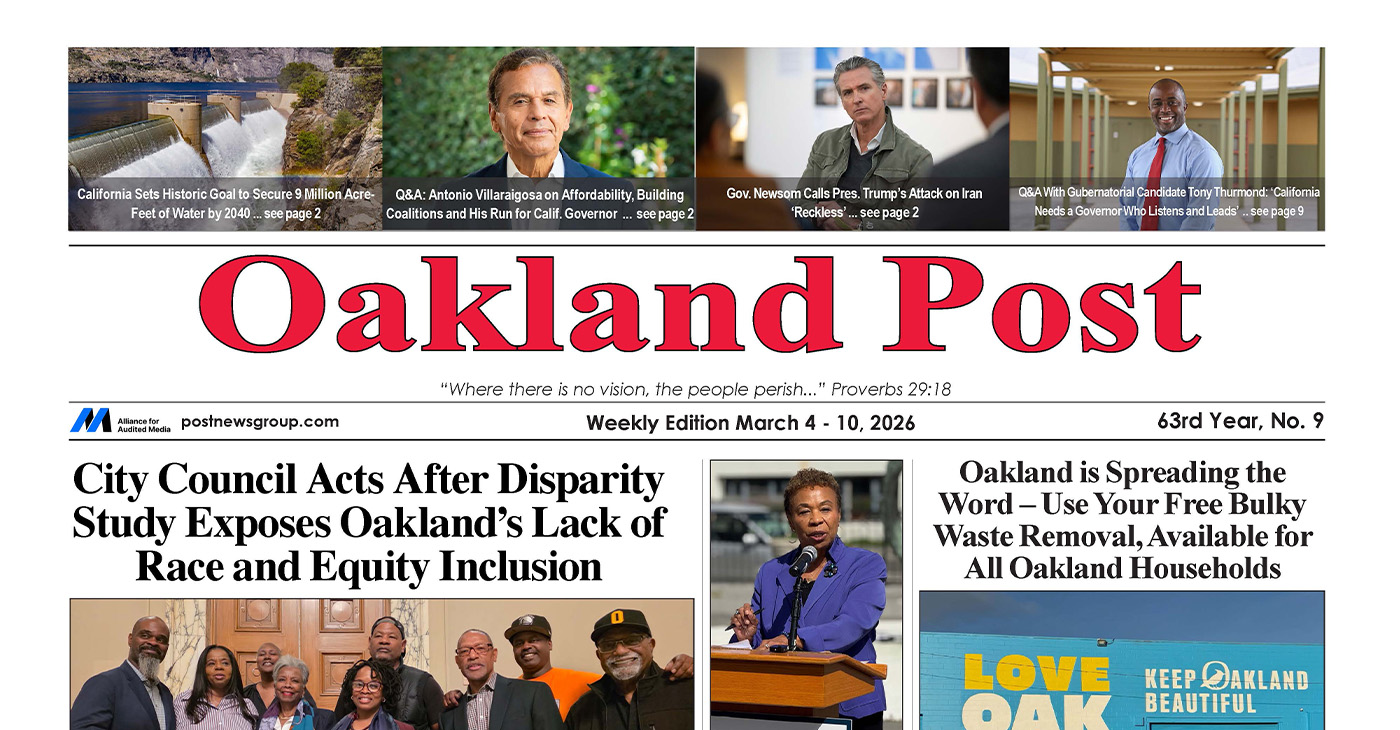
To enlarge your view of this issue, use the slider, magnifying glass icon or full page icon in the lower right corner of the browser window.

WORK FROM HOME
Home-based business with potential monthly income of $10K+ per month. A proven training system and website provided to maximize business effectiveness. Perfect job to earn side and primary income. Contact Lynne for more details: Lynne4npusa@gmail.com 800-334-0540


Black Artists in America, Installation Three Wraps at the Dixon Gallery and Gardens

Grief, Advocacy, and Education: A Counselor Reflects on Black Maternal Health

Future of Florida’s Black History Museum in Limbo

New Research Shows the Many Benefits of Early Learning

South Hampton K-8 Students Among Top 10 Finalists for Samsung’s ‘Solve for Tomorrow’ Competition

Cuba: No Negotiation with US on the President or Political System

Brooklyn Academy of Music Names Jamaican-Born Tamara McCaw as President

Trinidad & Tobego – U.S. Launches WhatsApp Channel for American Citizens in the Country

Oakland Post: Week of March 18 – 24, 2026

AI Innovation vs. Ethics and Environmental Impact

AI, Web3, and Digital Reparations

What If You Owned Your AI Agent?

Season 7, Episode 3 – January Reporter’s Roundtable 📱

Season 7, Episode 3 – January Reporter’s Roundtable

AI, Media, and Power | Part 2, Real-World Impacts and Tradeoffs

Discrimination in City Contracts

Oakland Post: Week of February 11 – 17, 2026

Reflecting on Black History Milestones in Birmingham AL

Rising Optimism Among Small And Middle Market Business Leaders Suggests Growth for California

CITY OF SAN LEANDRO STATE OF CALIFORNIA PUBLIC WORKS DEPARTMENT ENGINEERING DIVISION NOTICE TO BIDDERS FOR ANNUAL STREET OVERLAY/REHABILITATION 2019-21 – PHASE III

Oakland Post: Week of February 18 – 24, 2026

PRESS ROOM: NBA Hall of Fame Nominee Terry Cummings Joins 100 Black Men of DeKalb County to Launch Victory & Values Initiative

Oakland Post: Week of February 25 – March 3, 2026

Trump’s MAGA Allies are Creating Executive Order Plan to Steal the 2026 Midterms

U.S. manufacturing rebounds – how foundry services are adapting to rising demand

OP-ED: One Hundred Years of Black Workers Telling the Truth

Advancements in solar technology that are changing the way we power the world

Chase Oakland Community Center Hosts Alley-Oop Accelerator Building Community and Opportunity for Bay Area Entrepreneurs

Poll Shows Support for Policies That Help Families Afford Child Care

PRESS ROOM: Civil Rights TV Launches in Selma as the World’s First 24/7 Civil Rights Television Network

Hyundai Ioniq 5 Parking, Safety, and 360 View #shorts

2025 Ioniq 5 New Wiper & Powerful Performance! #shorts

Electric SUV Range: Is 259 Miles Enough? #shorts

EV Charging: How Fast Can You Charge an Electric Vehicle? #shorts

Biometric Cooling… Messaging Seats…Come on! 2025 Infiniti QX80 Autograph 4WD

Charged Up: Witness the Magic of a Fully Electric Car! #shorts

Range Rover Sport PHEV Included…: See What’s Inside This Luxury SUV! #shorts

Invisible Hood View: Perfect Parking with X-Ray Vision! #shorts

AI Is Reshaping Black Healthcare: Promise, Peril, and the Push for Improved Results in California

ESSAY: Technology and Medicine, a Primary Care Point of View

Sanctuary Cities

The RESISTANCE – FREEDOM NOW

STATE OF THE PEOPLE: Freddie

ECONOMIC BOYCOTT DAY!!!!!

I told You So
-
 Activism4 weeks ago
Oakland Post: Week of February 25 – March 3, 2026
-
 #NNPA BlackPress4 weeks ago
Poll Shows Support for Policies That Help Families Afford Child Care
-

 Activism3 weeks ago
Oakland Post: Week of March 4 – 10, 2026
-

 #NNPA BlackPress3 weeks ago
Woman’s Search for Family’s Roots Leads to Ancestor John T. Ward – A Successful Entrepreneur and Conductor on the Underground Railroad
-

 #NNPA BlackPress3 weeks ago
OP-ED: NNPA Launches 2026 “Leadership Matters” Video Series
-

 #NNPA BlackPress3 weeks ago
Advocates Raise Alarm Over ICE Operation, MOU and Detention Risks in Baltimore County
-

 #NNPA BlackPress3 weeks ago
COMMENTARY: Women of Color Shape Our Past and Future
-

 #NNPA BlackPress3 weeks ago
Pete Buttigieg to Join Mayor Randall Woodfin for Community Town Hall in Birmingham
