
City Government
Is Phil Tagami Stacking the Deck Against California Waste Solutions?

The Oakland Post has been hearing community concerns that Army Base Master Developer Phil Tagami of CCIG may have been trying to undermine the city’s new trash and recycling company – California Waste Solutions (CWS) by keeping the company waiting to move ahead with the construction of its new facility at the North Gateway of the Oakland Army Base.
CWS has already put up $600,000 to show its commitment and was supposed to take possession of the Army Base property in 2013. Now, the company is being told it will get the land in 2016, though some people close to the project says it will not be turned over until 2017 or 2018.
According to Post Publisher Paul Cobb, he has heard from many sources that, “The developer in effect is saying he can’t give CWS the North Gateway, and there seems to be s be no one in this administration that is taking control of this project. They just seem to listen to whatever Tagami says.”
Responding, Tagami sent an email to the Post, saying, “It is in all parties interest to get out of the ground as soon as possible.” Tagami’s statement is printed in full at his request on the Post’s website at postnewsgorup.com

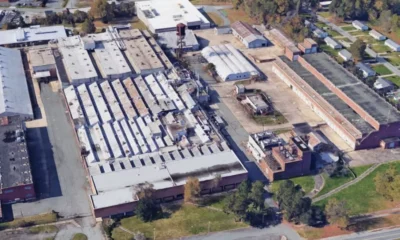
CWS says it will take about 18 months to build its $80 million facility at the North Gateway section of the base – 27.3 acres that has been set aside for indoor recycling facilities and an additional seven acres for truck parking.
A key part of the company’s operations, the CWS facility will dedicate 200,000 square feet to process and transfer the various components of the city’s trash stream – composting, organic materials and recyclables like paper and metal. The site will also house the truck corporation and maintenance yard and become the new headquarters for CWS and its employees.
Until the CWS takes possession of its property and builds the facility, the company has arranged with East Bay Municipal District (EBMUD) to utilize some of its property.
People close to the Army Base project have suggested that Tagami and CCIG have never wanted to give any property to recyclers – Cass metals and CWS – even though the City Council voted to give them space on the base, said Cobb.
The problem, says Cobb, is economic. Tagami has been hired to be the city’s agent but is also a private businessman who will make less money if property goes to CWS.
“Any space that is turned into a warehouse is a revenue for the city and revenue for CCIG (Tagami),” he said. “When recyclers get a lease, there is no revenue for Phil – there is just rent for the city.”
“ I’m hearing that his financial interests as an individual are in conflict with the city and its overall goal,” which is to use a portion of the base property for CWS, Cass metals and OMSS, to get the recyclers and truck parking out of the West Oakland community, Cobb said.
Cobb noted that if the city had structured an arrangement with Tagami that is similar to the $1.5 million payment to the city that it required from CWS, Tagami would be paying the city for the privilege of receiving ta contract, rather than the city subsidizing him at the same time he is benefitting.
Cobb says it is in the interests of the city to turn the base property over to CWS on or before July 1, 2015, but that seems to be opposite for Tagami.












Activism
Oakland Post: Week of September 23 – 29, 2026
The printed Weekly Edition of the Oakland Post: Week of September 23 – 29, 2026

To enlarge your view of this issue, use the slider, magnifying glass icon or full page icon in the lower right corner of the browser window.
Activism
Oakland Post: Week of September 16 – 22, 2026
The printed Weekly Edition of the Oakland Post: Week of September 16 – 22, 2026

To enlarge your view of this issue, use the slider, magnifying glass icon or full page icon in the lower right corner of the browser window.
Activism
Oakland Post: Week of September 9 – 15, 2026
The printed Weekly Edition of the Oakland Post: Week of September 9 – 15, 2026

To enlarge your view of this issue, use the slider, magnifying glass icon or full page icon in the lower right corner of the browser window.



Asm. Corey Jackson Announces Launch of 24-Hour Childcare in His District

IN MEMORIAM: The Rev. Leon “Sonny” Clark, Longtime Orange County Pastor and Community Leader, Dies at 72

Poll: Becerra Widens His Lead Over Hilton; Californians Split on Wealth Tax

From Historic Memories to New Possibilities: Oakland Celebrates Coliseum 60

County Office of Education Says OUSD Finances Are Getting Healthier, Materially Stronger

LIVE FREE Sunday Dinner Brings Faith, Fellowship and Civic Conversation to Oakland

Remembering Chauncey Bailey as Student Journalists Face Threats to Truth-Telling

BLACspace Cooperative Invites Bay Area to Experience Oakland’s Black Cultural Ecosystem Through a BLAC Map Tour + Party

In Wake of Death on Doorstep, Williams Chapel Baptist Church Calls for Better Care, Funding for Unhoused

Oakland Centenarian Nuna McKee Honored!

Caribbean Nations Produce Action Plan Calling for UK Reparations Over Slavery

Oakland Post: Week of September 23 – 29, 2026

Doulas Are Helping Black California Moms Navigate Pregnancy–Even as High Mortality Rates Persist

Newsom Signs Addictive Social Media Law to Protect Kids

On Your November Ballot: Prop 38 Would Allocate $8.4 Billion to Immunology and Immunotherapy Funding

Less Affluent School Districts, Including Sacramento City, Face Threat of State Takeover

ESSAY: California Can Close Its Colorectal Cancer Gap

California Hispanic Chambers of Commerce Unveils: ‘Powering the Future’ Theme for 47th Annual Statewide Convention

Four Candidates, Including Incumbent Barbara Lee, Qualify for Oakland Mayor’s Race

Oakland Post: Week of August 12 – 18, 2026

From Blueprint to Breakthrough: Tackling Affordable Housing in Oakland

Oakland Observes Black August with Block Parties, Film Showings, Workshops

COMMENTARY: Why Local School Tax Measure G1 Will Not Be on the November Ballot

Standoff for Justice: Our Homes Are Worth Fighting For

Returning to Its Roots, the Oakland Black-Eyed Pea Festival Partners with the Freedom Farmers Market Sept. 12

Oakland Post: Week of August 26 – September 1, 2026

NPRC Scores First Advocacy Victory: David Shaw Finally Gets His Wish to ‘Go Home’

Frontier Airlines’ Return to Oakland Airport Brings Flights, Jobs and Opportunity

Gubernatorial Candidate Steve Hilton Blasts California New Tire Rules; Newsom Hits Back

Chef Sharon Lee Blends Culinary Excellence, Education and Empowerment

The Conversation With Al McFarlane 6/23/26

Media Monday 6/22/26

LIVE! ASK ALMA! — TUES. 6.23.26 7PM EST

Car Buying Secrets: 4 Hidden Checks Before You Sign!

Is This 550 HP Charger Worth YOUR Money? AutoNetwork Review

Celebrating Juneteenth – Frederick Douglass on education and resistance

LIVE! — ASK ALMA! — TUES. 6.19.26 7PM EST

Hyundai Ioniq 5 Parking, Safety, and 360 View #shorts

2025 Ioniq 5 New Wiper & Powerful Performance! #shorts

Electric SUV Range: Is 259 Miles Enough? #shorts

EV Charging: How Fast Can You Charge an Electric Vehicle? #shorts

Biometric Cooling… Messaging Seats…Come on! 2025 Infiniti QX80 Autograph 4WD

Charged Up: Witness the Magic of a Fully Electric Car! #shorts

Range Rover Sport PHEV Included…: See What’s Inside This Luxury SUV! #shorts

Invisible Hood View: Perfect Parking with X-Ray Vision! #shorts
-
 Commentary4 weeks ago
Standoff for Justice: Our Homes Are Worth Fighting For
-
 Activism4 weeks ago
Oakland Post: Week of August 26 – September 1, 2026
-
 Business4 weeks ago
Frontier Airlines’ Return to Oakland Airport Brings Flights, Jobs and Opportunity
-
 Business4 weeks ago
Gubernatorial Candidate Steve Hilton Blasts California New Tire Rules; Newsom Hits Back
-
 Business4 weeks ago
Chef Sharon Lee Blends Culinary Excellence, Education and Empowerment
-

 Community4 weeks ago
Big City Mayors Ask for “Yes” Vote on Housing Bond Measure; Conservatives Say “No”
-

 Black History4 weeks ago
Jackie Wright Champions Bay Area Stories, Filmmakers and Cultural Institutions
-

 Education4 weeks ago
Gov. Newsom’s Latest Appointees Include Sacramento Advocate for Formerly Incarcerated Students; State’s New Tech Chief
