
Uncategorized
Packers End Raiders Playoff Hopes

Oakland, CA – The Raiders have been knocked out of the playoff hunt. The Green Bay Packers leave Oakland unscathed, staying atop the NFC North with a 30-20 win over Oakland. Despite losing their lead, the Packers dominated the second half by outscoring their opponent with a touchdown and three field goals by Mason Crosby.
Derek Carr didn’t have his best game, he threw two interceptions in the first quarter that led to an early 14-0 Green Bay lead. He made up for it in the second when he got his team back in the game despite losing some help along the way. Oakland lost Michael Crabtree, Seth Roberts and Mario Edwards Jr. with injuries.
“Mario, obviously, has become a real key member of our defensive front and having him go out early like he did definitely was a blow,” said coach Jack Del Rio.
Both Edwards (neck injury) and Roberts (abdominal injury) did not return. Crabtree was temporarily sidelined with concussion like symptoms but returned in the third. Sebastian Janikowski kicked two ( 23-yard and 30-yard) field goals. But it was a big play by Charles Woodson late in the quarter that changed the game.
The Raiders caught a huge break with 1:22 seconds left in the second when Woodson made a hit on James Starks, who fumbled the ball. Carr scrambled for 17-yards setting up his 19-yard touchdown pass to Cooper making it a 14-13 game to end the half. He did enough to make up for a horrible start but the damage was already done.

“You can’t dig yourself a into a hole early like that,” Woodson said. “We gave them 14 points early on in the game. Those kinds of mistakes kill you as a team. We gave ourselves a chance but we didn’t come out with it at the end like we needed to.”
Carr threw a pass intended for Clive Walford but was intercepted by Micah Hyde who ran it back for 34-yards. That setup Jon Kuhn’s 5-yard touchdown giving the Packers a 7-0 lead. In the next series Carr overthrew Roberts, landing in the hands of Damarious Randall with the pick 6. That’s a total of 11 interceptions for Carr this season.
Oakland’s defense was still outstanding despite the team’s 10 penalties resulting in 95 yards. They kept the Packers from scoring in the end zone. Crosby kicked three field goals in the second half while Aaron Rodgers threw one touchdown. Carr found Cooper twice for two touchdowns but it wasn’t enough to be eliminated from the playoffs for the 13th straight season.
“It hurts. It hurt my heart to be honest because I know how much work I put into this, how much work our team puts into this, our coaches,” said Carr.
Carr found Cooper again in the third for a 26-yard touchdown pass in the end zone. But Rodgers dominated with three quick passes before he found a wide open James Jones for a 30-yard touchdown making it a 24-20 game in the third. After blowing a 14-point lead with multiple failed attempts getting into the red zone. They did just enough to stay ahead.
Cooper finished with 6 receptions for 120 yards, marking his fifth 100-yard receiving game tying him with Keenan Allen for the most by a NFL player 21-years old or younger. He’s the first rookie with 100 receiving yards and two receiving touchdowns against Green Bay since Randy Moss in 1998.
“I guess it’s a good thing to do,” Cooper said. “But people go for 1,000 yards every year, so it’s not a big deal.”
While Cooper would’ve rather celebrated a victory, many of his teammates agree that a 6-8 season does not define who they are as a team. The fourth quarter hasn’t always been easy for the Raiders this season but most of their games they’ve competed until the end. Unlucky today, Oakland must finish the season strong, they have a short week as they host the San Diego Chargers Christmas Eve.
“We wanted to win the division,” Latavius Murray said. “That was our goal, and we didn’t do that. We wanted to play in the postseason, and we came up short. We’re not happy with that. We’re not satisfied at all.”


Uncategorized
New Protections for Ticket Buyers: Gov. Newsom Signs Assemblymember Isaac Bryan’s Bill
OAKLAND POST — Assembly Bill 1349 expands state regulation of original ticket sellers, resellers and online resale marketplaces. The law targets deceptive sales practices, ticket-buying software and speculative listings — tickets advertised for sale by sellers who do not possess them or have authorization to sell them.

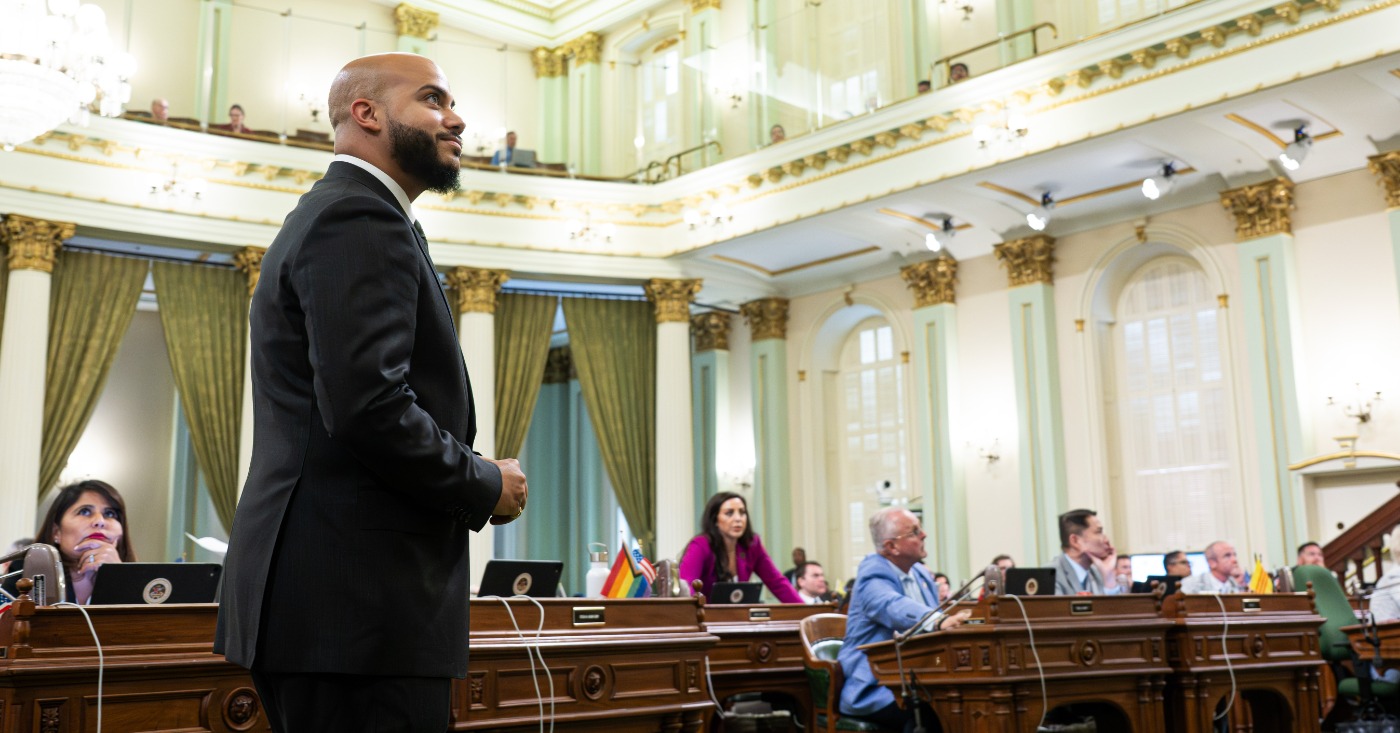
Gov. Gavin Newsom signed legislation on Sept. 27 authored by Assemblymember Isaac Bryan (D-Ladera Heights) that strengthens consumer protections for Californians purchasing tickets to concerts, sporting events and other live entertainment.
Assembly Bill 1349 expands state regulation of original ticket sellers, resellers and online resale marketplaces. The law targets deceptive sales practices, ticket-buying software and speculative listings — tickets advertised for sale by sellers who do not possess them or have authorization to sell them.
“Buying a ticket shouldn’t come with hidden risks or unfair practices,” Newsom wrote on social media after signing the measure.
Under AB 1349, ticket sellers are prohibited from listing tickets before they have been officially released unless they have authorization or a legally enforceable right to receive them. Online marketplaces must also take reasonable steps to prevent speculative ticket sales on their platforms.
The law prohibits sellers from using bots, multiple accounts, email addresses or internet protocol addresses to circumvent ticket limits, presale restrictions, electronic queues and other controls. It also bans websites and advertisements designed to mislead buyers into believing they are purchasing tickets from an authorized seller, venue or event organizer.

Sellers who violate certain provisions and fail to provide a promised ticket may be held liable for twice the ticket’s contracted price. Buyers may also recover nonrefundable expenses incurred while attempting to attend an event, along with reasonable attorney’s fees and court costs.
Pastor Tecoy Porter Sr., president of the National Action Network’s Sacramento chapter, said the law establishes needed accountability.
“Buying a ticket to a concert or show shouldn’t mean entering a marketplace where the rules are stacked against you. This year, we worked with a coalition of consumers, civil rights advocates, community groups, and businesses to make AB 1349 stronger. Consumers deserve enforceable rules that protect them. We thank Assemblymember Bryan for his leadership, and we will keep working to make ticketing fair for every Californian.”
Jose L. Barrera, national vice president for the Far West Region of the League of United Latin American Citizens, also praised the measure.
“Californian families deserve certain protections when they buy tickets. Assemblymember Bryan listened to communities across California and delivered a bill that puts fans first. We thank him and Governor Newsom for making it law.”

Uncategorized
Zakiya Jendayi Arrested, Locked Out of Home by Sheriff’s Deputies
OALAND POST — On Tuesday, deputies followed Jendayi as she left her residence of 13 years to file documents in her case at the Appellate Court. Deputies arrested her upon arrival and transported her to Santa Rita Jail.


Yesterday, more than 10 Alameda County Sheriff’s deputies arrived to take possession of Zakiya Jendayi’s home on behalf of a court-appointed administrator. Jendayi was arrested at the courthouse and transported to Santa Rita Jail around the same time.
Jendayi, who has been embroiled in a probate court battle to retain the inheritance bestowed on her by a longtime friend and colleague who passed away in 2013, had received a notice of eviction last month.
With help from neighbors, friends and clergy, she was able to fend off the eviction from 3614 Randolph Ave. in Oakland and even obtained a reprieve when her bid to file bankruptcy was approved by a county court.
But Philip Campbell, the court-appointed administrator, had already placed Jendayi’s home in his name in October 2025.
On Tuesday, deputies followed Jendayi when she left her residence of 13 years to go to the Appellate Court to file documents in her case. Deputies arrested her upon arrival and transported her to Santa Rita jail.
Undersheriff April Luckett-Fahini said Jendayi was arrested for “safety reasons.” At this time, it is unknown what charges were used for the arrest.
In Jendayi’s absence, Campbell came to her residence accompanied by deputies, had the property taped off with yellow crime tape, and had the locks changed.
Afterward, Campbell requested a police escort to his car amid several angry neighbors who had been advocating that officials pause the eviction pending Jendayi’s appeal.
“Zakiya Jendayi is a respected Black elder in our community,” said Alameda County Supervisor Nikki Fortunato Bas, who has been working with Jendayi to prevent her eviction. “It’s outrageous that she was arrested. There needs to be more justice and equity in our probate system.”
Uncategorized
Ask California: Golden State Releases New AI Chatbot
Gov. Gavin Newsom introduced the prototype as part of the state’s broader effort to use artificial intelligence to make government services easier to access. The launch follows his March 2026 executive order directing state agencies to responsibly implement generative AI while protecting privacy, security and civil liberties.

California has launched AskCA, a new artificial intelligence-powered chatbot designed to help residents find and navigate state and local government services through a single online platform.
Developed by the state’s Office of Data and Innovation, AskCA is designed around major life events rather than individual government agencies. Californians can use the tool to find information about finding a job, starting a business, accessing family services and recovering from disasters.
Gov. Gavin Newsom introduced the prototype as part of the state’s broader effort to use artificial intelligence to make government services easier to access. The launch follows his March 2026 executive order directing state agencies to responsibly implement generative AI while protecting privacy, security and civil liberties.
“When a Californian needs help, they shouldn’t have to become an expert in government to find it,” said Newsom. “We’re using the best technology California has to offer to make the government more efficient, effective, and more engaged.”
The state is now seeking Californians age 18 and older to participate in the pilot and help test and refine AskCA’s responses. Officials said subject matter experts across state governments are helping inform the chatbot’s answers, which are designed to draw from verified government sources and provide actionable information.
The prototype grew out of California’s response to the January 2025 Los Angeles wildfires. Early testing included more than 140 fire recovery leaders and Altadena wildfire survivors, a dozen job seekers and more than 100 general users.
Jeffery Marino, director of the Office of Data and Innovation, said the tool is intended to remove the need for residents to understand how government agencies are organized before they can get help.
“Californians should not have to understand how the government is organized just to get basic help,” Marino said.
AskCA’s technology will also be used in a new job-skills matching feature that the California Department of Human Resources plans to launch Sept. 30 on CalCareers. Job seekers will be able to upload a resume and receive potential matches to state job classifications.
The state said the CalCareers pilot will not store personal information or require users to have a CalCareers account. California plans to continue testing AskCA as officials evaluate its accuracy, performance and usefulness before expanding the system.



OP-ED: Proposition 44 Would Put a Price on Trust

OP-ED: Proposition 40: It’s Time to Play Chess, Not Checkers

Listening as a Lifeline: A Doula’s Witness to Black Maternal Health

New Protections for Ticket Buyers: Gov. Newsom Signs Assemblymember Isaac Bryan’s Bill

‘We Don’t Talk Trash — We Pick Up Trash!’

Zakiya Jendayi Arrested, Locked Out of Home by Sheriff’s Deputies

Oakland Post: Week of September 30 – October 6, 2026

Asm. Corey Jackson Announces Launch of 24-Hour Childcare in His District

IN MEMORIAM: The Rev. Leon “Sonny” Clark, Longtime Orange County Pastor and Community Leader, Dies at 72

Poll: Becerra Widens His Lead Over Hilton; Californians Split on Wealth Tax

From Historic Memories to New Possibilities: Oakland Celebrates Coliseum 60

County Office of Education Says OUSD Finances Are Getting Healthier, Materially Stronger

LIVE FREE Sunday Dinner Brings Faith, Fellowship and Civic Conversation to Oakland

Remembering Chauncey Bailey as Student Journalists Face Threats to Truth-Telling

BLACspace Cooperative Invites Bay Area to Experience Oakland’s Black Cultural Ecosystem Through a BLAC Map Tour + Party

Standoff for Justice: Our Homes Are Worth Fighting For

Oakland Post: Week of August 26 – September 1, 2026

Frontier Airlines’ Return to Oakland Airport Brings Flights, Jobs and Opportunity

Gubernatorial Candidate Steve Hilton Blasts California New Tire Rules; Newsom Hits Back

Jackie Wright Champions Bay Area Stories, Filmmakers and Cultural Institutions

Chef Sharon Lee Blends Culinary Excellence, Education and Empowerment

Misnamed ‘Parent’ PAC Seeks to Influence Oakland School Board Elections

Oakland Coliseum Project Opens Door for Small Businesses to Build Bigger

Gov. Newsom’s Latest Appointees Include Sacramento Advocate for Formerly Incarcerated Students; State’s New Tech Chief

Big City Mayors Ask for “Yes” Vote on Housing Bond Measure; Conservatives Say “No”

Longtime BWOPA Member Brendalyn Goodall Appointed to California Workforce Development Board

Oakland Post: Week of September 2 – 8, 2026

Gov. Newsom Signs Law Shielding Immigration Aid Workers From Doxing Threats

Secretary of State Shirley N. Weber Urges Californians to Vote Early as Voter ID Battle Intensifies

IN MEMORIAM: Dolly Parton Dead at 80 — How She Built a Legacy of Love and Earned Her Place in Black Culture

The Conversation With Al McFarlane 6/23/26

Media Monday 6/22/26

LIVE! ASK ALMA! — TUES. 6.23.26 7PM EST

Car Buying Secrets: 4 Hidden Checks Before You Sign!

Is This 550 HP Charger Worth YOUR Money? AutoNetwork Review

Celebrating Juneteenth – Frederick Douglass on education and resistance

LIVE! — ASK ALMA! — TUES. 6.19.26 7PM EST

Hyundai Ioniq 5 Parking, Safety, and 360 View #shorts

2025 Ioniq 5 New Wiper & Powerful Performance! #shorts

Electric SUV Range: Is 259 Miles Enough? #shorts

EV Charging: How Fast Can You Charge an Electric Vehicle? #shorts

Biometric Cooling… Messaging Seats…Come on! 2025 Infiniti QX80 Autograph 4WD

Charged Up: Witness the Magic of a Fully Electric Car! #shorts

Range Rover Sport PHEV Included…: See What’s Inside This Luxury SUV! #shorts

Invisible Hood View: Perfect Parking with X-Ray Vision! #shorts
-
 Community4 weeks ago
Misnamed ‘Parent’ PAC Seeks to Influence Oakland School Board Elections
-

 Activism4 weeks ago
Oakland Post: Week of September 9 – 15, 2026
-

 Community4 weeks ago
Richmond Tiny House Village Farm & Garden Set to Open Gates on Sept. 26
-

 Black History4 weeks ago
Latest Massacre in Haiti Reveals Cruelty U.S. Deportations
-

 Black History4 weeks ago
OPINION: Nolan Wells’ Death One of Several Signifying Racial Terror Lives on in U.S. South
-

 Business3 weeks ago
Mayor Lee Announces $1 Million Kaiser Permanente Grant for Pilot Program to Address Homelessness, Clean Up Public Spaces throughout Oakland
-

 Community4 weeks ago
Democratic Clubs Interview Candidates for Oakland School Board
-
 Uncategorized3 weeks ago
Oakland People’s Arms Embargo Coalition Demands End to Military Shipments Thru Oakland
