
Opinion
Opinion: Worthy of Justice (Part 2)

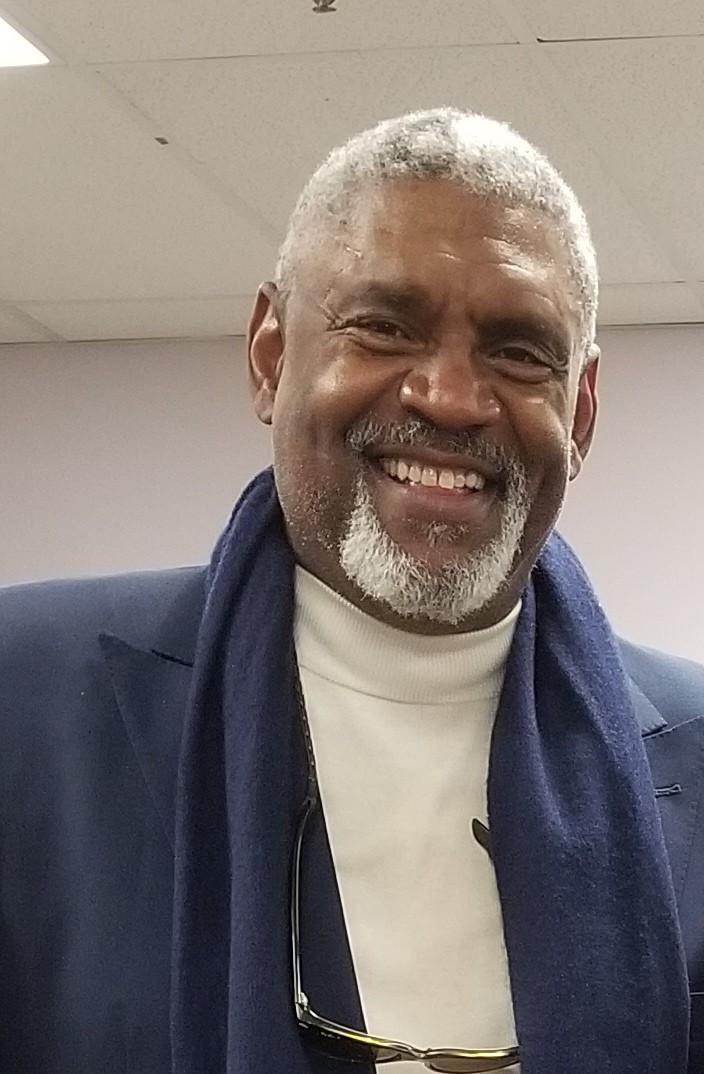
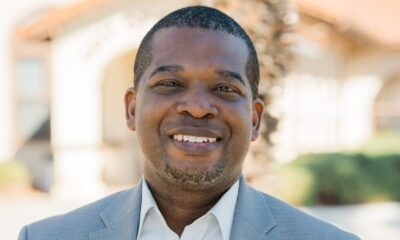
Columnist Leo Bazile began a series of articles examining morality and other aspects of the Reparations topic during this 2019 political climate. Reginald W. Lyles’ column is a theological response to Bazile’s work.
Last week, Lyles’ column (part 1) closed with a historical examination of the mind set before the Civil War, concluding that Africans were of such an inferior stock that they had no rights that the white man was bound to respect.
Out of this erroneous and racist thinking, hundreds of years of indoctrination and oppression were and still are forced upon the psyche and thinking of African Americans.
To counteract and repair this oppressive thinking. Liberation Theology emerged.
Liberation Theology emphasizes social concern for the poor and political liberation for oppressed peoples. In the 1950s and 1960s, liberation theology was the political praxis (the process by which a theory’, lesson, or skill is enacted, embodied, or realized), of Latin American theologians, such as Gustavo Gutierrez of Peru, Leonardo Boff of Brazil, Juan Luis Segundo of Uruguay, and Jon Sobrino of Spain, who popularized the phrase “preferential option for the poor.”
Liberation Theology also found the voice of James Cone in his books, “A Black Theology of Liberation” and “The Cross and the Lynching Tree,” which attempts to help people of African descent overcome oppression. He especially focused on injustices committed against African Americans and Black South Africans during the periods of U.S. segregation and South Africa’s apartheid, respectively.
Katie G. Cannon and Jacquelyn Grant’s book, “Womanist Theology,” emphasizes interrogating the social construction of Black womanhood in the Black community and assuming a liberation perspective so African American women can live emboldened lives within the African American community and within the larger society’.
These liberation theologies shed the light of justice.
We are experiencing dark days all over the world and especially here in the United States, where fascism and bigotry are emerging and thriving.
oligarchs are flourishing everywhere: Donald Trump of the United States, Rodrigo Duterte of the Philippines, Marine Le Pen of France, Vladimor Putin of Russia, Bashar al-Assad of Syria, Matteo Salvini of Italy, Benjamin Netanyahu of Israel, Boris Johnson of England, King Salman of Saudi Arabia, and many more.
The last time forces like these emerged so fully on a worldwide scale, we literally fought wars to quell the evil: WWII, two atomic bombs, the casualties of 20 million military personnel, 40 million civilians, and many who died because of deliberate genocide, massacres, mass-bombings, disease, and starvation. Six million Jew’s in the Holocaust and 300,000 Chinese in the Rape of Nanjing died under mass oppression.
The Bible says in Micah 6:8: “He has shown you, O mortal, what is good. And what does the Lord require of you? To act justly and to love mercy and to walk humbly with your God.”
Everyone is deserving and must do justice, but we must also demand it from and for ourselves, and all those around us. We must apply justice to everyone. And, we must be mindful in the struggle that power concedes nothing without a demand.
The demand for reparations is gaining traction in the United States. We must boldly embrace this political issue because African Americans built this country with free slave labor. Yet we have been “red-lined” from benefiting from the wealth we built – by segregationist alliances of immoral government legislation, unethical banking policies, and an unscrupulous real estate industry.
African Americans deserve reparations. African Americans deserve to be made whole.
African Americans must understand and believe that they deserve justice in the forms of reparations, economic justice, environmental justice, housing justice, food justice, water justice, and equal treatment in the justice system.
African Americans’ demand for justice is not radical, or communist, or socialist, or any other imagined label designed to demean, intimidate and shame them. On the contrary, all children of God are wonderfully made and deserving of justice.

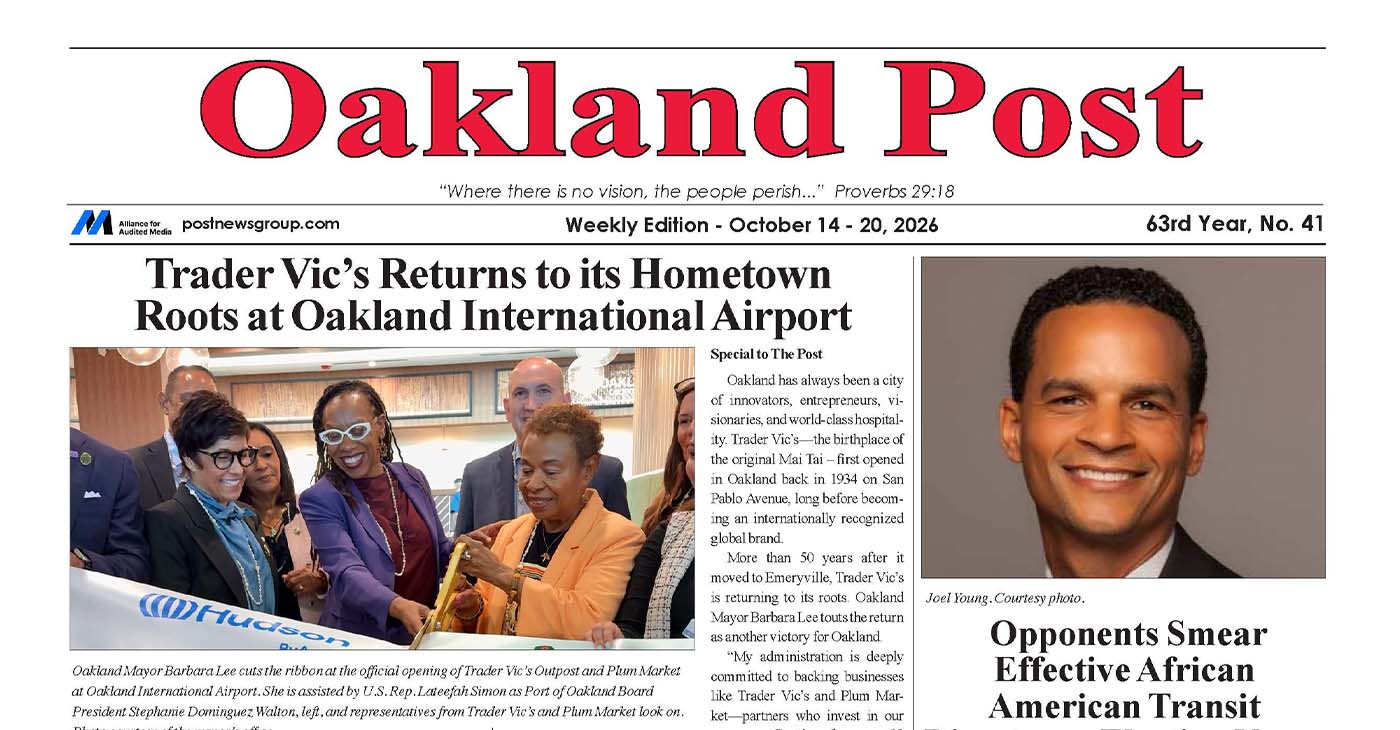
To enlarge your view of this issue, use the slider, magnifying glass icon or full page icon in the lower right corner of the browser window.

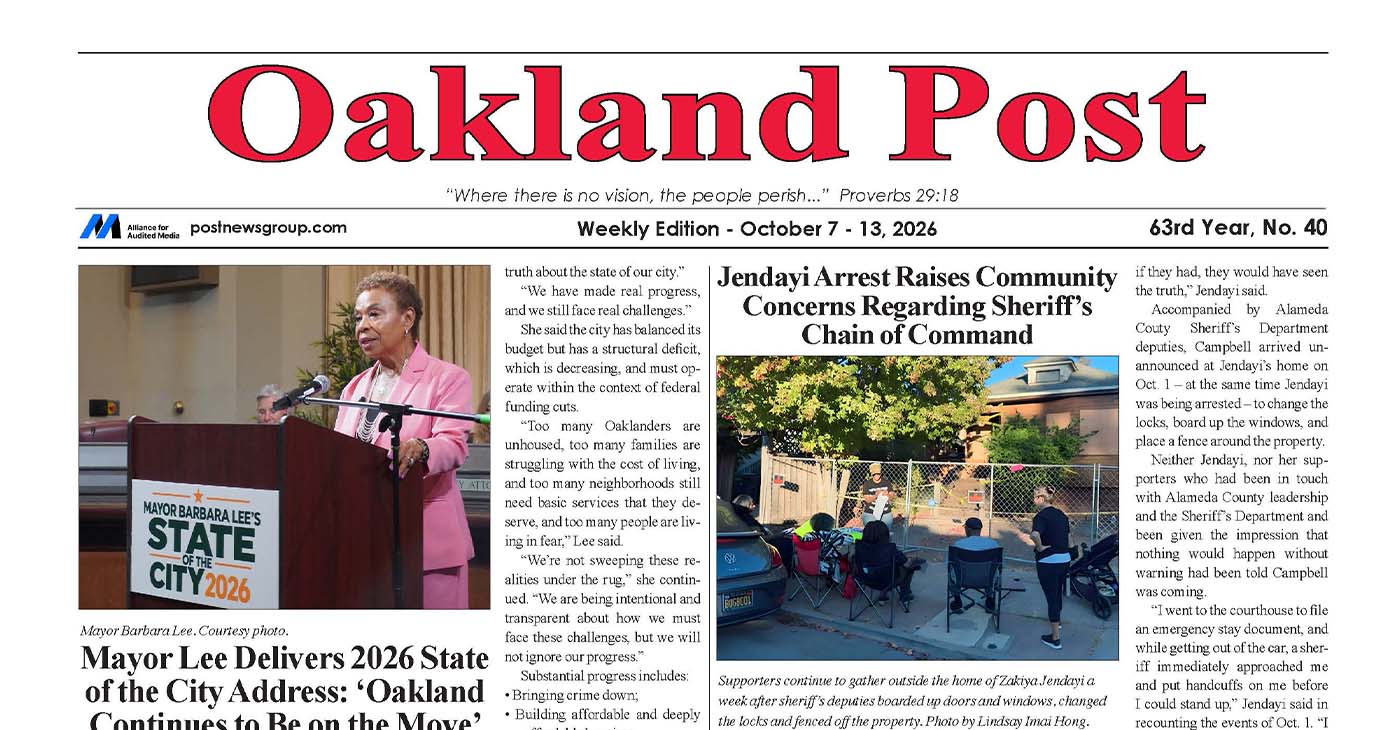
To enlarge your view of this issue, use the slider, magnifying glass icon or full page icon in the lower right corner of the browser window.
Activism
Oakland Post: Week of September 30 – October 6, 2026
The printed Weekly Edition of the Oakland Post: Week of September 30 – October 6, 2026

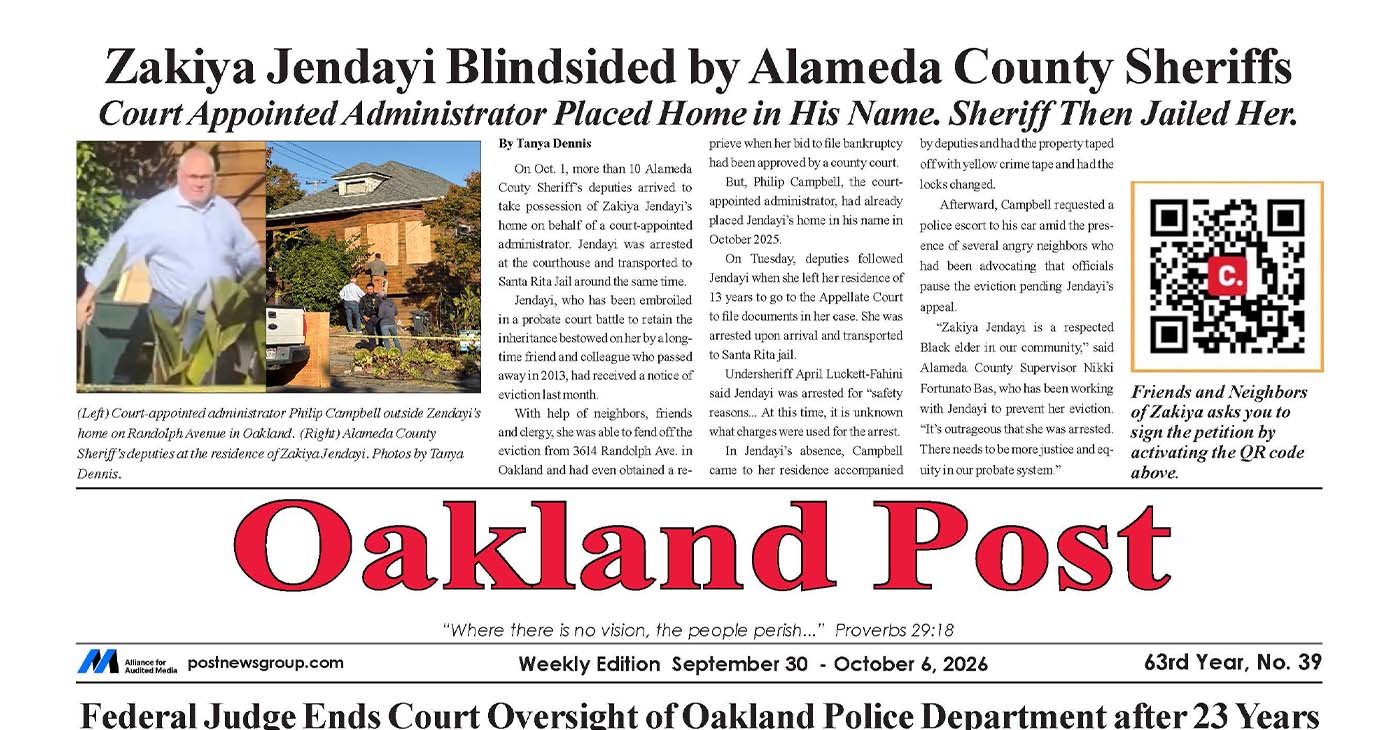
To enlarge your view of this issue, use the slider, magnifying glass icon or full page icon in the lower right corner of the browser window.


Mayor Barbara Lee Holds Special State of the City Address in Deep East Oakland

Practitioners of African Traditional Spirituality Offer Ancestral Reverence Ritual Oct. 31

It’s Time to Lose Weight Before the Holidays

Trader Vic’s Returns to Its Oakland Roots

Oakland Coal Terminal Backed by Trump Would Be Bigger, Dirtier Than Promised, Says Report

Opponents Smear Effective African American Transit Director as Election Nears

Oakland Post: Week of October 14 – 20, 2026

OP-ED: The Black Church Writes AI’s Next Chapter

OP-ED: The Black Church Writes AI’s Next Chapter

WCCUSD Joins Statewide Organic School Food Purchasing Cooperative

Democrats, Community Groups Back Measure EE to Change How Oakland Is Governed

Four Tips to Help You Plan a Holiday “Staycation”

Veterans Housing Project Proposed for South Richmond
PRESS ROOM: Transformative Justice Coalition 2026 Voting Rights Champion Awards Reception ‘Yesterday Is Today: The Battle For Voting Rights

Mayor Lee Delivers 2026 State of the City Address: ‘Oakland Continues to Be on the Move’

Misnamed ‘Parent’ PAC Seeks to Influence Oakland School Board Elections

Poll: Becerra Widens His Lead Over Hilton; Californians Split on Wealth Tax

Oakland Post: Week of September 9 – 15, 2026

County Office of Education Says OUSD Finances Are Getting Healthier, Materially Stronger

Listening as a Lifeline: A Doula’s Witness to Black Maternal Health

Richmond Tiny House Village Farm & Garden Set to Open Gates on Sept. 26

Mayor Lee Announces $1 Million Kaiser Permanente Grant for Pilot Program to Address Homelessness, Clean Up Public Spaces throughout Oakland

Latest Massacre in Haiti Reveals Cruelty U.S. Deportations

OPINION: Nolan Wells’ Death One of Several Signifying Racial Terror Lives on in U.S. South

Zakiya Jendayi Arrested, Locked Out of Home by Sheriff’s Deputies

BLACspace Cooperative Invites Bay Area to Experience Oakland’s Black Cultural Ecosystem Through a BLAC Map Tour + Party

Doulas Are Helping Black California Moms Navigate Pregnancy–Even as High Mortality Rates Persist

Oakland Post: Week of September 16 – 22, 2026

Oakland People’s Arms Embargo Coalition Demands End to Military Shipments Thru Oakland

Democratic Clubs Interview Candidates for Oakland School Board

The Conversation With Al McFarlane 6/23/26

Media Monday 6/22/26

LIVE! ASK ALMA! — TUES. 6.23.26 7PM EST

Car Buying Secrets: 4 Hidden Checks Before You Sign!

Is This 550 HP Charger Worth YOUR Money? AutoNetwork Review

Celebrating Juneteenth – Frederick Douglass on education and resistance

LIVE! — ASK ALMA! — TUES. 6.19.26 7PM EST

Hyundai Ioniq 5 Parking, Safety, and 360 View #shorts

2025 Ioniq 5 New Wiper & Powerful Performance! #shorts

Electric SUV Range: Is 259 Miles Enough? #shorts

EV Charging: How Fast Can You Charge an Electric Vehicle? #shorts

Biometric Cooling… Messaging Seats…Come on! 2025 Infiniti QX80 Autograph 4WD

Charged Up: Witness the Magic of a Fully Electric Car! #shorts

Range Rover Sport PHEV Included…: See What’s Inside This Luxury SUV! #shorts

Invisible Hood View: Perfect Parking with X-Ray Vision! #shorts
-
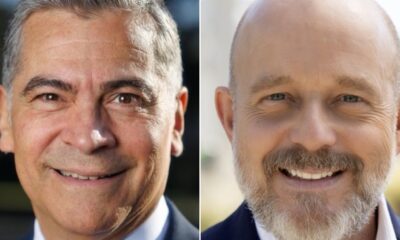 Economy4 weeks ago
Poll: Becerra Widens His Lead Over Hilton; Californians Split on Wealth Tax
-
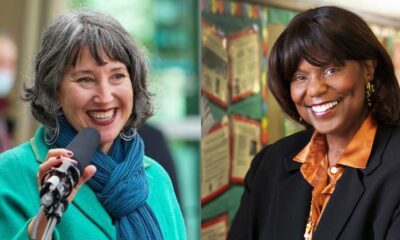 Business4 weeks ago
County Office of Education Says OUSD Finances Are Getting Healthier, Materially Stronger
-
 Black History3 weeks ago
Listening as a Lifeline: A Doula’s Witness to Black Maternal Health
-
 Lead Story3 weeks ago
Zakiya Jendayi Arrested, Locked Out of Home by Sheriff’s Deputies
-
 Art4 weeks ago
BLACspace Cooperative Invites Bay Area to Experience Oakland’s Black Cultural Ecosystem Through a BLAC Map Tour + Party
-
 Black History4 weeks ago
Doulas Are Helping Black California Moms Navigate Pregnancy–Even as High Mortality Rates Persist
-
 Business4 weeks ago
From Historic Memories to New Possibilities: Oakland Celebrates Coliseum 60
-
 Community4 weeks ago
Asm. Corey Jackson Announces Launch of 24-Hour Childcare in His District
