
Opinion
Opinion: We Have a Plan. The Time to Act on Reparations is Now

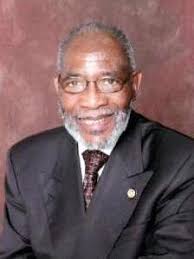
Finally. It only took 150 years, but at last a substantive, realistic, and responsible national plan for slavery reparations has been put forward.
Question is, will the purportedly liberal and benevolent San Francisco be a leader in this effort, or will it continue to enact policies that have forced an exodus of African American families, culture, and heritage from this city?
It is no longer time to seize the moment. The moment has been seized.
Last week, I attended the NAACP convention in Detroit, where we passed a viable measure that provides reparations to African Americans in the form of resources in the areas of housing, economic empowerment, funding for historically black colleges, and health care, including mental health. Rather than provide money to individuals, we felt the need for solutions that will ultimately end regressive systems created by a damaging history of enslavement and oppression.
It is a detrimental system that can be seen in plain view in San Francisco, a city that proclaims to fight for its vulnerable, but has instead pushed policies prompting black flight.
In droves, we moved here from the South during the 1940s to help build ships and other industrial-related goods for the WWII effort. After the war ended, we were passed over for what jobs remained from the massive industrial effort. Our neighborhoods were left in aimless economic desolation, with run-down housing and schools.

Rather than address the problems, city leaders worked to push them out of sight and mind. So-called “urban renewal” projects aiming to improve our neighborhoods encouraged gentrification and the closing of black businesses and cultural centers. While the African American population in San Francisco peaked at about 13.4 percent in 1970, by 2010 it was cut in half, even though the city grew. And our population continues to dwindle.
With a renewed national movement – and, most importantly, a substantive plan – in place to right the wrongs of a sordid historical injustice, San Francisco has an opportunity to be a leader in reversing its African American exodus.
In keeping with the NAACP resolution achieved in Detroit, here are some steps San Francisco can take to achieve successful reparations:
- On education: A coalition of political, spiritual, and social betterment agencies must unite to identify and carry out collaborative, comprehensive remedial programs to help families catch up and move beyond abysmal low achievement.
- On economic empowerment: A coalition of the city’s economic powers, including its high tech communities, must unite to identify and carry out solutions that ensure equal opportunity for African American workers and small businesses. That includes engaging with the San Francisco African American Chamber of Commerce to provide pathways for black contractors, entrepreneurs and technology gurus to receive a fair share of contracts and participation in our booming economy and tourism industry.
- On housing: The city and county must strengthen its human rights commission to become a true watchdog ensuring African Americans can regain much-needed access to fair and affordable housing, particularly for those who have been, and are currently being, pushed out.
- On heritage: The NAACP, faith community and allies are calling the city to do for the African American community what it did for the Asian community when it provided a space in the Civic Center for the Asian Art Museum. The city should also do the same for the Fillmore Heritage Center, ensuring the center becomes a watering hold for African American community members, a place to come together and celebrate their culture and history and to maintain the presence of the black community’s dwindling heritage in San Francisco.
- On mental and physical health: We need to focus on providing comparative health systems to the African American community, in part through the San Francisco Department of Public Health and West Side Community Mental Health. Resources need to address black community members who are suffering from post-traumatic stress syndrome from violence, and from many other residual mental and physical effects that have resulted from a dark history of slavery and generations of discrimination. This has led to a long list of detrimental conditions, such as depression, asthma, diabetes and hypertension. The city’s highly funded and capable public and private health sectors must collaborate on programs promoting mental and physical treatment, wellness and nutrition, in order to cease the cycles that have negatively impacted multiple generations of African Americans.
The national conversation has begun. After the Detroit convention, it is apparent that it is not going away.
San Francisco is a city that prides itself on liberal ideologies that aim to empower and uplift the underserved. As aforementioned, we must put our money and political resources where our mouths are. The time to talk is over. The time to act is now.

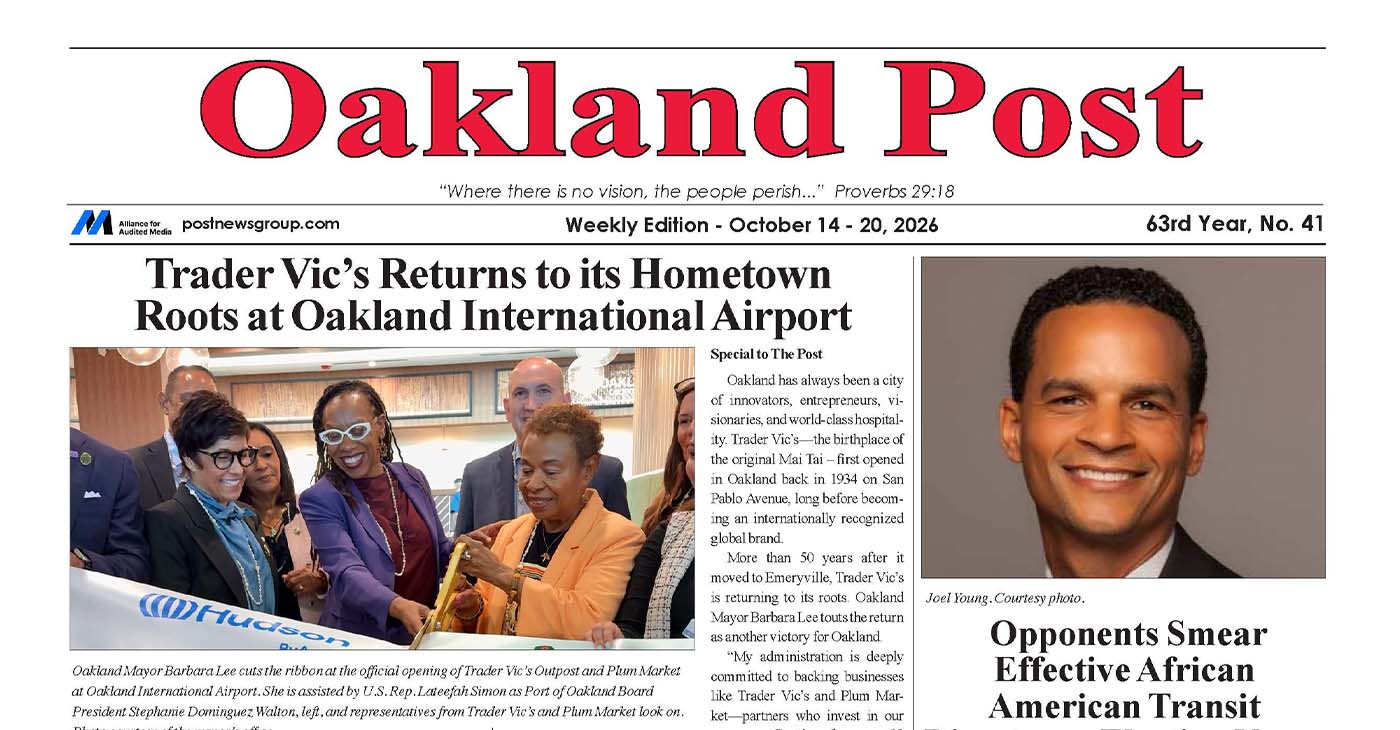
To enlarge your view of this issue, use the slider, magnifying glass icon or full page icon in the lower right corner of the browser window.

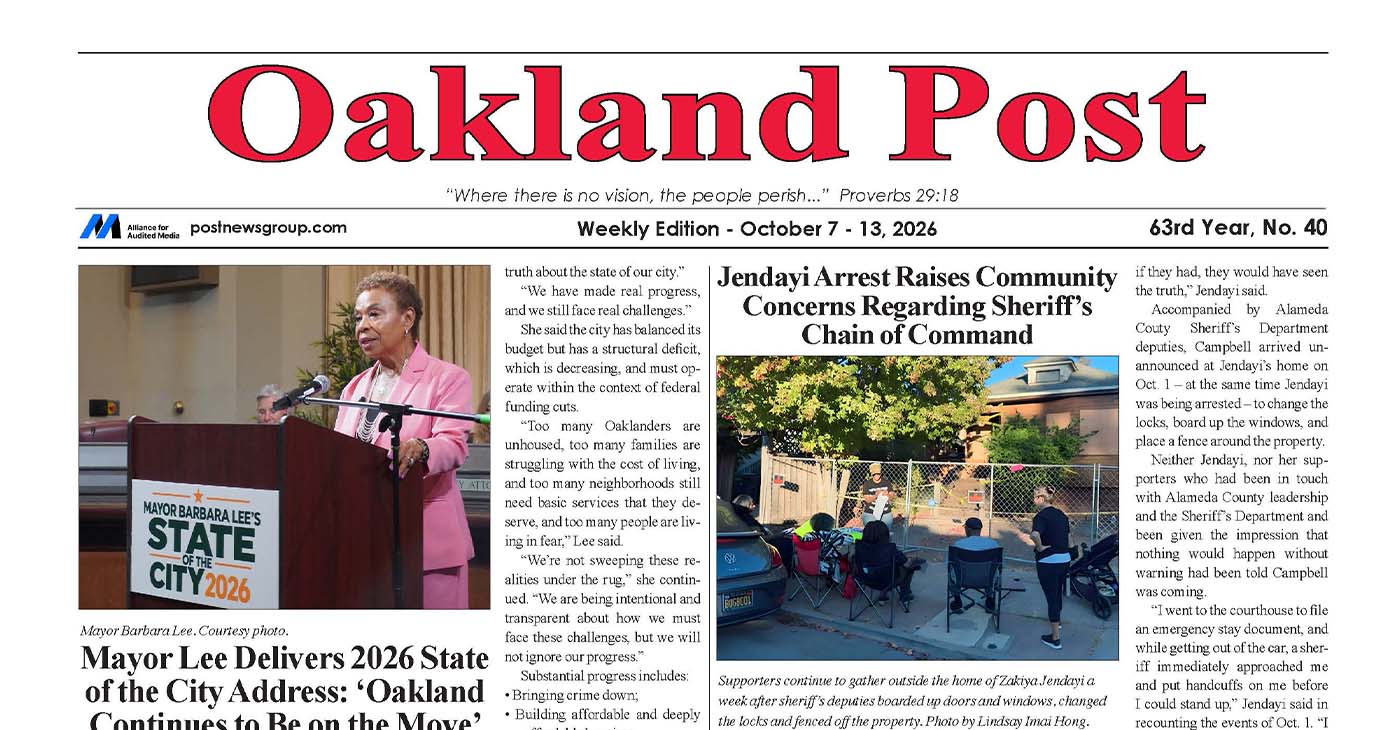
To enlarge your view of this issue, use the slider, magnifying glass icon or full page icon in the lower right corner of the browser window.

Activism
Oakland Post: Week of September 30 – October 6, 2026
The printed Weekly Edition of the Oakland Post: Week of September 30 – October 6, 2026


To enlarge your view of this issue, use the slider, magnifying glass icon or full page icon in the lower right corner of the browser window.


Mayor Barbara Lee Holds Special State of the City Address in Deep East Oakland

Practitioners of African Traditional Spirituality Offer Ancestral Reverence Ritual Oct. 31

It’s Time to Lose Weight Before the Holidays

Trader Vic’s Returns to Its Oakland Roots

Oakland Coal Terminal Backed by Trump Would Be Bigger, Dirtier Than Promised, Says Report

Opponents Smear Effective African American Transit Director as Election Nears

Oakland Post: Week of October 14 – 20, 2026

OP-ED: The Black Church Writes AI’s Next Chapter

OP-ED: The Black Church Writes AI’s Next Chapter

WCCUSD Joins Statewide Organic School Food Purchasing Cooperative

Democrats, Community Groups Back Measure EE to Change How Oakland Is Governed

Four Tips to Help You Plan a Holiday “Staycation”

Veterans Housing Project Proposed for South Richmond
PRESS ROOM: Transformative Justice Coalition 2026 Voting Rights Champion Awards Reception ‘Yesterday Is Today: The Battle For Voting Rights

Mayor Lee Delivers 2026 State of the City Address: ‘Oakland Continues to Be on the Move’

Misnamed ‘Parent’ PAC Seeks to Influence Oakland School Board Elections

Poll: Becerra Widens His Lead Over Hilton; Californians Split on Wealth Tax

Oakland Post: Week of September 9 – 15, 2026

County Office of Education Says OUSD Finances Are Getting Healthier, Materially Stronger

Listening as a Lifeline: A Doula’s Witness to Black Maternal Health

Richmond Tiny House Village Farm & Garden Set to Open Gates on Sept. 26

Latest Massacre in Haiti Reveals Cruelty U.S. Deportations

Mayor Lee Announces $1 Million Kaiser Permanente Grant for Pilot Program to Address Homelessness, Clean Up Public Spaces throughout Oakland

OPINION: Nolan Wells’ Death One of Several Signifying Racial Terror Lives on in U.S. South

Zakiya Jendayi Arrested, Locked Out of Home by Sheriff’s Deputies

BLACspace Cooperative Invites Bay Area to Experience Oakland’s Black Cultural Ecosystem Through a BLAC Map Tour + Party

Oakland Post: Week of September 16 – 22, 2026

Doulas Are Helping Black California Moms Navigate Pregnancy–Even as High Mortality Rates Persist

Democratic Clubs Interview Candidates for Oakland School Board

Oakland People’s Arms Embargo Coalition Demands End to Military Shipments Thru Oakland

The Conversation With Al McFarlane 6/23/26

Media Monday 6/22/26

LIVE! ASK ALMA! — TUES. 6.23.26 7PM EST

Car Buying Secrets: 4 Hidden Checks Before You Sign!

Is This 550 HP Charger Worth YOUR Money? AutoNetwork Review

Celebrating Juneteenth – Frederick Douglass on education and resistance

LIVE! — ASK ALMA! — TUES. 6.19.26 7PM EST

Hyundai Ioniq 5 Parking, Safety, and 360 View #shorts

2025 Ioniq 5 New Wiper & Powerful Performance! #shorts

Electric SUV Range: Is 259 Miles Enough? #shorts

EV Charging: How Fast Can You Charge an Electric Vehicle? #shorts

Biometric Cooling… Messaging Seats…Come on! 2025 Infiniti QX80 Autograph 4WD

Charged Up: Witness the Magic of a Fully Electric Car! #shorts

Range Rover Sport PHEV Included…: See What’s Inside This Luxury SUV! #shorts

Invisible Hood View: Perfect Parking with X-Ray Vision! #shorts
-
 Economy4 weeks ago
Poll: Becerra Widens His Lead Over Hilton; Californians Split on Wealth Tax
-
 Business4 weeks ago
County Office of Education Says OUSD Finances Are Getting Healthier, Materially Stronger
-
 Black History3 weeks ago
Listening as a Lifeline: A Doula’s Witness to Black Maternal Health
-
 Lead Story3 weeks ago
Zakiya Jendayi Arrested, Locked Out of Home by Sheriff’s Deputies
-
 Art4 weeks ago
BLACspace Cooperative Invites Bay Area to Experience Oakland’s Black Cultural Ecosystem Through a BLAC Map Tour + Party
-
 Black History4 weeks ago
Doulas Are Helping Black California Moms Navigate Pregnancy–Even as High Mortality Rates Persist
-
 Business4 weeks ago
From Historic Memories to New Possibilities: Oakland Celebrates Coliseum 60
-
 Community4 weeks ago
Asm. Corey Jackson Announces Launch of 24-Hour Childcare in His District
