
Housing
Opinion: Hold Mayor Schaaf Accountable for Housing, Police Reform Failures


By Eric Arnold
The Mercury News (August 12, 2018) reports that as a candidate Libby Schaaf promised that 28 percent of the housing built in Oakland would be affordable.
The article also notes only 6 percent of housing currently in the pipeline is considered “affordable.”
Most of that 6 percent “affordable” housing was generated by community-benefit agreements, and not solely by impact fees—which do not guarantee onsite affordable units in new developments .
How is that acceptable, if displacement and affordability are the top two issues in Oakland today?
If Lailan Huen, Ayodele Nzinga, Carla Service, Alvina Wong and I had not personally negotiated those community benefit agreements, the affordable housing in the pipeline might be closer to 1 percent-2 percent.
The residents of Oakland are owed an explanation of why this 28 percent target was not even in the ballpark.
That is either incompetence or benign neglect or both. If private developers can hit 20 percent affordable housing targets, and BART can hit 30 percent, what is the reasonable explanation for Oakland’s poor performance in this area?
Remember, the 28 percent target was Mayor Schaaf’s own projection.
Meanwhile, development was accelerated at market-rate, resulting in a 76 percent increase in rents both commercial and residential and only a single-digit wage increase. I am using City numbers here, so there is no way any elected official can say they were unaware.
There are many things the mayor could have done but didn’t. She could have appointed Planning Commission members with deeper ties to the flatlands residents instead of contractors and developers more familiar with Piedmont than the Lower Bottomz.
She could have not given carte blanche to the Big Five developers. She could have incentivized affordable housing units with a stronger impact fee law.
She could have bought instead of sold public land and turned those into affordable buildings. She could have prevented the loss of 50 percent of Single-room Occupancy (SRO) stock in downtown.
Oakland has known it would have to do this since 2012 when redevelopment was eliminated, and the writing was on the wall prior to Mayor Schaaf’s election.
She made affordable housing and not displacing current residents a talking point but did not manage to come up with anything concrete as far as policy initiatives, which is what the situation required.
This is one reason Oakland got an equity score of 33 out of 100 in a recent equity study.
Is anyone crunching the numbers and looking at Schaaf’s actual track record? Mayor Schaaf is also weak on police misconduct cases. During the OPD sex scandal, she was more concerned about PR than holding criminal officers accountable. She was ok with a cover-up as long as she had plausible deniability. She did not call on District Attorney Nancy O’Malley to prosecute those cops who had illegal relations with a minor. She was silent.
In 2017, OPD misconduct racked up another $12 million in legal payouts on top of the $1 million paid out to the victim in the case, Celeste Guap.
Meanwhile, OUSD is cutting sports programs and the homeless crisis has proliferasted on her watch.
Schaaf could not even keep coal out of the Port terminal.
Where, in what world, is this acceptable?
So, the question becomes, should we give an ineffective mayor who merely continued the agenda set by Jerry Brown for gentrification—and displacement—the benefit of the doubt when she has yet to craft effective policies?
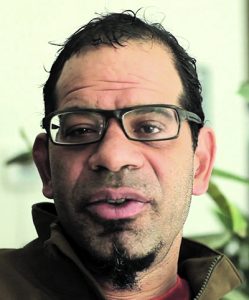
Eric Arnold is an Oakland journalist, researcher, archivisit, cultural historian and multimedia producer.
Or do we hold her accountable for promises she made which she has not delivered on? How is she not responsible for the current homeless crisis and disproportionate displacement of African Americans?









Activism
As California Hits Aging Milestone, State Releases Its Fifth Master Plan for Aging
“California’s Master Plan for Aging started a powerful movement that is shaping the future of aging in our state for generations to come,” Gov. Gavin Newsom said in a statement, calling the initiative a “future-forward” model delivering real results for older adults, people with disabilities, and their families.

By Bo Tefu, California Black Media
On Jan. 27, California released its Fifth Master Plan for Aging Annual Report,titled “Focusing on What Matters Most,” outlining the state’s progress and priorities as its population rapidly grows older.
The report, issued by the California Health and Human Services Agency (CalHHS), provides updates on the Master Plan for Aging’s “Five Bold Goals”: housing, health, inclusion and equity, caregiving, and affordability.
The report comes as Californians aged 60 and older now outnumber those under 18 for the first time, a demographic shift expected to accelerate over the next decade.
“California’s Master Plan for Aging started a powerful movement that is shaping the future of aging in our state for generations to come,” Gov. Gavin Newsom said in a statement, calling the initiative a “future-forward” model delivering real results for older adults, people with disabilities, and their families.
Launched in 2021, the Master Plan for Aging takes a “whole-of- government” and “whole-of-society” approach, coordinating state agencies, local governments, community organizations, and private partners. The annual report highlights significant milestones, including more than 100 California communities joining AARP’s Age-Friendly Network and $4 million in state funding awarded to local organizations to develop aging and disability action plans in 30 communities statewide.
The report also underscores California’s leadership at the national level, noting that dozens of states have followed its example and that federal legislation inspired by the plan was reintroduced in the U.S. Senate in December 2025.
CalHHS Secretary Kim Johnson emphasized the plan’s focus on equity and resilience amid ongoing challenges.
“The Master Plan for Aging continues to provide a vision, a focus, and a platform for collaboration,” Johnson said. “Equity is at the center of all that we do.”
Looking ahead, the report notes that by 2030, one in four Californians will be age 60 or older, positioning the Master Plan for Aging as a central framework for meeting the state’s long-term social, economic, and health needs.
Activism
Can You Afford a Mortgage but Not the Down Payment? Dream For All Offers Up to $150K
Duvernay-Smith’s journey exemplifies the transformative potential of Dream For All, a program designed to help first-generation homebuyers across California. Applications will open on Feb. 24, and close on March 16. The program uses a random selection process to ensure equitable access, and Gov. Gavin Newsom’s office has directed that a minimum of 10% of funds go to applicants in Qualified Census Tracts — communities that historically faced discriminatory or unfair barriers to home ownership.
By Tanu Henry, California Black Media
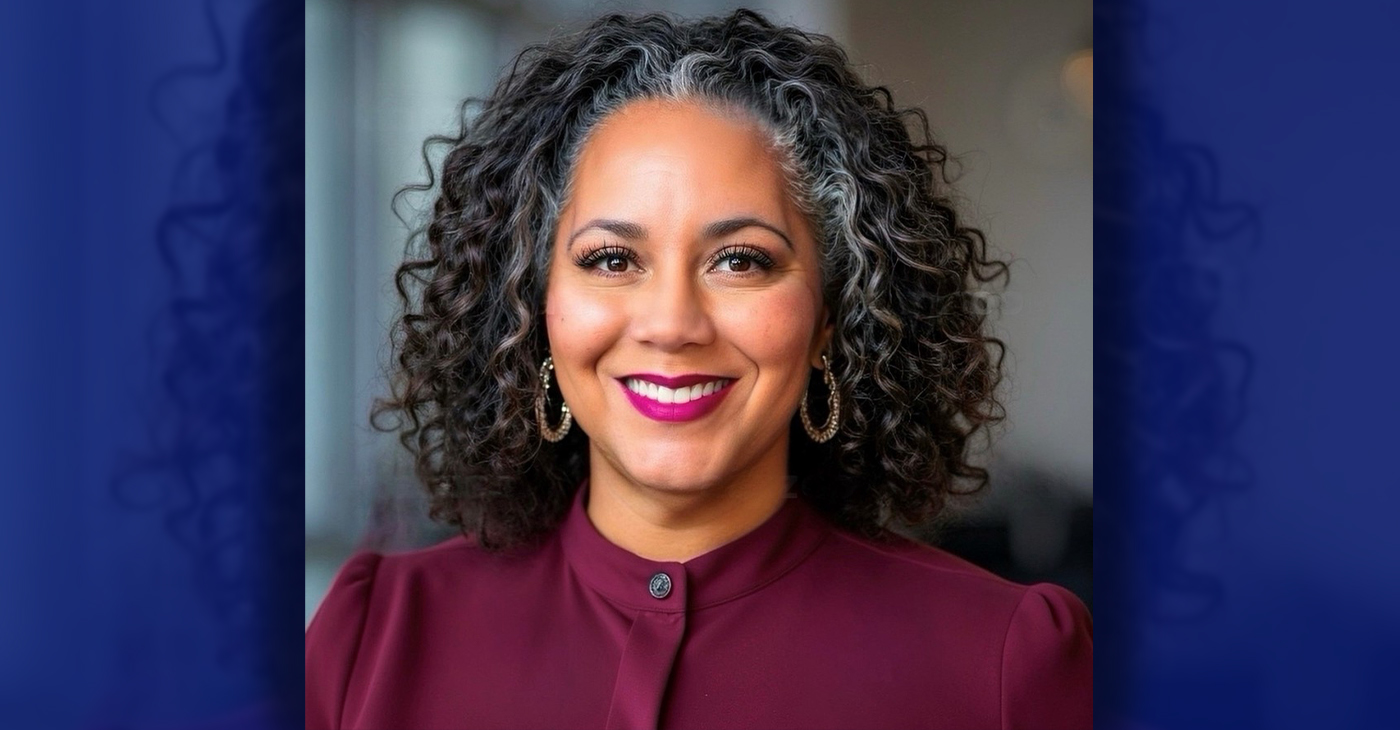
Tiffany Duvernay-Smith went from knowing the harsh realities of homelessness to owning her first home – made possible by the California Housing Finance Agency’s (CalHFA) Dream For All program, which is reopening applications this month with up to $150,000 in down payment assistance for first-generation buyers.
“I feel like I was the least likely person,” says Duvernay-Smith, who is Coordinator for the Los Angeles Homeless Services Authority’s Lived Experience Board, a published journalist, artist and outspoken advocate for unhoused people, people living with disabilities and domestic violence survivors.
“I didn’t know my story would change from homeless to homeowner,” she added. “But if there’s a house with your name on it, nothing can stop you.”
Duvernay-Smith’s journey exemplifies the transformative potential of Dream For All, a program designed to help first-generation homebuyers across California. Applications will open on Feb. 24 and close on March 16. The program uses a random selection process to ensure equitable access, and Gov. Gavin Newsom’s office has directed that at least 10% of funds be allocated to applicants in Qualified Census Tracts—communities that have historically faced discriminatory or unfair barriers to homeownership.
For eligible participants, the program provides up to 20% of the home’s purchase price or appraised value as down payment assistance, capped at $150,000.
CalHFA expects to make $150 million to $200 million available in 2026, potentially helping 1,000 to 1,500 families, with a total of approximately 2,000 households supported through the 2025–26 budget allocation of $300 million.
The program is particularly impactful for Black Californians, who continue to face the highest rates of homelessness across the state and significant barriers to homeownership due to decades of discriminatory housing policies and wealth inequities.
“Black Californians continue to face some of the widest homeownership gaps in the state,” says Regina Brown Wilson, Executive Director of California Black Media. “Programs like Dream For All are critical because they directly address generational inequities.”
Wilson spoke during an online news briefing on Jan. 30 that featured Eric Johnson, information officer in CalHFA’s Marketing and Communications Division, and Shonta Clark, senior loan consultant and CalHFA program educator, home counselor, and broker in Southern California.
“There are a lot of people in California with steady jobs, good incomes, and strong credit scores – but who haven’t been able to save the five or even six figures needed for a down payment on a home,” says Johnson. “That’s exactly what Dream For All is designed to address.
Eligibility requirements focus on first-generation homebuyers—those who have not owned a home in the past seven years and whose parents do not currently own one. CalHFA defines a “first-time homebuyer” as someone who has not owned and lived in their own home in the past three years. Foster youth are automatically considered first-generation homebuyers, reflecting the program’s commitment to reaching Californians who have faced systemic barriers, CalHFA says.
Applicants must work with CalHFA-approved lenders and provide standard documentation such as government-issued IDs and parental information.
Johnson encourages applicants to remain optimistic.
“Take the first step. Despite high interest rates and high prices, it is still possible to buy your first home in California. Believe in yourself and know that homeownership is meant for you,” says Johnson.
Community
Candidates Vying for Governor’s Seat Debate at Ruth Williams–Bayview Opera House in San Francisco
The gubernatorial debate participants included Antonio Villaraigosa, former Los Angeles mayor; Matt Mahan, San Jose mayor; Betty Yee, former California state controller; Xavier Becerra, former U.S. Secretary of Health and Human Services, and attorney general of California; Steve Hilton, political commentator and political adviser; Tom Steyer, entrepreneur, and Tony Thurmond, California’s superintendent of public instruction.

By Carla Thomas
On Tuesday, Feb. 3, seven candidates took the stage at the historic Ruth Williams–Bayview Opera House in San Francisco for the gubernatorial debate, hosted by the Black Action Alliance (BAA) in partnership with KTVU and sister station KTTV Fox 11 in Los Angeles.
For many voters, it marked a first opportunity to hear directly from several candidates seeking to lead the nation’s most populous state.
The gubernatorial debate participants included Antonio Villaraigosa, former Los Angeles mayor; Matt Mahan, San Jose mayor; Betty Yee, former California state controller; Xavier Becerra, former U.S. Secretary of Health and Human Services, and attorney general of California; Steve Hilton, political commentator and political adviser; Tom Steyer, entrepreneur, and Tony Thurmond, California’s superintendent of public instruction.
Crucial topics and issues addressed throughout the debate included housing, crime, immigration, climate change, health care and homelessness.

The debate was moderated by KTVU political reporter Greg Lee alongside KTVU’s Andre Senior and KTTV Fox 11’s Marla Tellez.
Candidates also addressed inflation and the rising costs across the state, impacting everything from groceries to childcare and health care.
Thurmond vowed to generate 2.3 million units of housing by placing 12 units on each parcel of available land in the 58 counties of California. Steyer agreed that billionaires should pay their fair share of taxes.
Hilton wanted to cut taxes, help working-class families, and end the Democrats “climate crusade and insane regulations.”
Yee offered a more transparent governmental approach with accountability, given the state’s debt.
Gonzalez said, “This debate was a great way to see who has great ideas and who has substance.”
“It’s important to have the debate within a community that requires the most,” said business leader Linda Fadekye.
Attendees included State Controller Malia Cohen, representatives of the National Coalition of 100 Black Women, the National Coalition of 100 Black Men, the San Francisco African American Chamber of Commerce, and Black Women Organized for Political Action, among others.
Event host, the Black Action Alliance (BAA) was established to amplify the voices of the Bay Area’s Black community, whose perspectives have too often been overlooked in politics and public policy.
Loren Taylor, CEO of BAA, said it was important to bring the event to the Bayview in San Francisco and shared his organization’s mission.
“The Black Action Alliance (BAA) stands for practical, community-driven solutions that strengthen public safety, address homelessness, support small businesses, expand affordable housing, and ensure access to quality education—issues at the heart of the Black experience in the Bay Area,” said Taylor.
California’s primary election will take place on June 2 and the general election will take place on Nov. 3.


WORK FROM HOME
Home-based business with potential monthly income of $10K+ per month. A proven training system and website provided to maximize business effectiveness. Perfect job to earn side and primary income. Contact Lynne for more details: Lynne4npusa@gmail.com 800-334-0540


Oakland Post: Week of April 1 – 7, 2026

Black Artists in America, Installation Three Wraps at the Dixon Gallery and Gardens

Grief, Advocacy, and Education: A Counselor Reflects on Black Maternal Health

Future of Florida’s Black History Museum in Limbo

New Research Shows the Many Benefits of Early Learning

South Hampton K-8 Students Among Top 10 Finalists for Samsung’s ‘Solve for Tomorrow’ Competition

Cuba: No Negotiation with US on the President or Political System

Brooklyn Academy of Music Names Jamaican-Born Tamara McCaw as President

Trinidad & Tobego – U.S. Launches WhatsApp Channel for American Citizens in the Country

Oakland Post: Week of March 18 – 24, 2026

AI Innovation vs. Ethics and Environmental Impact

AI, Web3, and Digital Reparations

What If You Owned Your AI Agent?

Season 7, Episode 3 – January Reporter’s Roundtable 📱

Season 7, Episode 3 – January Reporter’s Roundtable

Reflecting on Black History Milestones in Birmingham AL

Oakland Post: Week of February 25 – March 3, 2026

PRESS ROOM: NBA Hall of Fame Nominee Terry Cummings Joins 100 Black Men of DeKalb County to Launch Victory & Values Initiative

Oakland Post: Week of March 4 – 10, 2026

Trump’s MAGA Allies are Creating Executive Order Plan to Steal the 2026 Midterms

U.S. manufacturing rebounds – how foundry services are adapting to rising demand

Poll Shows Support for Policies That Help Families Afford Child Care

OP-ED: One Hundred Years of Black Workers Telling the Truth

Oakland Post: Week of March 11 -17, 2026

Advancements in solar technology that are changing the way we power the world
Oakland Post: Week of March 18 – 24, 2026

Woman’s Search for Family’s Roots Leads to Ancestor John T. Ward – A Successful Entrepreneur and Conductor on the Underground Railroad

COMMENTARY: Women of Color Shape Our Past and Future

PRESS ROOM: Civil Rights TV Launches in Selma as the World’s First 24/7 Civil Rights Television Network

Financial Wellness and Mental Health: Managing Money Stress in College

Hyundai Ioniq 5 Parking, Safety, and 360 View #shorts

2025 Ioniq 5 New Wiper & Powerful Performance! #shorts

Electric SUV Range: Is 259 Miles Enough? #shorts

EV Charging: How Fast Can You Charge an Electric Vehicle? #shorts

Biometric Cooling… Messaging Seats…Come on! 2025 Infiniti QX80 Autograph 4WD

Charged Up: Witness the Magic of a Fully Electric Car! #shorts

Range Rover Sport PHEV Included…: See What’s Inside This Luxury SUV! #shorts

Invisible Hood View: Perfect Parking with X-Ray Vision! #shorts

AI Is Reshaping Black Healthcare: Promise, Peril, and the Push for Improved Results in California

ESSAY: Technology and Medicine, a Primary Care Point of View

Sanctuary Cities

The RESISTANCE – FREEDOM NOW

STATE OF THE PEOPLE: Freddie

ECONOMIC BOYCOTT DAY!!!!!

I told You So
-
 Activism3 weeks ago
Oakland Post: Week of March 11 -17, 2026
-
 Activism2 weeks ago
Oakland Post: Week of March 18 – 24, 2026
-
 #NNPA BlackPress4 weeks ago
Woman’s Search for Family’s Roots Leads to Ancestor John T. Ward – A Successful Entrepreneur and Conductor on the Underground Railroad
-
 #NNPA BlackPress4 weeks ago
COMMENTARY: Women of Color Shape Our Past and Future
-
 Advice3 weeks ago
Financial Wellness and Mental Health: Managing Money Stress in College
-

 #NNPA BlackPress4 weeks ago
Advocates Raise Alarm Over ICE Operation, MOU and Detention Risks in Baltimore County
-

 #NNPA BlackPress4 weeks ago
Pete Buttigieg to Join Mayor Randall Woodfin for Community Town Hall in Birmingham
-
 #NNPA BlackPress2 weeks ago
Brooklyn Academy of Music Names Jamaican-Born Tamara McCaw as President
