
Business
Opinion: Different Summit, Same Story for the Polluters, Politicians, Privileged and Poor at Global Climate Meeting
So far, Glasgow has heard a lot of talk. President Biden and other world leaders touted two ‘major’ agreements earlier this week. One commits to ending deforestation by 2030, and the other to cut planet-heating methane emissions by 30%. But these aren’t binding. They are promises, an invitation to take leaders at their word. Many of these leaders promised to halve deforestation by 2020 back at a New York summit in 2014, a promise that was quietly broken.


By Louis Wilson, Special to California Black Media Partners
Global negotiations kicked off this week in Glasgow, Scotland, in what John Kerry, President Biden’s climate envoy, described as our ‘last best chance’ to avoid environmental disaster.
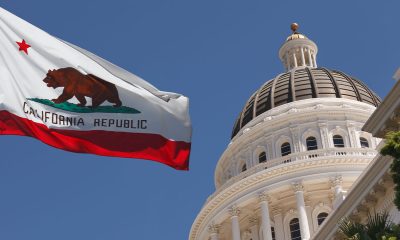
These talks matter to California – so much so that a delegation of elected and government officials led by Lt. Gov. Eleni Kounalakis made the 5,000-mile trip.
The goal is simple: agree to a plan to reduce the emissions that cause dangerous heating. To do that, governments need to end our reliance on fossil fuels, and support less-wealthy nations and communities in their decarbonization process.
We’ve been here 25 times before. The 26th U.N. Climate Change Conference COP26 is a gathering of over 100 nations in search of a solution to the climate crisis. Sadly, since the first meeting in Berlin in 1995, global emissions have increased. By almost every measure, the climate crisis is getting worse. That’s visible to Californians in the record wildfires, drought, and extreme weather that has intensified in the past two years.
The science is clear – something needs to change right now, otherwise the climate will change it for us. The current business-as-usual trajectory is set to make the world somewhere between 4.5 degrees F to 5.4 degrees F hotter than it was before we started burning fossil fuels. That would mean more droughts, fire, hurricanes, famines, climate refugees, and the list goes on.

So far, Glasgow has heard a lot of talk. President Biden and other world leaders touted two ‘major’ agreements earlier this week. One commits to ending deforestation by 2030, and the other to cut planet-heating methane emissions by 30%. But these aren’t binding. They are promises, an invitation to take leaders at their word. Many of these leaders promised to halve deforestation by 2020 back at a New York summit in 2014, a promise that was quietly broken.
Despite the looming catastrophe, a tour of the COP26 premises makes it very clear that at these talks, nothing has changed. The same old faces are here – the politicians, the polluters, the big companies, and people representing privileged and largely white interests.
Companies sponsoring the talks for a seat at the center of the action include one of the world’s largest plastic polluters (Unilever), a bank (NatWest) that has financed billions of dollars’ worth of fossil fuel projects since 2015, and a consumer goods company (Reckitt) whose suppliers included, until very recently, companies tearing down one of the world’s last remaining tropical rainforests in Papua New Guinea.
One of these sponsors, SSE, is currently building a new fossil gas plant, even while hosting a friendly stall touting unproven future technologies that might eventually help reduce emissions. Reckitt, meanwhile, is organizing an official side-event titled ‘Changing Consumer Behaviour,’ which appears aimed at deflecting responsibility onto individuals.
Presumably, the main recommendation will be to steer clear of their products until they can remove deforestation from their supply chain.
While companies that have had a hand in causing the crisis are overrepresented, notably underrepresented are BIPOC communities, or representatives from the worst affected countries. It is, as many have called it, the richest, Whitest COP ever.
That’s a problem ethically, but it’s also a big problem because clearly, ‘business as usual’ hasn’t worked. If we want to prevent the worst of what is to come, we need to focus on the interests of people on the frontlines: those who lost their homes in wildfires this year, or who were forced off their land by agribusinesses, or whose air is being polluted by mining projects. We can no longer prioritize the narrow interests of a very noisy but destructive business community.
This matters for California – the state which has long been a leader in the U.S. on climate action but is suffering the most immediate impacts of the climate crisis right now. If Californians want this state to be liveable for future generations, we need to see through ambitious action at home – but we also need these global negotiations to be a success.
Right now, we’re on track for more warm words, more bold, unmet promises, and more degrees of global heating. Unless this COP and all future climate summits put the worst affected, most vulnerable communities first, we will continue on this disastrous path which will see California and many other parts of the globe become inhospitable for our descendants within generations.
Louis Wilson is a senior communications advisor with Global Witness, a climate advocacy group.






Activism
Oakland Post: Week of March 18 – 24, 2026
The printed Weekly Edition of the Oakland Post: Week of March 18 – 24, 2026

To enlarge your view of this issue, use the slider, magnifying glass icon or full page icon in the lower right corner of the browser window.
Advice
Financial Wellness and Mental Health: Managing Money Stress in College
While everyone’s financial situation is unique, several common sources of stress have the potential to strain your financial health. These include financial and economic uncertainty, existing debts, unexpected expenses, and mental or physical health changes. Financial stress may differ from situation to situation, but understanding the factors contributing to yours may help you begin to craft a plan for your unique circumstances.

Sponsored by JPMorganChase
As a college student, managing financial responsibilities can be stressful.
If you’ve found yourself staying up late thinking about your finances or just feeling anxious overall about your financial future, you’re not alone. In one survey, 78% of college students who reported financial stress had negative impacts on their mental health, and 59% considered dropping out. While finances can impact overall stress, taking steps to manage your finances can support your mental, emotional and physical well-being.
When it comes to money, the sources of stress may look different for each student, but identifying the underlying causes and setting goals accordingly may help you feel more confident about your financial future.
Consider these strategies to help improve your financial wellness and reduce stress.
Understand what causes financial stress
While everyone’s financial situation is unique, several common sources of stress have the potential to strain your financial health. These include financial and economic uncertainty, existing debts, unexpected expenses, and mental or physical health changes. Financial stress may differ from situation to situation, but understanding the factors contributing to yours may help you begin to craft a plan for your unique circumstances.
2. Determine your financial priorities
Start by reflecting on your financial priorities. For students this often includes paying for school or paying off student loans, studying abroad, saving for spring break, building an emergency fund, paying down credit card debt or buying a car. Name the milestones that are most important to you, and plan accordingly.
3. Create a plan and stick to it
While setting actionable goals starts you on the journey to better financial health, it’s essential to craft a plan to follow through. Identifying and committing to a savings plan may give you a greater sense of control over your finances, which may help reduce your stress. Creating and sticking to a budget allows you to better track where your money is going so you may spend less and save more.
4. Pay down debt
Many students have some form of debt and want to make progress toward reducing their debt obligations. One option is the debt avalanche method, which focuses on paying off your debt with the highest interest rate first, then moving on to the debt with the next-highest interest rate. Another is the debt snowball method, which builds momentum by paying off your smallest debt balance, and then working your way up to the largest amounts.
5. Build your financial resilience
Some financial stress may be inevitable, but building financial resilience may allow you to overcome obstacles more easily. The more you learn about managing your money, for instance, the more prepared you’ll feel if the unexpected happens. Growing your emergency savings also may increase resilience since you’ll be more financially prepared to cover unexpected expenses or pay your living expenses.
6. Seek help and support
Many colleges have resources to help students experiencing financial stress, like financial literacy courses or funds that provide some assistance for students in need. Talk to your admissions counselor or advisor about your concerns, and they can direct you to sources of support. Your school’s counseling center can also be a great resource for mental health assistance if you’re struggling with financial stress.
The bottom line
Financial stress can affect college students’ health and wellbeing, but it doesn’t have to derail your dreams. Setting smart financial goals and developing simple plans to achieve them may help ease your stress. Revisit and adjust your plan as needed to ensure it continues to work for you, and seek additional support on campus as needed to help keep you on track.
JPMorgan Chase Bank, N.A. Member FDIC
© 2026 JPMorgan Chase & Co.
Activism
Oakland Post: Week of March 11 -17, 2026
The printed Weekly Edition of the Oakland Post: Week of March 11 – 17, 2026
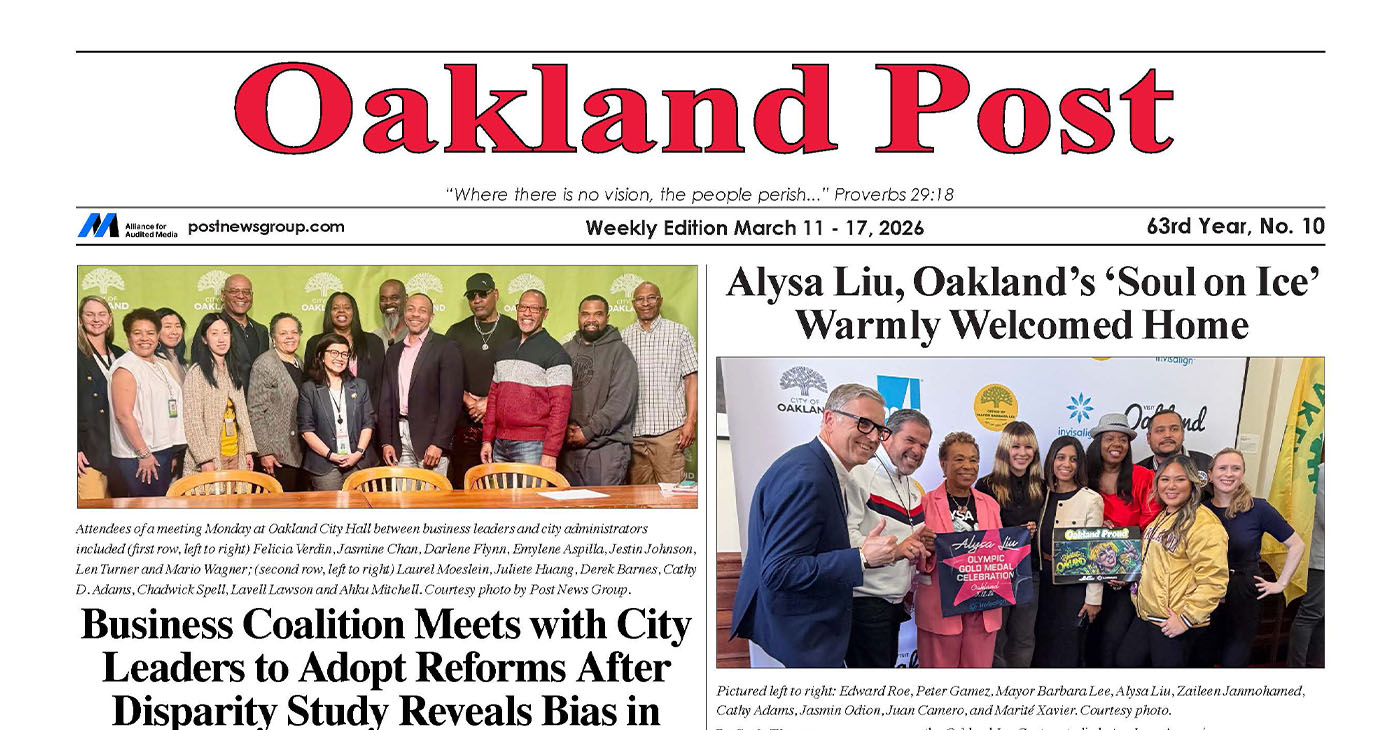
To enlarge your view of this issue, use the slider, magnifying glass icon or full page icon in the lower right corner of the browser window.


WORK FROM HOME
Home-based business with potential monthly income of $10K+ per month. A proven training system and website provided to maximize business effectiveness. Perfect job to earn side and primary income. Contact Lynne for more details: Lynne4npusa@gmail.com 800-334-0540


Black Artists in America, Installation Three Wraps at the Dixon Gallery and Gardens

Grief, Advocacy, and Education: A Counselor Reflects on Black Maternal Health

Future of Florida’s Black History Museum in Limbo

New Research Shows the Many Benefits of Early Learning

South Hampton K-8 Students Among Top 10 Finalists for Samsung’s ‘Solve for Tomorrow’ Competition

Cuba: No Negotiation with US on the President or Political System

Brooklyn Academy of Music Names Jamaican-Born Tamara McCaw as President

Trinidad & Tobego – U.S. Launches WhatsApp Channel for American Citizens in the Country

Oakland Post: Week of March 18 – 24, 2026

AI Innovation vs. Ethics and Environmental Impact

AI, Web3, and Digital Reparations

What If You Owned Your AI Agent?

Season 7, Episode 3 – January Reporter’s Roundtable 📱

Season 7, Episode 3 – January Reporter’s Roundtable

AI, Media, and Power | Part 2, Real-World Impacts and Tradeoffs

Oakland Post: Week of February 11 – 17, 2026

Reflecting on Black History Milestones in Birmingham AL

Rising Optimism Among Small And Middle Market Business Leaders Suggests Growth for California

CITY OF SAN LEANDRO STATE OF CALIFORNIA PUBLIC WORKS DEPARTMENT ENGINEERING DIVISION NOTICE TO BIDDERS FOR ANNUAL STREET OVERLAY/REHABILITATION 2019-21 – PHASE III

Oakland Post: Week of February 18 – 24, 2026

PRESS ROOM: NBA Hall of Fame Nominee Terry Cummings Joins 100 Black Men of DeKalb County to Launch Victory & Values Initiative

Oakland Post: Week of February 25 – March 3, 2026

Trump’s MAGA Allies are Creating Executive Order Plan to Steal the 2026 Midterms

U.S. manufacturing rebounds – how foundry services are adapting to rising demand

OP-ED: One Hundred Years of Black Workers Telling the Truth

Advancements in solar technology that are changing the way we power the world

Chase Oakland Community Center Hosts Alley-Oop Accelerator Building Community and Opportunity for Bay Area Entrepreneurs

Poll Shows Support for Policies That Help Families Afford Child Care

Oakland Post: Week of March 4 – 10, 2026

PRESS ROOM: Civil Rights TV Launches in Selma as the World’s First 24/7 Civil Rights Television Network

Hyundai Ioniq 5 Parking, Safety, and 360 View #shorts

2025 Ioniq 5 New Wiper & Powerful Performance! #shorts

Electric SUV Range: Is 259 Miles Enough? #shorts

EV Charging: How Fast Can You Charge an Electric Vehicle? #shorts

Biometric Cooling… Messaging Seats…Come on! 2025 Infiniti QX80 Autograph 4WD

Charged Up: Witness the Magic of a Fully Electric Car! #shorts

Range Rover Sport PHEV Included…: See What’s Inside This Luxury SUV! #shorts

Invisible Hood View: Perfect Parking with X-Ray Vision! #shorts

AI Is Reshaping Black Healthcare: Promise, Peril, and the Push for Improved Results in California

ESSAY: Technology and Medicine, a Primary Care Point of View

Sanctuary Cities

The RESISTANCE – FREEDOM NOW

STATE OF THE PEOPLE: Freddie

ECONOMIC BOYCOTT DAY!!!!!

I told You So
-
 Activism4 weeks ago
Oakland Post: Week of February 25 – March 3, 2026
-
 #NNPA BlackPress4 weeks ago
Poll Shows Support for Policies That Help Families Afford Child Care
-
 Activism3 weeks ago
Oakland Post: Week of March 4 – 10, 2026
-

 #NNPA BlackPress3 weeks ago
Woman’s Search for Family’s Roots Leads to Ancestor John T. Ward – A Successful Entrepreneur and Conductor on the Underground Railroad
-

 #NNPA BlackPress4 weeks ago
OP-ED: NNPA Launches 2026 “Leadership Matters” Video Series
-

 #NNPA BlackPress3 weeks ago
Advocates Raise Alarm Over ICE Operation, MOU and Detention Risks in Baltimore County
-

 #NNPA BlackPress3 weeks ago
COMMENTARY: Women of Color Shape Our Past and Future
-

 #NNPA BlackPress3 weeks ago
Pete Buttigieg to Join Mayor Randall Woodfin for Community Town Hall in Birmingham
