
Black History
Opera and the African American – ‘Figaro Meets Frederick Douglass’
NNPA NEWSWIRE — “Our artistry is vast, and can be used in many ways, but without funding for creating new stories with casting of old stories in collaboration with advertising and marketing, one might think Black people never existed or have a place to shine in opera, which causes another challenge.”

By Stacy M. Brown, NNPA Newswire Correspondent
@StacyBrownMedia
Among many other trailblazing accomplishments, W.E.B. Du Bois stood among the many African Americans who composed, sang, and otherwise reveled in opera.
In 1955, Marian Anderson broke the color barrier at the Met. Yes, Blacks in opera – it’s a thing.
Opera is as much a part of the African American as Rhythm & Blues. It just hasn’t always been as celebrated, according to historians.
Consider, 19th century black singers like Elizabeth Taylor Greenfield and Sissieretta Jones sang opera but reportedly gave recitals because the opera houses refused to hire them.
Black churches were performing Verdi’s Requiem with all-Black casts and musicians. Coretta Scott King attended the New England Conservatory, planning to be an opera singer, according to Hyperallergic, a web forum for serious, playful and radical thinking about art.
Officials at the Coalition for African Americans in the Performing Arts – or CAAPA – said they’re dedicated to “Bringing Color to the Classics.” The organization advocates for diversity on the stage on behalf of Black classical musicians, youth and others in the performing arts.
Through the nonprofit organization’s newly formed International Outreach Program, CAAPA provides a vibrant musical experience, bringing culturally diverse performance opportunities to the community and underserved population while promoting Black classical musicians and others in the performing arts.
The International Outreach Program offers concerts, recitals, festivals, panels, workshops, exchanges, musical performances, and more. The program will also target diverse populations in elementary, middle and high schools, camps, youth programs, as well as adult audiences, including seniors.
Officials hope the program will help overcome the radical racial barriers that have long kept Blacks out of the opera. “Like any other professional field or industry, there is always racial bias. However, it has gotten moderately better in past years,” said Terri Allen, the executive director of CAAPA.
For instance, Allen said when CAAPA began in 2003, only 3 percent of all opera companies and symphony orchestras had main stage roles for Black musicians.
Today, that total has risen by almost 5 percent – much of it can be attributed to the work that CAAPA has done on behalf of Black classical musicians. “While overall, it has gotten better, these challenges allow us to continue creating spaces for ourselves to tell our stories, as well as other stories that may not always look like us, while adding our perspective and artistry along the side of our colleagues who are not Black,” Allen said.
CAAPA is very aggressive in this regard.
“We deliberately create performance opportunities for Blacks. For instance, this season’s performance roster includes programs such as, ‘Figaro Meets Frederick Douglass’; ‘Musical Tribute to Shirley Chisholm’; and ‘Cotton Field to Concert Hall,’” Allen said.
Among the continued challenges is recognition of the seemingly endless pool of Black talent.
“CAAPA would love to have Black artists be seen and provided with an opportunity to shine purely based on skill and talent with consideration for casting and being matched alongside any other artist regardless of skin color, height, or weight,” Allen said.
“Often times, it is not what you know, it is who you know, when chosen for an opera. In some cases, plots in opera require a distinct ethnicity of a character to help further tell the story and assist with visually displaying the obstacle, while other operas can be more daring in casting.”
Allen continued:
“One opera even [literally] states the ethnicity of its characters. Representation is important and educates many who believe that opera is not a place for a Black person while exposing the existence of Black people already in opera.
“Our artistry is vast, and can be used in many ways, but without funding for creating new stories with casting of old stories in collaboration with advertising and marketing, one might think Black people never existed or have a place to shine in opera, which causes another challenge.”
Another challenge remains funding, Allen added.
“Statistics show minority organizations generally receive less and lower amounts for grants, resulting in fewer program including Black musicians,” she said.
Still, the outlook remains positive for Blacks in opera.
In its “Bringing Color to the Classics” efforts, CAAPA’s mission is to make opera more acceptable and palatable to the Black community through various programs, Allen said.
“Opera is a vessel that isn’t used often to tell a story like other vessels including Musical Theater, Stage Play, and Movies,” she said. “At times it can be challenging for Black opera singers to stay in an art form that some folks don’t see as valuable – African Americans traditionally tend to gravitate toward R&B, Jazz, Pop, Blues, Hip Hop, and Gospel – thus disregarding Opera as a legitimate art form for the Black community.
“CAAPA strives to change that attitude. CAAPA believes the outlook is good and moving forward.”
To find out more CAAPA and its programs, visit www.4caapa.org










Activism
Oakland Post: Week of April 1 – 7, 2026
The printed Weekly Edition of the Oakland Post: Week of April 1 – 7, 2026
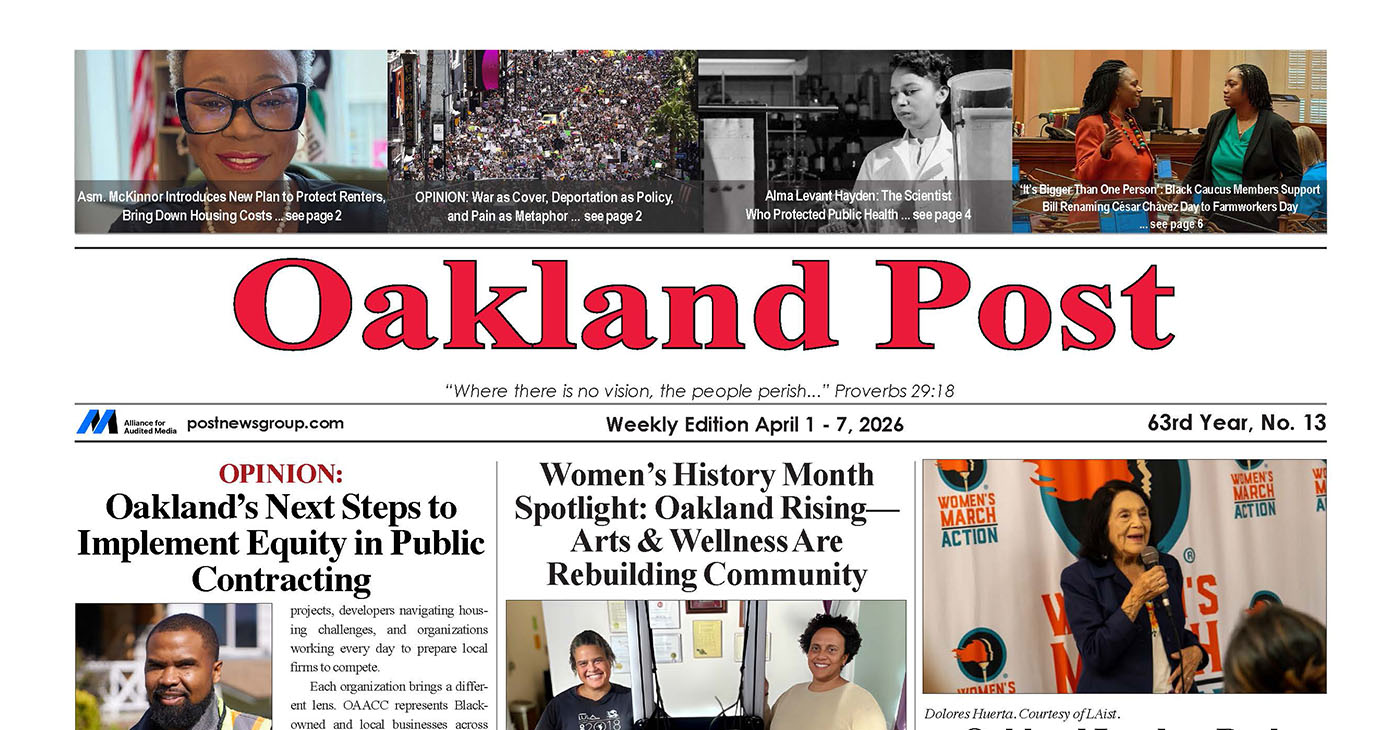
To enlarge your view of this issue, use the slider, magnifying glass icon or full page icon in the lower right corner of the browser window.
Activism
Oakland Post: Week of March 18 – 24, 2026
The printed Weekly Edition of the Oakland Post: Week of March 18 – 24, 2026
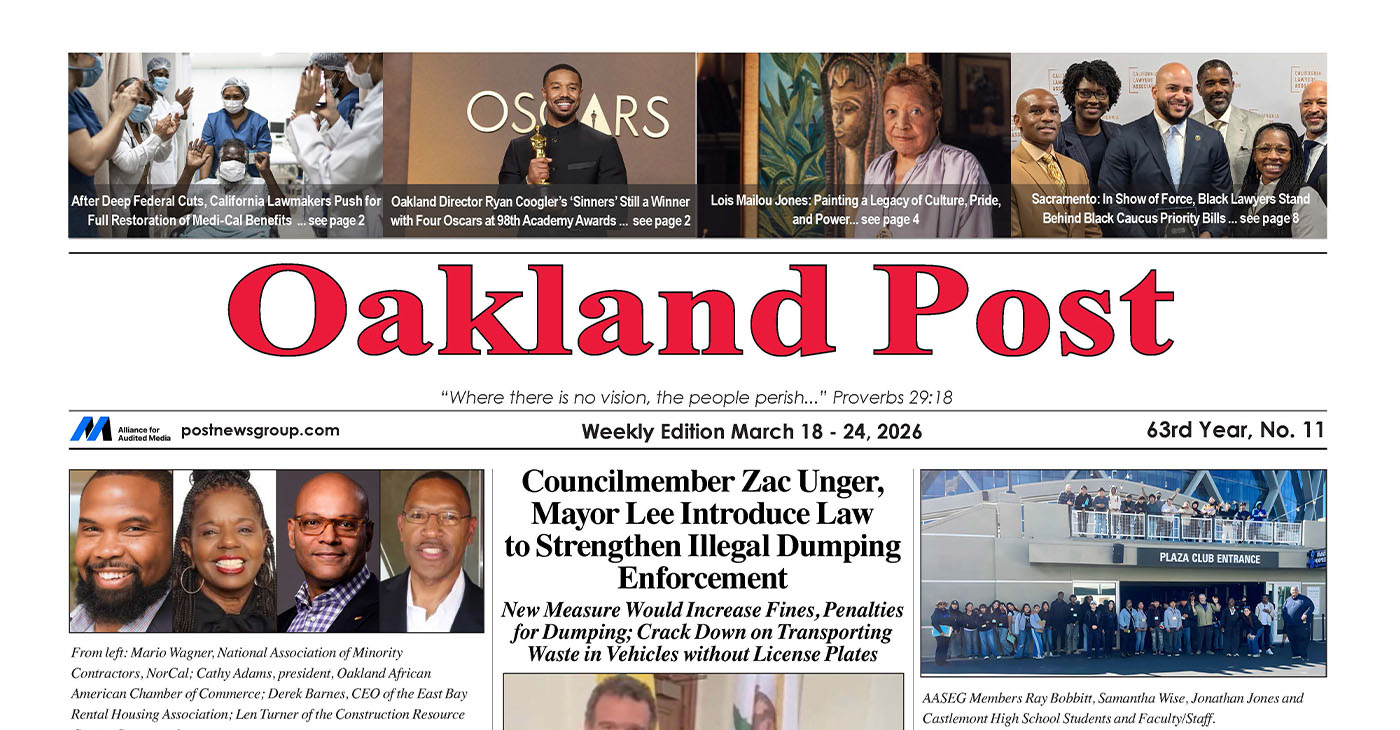
To enlarge your view of this issue, use the slider, magnifying glass icon or full page icon in the lower right corner of the browser window.
Activism
Oakland Post: Week of March 11 -17, 2026
The printed Weekly Edition of the Oakland Post: Week of March 11 – 17, 2026
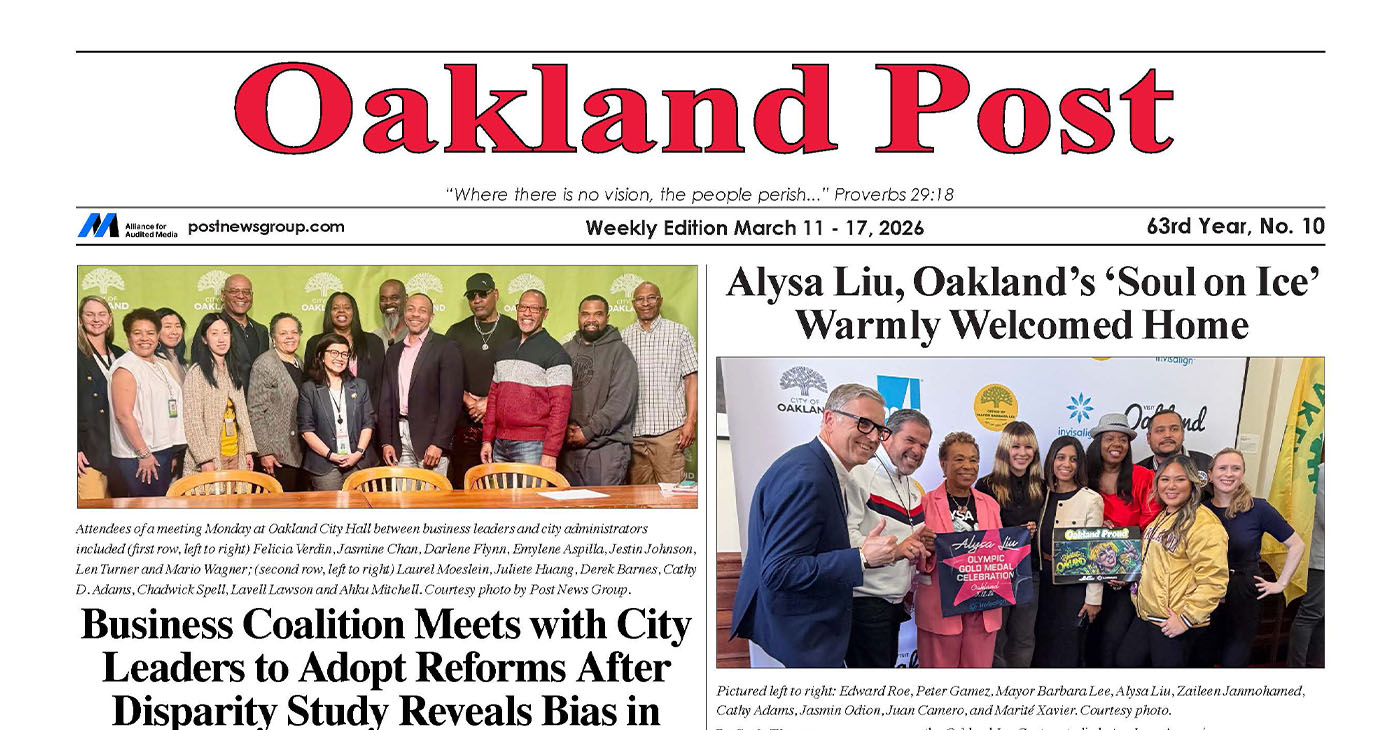
To enlarge your view of this issue, use the slider, magnifying glass icon or full page icon in the lower right corner of the browser window.

WORK FROM HOME
Home-based business with potential monthly income of $10K+ per month. A proven training system and website provided to maximize business effectiveness. Perfect job to earn side and primary income. Contact Lynne for more details: Lynne4npusa@gmail.com 800-334-0540


Oakland Post: Week of April 1 – 7, 2026

Black Artists in America, Installation Three Wraps at the Dixon Gallery and Gardens

Grief, Advocacy, and Education: A Counselor Reflects on Black Maternal Health

Future of Florida’s Black History Museum in Limbo

New Research Shows the Many Benefits of Early Learning

South Hampton K-8 Students Among Top 10 Finalists for Samsung’s ‘Solve for Tomorrow’ Competition

Cuba: No Negotiation with US on the President or Political System

Brooklyn Academy of Music Names Jamaican-Born Tamara McCaw as President

Trinidad & Tobego – U.S. Launches WhatsApp Channel for American Citizens in the Country

Oakland Post: Week of March 18 – 24, 2026

AI Innovation vs. Ethics and Environmental Impact

AI, Web3, and Digital Reparations

What If You Owned Your AI Agent?

Season 7, Episode 3 – January Reporter’s Roundtable 📱

Season 7, Episode 3 – January Reporter’s Roundtable

Reflecting on Black History Milestones in Birmingham AL

Oakland Post: Week of February 25 – March 3, 2026

PRESS ROOM: NBA Hall of Fame Nominee Terry Cummings Joins 100 Black Men of DeKalb County to Launch Victory & Values Initiative

Trump’s MAGA Allies are Creating Executive Order Plan to Steal the 2026 Midterms

Oakland Post: Week of March 4 – 10, 2026

Chase Oakland Community Center Hosts Alley-Oop Accelerator Building Community and Opportunity for Bay Area Entrepreneurs

U.S. manufacturing rebounds – how foundry services are adapting to rising demand

Poll Shows Support for Policies That Help Families Afford Child Care

OP-ED: One Hundred Years of Black Workers Telling the Truth

Advancements in solar technology that are changing the way we power the world

Oakland Post: Week of March 11 -17, 2026

Woman’s Search for Family’s Roots Leads to Ancestor John T. Ward – A Successful Entrepreneur and Conductor on the Underground Railroad
Oakland Post: Week of March 18 – 24, 2026

COMMENTARY: Women of Color Shape Our Past and Future

PRESS ROOM: Civil Rights TV Launches in Selma as the World’s First 24/7 Civil Rights Television Network

Hyundai Ioniq 5 Parking, Safety, and 360 View #shorts

2025 Ioniq 5 New Wiper & Powerful Performance! #shorts

Electric SUV Range: Is 259 Miles Enough? #shorts

EV Charging: How Fast Can You Charge an Electric Vehicle? #shorts

Biometric Cooling… Messaging Seats…Come on! 2025 Infiniti QX80 Autograph 4WD

Charged Up: Witness the Magic of a Fully Electric Car! #shorts

Range Rover Sport PHEV Included…: See What’s Inside This Luxury SUV! #shorts

Invisible Hood View: Perfect Parking with X-Ray Vision! #shorts

AI Is Reshaping Black Healthcare: Promise, Peril, and the Push for Improved Results in California

ESSAY: Technology and Medicine, a Primary Care Point of View

Sanctuary Cities

The RESISTANCE – FREEDOM NOW

STATE OF THE PEOPLE: Freddie

ECONOMIC BOYCOTT DAY!!!!!

I told You So
-
 Activism3 weeks ago
Oakland Post: Week of March 11 -17, 2026
-
 #NNPA BlackPress4 weeks ago
Woman’s Search for Family’s Roots Leads to Ancestor John T. Ward – A Successful Entrepreneur and Conductor on the Underground Railroad
-
 Activism2 weeks ago
Oakland Post: Week of March 18 – 24, 2026
-
 #NNPA BlackPress4 weeks ago
COMMENTARY: Women of Color Shape Our Past and Future
-

 Advice3 weeks ago
Financial Wellness and Mental Health: Managing Money Stress in College
-

 #NNPA BlackPress4 weeks ago
Advocates Raise Alarm Over ICE Operation, MOU and Detention Risks in Baltimore County
-

 #NNPA BlackPress4 weeks ago
Pete Buttigieg to Join Mayor Randall Woodfin for Community Town Hall in Birmingham
-
 #NNPA BlackPress2 weeks ago
Brooklyn Academy of Music Names Jamaican-Born Tamara McCaw as President
