
Education
OP:ED This is the Moment for Action on Climate Change

President Obama kicked off the summer with a high-profile environmental speech at Georgetown University. He put forth a plan to limit carbon emissions for coal-fired power plants, and called for America to double renewable energy sources.
As the details of this plan emerge, it is important to remember who is most affected by coal pollution: low-income communities and communities of color.
Pollution from coal-fired power plants is estimated to cause 13,200 premature deaths and 9,700 hospitalizations in the United States every year. It has been linked to asthma attacks, lung inflammation, chronic bronchitis, irregular heart conditions, and birth defects.
None of the so-called “emissions controls” introduced in the past few years have gone far enough to diminish those numbers.
If we look deeper, we can see exactly which communities and neighborhoods bear the brunt of the impact. According to Census data, the six million Americans who live within three miles of a coal plant have an average income of $18,400, compared with $21,857 nationwide.
Thirty nine percent are people of color. As a result, emissions from coal combustion often harm those who are least able to afford the effects of exposure.
This is no accident. The simple fact is that very few people want a coal plant in their backyard. Therefore, power companies have a strong incentive to maintain plants in the area of least political resistance.

To add insult to injury, the sight of spewing smokestacks often brings property values down even further. The coal-fired power plant has come to serve as cause and symbol of urban and suburban blight.
In November 2012, the NAACP and our partners released a report to raise awareness about the disparate impact of coal pollution, titled, “Coal Blooded: Putting Profits Before People.” The report created the first ranking system that judged coal plants based on their demographic impact as well as their emissions levels.
“Coal Blooded” was written as a guide for local NAACP units and other community groups to take action. Each of the nation’s 378 plants operating at the time of the report received an easily-referenced “Environmental Justice Performance” score based partly on the race, income, and density of the surrounding neighborhood.
Already, NAACP units have started to host education and advocacy activities in communities that are host to the most harmful power plants.
The message of these activities is straightforward: we need to transition away from coal power and replace coal plants with profitable, clean energy alternatives. And we need to focus our energy on coal plants that have the most harmful impact on their surrounding communities.
Coal power is not without its supporters, even in the communities most affected by pollution. However, the negatives almost always outweigh the positives. No coal plant is worth the cost – in emotional loss and loss of productivity – when children are getting sick, grandparents are dying early, and mothers and fathers are missing work.
Moreover, it is possible to maintain jobs and livelihoods without relying on dirty coal. As President Obama rightly noted in his speech, the future of American energy independence lies in clean energy – an emerging sector that is poised to create millions of jobs and ensure an affordable power supply far into the future.
America is moving beyond coal. As we do so, it is important to remember the human impact of coal pollution. Climate change is more than an environmental issue – it is a civil rights and human rights issue as well.
Ben Jealous is president/CEO of the NAACP.














Community
Asm. Corey Jackson Announces Launch of 24-Hour Childcare in His District
Assemblymember Corey Jackson has secured $2 million in state funding for a proposed childcare special district in Moreno Valley and Perris. This funding aims to establish a system providing 24-hour, seven-day-a-week childcare, which would be California’s first special district focused solely on childcare. The initiative seeks to address the area’s designation as a “childcare desert” and high costs for working families. The funding will cover startup, planning, and formation costs for the district. Read more about the specifics of this groundbreaking initiative.


Assemblymember Corey Jackson (D-Moreno Valley) has secured $2 million in state funding to launch a proposed childcare special district serving families in Moreno Valley and Perris, paving the way for a system designed to provide childcare 24 hours a day, seven days a week.
The Moreno Valley-Perris Childcare Special District would be the first special district in California focused specifically on childcare, according to Jackson’s office. The state funding will cover startup, planning, and formation costs and help the district meet requirements set by the Riverside Local Agency Formation Commission, or LAFCO.
The proposed district would coordinate a mixed-delivery childcare system that could include home-based and center-based care. The goal is to provide universal childcare for families who work overnight, early morning, or other nontraditional shifts.
Jackson’s office says Moreno Valley is a certified “childcare desert,” with licensed childcare spaces available for only 15% of children with working parents. Infant care in Moreno Valley averages $2,776 a month, or about 35.7% of median household income. In Perris, licensed infant care can cost more than 60% of an individual worker’s gross median earnings, according to the assemblymember’s office.
“Securing this $2 million in startup funding is a monumental victory for the working-class families of Moreno Valley and Perris who have been trapped in a childcare desert for far too long,” Jackson said.
The proposal follows Jackson’s unsuccessful effort to establish the district through Assembly Bill 2083. The legislation would have created the district as a dependent special district covering Moreno Valley, Perris and their spheres of influence, with Riverside LAFCO responsible for reviewing its formation and boundaries.
The new funding allows the district’s formation to move forward without requiring mandatory contributions from local school districts and other stakeholders, according to Jackson’s office. His spokesperson, Daniel Peeden, said Jackson hopes the district can be operating by 2028.
The proposal has faced questions from some local officials. Moreno Valley City Councilmember Ed Delgado, who is running against Jackson for the 60th Assembly District seat, said he supports affordable childcare but questioned how the proposed district would operate and how much it would ultimately cost.
“Basically, he didn’t have a plan. We didn’t see a plan,” Delgado said, adding that officials had questions about operating costs, insurance and eligibility.
“It’s going to take a lot more than $2 million to create a special district to provide affordable childcare,” Delgado said.
Delgado has suggested working with existing childcare centers to subsidize costs for local families rather than creating a new agency.
Jackson’s office says the program will lower barriers to “workforce participation” and reduce “affordability anxiety” for young families. This landmark District is poised to trigger a virtuous cycle of economic upward mobility and long-term regional prosperity in the 60th Assembly District, his office added.

Business
County Office of Education Says OUSD Finances Are Getting Healthier, Materially Stronger
The Oakland Unified School District’s recent budget submission has been deemed “materially stronger” by the Alameda County Office of Education, reflecting deliberate work by the new board and superintendent. Despite needing further cuts in the coming years, the district is progressing toward financial health, according to ACOE Superintendent Alysse Castro. This assessment counters critics who suggest a dire financial outlook for Oakland schools, acknowledging the district has made significant reductions and adopted a plan to address structural challenges. The ACOE commended the district’s efforts to get its financial house in order. Read more to learn about the details of these financial improvements.
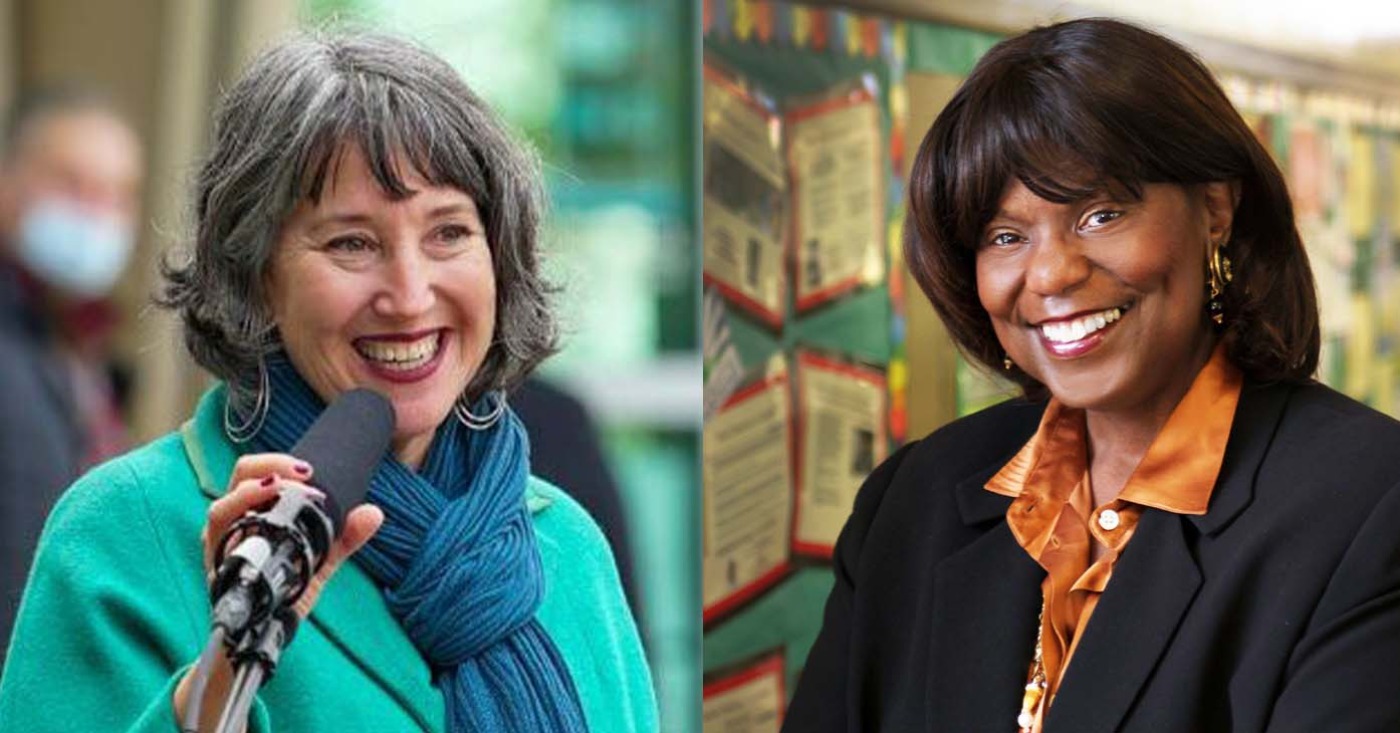
County’s letter counters critics who offer Doomsday scenarios for Oakland schools
The Oakland Unified School District, under the leadership of a new board majority and new superintendent, recently submitted a budget to the county “that is a materially stronger submission than the district has filed in recent years, (which) reflects difficult and deliberate work,” according to a letter to the district from Supt. Alysse Castro of the Alameda County Office of Education.
While OUSD still must make more budget cuts in the next two years, the district is on the road to financial health, according to a Sept. 15 letter from Castro to the district.
Under the California Education Code, Alameda County and other county offices of education (COEs) have the legal responsibility to review, approve, conditionally approve, or disapprove local school district annual budgets and interim financial reports.
“The Alameda County Office of Education wants to acknowledge that the district has submitted a budget that shows a positive fund balance, meets the state minimum reserve for economic uncertainty in each year of the multiyear project and is accompanied by a board-adopted commitment to close the remaining structural challenges,” the letter said.

“After two decades of state receivership and significant changes in OUSD’s budgeting practices,” it is understandable that there may be “considerable confusion” in the public about the district’s current financial condition, according to the letter.
However, the district’s current fiscal position and practices are “materially” better than prior years, though they “do not yet eliminate underlying structural challenges,” the letter continued.
Castro also commended the board and staff for working to get their financial house in order.
“There are three essential parts to addressing a structural deficit: staff must identify and bring
forward hard choices; the governing board must make those choices; and staff must follow
through and implement them,” she wrote.
“All three appear to be happening in OUSD, and that represents meaningful progress,” she wrote. “The district has made significant reductions to ongoing expenditures, increased its use of available restricted resources, and adopted a plan to address the remaining gap.”
According to the County, the district already has approved budget cuts of about $30 million in the current year. Additional reductions of about $30 million will be necessary next year, and another $11 million the following year.
These cuts are necessary, the county says, because “the district is still operating at a structural
deficit, meaning spending more every year than it brings in.”
In a statement released earlier this month, the district announced it had “finished the year with $170.1 million in its General Fund and an unrestricted reserve of $32.3 million, finishing $16.4 million ahead of what the district projected in March.”
The budget reflects progress toward putting the district in a stronger financial position to better serve students and families, said district leaders, while also acknowledging the need for significant reductions across the board.
“This turnaround happened because our board was willing to make difficult decisions rather than pass them along, and because our staff did the work,” said Supt. Dr. Denise Saddler. “None of this came easily, and there is more ahead of us. What these closed books show is that the direction is right.”
In October 2025, the board directed staff to prepare budget scenarios totaling $100 million in adjustments. In December, presented with a choice between borrowing to bridge the gap and making the reductions directly, the board chose the latter, the district statement said. As part of the reduction plan, the board approved cuts to more than 400 certificated and classified positions, along with a retirement incentive that converted some layoffs into voluntary departures.
“Closing our books is not the same as finishing the work, and we are not stopping here,” said Tara Gard,deputy superintendent of Business and Operations. “We will continue with the actions in our Financial Stabilization Plan because of where they lead.”
In a statement released on social media, Oakland Education Association (OEA) President
Kampala Taiz-Rancifer strongly criticized those who allege the district is collapsing and supported members of the school board majority who are working hard to stabilize the district’s finances while minimizing disruption for schools and employees.
Jennifer Brouhard (D2) and Valarie Bachelor (D6), who are running for reelection, “are moving the district toward a ‘materially stronger’ financial position than we’ve seen in recent years—all while investing in school sites and the employees who serve Oakland students,” she wrote.
“For years, we’ve heard billionaire-backed board members say they had to make ‘tough choices’ to balance the budget,” she continued. “Those choices almost always caused disruption and instability for our schools and communities. This is a different approach: financial stability alongside investments in students, schools, and workers. All in the effort to improve student outcomes.”
“The real hard work is tuning out the rage bait, the chaos agents, the attacks on unions and workers, and ignoring the loud corporate profiteers—and staying focused on what matters: improving outcomes for students while creating stable teaching and learning conditions,” said Taiz-Rancifer.
“Let’s not go backward into the days of manufactured panic.”
Books
Oakland Mayor Reads to Children at Bookout Block Party at Marcus Books Store
Booths lined the street with arts and crafts, and children participated in hands-on art projects. A large display of books was on display and each child chose his/her free book to take home. Food and snacks were available, and free water was encouraged to keep all hydrated.

Floating bubbles greeted families on arrival at the Bookout Block Party held on Sat. Sept. 12 at 39th and MLK Blvd. in Oakland.
Sponsored by Marcus Books and Storyland Collective, a wonderland of activity for children stretched to Longfellow School while live music filled the air, courtesy of KWC Complex Jazz Group.
Booths lined the street with arts and crafts, and children participated in hands-on art projects. A large display of books was on display and each child chose his/her free book to take home. Food and snacks were available, and free water was encouraged to keep all hydrated.
A large area of turf was filled with huge bean bags for jumping, rolling, and sitting to listen as families crowded close to listen to Oakland Mayor Barbara Mayor Barbara Lee read a book out loud.
Of the numerous booths present were, “Claim Your Scholarship,” a program for Oakland Public School students and “VOLUNTEER NOW,” a program encouraging volunteers to help boost reading proficiency. Individuals sold their art and products. Free gifts were at many tables and a raffle was held.
The event with Marcus books culminated a summer-long program organized by Storyland Collective, a literacy arts organization bringing children’s ‘storytime,’ local authors, and art activities to Bay Area neighborhoods. Marcus Books is the oldest, independent Black-owned book store in the U.S., featuring books by and about Black people here and abroad.



Asm. Corey Jackson Announces Launch of 24-Hour Childcare in His District

IN MEMORIAM: The Rev. Leon “Sonny” Clark, Longtime Orange County Pastor and Community Leader, Dies at 72

Poll: Becerra Widens His Lead Over Hilton; Californians Split on Wealth Tax

From Historic Memories to New Possibilities: Oakland Celebrates Coliseum 60

County Office of Education Says OUSD Finances Are Getting Healthier, Materially Stronger

LIVE FREE Sunday Dinner Brings Faith, Fellowship and Civic Conversation to Oakland

Remembering Chauncey Bailey as Student Journalists Face Threats to Truth-Telling

BLACspace Cooperative Invites Bay Area to Experience Oakland’s Black Cultural Ecosystem Through a BLAC Map Tour + Party

In Wake of Death on Doorstep, Williams Chapel Baptist Church Calls for Better Care, Funding for Unhoused

Oakland Centenarian Nuna McKee Honored!

Caribbean Nations Produce Action Plan Calling for UK Reparations Over Slavery

Oakland Post: Week of September 23 – 29, 2026

Doulas Are Helping Black California Moms Navigate Pregnancy–Even as High Mortality Rates Persist

Newsom Signs Addictive Social Media Law to Protect Kids

On Your November Ballot: Prop 38 Would Allocate $8.4 Billion to Immunology and Immunotherapy Funding

Less Affluent School Districts, Including Sacramento City, Face Threat of State Takeover

ESSAY: California Can Close Its Colorectal Cancer Gap

California Hispanic Chambers of Commerce Unveils: ‘Powering the Future’ Theme for 47th Annual Statewide Convention

Four Candidates, Including Incumbent Barbara Lee, Qualify for Oakland Mayor’s Race

Oakland Post: Week of August 12 – 18, 2026

From Blueprint to Breakthrough: Tackling Affordable Housing in Oakland

Oakland Observes Black August with Block Parties, Film Showings, Workshops

COMMENTARY: Why Local School Tax Measure G1 Will Not Be on the November Ballot

Standoff for Justice: Our Homes Are Worth Fighting For

Returning to Its Roots, the Oakland Black-Eyed Pea Festival Partners with the Freedom Farmers Market Sept. 12

Oakland Post: Week of August 26 – September 1, 2026

NPRC Scores First Advocacy Victory: David Shaw Finally Gets His Wish to ‘Go Home’

Frontier Airlines’ Return to Oakland Airport Brings Flights, Jobs and Opportunity

Gubernatorial Candidate Steve Hilton Blasts California New Tire Rules; Newsom Hits Back

Chef Sharon Lee Blends Culinary Excellence, Education and Empowerment

The Conversation With Al McFarlane 6/23/26

Media Monday 6/22/26

LIVE! ASK ALMA! — TUES. 6.23.26 7PM EST

Car Buying Secrets: 4 Hidden Checks Before You Sign!

Is This 550 HP Charger Worth YOUR Money? AutoNetwork Review

Celebrating Juneteenth – Frederick Douglass on education and resistance

LIVE! — ASK ALMA! — TUES. 6.19.26 7PM EST

Hyundai Ioniq 5 Parking, Safety, and 360 View #shorts

2025 Ioniq 5 New Wiper & Powerful Performance! #shorts

Electric SUV Range: Is 259 Miles Enough? #shorts

EV Charging: How Fast Can You Charge an Electric Vehicle? #shorts

Biometric Cooling… Messaging Seats…Come on! 2025 Infiniti QX80 Autograph 4WD

Charged Up: Witness the Magic of a Fully Electric Car! #shorts

Range Rover Sport PHEV Included…: See What’s Inside This Luxury SUV! #shorts

Invisible Hood View: Perfect Parking with X-Ray Vision! #shorts
-
 Business4 weeks ago
Frontier Airlines’ Return to Oakland Airport Brings Flights, Jobs and Opportunity
-
 Business4 weeks ago
Gubernatorial Candidate Steve Hilton Blasts California New Tire Rules; Newsom Hits Back
-
 Business4 weeks ago
Chef Sharon Lee Blends Culinary Excellence, Education and Empowerment
-

 Black History4 weeks ago
Jackie Wright Champions Bay Area Stories, Filmmakers and Cultural Institutions
-

 Community4 weeks ago
Big City Mayors Ask for “Yes” Vote on Housing Bond Measure; Conservatives Say “No”
-

 Education4 weeks ago
Gov. Newsom’s Latest Appointees Include Sacramento Advocate for Formerly Incarcerated Students; State’s New Tech Chief
-

 Business4 weeks ago
Oakland Coliseum Project Opens Door for Small Businesses to Build Bigger
-

 Community2 weeks ago
Misnamed ‘Parent’ PAC Seeks to Influence Oakland School Board Elections
