
Opinion
OP-ED: Is Voting Fraud Real?

“Why does death have to stop love? It doesn’t stop people from voting in Chicago?” ~ Jarod Kintz
We have all heard the humorous quips about voter fraud. “Vote early and vote often” is a common phrase. But is voter fraud real?
All U.S. citizens who have reached the age of eighteen and who are non felons and not currently incarcerated and may register to vote within in the district where they reside. In a world filled with dictators and monarchs, America is one of the few democracies. The dictionary defines democracy as :
“government by the people; a form of government in which the supreme power is vested in the people and exercised directly by them or by their elected agents under a free electoral system.”
For a democracy to be sustained the integrity of the ballot box must be above reproach. It is a federal crime for an illegal alien to register to vote or to vote in U.S. elections and yet Project Veritas discovered that twelve thousand noncitizens registered to vote in Colorado and apparently five thousand of those voted in 2010.
*In December 2012 a 61 year old Belleville, NJ man was sentenced to five years in prison for submitting phony absentee ballots while he was working on the 2007 election campaign of State Sen. Teresa Ruiz.
*In December 2013 Ohio Secretary of State John Husted announced that his office found 17 non-citizens illegally cast ballots in the 2012 presidential election.
*Per the December 30. 2013 New York Post article The dead can vote in NYC, “Investigators posing as dead voters were allowed to cast ballots for this year’s primary and general elections, thanks to antiquated Board of Elections registration records and lax oversight by poll workers, authorities said. Undercover DOI agents were able to access voting booths 61 instances, including 39 dead people, 14 jail birds and eight non-residents.”
* In Iowa a two year investigation recently uncovered 117 illegally cast votes resulting in six criminal convictions. The crimes included non-citizen voting and felony voting.
* Per the Taunton Daily Gazette, June 10, 2014 article, “a Massachusetts man pled guilty to illegally voting in both the 2008 and 2012 NH primaries. He was charged with one felony count and two misdemeanor counts of wrongful voting under NH law for traveling from Massachusetts to New Hampshire to cast votes in both primaries. He was fined $5,000 and given a suspended prison term of one to three years.

Karen Watson is author of the book, “Being Black and Republican in the Age of Obama”. Email karen.watson@gopbuzz.com
* Last month Bridgeport State Rep. Christina Ayala was arrested on 19 charges of voting fraud including, eight misdemeanor counts of fraudulent voting, ten felony of primary or enrollment violations and one felony count of tampering with or fabricating physical evidence. Ms. Ayala was released on a promise to appear for arraignment at Bridgeport Superior Court on October 7, 2014, the charges are merely accusations and she is presumed innocent unless and until she is found guilty.
In bold script the preamble to our Constitution begins with the words, We The People, and what voter fraud does is to make a mockery of our very fragile democracy. Voter fraud is not just a crime against our system of government it is a crime against every American!









Activism
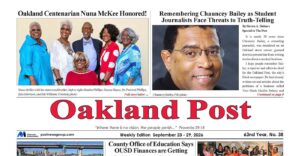
Oakland Post: Week of September 23 – 29, 2026
The printed Weekly Edition of the Oakland Post: Week of September 23 – 29, 2026

To enlarge your view of this issue, use the slider, magnifying glass icon or full page icon in the lower right corner of the browser window.
Activism
Oakland Post: Week of September 16 – 22, 2026
The printed Weekly Edition of the Oakland Post: Week of September 16 – 22, 2026

To enlarge your view of this issue, use the slider, magnifying glass icon or full page icon in the lower right corner of the browser window.
Activism
Oakland Post: Week of September 9 – 15, 2026
The printed Weekly Edition of the Oakland Post: Week of September 9 – 15, 2026

To enlarge your view of this issue, use the slider, magnifying glass icon or full page icon in the lower right corner of the browser window.


Asm. Corey Jackson Announces Launch of 24-Hour Childcare in His District

IN MEMORIAM: The Rev. Leon “Sonny” Clark, Longtime Orange County Pastor and Community Leader, Dies at 72

Poll: Becerra Widens His Lead Over Hilton; Californians Split on Wealth Tax

From Historic Memories to New Possibilities: Oakland Celebrates Coliseum 60

County Office of Education Says OUSD Finances Are Getting Healthier, Materially Stronger

LIVE FREE Sunday Dinner Brings Faith, Fellowship and Civic Conversation to Oakland

Remembering Chauncey Bailey as Student Journalists Face Threats to Truth-Telling

BLACspace Cooperative Invites Bay Area to Experience Oakland’s Black Cultural Ecosystem Through a BLAC Map Tour + Party

In Wake of Death on Doorstep, Williams Chapel Baptist Church Calls for Better Care, Funding for Unhoused

Oakland Centenarian Nuna McKee Honored!

Caribbean Nations Produce Action Plan Calling for UK Reparations Over Slavery

Oakland Post: Week of September 23 – 29, 2026

Doulas Are Helping Black California Moms Navigate Pregnancy–Even as High Mortality Rates Persist

Newsom Signs Addictive Social Media Law to Protect Kids

On Your November Ballot: Prop 38 Would Allocate $8.4 Billion to Immunology and Immunotherapy Funding

Standoff for Justice: Our Homes Are Worth Fighting For

Oakland Post: Week of August 26 – September 1, 2026

Frontier Airlines’ Return to Oakland Airport Brings Flights, Jobs and Opportunity

Gubernatorial Candidate Steve Hilton Blasts California New Tire Rules; Newsom Hits Back

Chef Sharon Lee Blends Culinary Excellence, Education and Empowerment

Jackie Wright Champions Bay Area Stories, Filmmakers and Cultural Institutions

Big City Mayors Ask for “Yes” Vote on Housing Bond Measure; Conservatives Say “No”

Oakland Coliseum Project Opens Door for Small Businesses to Build Bigger

Gov. Newsom’s Latest Appointees Include Sacramento Advocate for Formerly Incarcerated Students; State’s New Tech Chief

Misnamed ‘Parent’ PAC Seeks to Influence Oakland School Board Elections

Longtime BWOPA Member Brendalyn Goodall Appointed to California Workforce Development Board

Gov. Newsom Signs Law Shielding Immigration Aid Workers From Doxing Threats

Secretary of State Shirley N. Weber Urges Californians to Vote Early as Voter ID Battle Intensifies

From Palestine to Oakland: Seeds for Liberation Examines Shared Struggles for Freedom

IN MEMORIAM: Dolly Parton Dead at 80 — How She Built a Legacy of Love and Earned Her Place in Black Culture

The Conversation With Al McFarlane 6/23/26

Media Monday 6/22/26

LIVE! ASK ALMA! — TUES. 6.23.26 7PM EST

Car Buying Secrets: 4 Hidden Checks Before You Sign!

Is This 550 HP Charger Worth YOUR Money? AutoNetwork Review

Celebrating Juneteenth – Frederick Douglass on education and resistance

LIVE! — ASK ALMA! — TUES. 6.19.26 7PM EST

Hyundai Ioniq 5 Parking, Safety, and 360 View #shorts

2025 Ioniq 5 New Wiper & Powerful Performance! #shorts

Electric SUV Range: Is 259 Miles Enough? #shorts

EV Charging: How Fast Can You Charge an Electric Vehicle? #shorts

Biometric Cooling… Messaging Seats…Come on! 2025 Infiniti QX80 Autograph 4WD

Charged Up: Witness the Magic of a Fully Electric Car! #shorts

Range Rover Sport PHEV Included…: See What’s Inside This Luxury SUV! #shorts

Invisible Hood View: Perfect Parking with X-Ray Vision! #shorts
-
 Community2 weeks ago
Misnamed ‘Parent’ PAC Seeks to Influence Oakland School Board Elections
-

 Activism3 weeks ago
Oakland Post: Week of September 2 – 8, 2026
-

 Community2 weeks ago
Richmond Tiny House Village Farm & Garden Set to Open Gates on Sept. 26
-

 Black History2 weeks ago
OPINION: Nolan Wells’ Death One of Several Signifying Racial Terror Lives on in U.S. South
-

 Black History2 weeks ago
Latest Massacre in Haiti Reveals Cruelty U.S. Deportations
-

 Activism2 weeks ago
Oakland Post: Week of September 9 – 15, 2026
-

 Community2 weeks ago
Democratic Clubs Interview Candidates for Oakland School Board
-
 Featured2 weeks ago
‘Ready to See These Bills Become Law’: Sen. Weber’s Package of 15 Bills Advance to Gov. Newsom’s Desk
