
Opinion
OP-ED: Don’t Judge this Book by its Cover

I am a 56-year-old Black man who has read a total of five books in my life. I simply do not like reading books. Now before you get too excited, I have read the Holy Bible, cover to cover, have you? I believe the Bible is the soap for the heart and I encourage all to search out and apply its wisdom as soap, not man’s myths or biblical customs in an attempt to clean up one’s life.
Why has it been so easy to buy into the myths that Adam and Eve were the “First” people on earth and that Adam and Eve ate an “Apple”, but when it comes to reading, “Love one another”, too many of us act illiterate?
Recently, I walked into Marcus Books; the oldest Black owned book store in the country, located in the Fillmore district of San Francisco. Karen Johnson, who runs the SF store (There is a Marcus Books, Oakland) held up a book for me to read. Reading the title, I thought to myself, get real and then, this woman has lost her mind. I was offended by the title: “What is Wrong with Being Black?”
If there is one good quality about me, it is the fact that when I get offended, I do not run or lash out. Therefore, I took the book and thumbed a few pages. But I purchased it out of curiosity. This erudite Black London preacher and author, Matthew Ashimolowo, born in Nigeria pastors the largest church in Western Europe and he got me to read his 344 page book, by insulting me first.
After reading this thoroughly referenced work and certainly no expert on reading material, I recommend every Black person on earth read, “what is wrong with Being Black?”
Commonsense answers the question posed by the title. Nevertheless, with this book sitting in my vehicle, I still purposely hid the title from view. The author takes you on a well researched tour of truth about the Black race from Adam and Eve to Rev Jessie Jackson, Al Sharpton before ending in chapter 25 on the subject of marginalization. “Celebrating our heritage, confronting our challenges” is the sub-title but I still can’t handle the title.
Thank God I can handle the truth.
I am also a man who has always been annoyed with the stories of slavery. In fact, I don’t think I am alone. While teaching a Bible study in the early 90’s, to a room full of Black teenaged felons at the San Francisco juvenile hall, I said, “I am more concerned with Black future, than Black history.”
They all applauded my statement. My guess is that they too, were not quite buying into the stories of the past 400 years of slavery as I had not. Sure Blacks were slaves for too long. But I never felt as though the whole story was being told, after all, I only had White teachers.
This is quite a biblical and African history lesson to say the least. This London preacher pulled no punches. And though I can’t say I subscribe to everything he suggested on what struggling Black communities should do first, Blacks can’t go wrong by applying all of his advice towards changing course.
Ashimolowo, points out how and why slavery of the Black man was not the fault of the White man, while not letting the White man off the hook for their evil deeds. He also exposes two well known American preachers for who they really are and then artfully compares the totally different approaches against segregation used by Booker T. Washington and W.E.B. DuBois. Both men were 100% right. He even pointed out the good of segregation that most, including me, would not have seen, were it not for his pointing it out.
I was most impressed with how Ashimolowo pointed out the problems of trying to educate today’s young Black male and his suggested solution. Where I slightly disagree with the pastor is when he suggest Blacks should first get a hold of God.
Though God is first, in my life, I believe Blacks should get a hold of the book, “what is wrong with Being Black”, first.

Allen JonAllen Jones was a Bible Study teacher to teenaged felons from 1983 to 1993 at the San Francisco juvenile hall. Currently he is a prison reform activist living in San Francisco.



Activism
Oakland Post: Week of April 1 – 7, 2026
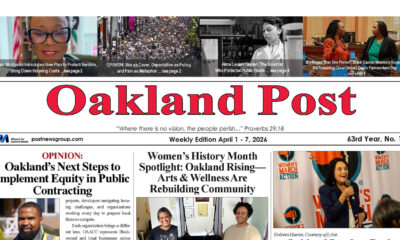
The printed Weekly Edition of the Oakland Post: Week of April 1 – 7, 2026
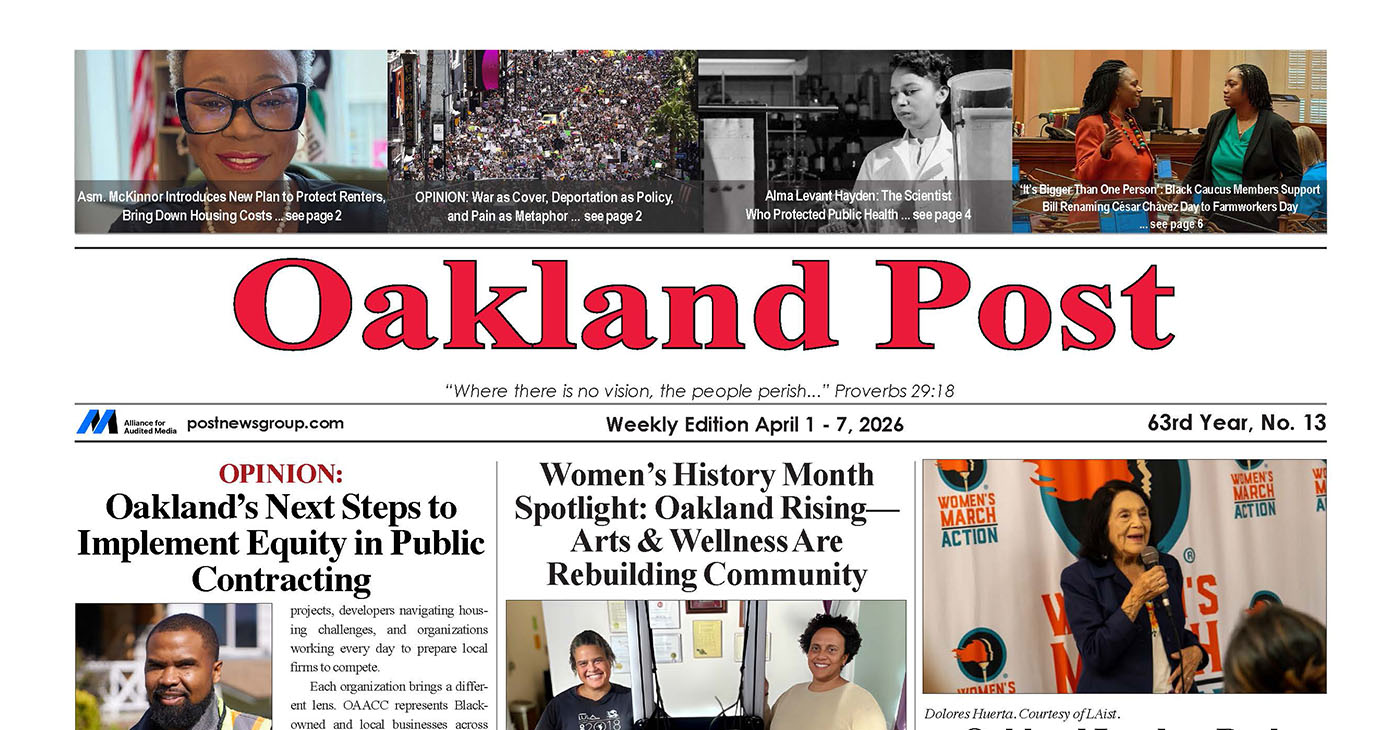
To enlarge your view of this issue, use the slider, magnifying glass icon or full page icon in the lower right corner of the browser window.
Activism
Oakland Post: Week of March 18 – 24, 2026
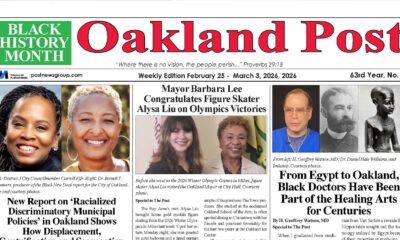
The printed Weekly Edition of the Oakland Post: Week of March 18 – 24, 2026
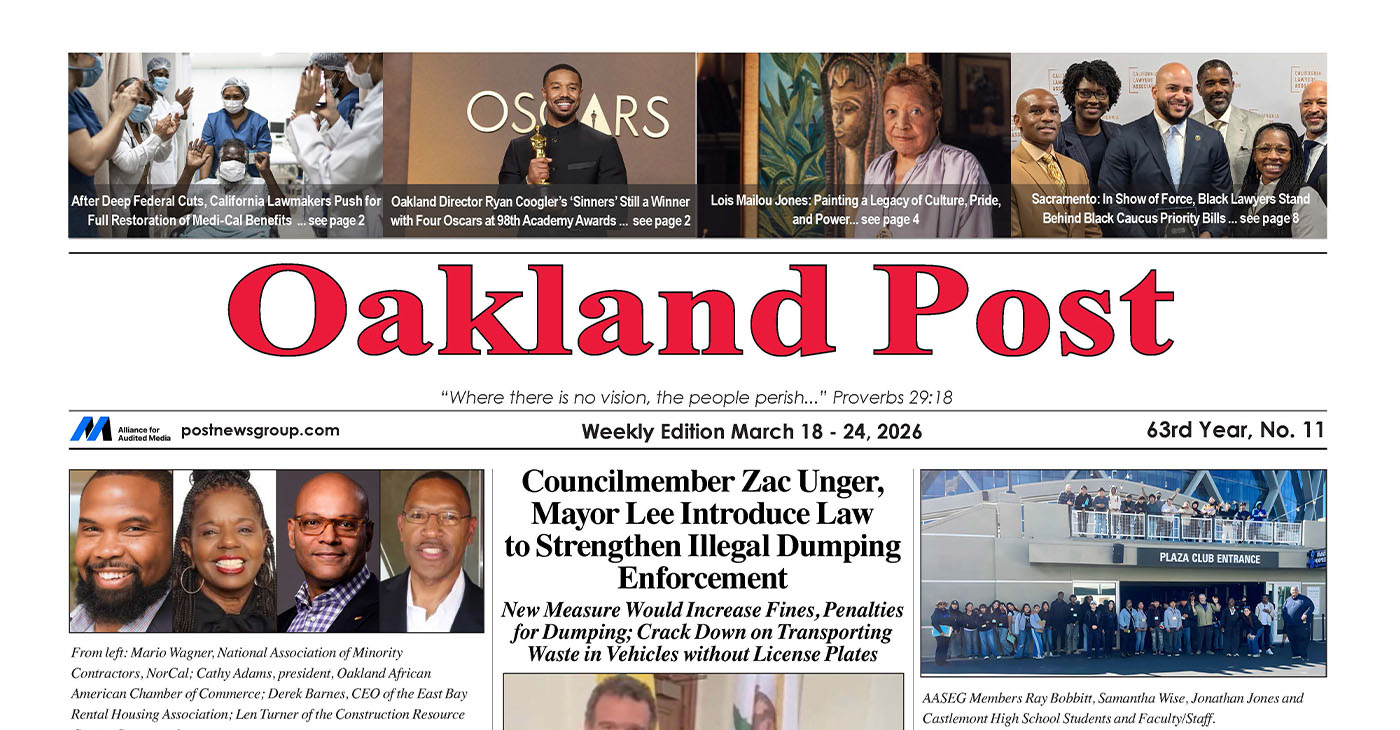
To enlarge your view of this issue, use the slider, magnifying glass icon or full page icon in the lower right corner of the browser window.
Activism
Oakland Post: Week of March 11 -17, 2026
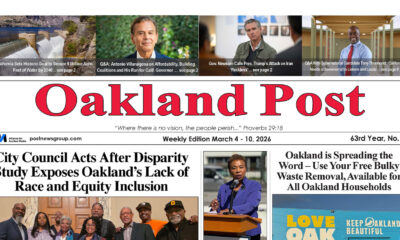
The printed Weekly Edition of the Oakland Post: Week of March 11 – 17, 2026
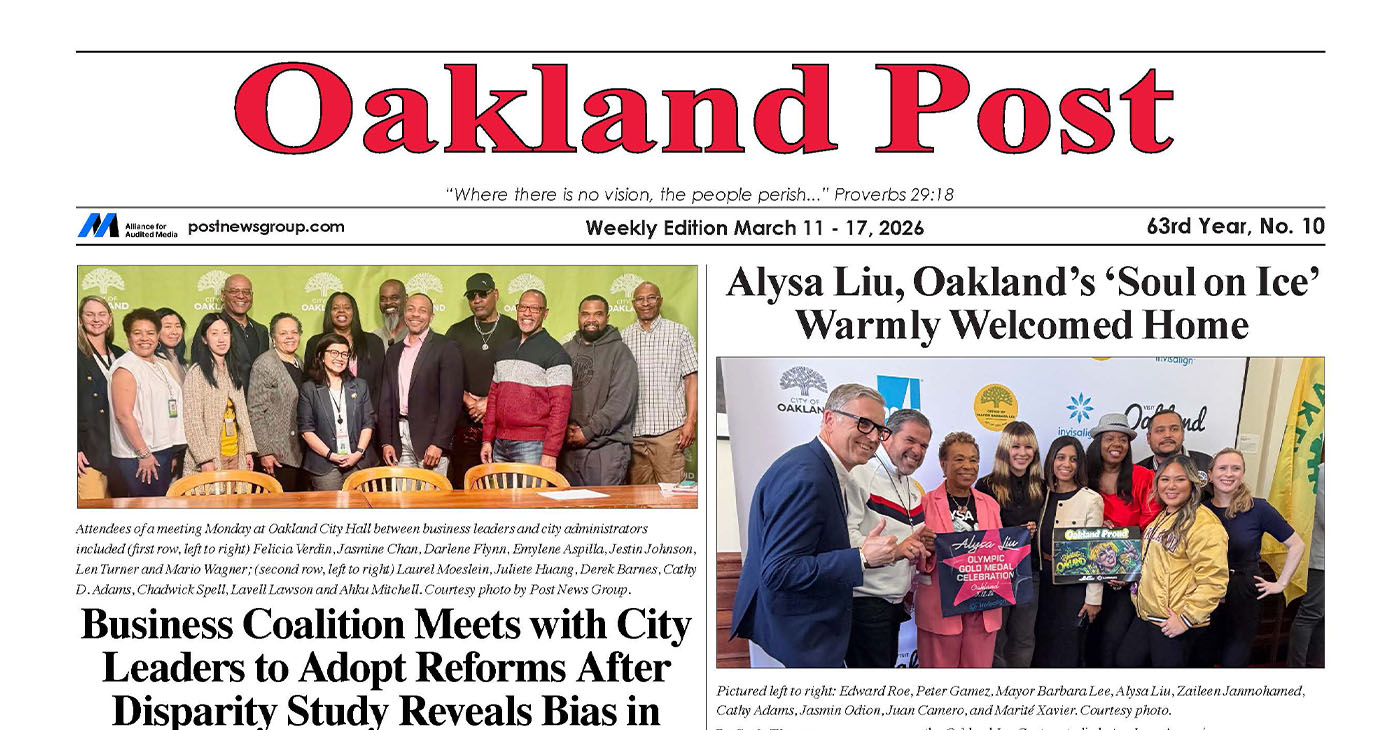
To enlarge your view of this issue, use the slider, magnifying glass icon or full page icon in the lower right corner of the browser window.
WORK FROM HOME
Home-based business with potential monthly income of $10K+ per month. A proven training system and website provided to maximize business effectiveness. Perfect job to earn side and primary income. Contact Lynne for more details: Lynne4npusa@gmail.com 800-334-0540


Oakland Post: Week of April 1 – 7, 2026

Black Artists in America, Installation Three Wraps at the Dixon Gallery and Gardens

Grief, Advocacy, and Education: A Counselor Reflects on Black Maternal Health

Future of Florida’s Black History Museum in Limbo

New Research Shows the Many Benefits of Early Learning

South Hampton K-8 Students Among Top 10 Finalists for Samsung’s ‘Solve for Tomorrow’ Competition

Cuba: No Negotiation with US on the President or Political System

Brooklyn Academy of Music Names Jamaican-Born Tamara McCaw as President

Trinidad & Tobego – U.S. Launches WhatsApp Channel for American Citizens in the Country

Oakland Post: Week of March 18 – 24, 2026

AI Innovation vs. Ethics and Environmental Impact

AI, Web3, and Digital Reparations

What If You Owned Your AI Agent?

Season 7, Episode 3 – January Reporter’s Roundtable 📱

Season 7, Episode 3 – January Reporter’s Roundtable

Reflecting on Black History Milestones in Birmingham AL

Oakland Post: Week of February 25 – March 3, 2026

PRESS ROOM: NBA Hall of Fame Nominee Terry Cummings Joins 100 Black Men of DeKalb County to Launch Victory & Values Initiative

Trump’s MAGA Allies are Creating Executive Order Plan to Steal the 2026 Midterms

Oakland Post: Week of March 4 – 10, 2026

Chase Oakland Community Center Hosts Alley-Oop Accelerator Building Community and Opportunity for Bay Area Entrepreneurs

U.S. manufacturing rebounds – how foundry services are adapting to rising demand

Poll Shows Support for Policies That Help Families Afford Child Care

OP-ED: One Hundred Years of Black Workers Telling the Truth

Advancements in solar technology that are changing the way we power the world

Oakland Post: Week of March 11 -17, 2026

Woman’s Search for Family’s Roots Leads to Ancestor John T. Ward – A Successful Entrepreneur and Conductor on the Underground Railroad
Oakland Post: Week of March 18 – 24, 2026

COMMENTARY: Women of Color Shape Our Past and Future

PRESS ROOM: Civil Rights TV Launches in Selma as the World’s First 24/7 Civil Rights Television Network

Hyundai Ioniq 5 Parking, Safety, and 360 View #shorts

2025 Ioniq 5 New Wiper & Powerful Performance! #shorts

Electric SUV Range: Is 259 Miles Enough? #shorts

EV Charging: How Fast Can You Charge an Electric Vehicle? #shorts

Biometric Cooling… Messaging Seats…Come on! 2025 Infiniti QX80 Autograph 4WD

Charged Up: Witness the Magic of a Fully Electric Car! #shorts

Range Rover Sport PHEV Included…: See What’s Inside This Luxury SUV! #shorts

Invisible Hood View: Perfect Parking with X-Ray Vision! #shorts

AI Is Reshaping Black Healthcare: Promise, Peril, and the Push for Improved Results in California

ESSAY: Technology and Medicine, a Primary Care Point of View

Sanctuary Cities

The RESISTANCE – FREEDOM NOW

STATE OF THE PEOPLE: Freddie

ECONOMIC BOYCOTT DAY!!!!!

I told You So
-
 Activism3 weeks ago
Oakland Post: Week of March 11 -17, 2026
-
 #NNPA BlackPress4 weeks ago
Woman’s Search for Family’s Roots Leads to Ancestor John T. Ward – A Successful Entrepreneur and Conductor on the Underground Railroad
-
 Activism2 weeks ago
Oakland Post: Week of March 18 – 24, 2026
-
 #NNPA BlackPress4 weeks ago
COMMENTARY: Women of Color Shape Our Past and Future
-

 Advice3 weeks ago
Financial Wellness and Mental Health: Managing Money Stress in College
-

 #NNPA BlackPress4 weeks ago
Advocates Raise Alarm Over ICE Operation, MOU and Detention Risks in Baltimore County
-

 #NNPA BlackPress4 weeks ago
Pete Buttigieg to Join Mayor Randall Woodfin for Community Town Hall in Birmingham
-
 #NNPA BlackPress2 weeks ago
Brooklyn Academy of Music Names Jamaican-Born Tamara McCaw as President
