
#NNPA BlackPress
OP-ED: Black Studies becomes major factor in social advancement
NNPA NEWSWIRE — At the modern HCBU campuses, most have established courses in Black Studies, but few have departments dedicated to the field. Only Howard and Clark Atlanta universities offer a Master of Arts in Black Studies. Howard is the only HBCU to offer a doctoral program in African Studies; eight traditionally White institutions (including Princeton and Yale) also offer a Ph. D in African Studies.

By Merdies Hayes, Editor, Our Weekly News
The Black Power movement of the late 1960s helped to redefine African American identity and establish a new racial consciousness. As influential as this period was in the study and enhancement of the African Diaspora, this movement spawned the academic discipline known as Black Studies on our college and university campuses.
While there are more than 100 Black Studies degree programs nationwide, it can be confirmed that the beginning of this curriculum evolved from a student strike at San Francisco State University in 1968. Young people there forced the establishment of the Division of Ethnic Studies and departments of Black, Asian, Chicano and Native studies, all accomplished despite the discouragement of then university president and future United States Sen. S.I. Hayakawya.
The Black Student Union
The Black Student Union on campus drafted a political statement, “The Justification for African American Studies,” that would become the main document for the development of the academic departments at more than 60 universities by the early 1970s. Shortly thereafter, Black Studies programs were implemented with inherent reservations from the various campus administrations at UCLA, Cal State Los Angeles, Cal State Long Beach and at Cal State Northridge.

Black students demanded an end to the so-called “liberal-fascist” ideology that was rampant on campus, as well as calling for the immediate preparation of African American youth including secondary school students to have direct participation in the struggles of the Black community and to define themselves as responsible to and for the future successes of that community. Black Studies departments were created in a confrontational environment in a forceful rejection of traditional curricula content.
It was a novel idea that was met with early opposition from the entrenched White faculty and administration already reeling from the Free Speech movement, opposition to the Vietnam War and a general uprising from young adults of all races, religions and creeds. Black students, specifically, wanted to reinforce the position that African Americans must possess the rights to self-determination, liberation and voice opposition to the dominant ideology of “White capitalism” (e.g. world imperialism, White supremacy) that for centuries had excluded persons of color.
The Atlanta University Conferences
Black Studies can be traced back as far back as the Atlanta University Conferences held from 1898 to 1914. This early formulation was under the auspices of W.E.B. DuBois in marking the inauguration of the first scientific study of the conditions of Black people that covered important aspects of life (e.g., health homes, the question of organization, economic development, higher education, voting).
By 1915, Carter G. Woodson had founded the Association for the Study of Negro Life and History (ASNLH) in marking a brave new era for Black curriculum. The group was founded to promote historical research, publish books on Black life and history, promote the study of Black history through clubs and schools and, in a noble effort, to foster harmony between the races by interpreting one history to the other. It was during this period that the Historically Black Colleges and Universities (HCBUs) began to respond to scholarly activities in history and social science.
It had become abundantly clear more than 100 years ago that Black education should conform to the social conditions of Black people. Black colleges began to add courses in Black history to their curricula. This effort corresponded with a call by Black college students for a culturally relevant curriculum, the same theme that occurred some 50 years later when mainstream support for Black Studies grew, particularly when more African American students were admitted into predominantly White institutions.
For the past 50 years, Black Studies has been evolving as a result of the social movement that opposed institutional racism in higher education. As more Black families were moving into the middle class, young people in many sectors either saw education as oppressive or liberating. Many African Americans began to consider Black Studies and Black education as having a “special assignment” to challenge and call out White mainstream knowledge for its deficiencies and racial corruption.
Pan Africa movement
Black Studies in large part grew out of Pan Africanism, which had its origins as a movement of intellectual protest against ill-treatment of Blacks all over the world. This movement was initiated by Black persons in the America and in the West Indies whose ancestors came from Africa. There are similarities between Black Studies and Pan Africanism in that the latter movement was created because Black people all over the world were tired of being mired with the “slave mentality” that had been connected with them from their African ancestors.
The advent of Pan Africanism was the result of Black people deciding that they were better than how they were treated, and if they banded together in a practical standpoint, they could possibly change the world. Far more than an “en vogue” application of the Civil Rights Movement, Pan Africanism and the resulting Black Studies was an emotional, cultural, psychological and ideological movement that would allow African Americans to feel secure while striving for long-sought political, economic and psychological power visa vis other races or world regions.
At its origin, Black Studies offered a clear and precise application of the African American experience, because many of the traditional history books for decades presented Black people as a hapless, helpless lot always mired in despair. It was only then that African Americans would study in detail persons like Anthony Johnson one of the original 20 Africans who arrived in Jamestown in 1619 and would later become a successful entrepreneur, or Denmark Vessey, who fought to liberate his people from slavery by organizing 9,000 slaves and freemen to revolt in Charleston, S.C. In 1822. there was also Dr. Rebecca Lee Crumpler who in 1864 became the first Black woman to earn a medical degree. This area of study helped to forge a pathway for each succeeding generation to learn that African Americans have always been innovators, fighters and intelligent persons well capable of succeeding in any endeavor.
Development of Black scholars
Black Studies is not exclusively reserved for Black scholars. There are a number of scholars from a variety of backgrounds who have done important work looking at the Black Diaspora. From the African American point of view, however, a primary reason for the implementation of Black Studies was to develop a critical mass of Black scholars. The significant presence today of African American academicians is due in large part to the existence of a longstanding tradition within Black Studies that offers a route into academia for an untold number of Black scholars.
The subject of Black Studies is interdisciplinary in nature. The subject draws in academics from a range of disciplines, including history, literature, education studies, sociology, theology, health studies, and some subjects as unexpected as sexuality and criminology. A strong tenant within Black Studies is the exposure to a range of ideas and discussions that can forge meaningful connections that can be built on the future. Had it not been for the Black Studies agenda, there are historic figures and contemporary individuals who may have never been encountered and whose work was and is relevant to contemporary dynamics within the Black community.
Women’s studies, as well, are an important aspect of Black Studies. In “Out Of The Revolution: The Development of Africana Studies” (2000), authors Delores P. Aldridge and Carlene Young attest that while the emergence of Black feminism was an offshoot of White feminism, the two groups are far apart in terms of battling sexism and striving for equality in a White-male-dominated world.
“During American slavery, Africana women were as harshly treated physically and mentally as were their male counterparts, thereby invalidating the alignment of Africana women and White women as equals in the struggle. The endless chores of the Africana woman awaited her both in and outside the home. Africana men and women have been equal partners in the struggle against oppression from early on. Thus, they could not afford division based on sex. In the African American slave experience, Africana men and women were viewed the same by the slave owners, thereby negating traditional (African and European) notions of male or female roles.”
Valuable study for both genders
Such study has proved valuable to African American students of both genders. Aldridge and Young state that Black Studies has empowered the Black student in noting that this academic challenge was a direct response to the mandate for change at all levels that characterized the Civil Rights Movement and the social rebellions of the 1930s, ’40s and ’50s.
At the modern HCBU campuses, most have established courses in Black Studies, but few have departments dedicated to the field. Only Howard and Clark Atlanta universities offer a Master of Arts in Black Studies. Howard is the only HBCU to offer a doctoral program in African Studies; eight traditionally White institutions (including Princeton and Yale) also offer a Ph. D in African Studies.
Why don’t more HBCUs offer a diploma in Black Studies? The problem is money.
“A program in African American Studies is very difficult to sustain in good times, and it’s near impossible in tough times,” said Dr. Johnny Taylor, president and CEO of the Thurgood Marshall College Fund. “However, some of the majority institutions have been able to get someone to underwrite less popular programs.”
The University of Wisconsin-Madison offers bachelor’s, master’s, and doctoral degrees in Black Studies, much to the disappointment of Dr. Mayibuye Monanabela who is among the founders of the Africana Studies department at Tennessee State University. He said getting students to major in Black Studies is often difficult primarily because, outside of teaching, there are not many well-paying trades that would require such professional acumen.
“We (HBCUs) should be doing better,” Monanabela said. “When students are ready to sign-up for a major, they ask ‘What can I do with a degree in Africana Studies?’“
Dr. David H. Jackson Jr., chair of the department of history and political science (which includes Black Studies) at Florida A&M University, believes the current attitude toward Black Studies among African American students could be an obstacle in the field’s development.
“If I looked at FAMU and the country in general from the 1980s and early ’90s in terms of an aggressive attitude toward embracing Black culture, I don’t see that as much now,” he said. As well, some Black students at predominantly White institutions may have the assumption that students at an HBCU tend to be “Africa-centered” or “radical,” and that belief could contribute to an apathy about the subject, which is in direct contrast with the roots of Black Studies programs.
Looking toward the future
HCBUs faced internal challenges in developing these programs as an older generation of administrators may have been reluctant to establish such a curriculum, because of the association with “militancy” and for fear of losing support from outside communities. Also, some HBCUs felt that because they were Black institutions, they were not obligated to dedicate a department to the subject because “just being a Black school was sufficient.”
At Princeton, Black Studies has proven to be a popular and successful program. Dr. Eddie Glaude Jr., chair of the Center for African American Studies at the New Jersey campus, believes the burgeoning interest in Black Studies may provide ground for a degree program.
“I think we’re seeing a new phase in the presence of Black Studies in higher education,” Glaude said. “We need to find an institutional configuration that reflects the complexity and nuance of the field. We haven’t changed our name to ‘Diaspora studies,’ and we have insisted that in order to mark that, as a field, Black Studies should be thought of more broadly.”
People of African ancestry have a long history and tradition in practically every region of the world. This history has been hallmarked by a number of struggles for recognition and against discrimination. In the present context of global uncertainty and the political reshaping of nation states Black Studies can play an essential role in the examination of the world’s Black population and the challenges that lie ahead.








#NNPA BlackPress
NFL: Week Two Recap | Jalen Hurts did not fold; Caleb Williams exits game with injury
Philadelphia Eagles quarterback Jalen Hurts found Darius Cooper with nine seconds left for the game winning touchdown as his team beat the Tennessee Titans 24-20 in Nashville. Hurts finished the day 26/37 for 264 yards. He threw for two touchdowns and two interceptions. Prior to the final drive, the Eagles ran 25 plays for 45 […]
The post NFL: Week Two Recap | Jalen Hurts did not fold; Caleb Williams exits game with injury appeared first on BlackPressUSA.
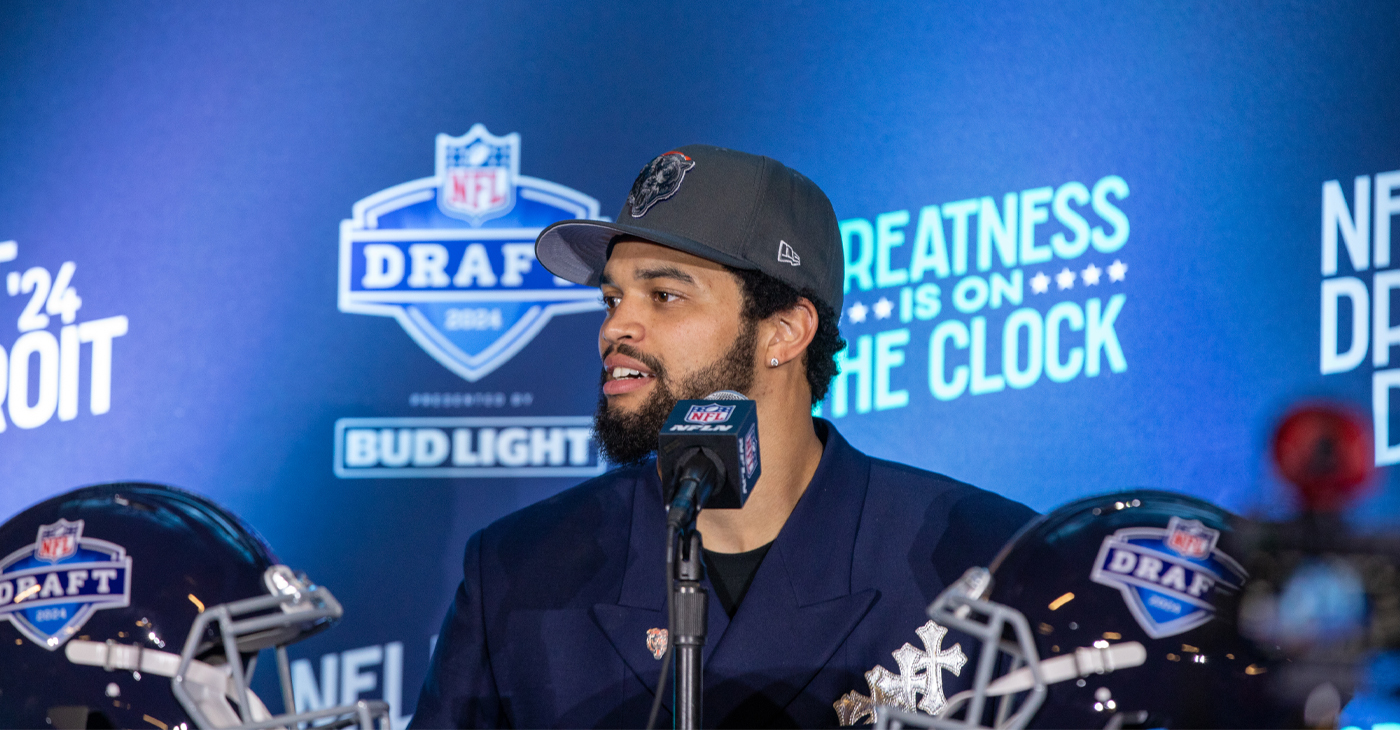
Philadelphia Eagles quarterback Jalen Hurts found Darius Cooper with nine seconds left for the game winning touchdown as his team beat the Tennessee Titans 24-20 in Nashville. Hurts finished the day 26/37 for 264 yards. He threw for two touchdowns and two interceptions.
Prior to the final drive, the Eagles ran 25 plays for 45 yards. During the final drive Hurts went 6-8 with 61 passing yards and the touchdown. Titans defensive tackle — and team captain — Jeffery Simmons said this week that the way to defend Jalen Hurts is to make him “play quarterback.”
Hurts said to Simmons after today’s game: “You started that sh**. I had to finish it.”
Running back Saquon Barkley suffered a stinger in the first half but he ultimately finished the game. He had four carries and nine yards and one catch for eleven yards. He will get an MRI for his injury, but admitted to Cameron Wolfe of the NFL Network he was fine.
Caleb Williams leaves game against Vikings with apparent lower-body injury
Chicago Bears quarterback Caleb Williams was helped off the field with a right leg injury with 7:42 remaining in the fourth quarter. Williams was down, writhing in pain after scrambling to his left. After departing the injury tent, Williams raised his right fist, acknowledging the crowd while expressing his frustration. Testing will commence on Monday to find out more details about his injury.
“We’ll know tomorrow,” Johnson admitted regarding Williams’ injury. “He’s in good spirits. He’s a team player.”
Williams finished the day with 138 passing yards and one interception.
“I’m actually happy it’s nothing with the knee — that was my first inclination,” Johnson said. “But, a hamstring could be pretty damaging as well. So, we’ll see. We’ll see how bad it is tomorrow and we’ll go from there.”
Bryce Young once again dominated the Falcons
Carolina Panthers quarterback Bryce Young is 5-1 against the Atlanta Falcons and is undefeated at Mercedes-Benz Stadium. Today, Young threw for 287 yards and three touchdowns as he led the Panthers to a 34-3 dismembering of the Atlanta Falcons. Georgia Tech alumnus Darren Waller caught two touchdowns and linebacker Devin Lloyd returned one of his two interceptions for a touchdown.
Cooper Rush started his second straight game for the Falcons and it did not go well. The partisan crowd voiced their displeasure after Rush completed 10/17 passes for 86 yards and two interceptions. Jack Strand entered the game for Rush prompting cheers from the Falcons fans. The rookie threw a pick-six on his first career pass attempt. Strand was the first QB to accomplish that feat since Sam Darnold in 2018 and is the first Falcons player to do that since Brett Favre in 1991. Strand finished the day with 59 passing yards and 16 rushing yards.
According to reports, quarterback Michael Penix, Jr. is expected to make his season debut this Thursday at the Green Bay Packers. His return should help the Falcons. They are the first team since the 2008 Rams to not run any plays in the red zone after the first two games to open a season.
The bright spots for the Falcons today were the Spelman College Jaguarettes performing with the Falcons cheerleaders and Florida A&M’s marching band, The Marching 100, also performed during halftime!
Jayden Daniels gets carted off after apparent arm injury
Washington Commanders quarterback Jayden Daniels appeared to injure his left elbow on the final play of the first half in his game against the Dallas Cowboys. During the play, Daniels got stepped on, braced himself for the fall, and his elbow bent the wrong way. Daniels draped a towel over his head as he exited the field on the cart.
He was later ruled out.
Daniels suffered a dislocated elbow to the same arm during week nine of last season against the Washington Commanders, which led to him being shut down for the remainder of the season.
The post NFL: Week Two Recap | Jalen Hurts did not fold; Caleb Williams exits game with injury appeared first on BlackPressUSA.
#NNPA BlackPress
The Complete Negotiation Framework — Every Stage, Every Tactic, Every Win
Master the complete vehicle-purchase negotiation framework with Roosevelt Gist and Roosevelt. Learn every stage, tactic, and win!
The post The Complete Negotiation Framework — Every Stage, Every Tactic, Every Win appeared first on BlackPressUSA.
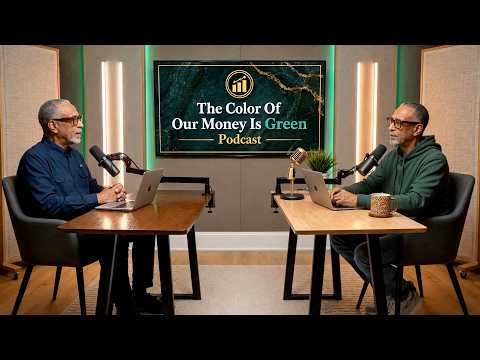
Roosevelt Gist and Roosevelt deliver the complete vehicle-purchase negotiation framework in Episode 8 of The Color of Our Money Is Green. This episode covers the three foundations of every effective negotiation, the full seven-stage negotiation sequence with exact language for every stage, and five of the most common dealership tactics with the specific response each one requires.
What You Learn in This Episode:
The three foundations that make every negotiation tactic work
The complete seven-stage car-buying negotiation sequence
Exact language for every stage of the dealership conversation
Five common dealership tactics — the turnover, the four-square, the packed payment, spot delivery, and forced add-ons — and how to counter each one
Why signing preliminary paperwork isn’t the same as signing the final contract
___________________________________________________________________
“The Color of Our Money Is Green: A Buyer’s Guide to What Cars Actually Cost” — stan.store/RGist
____________________________________________________________________
AutoNetwork helps serious car shoppers inspect any new vehicle online before walking into a dealership. I’m Roosevelt — I’ve been reviewing cars and shaping digital car buying and credit union auto leasing since before YouTube car reviews existed.
You’ll find detailed walkaround reviews, POV test drives, and buyer-focused breakdowns covering comfort, space, features, and real-world value.
How to use the channel:
Watch the walkaround of the car you’re considering
Visit AutoNetwork.com for the full review
Check CouponsOffersAndDeals.com for current dealer specials
Walk in already knowing what you want — and what it should cost
 AutoNetwork.com
 CouponsOffersAndDeals.com
Affiliate disclosure: some links earn a small commission at no cost to you and help support the channel. Insta360 is one of those partners.
The post The Complete Negotiation Framework — Every Stage, Every Tactic, Every Win appeared first on BlackPressUSA.
#NNPA BlackPress
Mazda CX-90 Luxury: Heated Seats & Premium Comfort! #shorts
Stay toasty in the CX-90! Plush Nappa leather, heated/ventilated seats, and a memory-equipped heated steering wheel deliver ultimate luxury.
The post Mazda CX-90 Luxury: Heated Seats & Premium Comfort! #shorts appeared first on BlackPressUSA.

Experience ultimate comfort in the CX-90. Nappa leather, heated/ventilated seats, 8-way power adjustments, and memory settings for both front passengers. The heated steering wheel with memory tilt/telescope adds premium convenience.
 Watch the full video: https://youtu.be/EH5A4eQ4ipY
#AutoNetwork
The post Mazda CX-90 Luxury: Heated Seats & Premium Comfort! #shorts appeared first on BlackPressUSA.



Doulas Are Helping Black California Moms Navigate Pregnancy–Even as High Mortality Rates Persist

Newsom Signs Addictive Social Media Law to Protect Kids

On Your November Ballot: Prop 38 Would Allocate $8.4 Billion to Immunology and Immunotherapy Funding

Ask California: Golden State Releases New AI Chatbot

Asm. Isaac Bryan’s Bill Banning California Police From ICE Side Jobs Reaches Newsom’s Desk

Assemblymember LaShae Sharp-Collins’s Bill Would Pause Law Enforcement’s Use of Shock Gloves Pending Study

BOOK REVIEW: ‘Laws of Solomon’ Reveals Tender Heart of Former Child Soldier

OPINION: The New American Fear – From 9-11 to AI

Passing for White, Fighting for Black America: The Courage of Walter White

Oakland People’s Arms Embargo Coalition Demands End to Military Shipments Thru Oakland

Barbara Lee Mourns Gloria Steinem, Remembers a Friendship Rooted in Equality

Event Preview: ‘Fashion v. Fascism’ – A Runway Revolution Is Coming to the Bay Area

Two Looming Threats Every Alameda County Elder Should Know About

Oakland Mayor Reads to Children at Bookout Block Party at Marcus Books Store

Tradition Comes to the Streets in 11th Annual Black-Eyed Pea Festival at the Freedom Farmers Market

Less Affluent School Districts, Including Sacramento City, Face Threat of State Takeover

ESSAY: California Can Close Its Colorectal Cancer Gap

California Hispanic Chambers of Commerce Unveils: ‘Powering the Future’ Theme for 47th Annual Statewide Convention

Four Candidates, Including Incumbent Barbara Lee, Qualify for Oakland Mayor’s Race

Oakland Post: Week of August 12 – 18, 2026

From Blueprint to Breakthrough: Tackling Affordable Housing in Oakland

Oakland Observes Black August with Block Parties, Film Showings, Workshops

COMMENTARY: Why Local School Tax Measure G1 Will Not Be on the November Ballot

Standoff for Justice: Our Homes Are Worth Fighting For

Returning to Its Roots, the Oakland Black-Eyed Pea Festival Partners with the Freedom Farmers Market Sept. 12

NPRC Scores First Advocacy Victory: David Shaw Finally Gets His Wish to ‘Go Home’

Oakland Post: Week of August 26 – September 1, 2026

Frontier Airlines’ Return to Oakland Airport Brings Flights, Jobs and Opportunity

Gubernatorial Candidate Steve Hilton Blasts California New Tire Rules; Newsom Hits Back

Chef Sharon Lee Blends Culinary Excellence, Education and Empowerment

The Conversation With Al McFarlane 6/23/26

Media Monday 6/22/26

LIVE! ASK ALMA! — TUES. 6.23.26 7PM EST

Car Buying Secrets: 4 Hidden Checks Before You Sign!

Is This 550 HP Charger Worth YOUR Money? AutoNetwork Review

Celebrating Juneteenth – Frederick Douglass on education and resistance

LIVE! — ASK ALMA! — TUES. 6.19.26 7PM EST

Hyundai Ioniq 5 Parking, Safety, and 360 View #shorts

2025 Ioniq 5 New Wiper & Powerful Performance! #shorts

Electric SUV Range: Is 259 Miles Enough? #shorts

EV Charging: How Fast Can You Charge an Electric Vehicle? #shorts

Biometric Cooling… Messaging Seats…Come on! 2025 Infiniti QX80 Autograph 4WD

Charged Up: Witness the Magic of a Fully Electric Car! #shorts

Range Rover Sport PHEV Included…: See What’s Inside This Luxury SUV! #shorts

Invisible Hood View: Perfect Parking with X-Ray Vision! #shorts
-
 Commentary4 weeks ago
Standoff for Justice: Our Homes Are Worth Fighting For
-
 Activism4 weeks ago
Oakland Post: Week of August 26 – September 1, 2026
-
 Business4 weeks ago
Frontier Airlines’ Return to Oakland Airport Brings Flights, Jobs and Opportunity
-
 Business4 weeks ago
Gubernatorial Candidate Steve Hilton Blasts California New Tire Rules; Newsom Hits Back
-
 Business4 weeks ago
Chef Sharon Lee Blends Culinary Excellence, Education and Empowerment
-

 Education4 weeks ago
Gov. Newsom’s Latest Appointees Include Sacramento Advocate for Formerly Incarcerated Students; State’s New Tech Chief
-

 Community4 weeks ago
Big City Mayors Ask for “Yes” Vote on Housing Bond Measure; Conservatives Say “No”
-

 Business4 weeks ago
Oakland Coliseum Project Opens Door for Small Businesses to Build Bigger
