
Bay Area
OP-ED: Balancing the Budget—and the Needs of Our Residents
When I took office in January, I knew that my Administration would be facing a large deficit. In fact, with a $360 million shortfall over the next two years, it is the largest deficit in Oakland’s history. This inherited shortfall is largely the result of two factors: the loss of federal pandemic funding and a decline in revenue generated from the real estate transfer tax and transient occupancy tax.


By Mayor Sheng Thao
When I took office in January, I knew that my Administration would be facing a large deficit.
In fact, with a $360 million shortfall over the next two years, it is the largest deficit in Oakland’s history. This inherited shortfall is largely the result of two factors: the loss of federal pandemic funding and a decline in revenue generated from the real estate transfer tax and transient occupancy tax.
But when you’re in need of City services, something I know about all too well, it doesn’t matter why there’s a shortfall, it matters if you’ll have a job, whether you have an affordable place to live, whether you live in a city that has opportunities and resources for your children and your family.
With this in mind, our challenge was unprecedented, but our mandate was clear: Balance the budget, invest in our communities, preserve jobs.
Thanks to the ingenuity and hard work of our City staff, our “One Oakland” proposed budget accomplishes all of the above—while also making significant investments in our communities, including the largest in affordable housing in the city’s history.
Yes, we were forced to make difficult decisions, but it was also an opportunity to create efficiencies and improve coordination in City government, reducing costs and strengthening our ability to serve our communities.

As a result, our proposed budget includes a new reorganization of City departments— Department of Homelessness & Housing Development; Department of Children, Youth and Families; and Department of Planning, Building and Economic Development.
The reorganization will ensure each department has a clear mission related to community priorities and save $2 million per year, allowing us to preserve vital services in these challenging times.
This reorganization will be supported by an improved management structure in the City Administrator’s Office. Departments with related services will be grouped into “channels” and report to or coordinate with a dedicated Deputy or Assistant City Administrator.
To further close the gap, we are freezing vacant positions—300 in total—many of which have been open for a long period of time; allowing for attrition, meaning if a position becomes vacant, we will hold off hiring a replacement until funding becomes available; and delaying on spending.
In all cases, we did this with the goal of minimizing impacts on services. And we will prioritize hiring for these positions if revenue exceeds forecasts.
This budget is a reflection of my Administration’s values: Centering Equity; Valuing the City Workforce; and Strategic Thinking.
This is why, despite the environment we face, the proposed budget allocates more than $200 million over the next two years toward affordable housing; expands early childhood education through Oakland’s Head Start and Early Head Start program; includes more than $106 million to build, repair and upgrade parks, recreation facilities, libraries, storm drains and non-road infrastructure; and invests more than $9.1 million toward street safety.
The proposed budget will also allow for better coordination of key public safety goals while continuing the ‘civilianization’ of certain functions of the Police Department.
This is a budget that manages our fiscal situation responsibly, responds to the needs of our residents and local businesses, and reflects my Administration’s commitment to direct investments in our communities—all while avoiding layoffs.
I applaud our City staff for this huge accomplishment, balancing not just the budget but the needs of our residents.
I look forward to hearing community input through a series of public forums—and to adopting this budget on June 30 so we can move forward together, as One Oakland.
Sheng Thao is the 51st and current Mayor of Oakland.










Activism
Oakland Post: Week of August 12 – 18, 2026
The printed Weekly Edition of the Oakland Post: Week of August 12 – 18, 2026

To enlarge your view of this issue, use the slider, magnifying glass icon or full page icon in the lower right corner of the browser window.
Activism
Oakland Post: Week of August 5 – 11, 2026
The printed Weekly Edition of the Oakland Post: Week of August 5 – 11, 2026
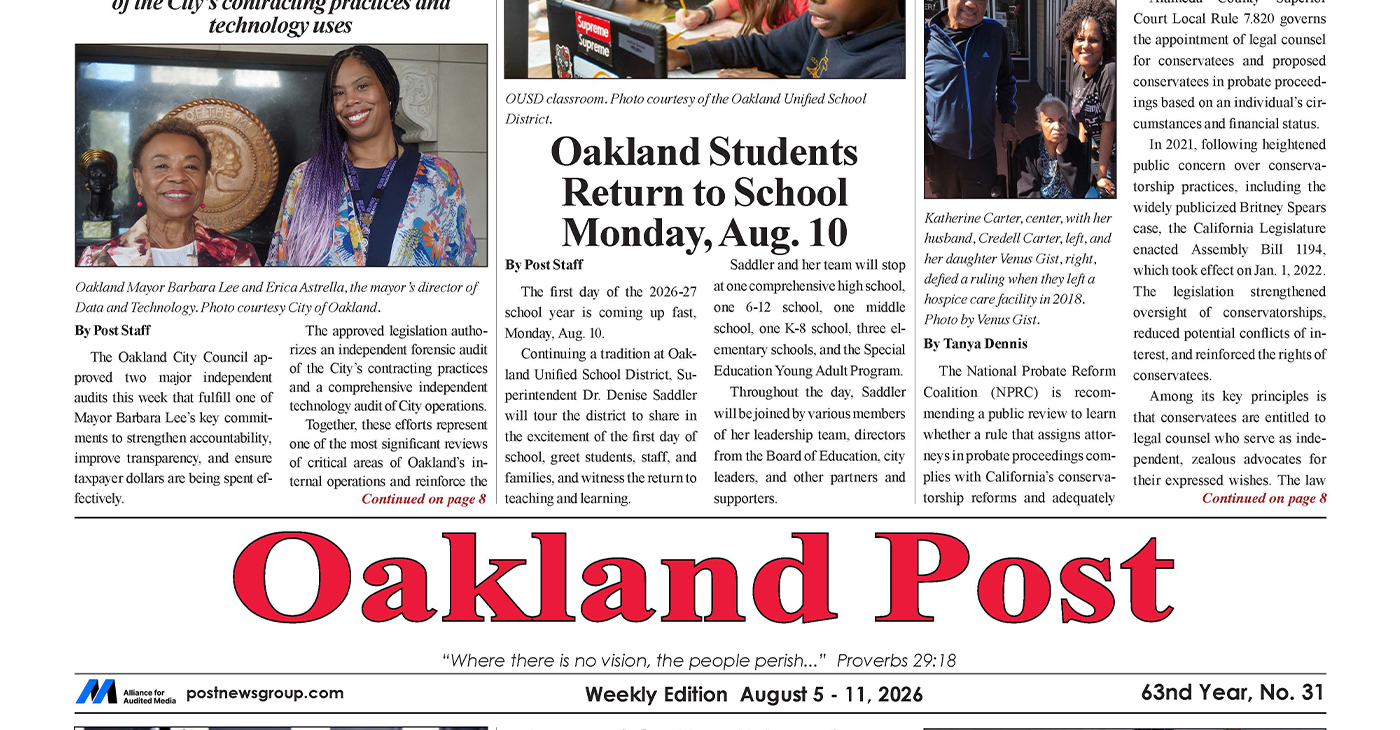
To enlarge your view of this issue, use the slider, magnifying glass icon or full page icon in the lower right corner of the browser window.
Activism
Oakland Post: Week of July 29 – August 4, 2026
The printed Weekly Edition of the Oakland Post: Week of July 29 – August 4, 2026
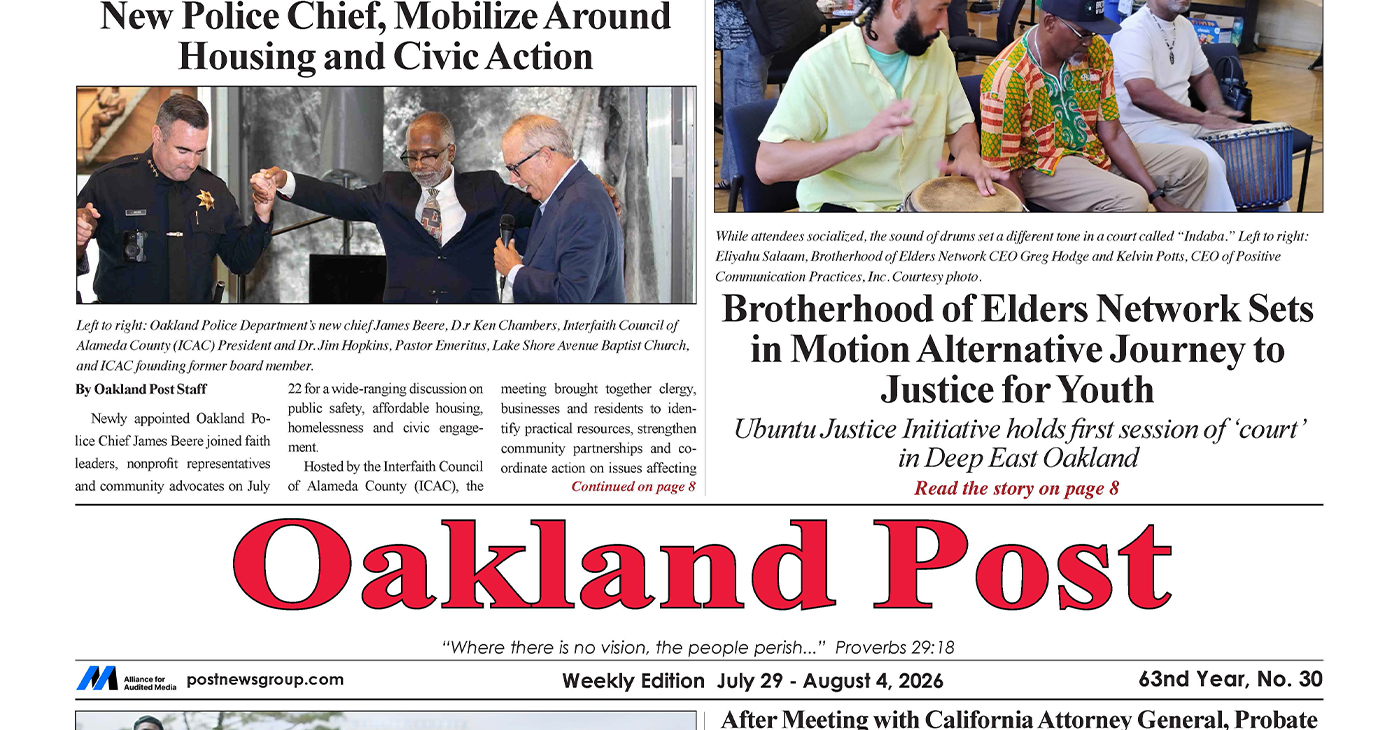
To enlarge your view of this issue, use the slider, magnifying glass icon or full page icon in the lower right corner of the browser window.

WORK FROM HOME
Home-based business with potential monthly income of $10K+ per month. A proven training system and website provided to maximize business effectiveness. Perfect job to earn side and primary income. Contact Lynne for more details: Lynne4npusa@gmail.com 800-334-0540


Four Candidates, Including Incumbent Barbara Lee, Qualify for Oakland Mayor’s Race

Oakland Observes Black August with Block Parties, Film Showings, Workshops

Oakland Post: Week of August 12 – 18, 2026

COMMENTARY: Why Local School Tax Measure G1 Will Not Be on the November Ballot

California Hispanic Chambers of Commerce Unveils: ‘Powering the Future’ Theme for 47th Annual Statewide Convention

Returning to Its Roots, the Oakland Black-Eyed Pea Festival Partners with the Freedom Farmers Market Sept. 12

Less Affluent School Districts, Including Sacramento City, Face Threat of State Takeover

From Blueprint to Breakthrough: Tackling Affordable Housing in Oakland

NPRC Scores First Advocacy Victory: David Shaw Finally Gets His Wish to ‘Go Home’

ESSAY: California Can Close Its Colorectal Cancer Gap

Car Wash Workers Cope with Lingering Impacts of ICE Raids

Misty Copeland Shapes Ballet’s Tomorrow

As Part of Your Back-to- School Checklist, Vaccinate

As Part of Your Back-to- School Checklist, Vaccinate

Congresswoman Simon Demands Investigation into Trump’s Abuse of Emergency Powers for Coal Export Terminal in West Oakland

Department of Homeland Security Demands California Secretary of State Shirley N. Weber Scrub Voter Rolls

Oakland Children’s Hospital Workers and Patients Rally for Pediatric Medical Care

New Judge Could Decide if Karmelo Anthony Gets a New Trial

“The Power to See Threats Sooner”: Gov. Newsom, Safety Officials Showcase California’s Investments in Hi-Tech Wildfire Prevention

Alpha Kappa Alpha Sorority, Inc. Celebrates New North Atlantic Regional Director

Surveillance Pricing Fight: State Senate Debates Bill Banning Retailers from Using AI to Set Prices Based on a Buyer’s Profile

Mount Zion MBC, Church of Jesus Christ of Latter-day Saints Partner to Bring 29,000 Meals to Alameda County

California Sen. Padilla Joins Colleagues to Introduce Bill Imposing Term Limits on Supreme Court Justices

Starting This Summer, California Car Buyers Can Get an Instant $3500 Off the Cost of Electric Vehicles
Less Affluent School Districts, Including Sacramento City, Face Threat of State Takeover

COMMENTARY: You Are Already Paying for the AI Boom

California Bill Would Let Abuse Victims Use Trauma as Legal Defense for Violent Crime
Car Wash Workers Cope with Lingering Impacts of ICE Raids

Fed Court to Decide Landmark First Amendment Case

Gov. Gavin Newsom Signs Law Streamlining Affordable Housing Rules

The Conversation With Al McFarlane 6/23/26

Media Monday 6/22/26

LIVE! ASK ALMA! — TUES. 6.23.26 7PM EST

Car Buying Secrets: 4 Hidden Checks Before You Sign!

Is This 550 HP Charger Worth YOUR Money? AutoNetwork Review

Celebrating Juneteenth – Frederick Douglass on education and resistance

LIVE! — ASK ALMA! — TUES. 6.19.26 7PM EST

Hyundai Ioniq 5 Parking, Safety, and 360 View #shorts

2025 Ioniq 5 New Wiper & Powerful Performance! #shorts

Electric SUV Range: Is 259 Miles Enough? #shorts

EV Charging: How Fast Can You Charge an Electric Vehicle? #shorts

Biometric Cooling… Messaging Seats…Come on! 2025 Infiniti QX80 Autograph 4WD

Charged Up: Witness the Magic of a Fully Electric Car! #shorts

Range Rover Sport PHEV Included…: See What’s Inside This Luxury SUV! #shorts

Invisible Hood View: Perfect Parking with X-Ray Vision! #shorts
-
 Featured1 week ago
Department of Homeland Security Demands California Secretary of State Shirley N. Weber Scrub Voter Rolls
-
 Business3 weeks ago
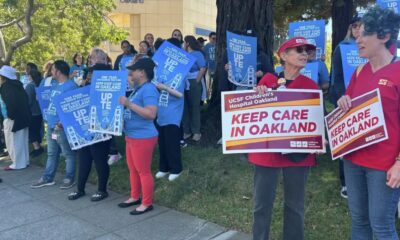
Oakland Children’s Hospital Workers and Patients Rally for Pediatric Medical Care
-
 #NNPA BlackPress2 weeks ago
New Judge Could Decide if Karmelo Anthony Gets a New Trial
-
 Environment1 week ago
“The Power to See Threats Sooner”: Gov. Newsom, Safety Officials Showcase California’s Investments in Hi-Tech Wildfire Prevention
-
 Black History2 weeks ago
Alpha Kappa Alpha Sorority, Inc. Celebrates New North Atlantic Regional Director
-
 Business3 weeks ago
Surveillance Pricing Fight: State Senate Debates Bill Banning Retailers from Using AI to Set Prices Based on a Buyer’s Profile
-
 Business3 weeks ago
Mount Zion MBC, Church of Jesus Christ of Latter-day Saints Partner to Bring 29,000 Meals to Alameda County
-
 Featured1 week ago
California Sen. Padilla Joins Colleagues to Introduce Bill Imposing Term Limits on Supreme Court Justices
