
Politics
Obama Restricts Police Military Gear, Says it Can Alienate


President Barack Obama speaks at the Ray & Joan Kroc Corps Community Center, Monday, May 18, 2015, in Camden, NJ. Obama traveled to Camden, NJ, to visit with local law enforcement, meet with young people in the Camden community and tour the Real-Time Tactical Operation Intelligence Center at the Camden County Police Dept. headquarters. (AP Photo/Pablo Martinez Monsivais)
NEDRA PICKLER, Associated Press
CAMDEN, N.J. (AP) — President Barack Obama ended long-running federal transfers of some combat-style gear to local law enforcement on Monday in an attempt to ease tensions between police and minority communities, saying equipment made for the battlefield should not be a tool of American criminal justice.
Grenade launchers, bayonets, tracked armored vehicles, weaponized aircraft and vehicles, firearms and ammunition of .50-caliber or higher will no longer be provided to state and local police agencies by the federal government under Obama’s order.
“We’ve seen how militarized gear can sometimes give people a feeling like there’s an occupying force, as opposed to a force that’s part of the community that’s protecting them and serving them,” Obama said, nine months after an outcry over the use of riot gear and armored vehicles by police confronting protesters in Ferguson, Missouri.
“It can alienate and intimidate local residents and send the wrong message,” he said.
Obama made his announcement in Camden, New Jersey, where he praised efforts by the police department to improve their relationship with a poor community struggling with violence.
With police under increased scrutiny over highly publicized deaths of black suspects nationwide, Obama also unveiled the final report of a task force he created to help build confidence between police and minority communities. And he issued a broader appeal for Americans to address racial disparities and the needs of poor communities before they erupt into disorder.
He also reiterated his call for overhauling sentencing practices for nonviolent drug crimes.
“We can’t ask the police to be the ones to solve the problem when there are no able-bodied men in the community or kids are growing up without intact households,” he said.
In Camden, Obama visited the police Real-Time Tactical Operational Intelligence Center and watched live video displays of city neighborhoods being monitored by officers. He also stopped by a community center where he met with young people and local police officers.
Ahead of his Camden remarks, Obama stopped briefly in nearby Philadelphia to praise its police and fire officials for their quick response to last week’s deadly Amtrak wreck.
In addition to the prohibitions in his order, Obama also is placing a longer list of military equipment under tighter control, including wheeled armored vehicles like Humvees, manned aircraft, drones, specialized firearms, explosives, battering rams and riot batons, helmets and shields. Starting in October, police will have to get approval from their city council, mayor or some other local governing body to obtain such equipment, provide a persuasive explanation of why it is needed and have more training and data collection on its use.
Programs that transfer surplus military-style equipment from the Pentagon and other federal agencies have been around for decades, but Congress increased spending to help departments acquire the gear in the wake of the 9/11 terror attacks.
The issue of police militarization rose to prominence last year after a white police officer in Ferguson fatally shot unarmed black 18-year-old Michael Brown, sparking protests. Critics questioned why police in full body armor with armored trucks responded to dispel demonstrators, and Obama seemed to sympathize when ordering a review of the programs that provide the equipment.
“There is a big difference between our military and our local law enforcement and we don’t want those lines blurred,” Obama said in August.
The review, published in December, showed five federal agencies spent $18 billion on programs that provided equipment, including 92,442 small arms, 44,275 night-vision devices, 5,235 Humvees, 617 mine-resistant vehicles and 616 aircraft. At the time, the White House defended the programs as proving to be useful in many cases, such as the response to the Boston Marathon bombing. Instead of repealing the programs, Obama issued an executive order that required federal agencies that run the programs to consult with law enforcement and civil rights and civil liberties organizations to recommend changes that make sure they are accountable and transparent.
The report from the 21st Century Policing task force has a long list of recommendations to improve trust in police, including encouraging more transparency about interactions with the public. The White House said 21 police agencies nationwide, including Camden and Philadelphia, have agreed to start putting out never-before released data on citizen interactions, like use of force, stops, citations and officer-involved shootings. The administration also is launching an online toolkit to encourage the use of body cameras to record police interactions. And the Justice Department is giving $163 million in grants to incentivize police departments to adopt the report’s recommendations.
Sacramento, California, Mayor Kevin Johnson, the president of the U.S. Conference of Mayors, praised Obama’s actions, saying they “show how serious he is about doing this now and doing this right.”
___
Follow Nedra Pickler on Twitter at https://twitter.com/nedrapickler
Copyright 2015 The Associated Press. All rights reserved. This material may not be published, broadcast, rewritten or redistributed.












Business
Newsom Signs Addictive Social Media Law to Protect Kids
Newsom said California’s approach focuses on the features that can encourage excessive social media use rather than taking the broader step of banning teenagers from the platforms altogether. He contrasted the measure with restrictions adopted in Australia and Malaysia that prevent teenagers from accessing social media or creating accounts.


Word Count: 391
Gov. Gavin Newsom has signed a new California law targeting addictive social media features that can keep children scrolling, giving the state new authority to restrict how platforms engage young users.
AB 1709, authored by Assemblymember Josh Lowenthal (D-Long Beach) prohibits social media companies from giving children under 16 access to personalized feeds, including “For You” pages, as well as other features designed to maximize screen time, such as infinite scrolling and video autoplay.
The law does not prevent children under 16 from using social media. Instead, platforms must deactivate the covered features for those users.
“This is about actually addressing the problem, the scrolling, the algorithms,” Newsom said Sept. 10 during a bill-signing event in the San Francisco Bay Area.
Newsom said California’s approach focuses on the features that can encourage excessive social media use rather than taking the broader step of banning teenagers from the platforms altogether. He contrasted the measure with restrictions adopted in Australia and Malaysia that prevent teenagers from accessing social media or creating accounts.
The law comes amid growing concerns about the impact of social media on children’s mental health and well-being. California lawmakers have increasingly focused on the design and business practices of technology platforms as part of efforts to protect young users.
AB 1709 is one of 13 youth online safety and privacy laws Newsom signed Sept.10. The package also includes measures regulating AI chatbots, increasing potential penalties for technology companies and establishing additional protections for children using digital services.
Lowenthal said the new rules represent a shift toward greater accountability for technology companies.
“We want oversight. We want accountability. We’re done asking nicely, and we’re demanding that there is a duty of care across these platforms — a duty that puts the wellness of our children ahead of profits,” Lowenthal said.
The law builds on California’s broader effort to regulate children’s online experiences. A separate law, AB 1043, will require users to provide their birth dates when setting up new phones or laptops beginning in January, with device manufacturers required to share users’ ages with apps.
Some youth online safety advocates have supported AB 1709 as a more targeted alternative to outright social media bans. Others have warned that the restrictions could make it harder for some LGBTQ+ young people to find support online and questioned how effectively age requirements can be enforced.

Featured
On Your November Ballot: Prop 38 Would Allocate $8.4 Billion to Immunology and Immunotherapy Funding
“Yes on 38”, with the tagline “Californians for Life-Saving Immunology Research and Cures,” is leading the campaign for the support side of the proposition.

California voters will decide in November whether Proposition (Prop) 38 should authorize substantial state funding for immunology and immunotherapy research.
The initiative would fund immunology and immunotherapy research aimed at harnessing the body’s immune system to develop new treatments, medical procedures and potential cures for diseases such as cancer, Alzheimer’s disease and heart disease.
More specifically, Prop 38, titled the Immunology and Immunotherapy Research Funding Initiative, is split into three main components that would go into effect if passed.
First, the initiative would authorize the state to issue $8.4 billion in general obligation bonds to support immunology and immunotherapy research. At least half of the bond proceeds, or $4.2 billion, would be dedicated exclusively to research.
Additionally, Prop 38 would make it mandatory for the state to enter into an agreement with a qualified nonprofit institute focused and dedicated to researching immunology and immunotherapy within 90 days of the initiative’s effective date. The research institute must be affiliated with the University of California.
The third component mandates that the remaining bond revenue must be directed to California-based public and nonprofit medical institutions through a peer-reviewed grant process.

“Yes on 38”, with the tagline “Californians for Life-Saving Immunology Research and Cures,” is leading the campaign for the support side of the proposition.
Along with the campaign, organizations that have publicly supported the ballot initiative include the California Democratic Party, The ALS Association, Alzheimer’s treatment and advocacy organizations, California Black Health Network, Parkinson Association of Northern California and Reform California among others.
“California has an opportunity to accelerate lifesaving medical breakthroughs. Immunotherapies work differently than traditional treatments. Instead of attacking cells directly, they empower the body’s own immune system to recognize and stop disease. Today, these therapies are already treating certain cancers and chronic conditions — and researchers continue to expand what’s possible. This initiative invests in proven science so cures can move from the lab to patients faster,” said the campaign.
No on Proposition 38 is leading the campaign against the measure, with support from the League of Women Voters of California. Opponents argue that California cannot afford to assume $8.4 billion in debt for medical research that may not produce definitive results. They also object to directing more than half of the bond proceeds — $4.2 billion — to a single qualifying nonprofit research institute, arguing that funding decisions of this magnitude should be made through the state’s regular budget process.
“Medical research can save lives, but Prop 38 is the wrong way to fund it. It would authorize $8.4 billion in borrowing for immunology and immunotherapy research and require the state to make $500 million to $600 million in annual debt payments for about 20 years. Those payments would come from the General Fund, which also pays for schools, health care, and other public services,” the League of Women Voters of California said.
A “yes” vote would authorize $8.4 billion in state bonds to fund immunology and immunotherapy medical research.
A “no” vote would reject the proposed bond funding.
Community
Asm. Isaac Bryan’s Bill Banning California Police From ICE Side Jobs Reaches Newsom’s Desk
The legislation comes as ICE ramps up efforts to recruit law enforcement personnel under the Trump administration. Bryan said the federal agency is offering financial incentives to attract officers, raising concerns about the impact on local law enforcement agencies and the communities they serve.
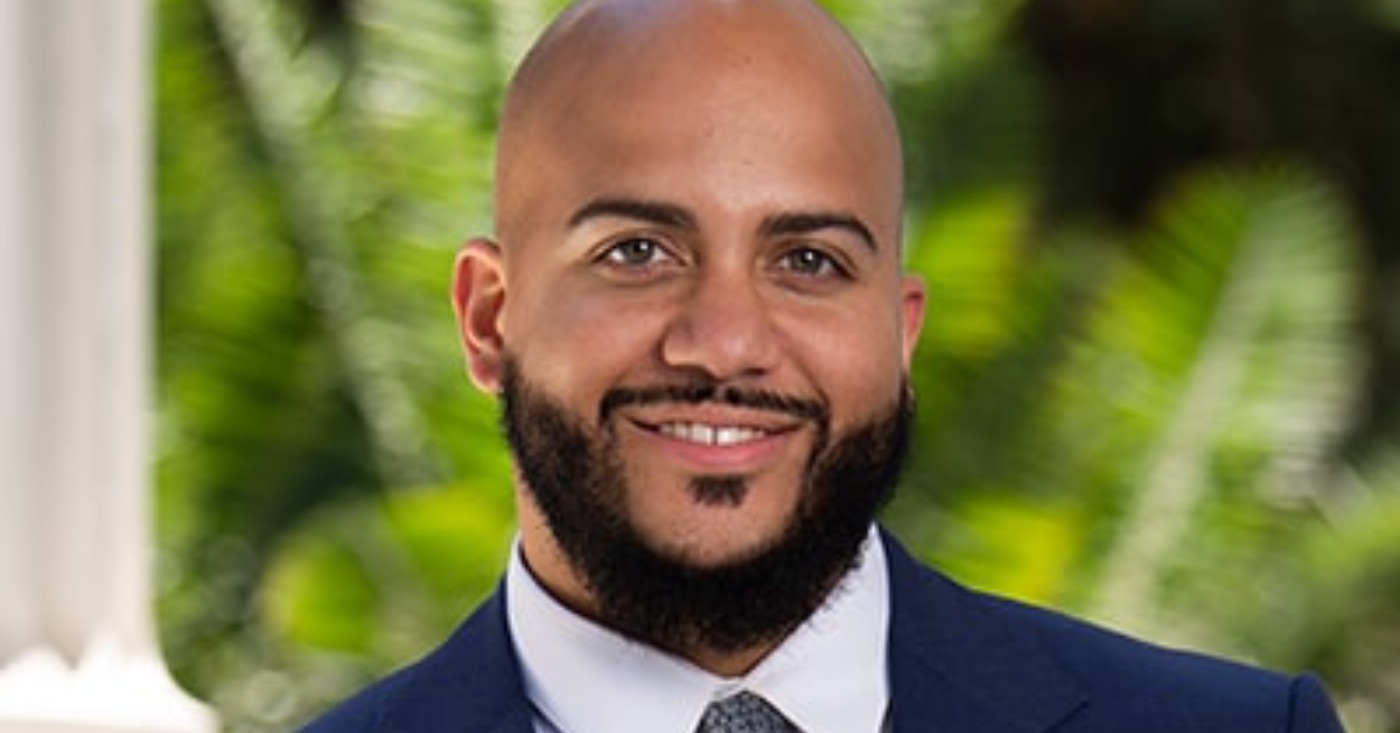
A bill by California Assemblymember Isaac Bryan (D-Ladera Heights) that would prevent state and local police officers from taking second jobs with federal immigration enforcement agencies is headed to Gov. Gavin Newsom after clearing the Legislature.
AB 1537 would bar California peace officers from accepting secondary employment related to immigration enforcement, including work with U.S. Immigration and Customs Enforcement (ICE). The measure also would require officers to report offers for immigration enforcement-related outside employment to their employing agencies.
The legislation comes as ICE ramps up efforts to recruit law enforcement personnel under the Trump administration. Bryan said the federal agency is offering financial incentives to attract officers, raising concerns about the impact on local law enforcement agencies and the communities they serve.
“They are trying to recruit our law enforcement personnel. They are offering these insane bonuses,” Bryan said.
Bryan said he is particularly concerned about efforts to recruit experienced law enforcement personnel while questions have been raised about ICE’s hiring standards.
“They want better skilled, better trained folks because their untrained and uneducated goons go through a very low threshold,” Bryan added.
The legislation would create consequences for California officers who violate its restrictions. Officers who fail to report offers of secondary employment related to immigration enforcement could face decertification as peace officers in California.
Bryan has framed the bill as a measure to establish boundaries between local law enforcement and federal immigration enforcement, particularly as immigration enforcement has become a major source of conflict between the Trump administration and California.
“This is a rogue agency that is harming the American people,” said Bryan. “It should be abolished, but in the meantime, we’ve got to do everything we can to put guardrails around our communities and protect our neighbors.”
AB 1537 previously received approval from the Assembly Public Safety Committee in March before advancing through the Legislature. The bill now awaits Newsom’s decision. The Governor can sign it into law, veto it or allow it to become law without his signature.



Newsom Signs Addictive Social Media Law to Protect Kids

On Your November Ballot: Prop 38 Would Allocate $8.4 Billion to Immunology and Immunotherapy Funding

Ask California: Golden State Releases New AI Chatbot

Asm. Isaac Bryan’s Bill Banning California Police From ICE Side Jobs Reaches Newsom’s Desk

Assemblymember LaShae Sharp-Collins’s Bill Would Pause Law Enforcement’s Use of Shock Gloves Pending Study

BOOK REVIEW: ‘Laws of Solomon’ Reveals Tender Heart of Former Child Soldier

OPINION: The New American Fear – From 9-11 to AI

Passing for White, Fighting for Black America: The Courage of Walter White

Oakland People’s Arms Embargo Coalition Demands End to Military Shipments Thru Oakland

Barbara Lee Mourns Gloria Steinem, Remembers a Friendship Rooted in Equality

Event Preview: ‘Fashion v. Fascism’ – A Runway Revolution Is Coming to the Bay Area

Two Looming Threats Every Alameda County Elder Should Know About

Oakland Mayor Reads to Children at Bookout Block Party at Marcus Books Store

Tradition Comes to the Streets in 11th Annual Black-Eyed Pea Festival at the Freedom Farmers Market

Attorney General Rob Bonta Continues Opposition to President Trump’s Tariff Regime

Less Affluent School Districts, Including Sacramento City, Face Threat of State Takeover

Car Wash Workers Cope with Lingering Impacts of ICE Raids

ESSAY: California Can Close Its Colorectal Cancer Gap

California Hispanic Chambers of Commerce Unveils: ‘Powering the Future’ Theme for 47th Annual Statewide Convention

Four Candidates, Including Incumbent Barbara Lee, Qualify for Oakland Mayor’s Race

Oakland Post: Week of August 12 – 18, 2026

From Blueprint to Breakthrough: Tackling Affordable Housing in Oakland

Oakland Observes Black August with Block Parties, Film Showings, Workshops

COMMENTARY: Why Local School Tax Measure G1 Will Not Be on the November Ballot

Standoff for Justice: Our Homes Are Worth Fighting For

Returning to Its Roots, the Oakland Black-Eyed Pea Festival Partners with the Freedom Farmers Market Sept. 12

NPRC Scores First Advocacy Victory: David Shaw Finally Gets His Wish to ‘Go Home’

Oakland Post: Week of August 26 – September 1, 2026

Gubernatorial Candidate Steve Hilton Blasts California New Tire Rules; Newsom Hits Back

Frontier Airlines’ Return to Oakland Airport Brings Flights, Jobs and Opportunity

The Conversation With Al McFarlane 6/23/26

Media Monday 6/22/26

LIVE! ASK ALMA! — TUES. 6.23.26 7PM EST

Car Buying Secrets: 4 Hidden Checks Before You Sign!

Is This 550 HP Charger Worth YOUR Money? AutoNetwork Review

Celebrating Juneteenth – Frederick Douglass on education and resistance

LIVE! — ASK ALMA! — TUES. 6.19.26 7PM EST

Hyundai Ioniq 5 Parking, Safety, and 360 View #shorts

2025 Ioniq 5 New Wiper & Powerful Performance! #shorts

Electric SUV Range: Is 259 Miles Enough? #shorts

EV Charging: How Fast Can You Charge an Electric Vehicle? #shorts

Biometric Cooling… Messaging Seats…Come on! 2025 Infiniti QX80 Autograph 4WD

Charged Up: Witness the Magic of a Fully Electric Car! #shorts

Range Rover Sport PHEV Included…: See What’s Inside This Luxury SUV! #shorts

Invisible Hood View: Perfect Parking with X-Ray Vision! #shorts
-
 Commentary4 weeks ago
Standoff for Justice: Our Homes Are Worth Fighting For
-
 Activism4 weeks ago
Oakland Post: Week of August 26 – September 1, 2026
-
 Business3 weeks ago
Gubernatorial Candidate Steve Hilton Blasts California New Tire Rules; Newsom Hits Back
-
 Business3 weeks ago
Frontier Airlines’ Return to Oakland Airport Brings Flights, Jobs and Opportunity
-

 Business3 weeks ago
Chef Sharon Lee Blends Culinary Excellence, Education and Empowerment
-

 Education3 weeks ago
Gov. Newsom’s Latest Appointees Include Sacramento Advocate for Formerly Incarcerated Students; State’s New Tech Chief
-

 Community3 weeks ago
Big City Mayors Ask for “Yes” Vote on Housing Bond Measure; Conservatives Say “No”
-

 Business3 weeks ago
Oakland Coliseum Project Opens Door for Small Businesses to Build Bigger
