
Religion
Obama Condemns Those Who Seek to ‘Hijack Religion’


Valerie Jarrett, senior adviser to President Barack Obama, right, talks with the Dalai Lama during the National Prayer Breakfast in Washington, Thursday, Feb. 5, 2015. The annual event brings together U.S. and international leaders from different parties and religions for an hour devoted to faith. (AP Photo/Evan Vucci)
NEDRA PICKLER, Associated Press
WASHINGTON (AP) — President Barack Obama on Thursday condemned those who seek to use religion as a rationale for carrying out violence around the world. “No god condones terror,” he said.
“We are summoned to push back against those who would distort our religion for their nihilistic ends,” Obama said at the National Prayer Breakfast.
He singled out the Islamic State group in Iraq and Syria, calling the militants a “death cult,” as well as those responsible for last month’s attacks in Paris and deadly assault on a school in Pakistan.
Obama offered a special welcome to a “good friend,” the Dalai Lama, seated at a table in front of the dais among the audience of 3,600. Earlier Obama, from the head table, pressed his hands together in a prayer-like position and bowed his head toward the Dalai Lama, then gave him a wave and a broad smile.
It was the first time the president and the Tibetan Buddhist leader attended the same public event.
China objects to foreign leaders meeting with the Dalai Lama because of his quest for greater Tibetan autonomy from Beijing. Obama’s three previous meetings with the Dalai Lama have been private because of the sensitivity of the situation.
But in a show of White House support for the Dalai Lama, he sat at a table with Obama adviser Valerie Jarrett. Actor Richard Gere, a friend and follower of the Dalai Lama, was nearby. Outside, hundreds of demonstrators banged drums and waved Tibetan flags under heavy police presence.
The Dalai Lama fled to exile in India after a failed 1959 Tibetan uprising against Chinese rule. Obama called him “a powerful example of what it means to practice compassion and who inspires us to speak up for the freedom and dignity of all human beings.”
The president joked that it’s a rare event that can bring together the Dalai Lama and NASCAR, after retired driver and commentator Darrell Waltrip gave the keynote address. Waltrip told how he had accepted Jesus Christ as his savior after a 1993 crash left him wondering what would happen if he died.
“If you’ve never gotten on your knees and asked him to forgive you of your sins, you’re just a pretty good guy or a pretty good gal? You’re going to go to hell,” Waltrip said.
Obama had a more nondenominational message for the audience that also included prominent leaders of non-Christian faiths. The president said that while religion is a source for good around the world, people of all faiths have been willing to “hijack religion for their own murderous ends.”
“Unless we get on our high horse and think that this is unique to some other place, remember that during the Crusades and Inquisition, people committed terrible deeds in the name of Christ,” Obama said. “In our home country, slavery and Jim Crow all too often was justified in the name of Christ.”
“So it is not unique to one group or one religion,” Obama said. “There is a tendency in us, a simple tendency that can pervert and distort our faith.”
Obama called for all people of faiths to show humility about their beliefs and reject the idea that “God speaks only to us and doesn’t speak to others.”
Jordan’s King Abdullah II canceled plans to attend the breakfast after Islamic State militants released a video this week showing a captured Jordanian pilot being burned to death.
In his place, Sen. Roger Wicker, R-Miss., offered prayers for Jordan and read the New Testament parable of the Good Samaritan who saved a stranger who had been beaten and left for dead.
___
Follow Nedra Pickler on Twitter at https://twitter.com/nedrapickler
Copyright 2015 The Associated Press. All rights reserved. This material may not be published, broadcast, rewritten or redistributed.










Black History
Oakland Faith Leaders Gather to Revitalize the Interdenominational Ministerial Alliance of Oakland
Oakland faith leaders and civic officials recently gathered at the Church of All Faiths to revitalize the Interdenominational Ministerial Alliance of Oakland and Vicinity. Led by convener Pastor Mark Anthony Clifton, Sr., the meeting aimed to unite clergy around civic engagement and community restoration. The event featured a call to action for the upcoming election and presentations on workforce development, drawing support from prominent figures including Mayor Barbara Lee and local school officials. Organizers shared their vision for the alliance’s future as they prepare for new collaborative initiatives. read more.

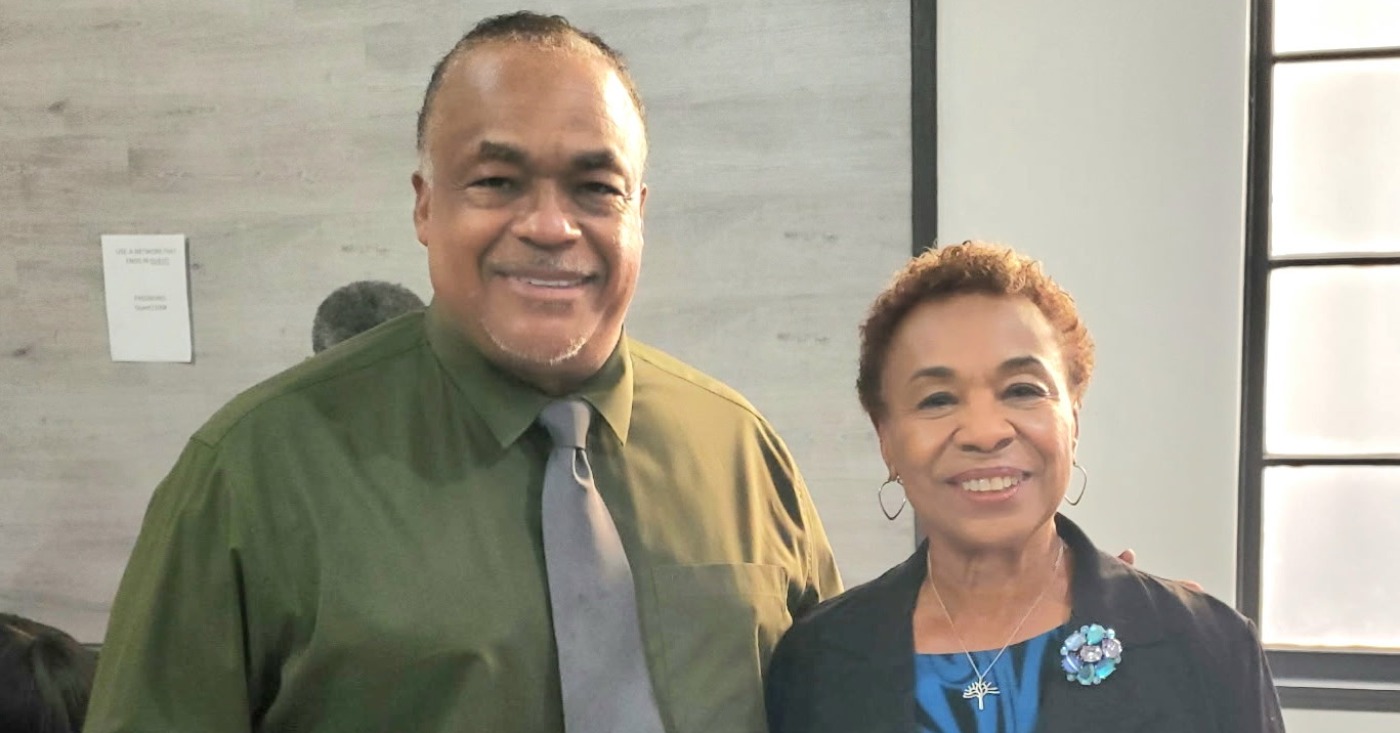
Pastors, civic leaders, and community members in the Bay Area gathered Thursday, Oct. 8, at Church of All Faiths in Oakland for a meet-and-greet marking a renewed push to revitalize the Interdenominational Ministerial Alliance (IMA) of Oakland and Vicinity.
A highlight of the evening was the “Souls to the Polls: Our Voice, Our Vote!” segment, led by Pastor Damon Owens of Genesis Church in Antioch, which urged congregations to turn out for the election. Organizers also announced a proposed joint pre-Thanksgiving worship service for Nov. 17, with the location to be announced.
Pastor Marcie Hodge of Prayer Mission Church called the program to order, and Rev. Michael Wakefield Wallace of Mt. Zion M.B. Church led the opening devotion. Pastor Cubie Finley III of Parks Chapel AME read Nehemiah 2:17-18, the passage behind the event’s rallying cry, “Let us rise up and build.”
COGIC National Evangelist Dr. Lucinda Taylor, principal of Westlake Middle School, delivered the opening welcome.

Dr. L.J. Jennings of Kingdom Builders Church gave a brief statement of purpose, explaining the alliance’s mission of ‘Voice, Vision, and Values.’ Pastor Terry Benjamin of Restoration Evangelistic Ministries then introduced the convener, Pastor Mark Anthony Clifton, Sr., who is in his 26th year leading East Oakland Church of God in Christ. Clifton has been reorganizing the alliance to unite clergy around civic engagement. He noted that IMA’s national roots in 1926 in Galveston, Texas, and honored the Oakland leaders who came before him, including his grandfather, the late Bishop Martin J. Clifton, Sr.
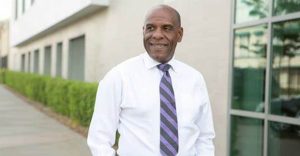
“The work of the IMA of Oakland is just a continuation of the work done before us. Today, working together we can continue to solve many of the issues our community faces,” said Clifton.
Members were invited to share testimonies, challenges, and ministry needs.
Other participants included Dr. Billy Dixon of At Thy Word Christian Center and Pastor Raymond Lankford, CEO of the Oakland Private Industry (OPIC) Council who shared information on the organization’s workforce development programming.
Public officials in attendance included Mayor Barbara Lee, Alameda County Supervisor Nate Miley, and Oakland Unified School District Superintendent Denise Saddler, strengthening the ties between the faith community and local government.
“We are better together and our city is stronger when we partner with our faith leaders,” said Oakland Mayor Barbara Lee.
Bishop Brondon Reems of Center of Hope Community Church provided the closing prayer and Rev. Dr. Jeffrey M. Parker, Sr., host pastor, gave final remarks and thanked attendees for coming.
“It’s an honor to serve the community and bring everyone together,” said Parker.
Dozens of pastors from Oakland, Antioch, and the greater Bay Area were recognized as supporters.
“I want our partners and attendees involved to help rebuild the city they love and this is only the beginning of a larger movement to restore our great city,” said Clifton.

Black History
Practitioners of African Traditional Spirituality Offer Ancestral Reverence Ritual Oct. 31
The Council for Global Ancestral Reverence will host “Ancestral Souls Rising” from Oct. 31 to Nov. 2, featuring a three-day gathering of prayer and discussion. Led by elders and priests across the African diaspora, the seventh annual ritual honors those lost without traditional rites while addressing current social challenges. This year’s event connects ancestral wisdom with contemporary issues, including a two-day conversation inspired by Afro-Beat music focused on Black community solidarity and the sacred importance of voting. Read more for details on the ritual schedule and participants.
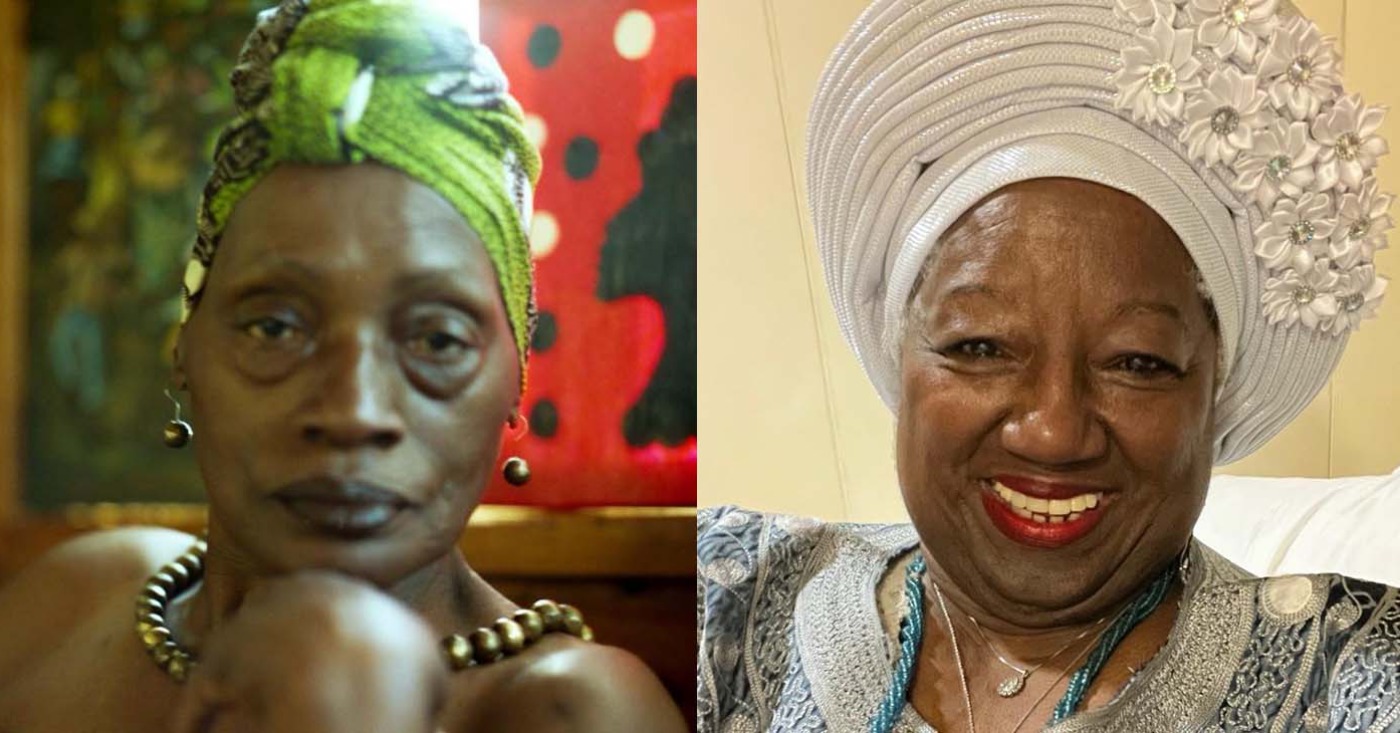
The Council for Global Ancestral Reverence (C4GAR), a group of elders who practice African traditional spirituality, will lead a three-day gathering of prayer and discussion from Oct. 31-Nov. 2.
Called ‘Ancestral Souls Rising,’ the council members and 21 priests will lead the prayers from many parts of the African diaspora: Africa, Portugal, and across the U.S. from Maryland to the Bay Area.
Now in its seventh year, the annual ritual began during the 2020 pandemic when hundreds of thousands of people died alone and were buried in mass graves without rites and rituals according to loved ones’ traditions.
This prayer event was and is intended to give peace to the departed and comfort for the living who still mourn. Each year, we gather names of new ancestors from living elders to elevate them into the “Great Hall of the Titans.”
In ensuing years, C4GAR added themes to the prayer gathering that referenced current events. In 2024, before the consequential presidential election, C4GAR called on people to vote, invoking the memory of Civil Rights Movement heroes and heroines like John Lewis, who urged “Good Trouble,” and Fannie Lou Hamer, who famously declared that she was “sick and tired of being sick and tired.”
The day of global Prayer on Oct. 31 will be followed by a two-day conversation inspired by “The Blueprint,” an Afro-Beat song by UyiosaEl, to write our new blueprint that supports solidarity and action in the Black community.
“Our elders have, for many generations, known the power of prayer, ritual and breath,” the council said in a statement.
It was and is their intention, then, to use the cultural wisdom, the gift of prayer “and the most sacred thing we have, our breath, to send energy into the world that invokes and honors our ancestors,” the council statement continued.
“Doing this creates a vibration that protects us and employs their ancient wisdom for the well-being of our communities,” the elders said.
The councilmembers, all over the age of 60, recognize that what is now history for so many was once their lived experience. And that history, those joys and sorrows, are now in their bodies.
To them, the uttered prayer and the sacred breath are oaths to an unfolding future that people can still shape.
The council members are Dr. Iyabeji Cathy Royal, Iyalocha Jennifer Dillard, Manbo Charlene Desir (Florida), Nana Sula Spirit (Louisiana), Baba Obafemi Feyemi, Ohen Nedra T. Williams, and Iyalocha Wanda Ravernell-Stewart Emeritus (Oakland).
This year, they also encourage everyone within their reach to VOTE because it is not only a secular and political act, but a sacred one. Remember, the ancestors were denied that right and died for it.
For tickets, go to:
Black History
OP-ED: The Black Church Writes AI’s Next Chapter
BLACKPRESSUSA NEWSWIRE — I implore my fellow faith leaders to use these tools. Start now and use them with wisdom. We count on each and every one of you to make sure our communities help write the next chapter of this story. This rapid change is not as unfamiliar as it may sound. My first understanding of AI came from using a calculator for the first time in grade school. We did not call it AI, but it was a tool that helped me work through mathematical equations hours more efficiently.

For generations, the Black church has stood strong in our communities through every historical change this country has experienced. During the civil rights movement and in recent times, faith leaders have helped uplift Black sanctuaries to register voters, keep food pantries open for people in need, and sit with families in hospital rooms in their most desperate moments. When our people faced new trials, they could always look to our faith leaders and the church to lean in to help us be included in these transformative changes.
Artificial intelligence is the latest revolutionary change to impact our society, and much like other transformations before us, underserved communities often get left behind.
I was recently featured in a report entitled “Faith, Community & AI” and it found that people send ChatGPT more than 70 million messages a week about religion. Nearly 22 million involve studying sacred texts, and 16 million ask about religious practices and holy days. Our members make up part of those numbers. They bring questions of faith to these tools every day.
Pastors have noticed, and according to a September 2025 Lifeway Research survey of 1,003 Protestant pastors, 42 percent said they use or experiment with AI in ministry. I count myself among them.

I write my sermons by hand, through prayer and study. When I finish a draft, I ask ChatGPT this question: “Where might this sermon become unclear or difficult to follow for someone early in their walk of faith?” It shows me gaps in my preparation, like where I incorrectly assumed everyone would know the context of who the Pharisees were. Then, change comes from my own pen, not the robot. The tool helps me reach the person in the back pew while the message still comes from me.
If I could have my wish, our whole community would take a similar posture. We must use these tools, understand them, and most importantly be present to help shape them if we want to be included in the coming change.
I implore my fellow faith leaders to use these tools. Start now and use them with wisdom. We count on each and every one of you to make sure our communities help write the next chapter of this story. This rapid change is not as unfamiliar as it may sound. My first understanding of AI came from using a calculator for the first time in grade school. We did not call it AI, but it was a tool that helped me work through mathematical equations hours more efficiently.
It starts with training; there is no involvement without understanding. Free AI trainings have begun in our churches and community centers across the nation. Every faith leader should sign up and, when possible, encourage members of your congregations to join you. By learning how to use AI, we can better understand what it can do, make up our own minds about its impact, and have a say in how it shapes our communities.”
Next, we must be at the tables where the builders of these tools make decisions. Presence is the first step toward understanding, and that gap is only bridged through a coordinated effort. How can any tool serve a community well if that community is not part of the conversation? Our traditions, needs, and concerns must be accounted for, and Black faith leaders are already making that happen. OpenAI’s recent Faith report states plainly that AI should never become an arbiter of religious truth. I fully intend to hold the company to its word, and the most effective way I can do that is from inside.
I will close with this––we must diligently protect what only the church can give. A believer in Seoul, Korea quoted in the report warned, “if you pour every struggle into a private chat, your pastor and your friends may never learn you need help.” A chatbot will not sit with a grieving family or pray with you at two in the morning. As we adopt this technology, it is up to us to ensure it keeps people connected to each other and to their church.
Rev. Dr. Adolphus Lacey is senior pastor of Bethany Baptist Church in Brooklyn, New York.


Oakland Post: Week of November 18 – 24, 2026

Oakland Post: Week of November 11 -17, 2026

Alameda County Supervisor Miley to Propose Illegal Dumping Ordinance

Oakland City Council Extends AI Data Center Moratorium for 10 Months.

On Veterans Day, U.S. Rep. Simon Demands Answers on Status of Veterans Affairs Clinic, Columbarium Project

OPINION: Mario Juarez’s Courtroom Admissions Raise Questions About Allegations That Fueled Recall of Pamela Price

Hutchinson Concedes: Ballots Still Being Counted in Oakland Board Elections

Mayor Lee and Schools’ Supt. Saddler Issue Joint Statement on Recent ICE Activity in Oakland

Mississippi Congressman Bennie Thompson Congratulates Scott Colom on Historic Victory

Farms to Grow, Inc. Hosts the 8th Annual Sweet Potato Pie Tasting Contest

Oakland Post: Week of November 4 – 10, 2026

How the Sandwich Generation Can Help Protect Aging Parents’ Finances

As Progressive Democrats Celebrate ‘Blue Tsunami,’ Oakland Counts Victories

Golden State Valkyries Become Bay Area Legends Winning WNBA Championship on Halloween Night

IN MEMORIAM: Marcia Ann Gillespie, Editor of Essence and Ms. Magazines, Dies at 82

COMMENTARY: Valarie Bachelor and Jennifer Brouhard are Excellent School Board Members and Deserve to Be Reelected

OUSD Receives State Review of District Finances; Outlines Progress Since January

HISTORY MADE: Keisha Lance Bottoms Becomes First Black Woman Elected Governor in American History

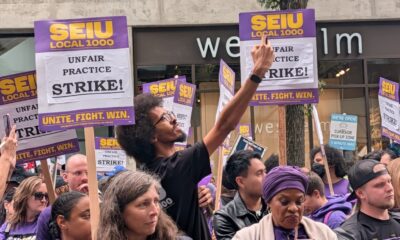
SEIU Local 1000 and State of California Will Continue to Negotiate New Labor Contract
Golden State Valkyries Become Bay Area Legends Winning WNBA Championship on Halloween Night

Fate of Bay Area Public Transit Hinges on Regional Transit Measure

COMMENTARY: Your California Living Trust Could Be Next: When Evidence Isn’t Enough

Chase Launches Fraud & Scam Prevention Month

Mayor Barbara Lee Holds Special State of the City Address in Deep East Oakland

Democrats, Community Groups Back Measure EE to Change How Oakland Is Governed

It’s Time to Lose Weight Before the Holidays

Post News Group Nov. 3 Election Endorsements

Richmond Neighbors Put Pantry Power on the Map

Oakland Awarded More than $14 Million in State Funding

Oakland Post: Week of October 7 – 13, 2026

The Conversation With Al McFarlane 6/23/26

Media Monday 6/22/26

LIVE! ASK ALMA! — TUES. 6.23.26 7PM EST

Car Buying Secrets: 4 Hidden Checks Before You Sign!

Is This 550 HP Charger Worth YOUR Money? AutoNetwork Review

Celebrating Juneteenth – Frederick Douglass on education and resistance

LIVE! — ASK ALMA! — TUES. 6.19.26 7PM EST

Hyundai Ioniq 5 Parking, Safety, and 360 View #shorts

2025 Ioniq 5 New Wiper & Powerful Performance! #shorts

Electric SUV Range: Is 259 Miles Enough? #shorts

EV Charging: How Fast Can You Charge an Electric Vehicle? #shorts

Biometric Cooling… Messaging Seats…Come on! 2025 Infiniti QX80 Autograph 4WD

Charged Up: Witness the Magic of a Fully Electric Car! #shorts

Range Rover Sport PHEV Included…: See What’s Inside This Luxury SUV! #shorts

Invisible Hood View: Perfect Parking with X-Ray Vision! #shorts
-
 Commentary3 weeks ago
COMMENTARY: Valarie Bachelor and Jennifer Brouhard are Excellent School Board Members and Deserve to Be Reelected
-
 Education3 weeks ago
OUSD Receives State Review of District Finances; Outlines Progress Since January
-
 Black History2 weeks ago
HISTORY MADE: Keisha Lance Bottoms Becomes First Black Woman Elected Governor in American History
-
 Business3 weeks ago
SEIU Local 1000 and State of California Will Continue to Negotiate New Labor Contract
-
 Community2 weeks ago
Golden State Valkyries Become Bay Area Legends Winning WNBA Championship on Halloween Night
-
 Business4 weeks ago
Fate of Bay Area Public Transit Hinges on Regional Transit Measure
-
 Business3 weeks ago
COMMENTARY: Your California Living Trust Could Be Next: When Evidence Isn’t Enough
-
 Business4 weeks ago
Chase Launches Fraud & Scam Prevention Month
