
Politics
Obama and Roberts legacies intertwined in health care law


FILE – In this Jan. 20, 2013, file photo, President Barack Obama is officially sworn-in by Chief Justice John Roberts in the Blue Room of the White House during the 57th Presidential Inauguration in Washington. Next to Obama are first lady Michelle Obama, holding the Robinson Family Bible, and daughters Malia and Sasha. The chief justice who mangled Obamas oath of office has helped the president yet again on his signature achievement, his health care law. After an awkward first encounter, these two Harvard Law graduates who rose to high positions of power from opposite ends of the political spectrum are bound together in the legacy of a law that the president says has now been “woven into the fabric of America” and that Roberts may not even personally support. (AP Photo/Pool, Charles Dharapak, File)
By Nancy Benac and Jim Kuhnhenn (Associated Press)
WASHINGTON (AP) — The chief justice who once mangled President Barack Obama’s oath of office has once again helped rescue the president’s signature achievement, his health care law.
After an awkward first encounter, these two Harvard Law graduates who rose to high positions of power from opposite ends of the political spectrum are bound together in the legacy of a law that the president says has now been “woven into the fabric of America” and that Roberts may not even personally support.
It was Roberts who wrote the majority opinion in Thursday’s 6-3 ruling that preserved a critical element of the health care law. And it was Roberts who provided the critical vote to uphold the legal underpinnings of the Affordable Care Act in a 5-4 ruling in 2012.
“This will be a part of them both,” predicted Harvard’s Laurence Tribe, the constitutional scholar who once had Roberts as a student and later hired Obama as a research assistant.
Tribe, a supporter of the health care law, called it a kind of “kismet” that didn’t have to happen that way.
This second ruling by Roberts may well have been easier for him than the first: This time, he was the sixth vote, with Justice Anthony Kennedy along for the ride and providing a cushion. And it only made sense that Roberts would back the law rather than gut it, when he’d already been savaged by conservatives for his ruling three years ago.
Critics of the health care law were nonetheless quick to castigate the latest decision, although many of those in Congress went the route of championing Justice Antonin Scalia’s dissent rather than focusing on the chief justice personally.
House Speaker John Boehner, an ardent critic of the health care law, batted away a question about whether he was disappointed in Roberts, saying, “I’ll let the legal beagles around the country debate the chief justice of the Supreme Court.”
Likewise, the White House shied away from addressing the Obama-Roberts connection, with press secretary Josh Earnest referring to the “business relationship” that the two men have in their respective roles.
Valerie Jarrett, Obama’s senior adviser, put the ruling in a historical perspective. “There’s a long history on the Supreme Court of justices exercising their independence,” she said. “That’s part of why they have lifetime appointments. You want to free them up from feeling politically beholden.”
But not everyone was ready to accept the ruling as evidence of Roberts’ judicial independence.
Carrie Severino, chief counsel to the conservative Judicial Crisis Network and a former law clerk for Justice Clarence Thomas, said the “the two biggest losers today are the English language and the legacy of Chief Justice Roberts.”
“If the chief justice is willing to join the court’s liberals in this linguistic farce, it’s time we admitted that our national ‘umpire’ is now playing for one of the teams,” she said, referring to Roberts’ description of a judge as one who impartially calls balls and strikes.
Larry Klayman, head of the conservative group Freedom Watch, said the six justices in the majority had “violated their own long-established rules of interpretation for applying statutes to instead advance their own political objectives or burnish their public persona. … The justices abandoned the rule of law and have become merely a political focus group.”
Ten years ago, when Obama was the junior U.S. senator from Illinois, he had his own reservations about the future chief justice. Obama said he feared Roberts would favor the powerful over the weak, and voted against his confirmation. He said Roberts was qualified in temperament and scholarship for most of what comes before the high court, but not for those truly difficult cases where “the critical ingredient is supplied by what is in the judge’s heart.”
Tribe speculated that Roberts is no fan of the health care law, “but I don’t think he had any difficulty voting the way he did.”
___
Associated Press writers Mark Sherman, Erica Werner and Julie Pace contributed to this report.
___
Following Nancy Benac on Twitter at http://twitter.com/nbenac and Jim Kuhnhenn at http://twitter.com/jkuhnhenn
Copyright 2015 The Associated Press. All rights reserved. This material may not be published, broadcast, rewritten or redistributed.


Activism
Oakland Post: Week of July 1 – 7, 2026
The printed Weekly Edition of the Oakland Post: Week of July 1 – 7, 2026
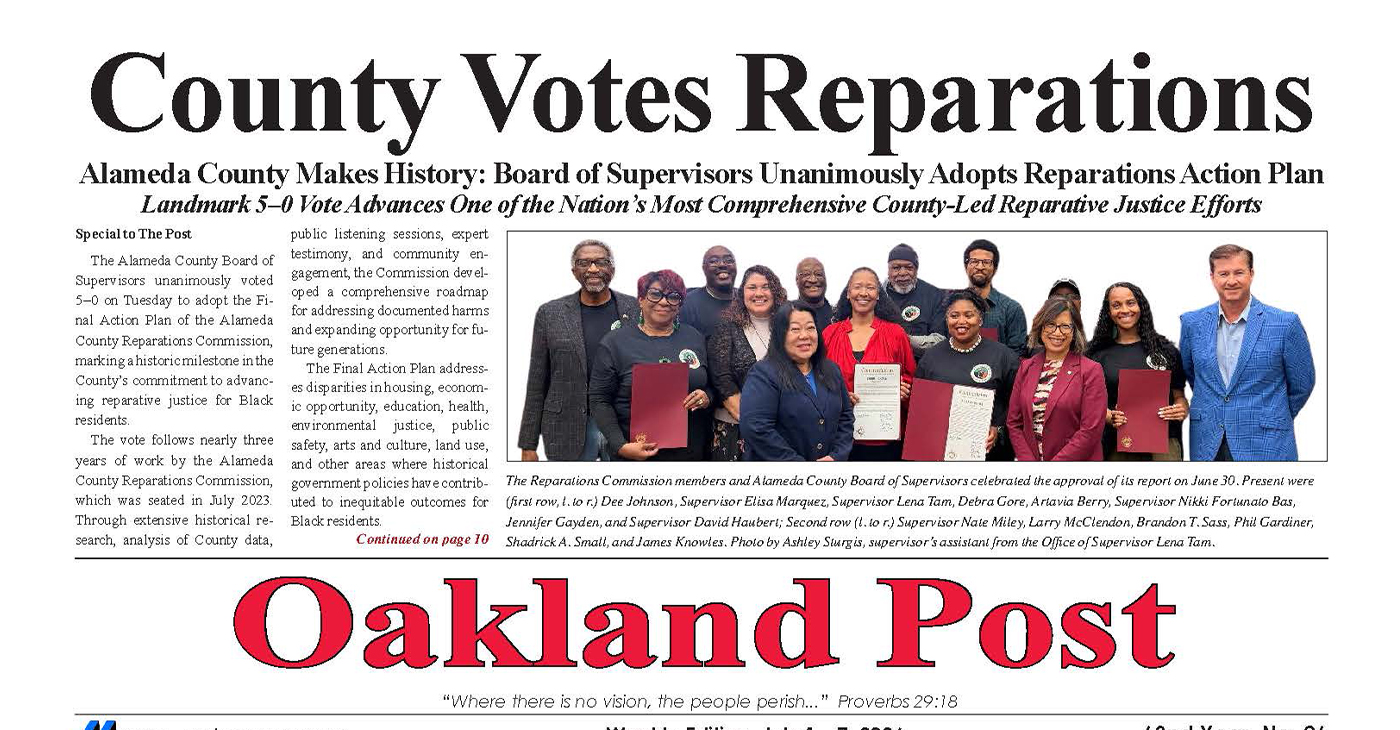
To enlarge your view of this issue, use the slider, magnifying glass icon or full page icon in the lower right corner of the browser window.
Activism
NPRC Joins National Grand Jury Proceedings Seeking Accountability, Constitutional Restoration
Organizers state that testimony will explore historical and political developments that they believe have contributed to the expansion of corporate influence over public institutions and governmental decision-making. Participants are expected to discuss concerns regarding constitutional governance, individual liberties, property rights, and the protection of vulnerable populations, including seniors and persons with disabilities.

Special to The Post
The National Probate Reform Coalition (NPRC) has joined Toll and Roll and a growing coalition of advocacy organizations, victims, whistleblowers, and citizen groups in support of a nationally broadcast People’s Grand Jury proceeding scheduled for July 1 and July 7.
Organizers describe the event as a public forum designed to examine allegations of government abuse, judicial misconduct, legislative failures, and the erosion of constitutional protections affecting millions of Americans.
The proceedings will feature testimony from victims, families, advocates, and organizations from across the country who contend they have experienced harm through government actions, institutional neglect, and failures of oversight.
According to organizers, the People’s Grand Jury will focus on concerns involving probate courts, guardianships, conservatorships, child welfare systems, property rights, civil liberties, and what participants view as a growing disconnect between government institutions and the constitutional rights of the people they are sworn to serve.
NPRC is participating because many of the issues being examined mirror the concerns raised by advocates, victims, and families who have participated in its monthly town halls. For years, families have reported cases involving exploitation of elders, questionable guardianships, estate depletion, denial of due process, and a lack of meaningful oversight within probate court systems.
“This proceeding gives victims and advocates an opportunity to place their experiences on the public record,” said Tanya Dennis, lead facilitator of NPRC. “For too long, families have struggled to have their voices heard regarding elder abuse, probate exploitation, and government inaction. This forum allows those stories to be shared before a national audience.”
Organizers state that testimony will explore historical and political developments that they believe have contributed to the expansion of corporate influence over public institutions and governmental decision-making. Participants are expected to discuss concerns regarding constitutional governance, individual liberties, property rights, and the protection of vulnerable populations, including seniors and persons with disabilities.
In keeping with principles of transparency and fairness, invitations have been extended to legislators, members of the judiciary, law enforcement representatives, and other public officials who may wish to respond to concerns raised during the proceedings or defend actions taken by their respective institutions.
One of the primary outcomes sought by organizers is public consideration and support for the People’s Remedy and Restoration Act, a proposed legislative framework that advocates believe would strengthen oversight, increase accountability, provide remedies for victims of governmental abuse, and restore constitutional protections.
The proceedings are expected to be broadcast nationally, providing citizens throughout the United States an opportunity to observe testimony, review evidence presented, and participate in an ongoing conversation regarding government accountability and the protection of individual rights.
Advocates hope the hearings will encourage meaningful dialogue, legislative reform, and renewed public engagement in the democratic process.
Individuals, organizations, public officials, and members of the media interested in attending or obtaining access information may contact the organizers at tollandroll2025@gmail.com.
As Americans continue to debate the future of constitutional governance, judicial accountability, and the protection of vulnerable citizens, the July proceedings are expected to serve as a significant forum for public testimony and civic engagement. For more information, go to https://tollandroll.com
Activism
Local Civil Rights Attorney, Activist Walter Riley Reveals Life Lessons from 70 Years in the Movement
Widely known in Oakland for his unifying leadership on issues of social justice and human rights, Riley is also recognized for his famous son, Raymond “Boots” Riley, a rap artist, political activist, and successful filmmaker, whose latest film, “I Love Boosters,” is now in theaters and capturing national attention.
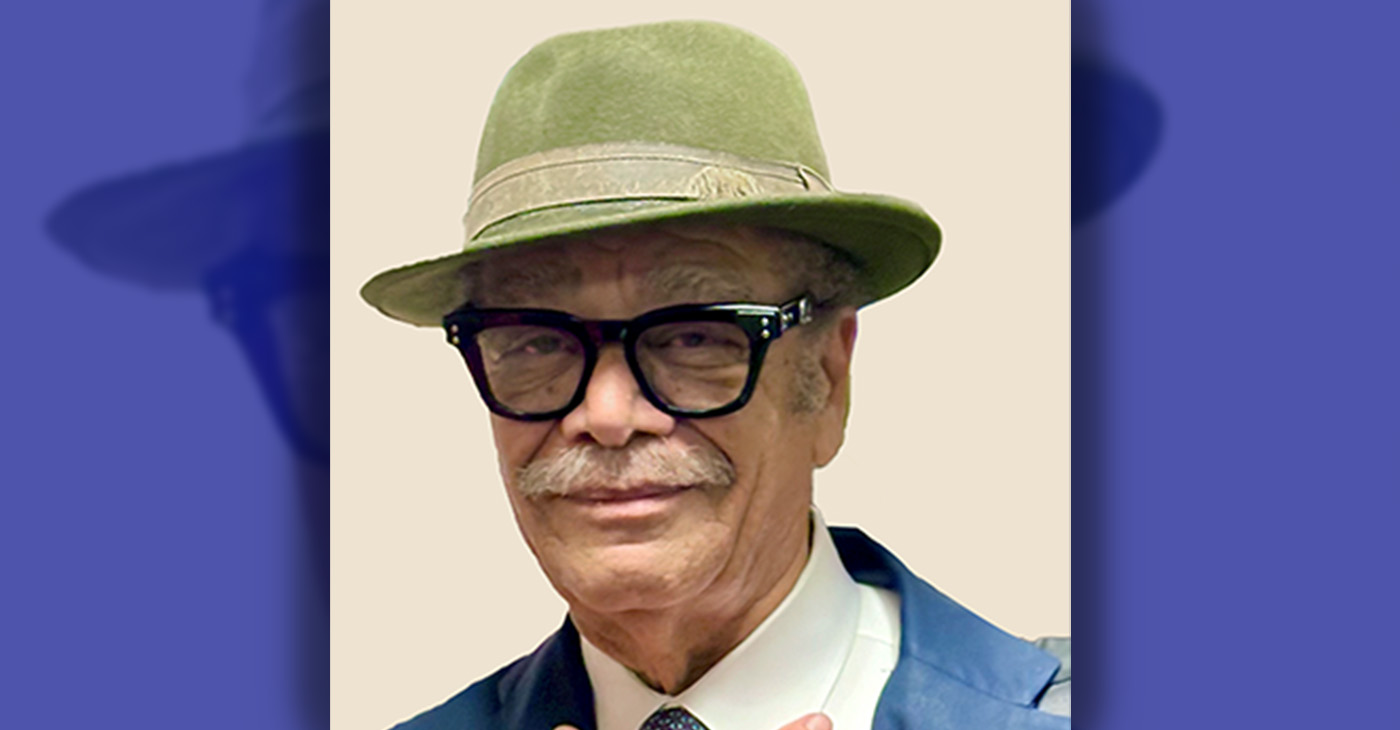
By Ken Epstein
Prominent civil rights attorney and activist Walter Riley recently went on radio station KPFA 94.1 to discuss his new book co-authored with local veteran organizer Jesse Strauss: “Civil Rights and Structural Attacks: Conversations with Walter Riley.”
Widely known in Oakland for his unifying leadership on issues of social justice and human rights, Riley is also recognized for his famous son, Raymond “Boots” Riley, a rap artist, political activist, and successful filmmaker, whose latest film, “I Love Boosters,” is now in theaters and capturing national attention.
Born in North Carolina, Riley has lived in San Francisco, Chicago, and Detroit, but his longtime home is Oakland, California.
Over the years, he was a leader in the South against Jim Crow, participated as a student in the historic 1968 San Francisco State University strike that created Black Studies and Ethnic Studies in the U.S. and scored victories in the fight for open college admissions.
He was also a labor organizer and was involved in early Black Panther Party formations, anti-war protests, and was a leader of the Progressive Labor Party, a pro-Mao, Marxist Leninist party.
In an interview on KPFA’s “Upfront” with host Brian Edwards-Tiekert on June 18, he discussed some of his formative experiences, born in 1944 to a family of sharecroppers who worked on a tobacco farm near Durham, North Carolina.
“I came from a farming family, the ninth child of 11 children,” Riley said. “My mom and dad got married as teenagers, and they were together for their entire lives. Growing up in this large family, we had to deal with various aspects of what it meant to live in an economically depressed area with parents who had come through what they called “Hoover times” (the Great Depression) in the South.
“They were proud of every one of their children when they took some stand, to develop and show some sense of dignity,” he said.
In his neighborhood, slavery was not a distant memory. There are many people “who knew firsthand what it was to have family members that had lived as enslaved people and lived in communities where enslaved people had lived.
“(Under tenant farming), the landowner negotiated for the entire family: the farmer, the wife, the children – everybody was involved on the farm. Kids were often engaged. We had to shovel, hoe tobacco to keep the weeds from taking over, to make sure that tobacco worms didn’t eat up the tobacco. If a child was old enough to plow, they would walk behind a horse or mule and plow a field, working from sunup to sundown,” he said.
The houses did not have indoor bathrooms, running water or electricity. “A lot of the names in the Black community were the same names as these slave owners. We could see the names of folks on the streets, street names of people who had enslaved people, and they were symbols to me of a world that did not see me as a human being, that has not treated my ancestors as humans, has treated us as chattel to be sold, to be owned, to be property,” Riley said
“When we were counted by our government, we were counted only for the purposes of allowing white people, white men, to have a vote.”
By 1950, when he was 6 years old, his family moved to another house, leaving tenant farming. His father took a job in construction.
“My parents wanted the younger kids to have education,” he continued. “The older kids had to work on the farms. By the time I came along, I was the second child born in a hospital. “My parents looked forward to younger kids to have more sense of independence from the economic and social depravities that they saw around them.”
Watching television, he became aware of the suffering under Jim Crow, including the lynching in Mississippi of Emmett Till in 1955 and Mack Parker in 1959.
When he was 13, he joined a picket line in town in front of a variety store chain that did not hire Black people and became active in the Civil Rights Movement. By time he was in high school, he had become a leader in the local chapter of the NAACP and met Malcolm X and later Medgar Evers, leaders who were both assassinated.
Married and with a child, he moved with his family in the early 1960s to San Francisco, attending San Francisco State University while working full time.
He participated in the San Francisco State University strike, the longest student strike in U.S. history, where students and their supporters prevailed in the face of mass arrests and daily violent police attacks.
While many people remember the strike for its historic victory – the creation of the first Black Studies and Ethnic Studies programs in the country. “But open admissions was the thing,” he said. “Open admissions had to do with people being able to go to school for free. People should be able to go to school just because they come here and say, ‘I want to go to school. I want an education’ (because) we live in a rich country.”
Studying Marxism, including dialectical materialism, he gradually began to understand structure of the system that needs to be changed, he said. “It requires a lot of study, and it still does.”
WORK FROM HOME
Home-based business with potential monthly income of $10K+ per month. A proven training system and website provided to maximize business effectiveness. Perfect job to earn side and primary income. Contact Lynne for more details: Lynne4npusa@gmail.com 800-334-0540


Diabetes in Black California: Turning the Tide from Crisis to Control

Oakland Post: Week of July 1 – 7, 2026

Prescott Circus Theatre Presents Free Summer Performance Series

NPRC Joins National Grand Jury Proceedings Seeking Accountability, Constitutional Restoration

Local Civil Rights Attorney, Activist Walter Riley Reveals Life Lessons from 70 Years in the Movement

50 Years Later, ‘Wake Up Everybody!’ Still Resonates During Black Music

Inaugural Juneteenth Awards Ceremony Celebrates the Fillmore’s Black History, Leadership and Resilience

Thousands Come Out to Celebrate Juneteenth in Richmond

East Oakland COGIC Celebrates Re-Dedication

Black Repertory Group Needs Volunteers to Help Shape the Next Generation of Artists and Leaders

Oakland Post: Week of June 24 – 30, 2026


Oakland Museum Presents Landmark Retrospective Celebrating Beloved Bay Area Artist Mildred Howard

Ferry Fares to Increase July 1 as Ridership Hits Record Highs

Stop the Hate Symposium Brings Oakland Together Through Dialogue, Partnership, and Community Healing

After 10-Year Wait, Fillmore Heritage Center Reopens in San Francisco

Oakland Post: Week of June 3 – 9, 2026

Oakland Post: Week of May 27 – June 2, 2026

COMMENTARY: Black Music is the Sound of Black Freedom: Let Us Reclaim Both This Juneteenth

2026 World Cup is Here and Atlanta is Ready For It

Oakland Director Boots Dazzles Once Again in ‘I Love Boosters’

Oakland Post: Week of June 10 – 16, 2026

5 Cleveland Police Officers Injured, Gunfire Erupts During East Side Pursuit

Sale of Coliseum to African American Developers Moves Toward Completion

Oakland Post: Week of June 17 – 23, 2026

Venus Williams Calls a Sabalenka Exit a Tragedy

COMMENTARY: Using Art, Healing, And Community to Transform Mental Health Dialogue
Ferry Fares to Increase July 1 as Ridership Hits Record Highs

UC Berkeley Named Top Public University in the U.S. and No. 7 in the World by ‘U.S. News’

The Conversation With Al McFarlane 6/23/26

Media Monday 6/22/26

LIVE! ASK ALMA! — TUES. 6.23.26 7PM EST

Car Buying Secrets: 4 Hidden Checks Before You Sign!

Is This 550 HP Charger Worth YOUR Money? AutoNetwork Review

Celebrating Juneteenth – Frederick Douglass on education and resistance

LIVE! — ASK ALMA! — TUES. 6.19.26 7PM EST

Hyundai Ioniq 5 Parking, Safety, and 360 View #shorts

2025 Ioniq 5 New Wiper & Powerful Performance! #shorts

Electric SUV Range: Is 259 Miles Enough? #shorts

EV Charging: How Fast Can You Charge an Electric Vehicle? #shorts

Biometric Cooling… Messaging Seats…Come on! 2025 Infiniti QX80 Autograph 4WD

Charged Up: Witness the Magic of a Fully Electric Car! #shorts

Range Rover Sport PHEV Included…: See What’s Inside This Luxury SUV! #shorts

Invisible Hood View: Perfect Parking with X-Ray Vision! #shorts
-
 Art4 weeks ago
After 10-Year Wait, Fillmore Heritage Center Reopens in San Francisco
-
 Activism2 weeks ago
 -
 Art4 weeks ago
Oakland Director Boots Dazzles Once Again in ‘I Love Boosters’
-
 Activism4 weeks ago
Oakland Post: Week of June 10 – 16, 2026
-
 Business3 weeks ago
Sale of Coliseum to African American Developers Moves Toward Completion
-
 Activism3 weeks ago
Oakland Post: Week of June 17 – 23, 2026
-
 Alameda County2 weeks ago
Ferry Fares to Increase July 1 as Ridership Hits Record Highs
-
 Bay Area2 weeks ago
UC Berkeley Named Top Public University in the U.S. and No. 7 in the World by ‘U.S. News’
