
Politics
Obama, Abe Putting Joint Face on Trade Amid Opposition in US


President Barack Obama hosts a state arrival ceremony for Japanese Prime Minister Shinzo Abe, Tuesday, April 28, 2015, on the South Lawn of the White House in Washington. (AP Photo/Jacquelyn Martin)
JIM KUHNHENN, Associated Press
WASHINGTON (AP) — Eager to build on the U.S.-Japan alliance, President Obama and Japanese Prime Minister Shinzo Abe will work to strengthen economic ties while confronting stiff resistance from Obama’s own political party to a massive new Pacific Rim trade deal.
Trade is one of the top agenda items for Abe’s state visit to the U.S. as the two countries work toward a 12-nation Trans-Pacific Partnership agreement that would further open vast Asian and Pacific rim markets to U.S. exports.
Abe’s visit comes as Obama’s negotiators work to complete the trade agreement, and as Obama seeks authority from Congress to put the deal, once it’s completed, on a fast track to approval later this year. Obama is pressing for the trade agreement and the negotiating authority against mounting pressure from liberals and labor unions who fear trade agreements can cost American jobs.

The U.S. and Japan are the agreement’s biggest participants and the talks between the two countries would go far in advancing the broader negotiations. But while Obama and Abe won’t be ready to announce a trade breakthrough, officials on both sides say they will likely declare they have made considerable progress in closing remaining gaps. The toughest sticking points are U.S. tariffs on Japanese pickup trucks and barriers in Japan on certain U.S. agricultural products.
Ahead of Tuesday’s meeting and the pomp and circumstance of a state visit, Obama took Abe to the Lincoln Memorial Monday afternoon. Obama played tour guide, leading the Japanese leader up the steps into the memorial where they examined the Gettysburg Address sketched into the marble walls.
Also on Monday, Japanese and U.S. foreign and defense ministers meeting in New York approved revisions to the U.S.-Japan defense guidelines. The new rules boost Japan’s military capability amid growing Chinese assertiveness in disputed areas in the East and South China Sea claimed by Beijing. The changes, which strengthen Japan’s role in missile defense, mine sweeping and ship inspections, are the first revisions in 18 years to the rules that govern U.S.-Japan defense cooperation.
Indeed, China’s economic and military footprint serves as a major backdrop for Abe’s visit.
Obama has undertaken an effort to rebalance the U.S. role in Asia and has argued time and again that without a trade agreement with Asian countries, China will step into the breach.
“If we don’t write the rules, China will write the rules out in that region,” Obama said in an interview with The Wall Street Journal. “We will be shut out — American businesses, American agriculture. That will mean a loss of U.S. jobs.”
Abe is sure to get a flavor of the opposition Obama confronts from Democrats and from the political left. He will address a joint meeting of Congress on Wednesday, and a coalition of trade deal critics plan to place a giant Trojan Horse, symbolizing the fast-track authority Obama seeks, well within view of his motorcade.
Likewise, Republican supporters of the trade deal were applying pressure on Abe. In an opinion piece in The Washington Post, House Ways and Means Committee Chairman Paul Ryan urged Abe to stand up to the Japanese farms and auto lobbies in favor of more open trade.
Educated at the University of Southern California, Abe will be the first Japanese leader to address both houses of Congress. He intends to deliver his remarks in English.
Abe’s visit comes on the 70th anniversary of the end of World War II and has already prompted demands that he use his trip to address the use of sex slaves by the Imperial Army during the war. The issue has been a major irritant with South Korea, which has demanded an apology from Abe.
Nothing seemed to underscore the reconciliation between the countries more than the agreement to boost the U.S.-Japan defense relationship, which would allow Japan to play a bigger role in global military operations with an eye on potential threats from China and North Korea.
Secretary of State John Kerry said the shift marks a historic transformation in the post-WWII relationship between Tokyo and Washington that recognizes the “evolving risks and dangers both in Asia-Pacific and across the globe.”
Japanese Foreign Minister Fumio Kishida agreed, saying “the security situation around Japan is becoming more harsh and difficult.”
The revisions come with a renewed pledge of the U.S. position that the Senkaku Islands — a group of small, uninhabited islands in the East China Sea — fall under Japanese administration and are within the scope of the U.S.-Japan mutual defense treaty. China also claims the islands, which Beijing calls Diaoyu.
China on Tuesday reiterated its claim on the islands.
“No matter what anybody says or does, the fact won’t change that the Diaoyu Islands belong to China,” Chinese Foreign Ministry spokesman Hong Lei said. “The Chinese government will firmly defend the country’s territorial sovereignty and integrity.”
In his interview Monday, Obama tried not to portray the U.S. as an antagonist to China but said, “We don’t want China to use its size to muscle other countries in the region around rules that disadvantage us.”






Business
OP-ED: Proposition 44 Would Put a Price on Trust
The danger in Proposition 44 is not only its 90 percent figure. It is that the meaning of “qualifying” spending will be worked out later. A clinic preparing a budget today may not know whether a navigator, health educator, transportation program, outreach worker, technology upgrade, or other patient-support service will be counted the way it expects. Yet the financial consequence of getting it wrong could be immediate.





Business
OP-ED: Proposition 40: It’s Time to Play Chess, Not Checkers
Proposition 40 would impose a one-time 5 percent tax on the wealth of Californians with more than $1 billion in assets. Most of that money would go toward health care, with the remainder supporting food assistance and education-related programs.

Activism
Oakland Post: Week of September 30 – October 6, 2026
The printed Weekly Edition of the Oakland Post: Week of September 30 – October 6, 2026

To enlarge your view of this issue, use the slider, magnifying glass icon or full page icon in the lower right corner of the browser window.



OP-ED: Proposition 44 Would Put a Price on Trust

OP-ED: Proposition 40: It’s Time to Play Chess, Not Checkers

Listening as a Lifeline: A Doula’s Witness to Black Maternal Health

New Protections for Ticket Buyers: Gov. Newsom Signs Assemblymember Isaac Bryan’s Bill

‘We Don’t Talk Trash — We Pick Up Trash!’

Zakiya Jendayi Arrested, Locked Out of Home by Sheriff’s Deputies

Oakland Post: Week of September 30 – October 6, 2026

Asm. Corey Jackson Announces Launch of 24-Hour Childcare in His District

IN MEMORIAM: The Rev. Leon “Sonny” Clark, Longtime Orange County Pastor and Community Leader, Dies at 72

Poll: Becerra Widens His Lead Over Hilton; Californians Split on Wealth Tax

From Historic Memories to New Possibilities: Oakland Celebrates Coliseum 60

County Office of Education Says OUSD Finances Are Getting Healthier, Materially Stronger

LIVE FREE Sunday Dinner Brings Faith, Fellowship and Civic Conversation to Oakland

Remembering Chauncey Bailey as Student Journalists Face Threats to Truth-Telling

BLACspace Cooperative Invites Bay Area to Experience Oakland’s Black Cultural Ecosystem Through a BLAC Map Tour + Party

Standoff for Justice: Our Homes Are Worth Fighting For

Oakland Post: Week of August 26 – September 1, 2026

Frontier Airlines’ Return to Oakland Airport Brings Flights, Jobs and Opportunity

Gubernatorial Candidate Steve Hilton Blasts California New Tire Rules; Newsom Hits Back

Chef Sharon Lee Blends Culinary Excellence, Education and Empowerment

Jackie Wright Champions Bay Area Stories, Filmmakers and Cultural Institutions

Misnamed ‘Parent’ PAC Seeks to Influence Oakland School Board Elections

Oakland Coliseum Project Opens Door for Small Businesses to Build Bigger

Gov. Newsom’s Latest Appointees Include Sacramento Advocate for Formerly Incarcerated Students; State’s New Tech Chief

Big City Mayors Ask for “Yes” Vote on Housing Bond Measure; Conservatives Say “No”

Longtime BWOPA Member Brendalyn Goodall Appointed to California Workforce Development Board

Oakland Post: Week of September 2 – 8, 2026

Gov. Newsom Signs Law Shielding Immigration Aid Workers From Doxing Threats

Secretary of State Shirley N. Weber Urges Californians to Vote Early as Voter ID Battle Intensifies

IN MEMORIAM: Dolly Parton Dead at 80 — How She Built a Legacy of Love and Earned Her Place in Black Culture

The Conversation With Al McFarlane 6/23/26

Media Monday 6/22/26

LIVE! ASK ALMA! — TUES. 6.23.26 7PM EST

Car Buying Secrets: 4 Hidden Checks Before You Sign!

Is This 550 HP Charger Worth YOUR Money? AutoNetwork Review

Celebrating Juneteenth – Frederick Douglass on education and resistance

LIVE! — ASK ALMA! — TUES. 6.19.26 7PM EST

Hyundai Ioniq 5 Parking, Safety, and 360 View #shorts

2025 Ioniq 5 New Wiper & Powerful Performance! #shorts

Electric SUV Range: Is 259 Miles Enough? #shorts

EV Charging: How Fast Can You Charge an Electric Vehicle? #shorts

Biometric Cooling… Messaging Seats…Come on! 2025 Infiniti QX80 Autograph 4WD

Charged Up: Witness the Magic of a Fully Electric Car! #shorts

Range Rover Sport PHEV Included…: See What’s Inside This Luxury SUV! #shorts

Invisible Hood View: Perfect Parking with X-Ray Vision! #shorts
-
 Community4 weeks ago
Misnamed ‘Parent’ PAC Seeks to Influence Oakland School Board Elections
-

 Activism4 weeks ago
Oakland Post: Week of September 9 – 15, 2026
-

 Community4 weeks ago
Richmond Tiny House Village Farm & Garden Set to Open Gates on Sept. 26
-

 Black History4 weeks ago
Latest Massacre in Haiti Reveals Cruelty U.S. Deportations
-

 Black History4 weeks ago
OPINION: Nolan Wells’ Death One of Several Signifying Racial Terror Lives on in U.S. South
-

 Business3 weeks ago
Mayor Lee Announces $1 Million Kaiser Permanente Grant for Pilot Program to Address Homelessness, Clean Up Public Spaces throughout Oakland
-

 Community4 weeks ago
Democratic Clubs Interview Candidates for Oakland School Board
-
 Uncategorized3 weeks ago
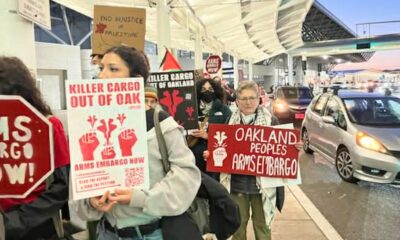
Oakland People’s Arms Embargo Coalition Demands End to Military Shipments Thru Oakland
