
Activism
Oakland Community Art Center is Helping Immigrants Heal from Trauma
The programs are catered to youth and adults with programs called “Arts in Schools” and “Arts and Wellness.” Students are encouraged to participate in music, crafts, and dancing. In contrast, adults can join support groups to connect with others and receive mental health resources to alleviate trauma they may have previously experienced.


By Magaly Muñoz
A local community art center ARTogether is creating a safe place for immigrants and refugees one craft at a time.
After Donald Trump’s first presidential term started in 2017, Leva Zand saw firsthand the impact of discrimination towards immigrants. She wanted to give this community a space to heal through a creative outlet, which prompted her to start ARTogether.
“Folks can come together and do art activities, celebrate their culture, and basically be in a judgmental free environment, no matter what is their immigration status or how well they speak English, when they came to this country, what generation they are,” Zand explained. “The idea was how to use arts and culture for community building and connection between refugees, immigrants themselves and with the broader community.”
Located in downtown Oakland, the space is dedicated partly for galleries and art shows featuring local immigrant artists. The remaining area is a communal studio where ARTogether hosts its regular activities.
Art is used as a therapeutic medium that allows participants to process and express their emotions and experiences and build community with others in the studio, Zand said.
The programs are catered to youth and adults with programs called “Arts in Schools” and “Arts and Wellness.” Students are encouraged to participate in music, crafts, and dancing. In contrast, adults can join support groups to connect with others and receive mental health resources to alleviate trauma they may have previously experienced.

Zand told the Post that a lot of the issues participants come into the program with are related to feeling a lack of support or community after newly arriving to the area from their home countries. While many come from areas where traditional therapy is considered taboo, art lets people of all backgrounds express themselves in a creative form that makes sense to them.
The center can also provide referrals and direct contacts to traditional mental and physical health professionals and legal and social programs for those who need more extensive assistance.
Because of how the organization started, ARTogether has a strong “Stop the Hate” messaging built into its mission. They began promoting advocacy against anti-immigrant and anti-refugee hate across several demographics during the pandemic, even before “Stop the Hate” became officially established.
“We really want to activate this space for the community to get together, to share, to strategize, to see how they can advocate at the local, state and even national level for their rights,” Zand shared.
Anticipating an influx in stress and trauma for residents after the presidential inauguration in January, ARTogether is hosting a community gathering at the end of the month in order to give people the space to express their feelings through crafts.
These gatherings, or “Gather In’s”, will be held monthly, or for as long as funding can sustain them, which Zand said might not be for long.
The organization recently lost one of its grants from the city of Oakland during the major budget cuts earlier this month that slashed funding for arts and culture programs. They were meant to receive a $20,000 grant through the city’s initial contingency budget plan but the money is now gone until Oakland can get their revenue up again.
Zand shared she worries about the state of the country come the new year and where her organization may end up as well if budget restraints continue at the local and state level.
“We are really facing uncertainty. We don’t know what is happening…We don’t know how bad it’s going to be,” she said.
This resource was supported in whole or in part by funding provided by the State of California, administered by the California State Library via California Black Media as part of the Stop theHate program. The program is supported by partnership with the California Department of Social Services and the California Commission on Asian and Pacific Islander American Affairs. To report a hate incident or hate crime and get support, go to https://www.cavshate.org/






Activism
Oakland Post: Week of March 18 – 24, 2026
The printed Weekly Edition of the Oakland Post: Week of March 18 – 24, 2026
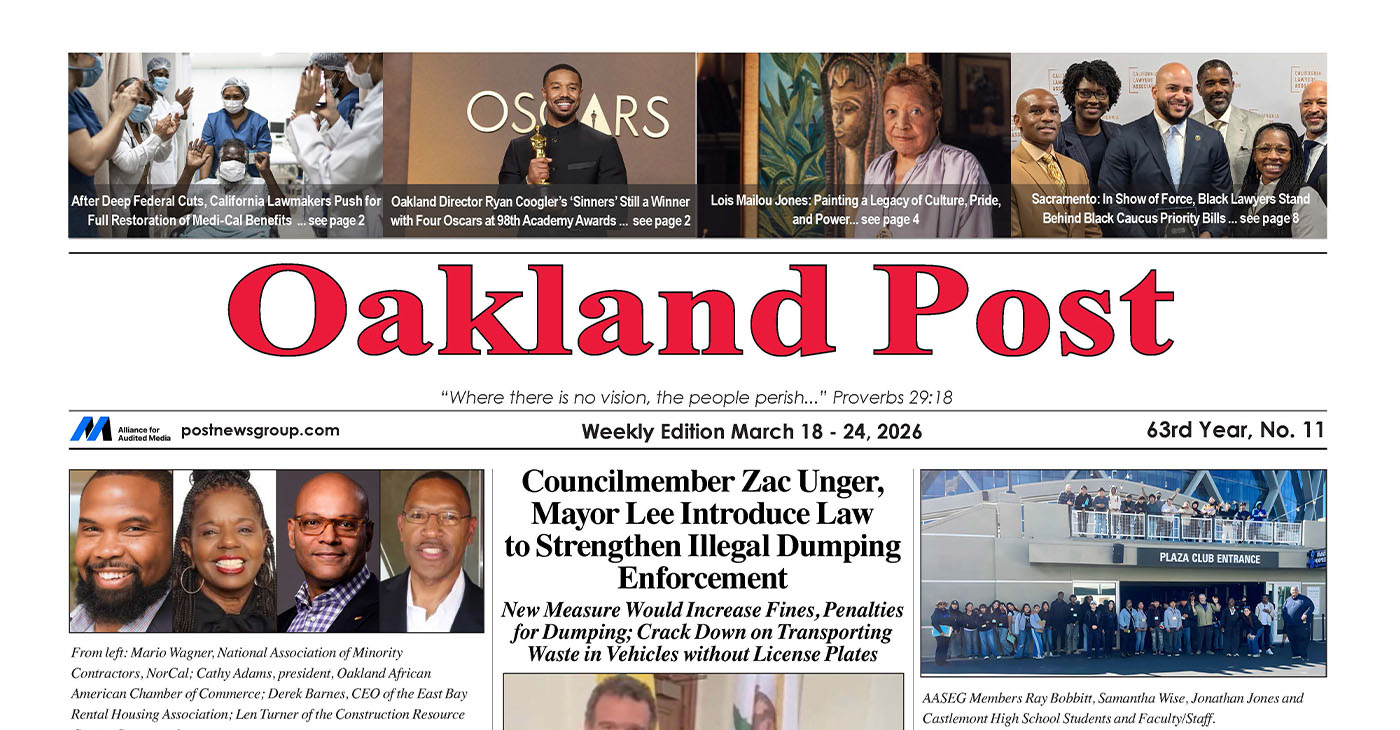
To enlarge your view of this issue, use the slider, magnifying glass icon or full page icon in the lower right corner of the browser window.
Activism
Oakland Post: Week of March 11 -17, 2026
The printed Weekly Edition of the Oakland Post: Week of March 11 – 17, 2026
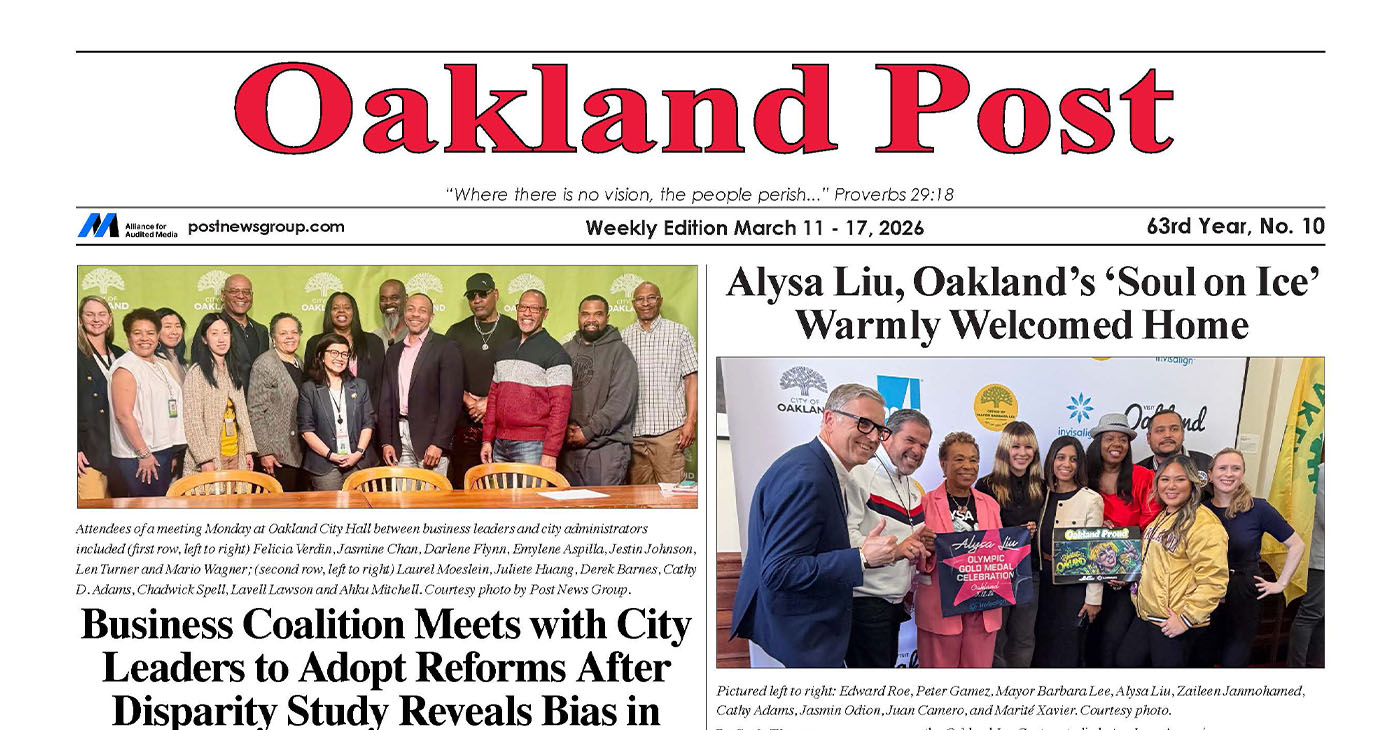
To enlarge your view of this issue, use the slider, magnifying glass icon or full page icon in the lower right corner of the browser window.
Activism
Oakland Post: Week of March 4 – 10, 2026
The printed Weekly Edition of the Oakland Post: Week of March 4 – 10, 2026

To enlarge your view of this issue, use the slider, magnifying glass icon or full page icon in the lower right corner of the browser window.


WORK FROM HOME
Home-based business with potential monthly income of $10K+ per month. A proven training system and website provided to maximize business effectiveness. Perfect job to earn side and primary income. Contact Lynne for more details: Lynne4npusa@gmail.com 800-334-0540


Black Artists in America, Installation Three Wraps at the Dixon Gallery and Gardens

Grief, Advocacy, and Education: A Counselor Reflects on Black Maternal Health

Future of Florida’s Black History Museum in Limbo

New Research Shows the Many Benefits of Early Learning

South Hampton K-8 Students Among Top 10 Finalists for Samsung’s ‘Solve for Tomorrow’ Competition

Cuba: No Negotiation with US on the President or Political System

Brooklyn Academy of Music Names Jamaican-Born Tamara McCaw as President

Trinidad & Tobego – U.S. Launches WhatsApp Channel for American Citizens in the Country

Oakland Post: Week of March 18 – 24, 2026

AI Innovation vs. Ethics and Environmental Impact

AI, Web3, and Digital Reparations

What If You Owned Your AI Agent?

Season 7, Episode 3 – January Reporter’s Roundtable 📱

Season 7, Episode 3 – January Reporter’s Roundtable

AI, Media, and Power | Part 2, Real-World Impacts and Tradeoffs

Oakland Post: Week of February 11 – 17, 2026

Reflecting on Black History Milestones in Birmingham AL

Rising Optimism Among Small And Middle Market Business Leaders Suggests Growth for California

CITY OF SAN LEANDRO STATE OF CALIFORNIA PUBLIC WORKS DEPARTMENT ENGINEERING DIVISION NOTICE TO BIDDERS FOR ANNUAL STREET OVERLAY/REHABILITATION 2019-21 – PHASE III

Oakland Post: Week of February 18 – 24, 2026

PRESS ROOM: NBA Hall of Fame Nominee Terry Cummings Joins 100 Black Men of DeKalb County to Launch Victory & Values Initiative

Oakland Post: Week of February 25 – March 3, 2026

Trump’s MAGA Allies are Creating Executive Order Plan to Steal the 2026 Midterms

U.S. manufacturing rebounds – how foundry services are adapting to rising demand

OP-ED: One Hundred Years of Black Workers Telling the Truth

Advancements in solar technology that are changing the way we power the world

Chase Oakland Community Center Hosts Alley-Oop Accelerator Building Community and Opportunity for Bay Area Entrepreneurs

Poll Shows Support for Policies That Help Families Afford Child Care

Oakland Post: Week of March 4 – 10, 2026

PRESS ROOM: Civil Rights TV Launches in Selma as the World’s First 24/7 Civil Rights Television Network

Hyundai Ioniq 5 Parking, Safety, and 360 View #shorts

2025 Ioniq 5 New Wiper & Powerful Performance! #shorts

Electric SUV Range: Is 259 Miles Enough? #shorts

EV Charging: How Fast Can You Charge an Electric Vehicle? #shorts

Biometric Cooling… Messaging Seats…Come on! 2025 Infiniti QX80 Autograph 4WD

Charged Up: Witness the Magic of a Fully Electric Car! #shorts

Range Rover Sport PHEV Included…: See What’s Inside This Luxury SUV! #shorts

Invisible Hood View: Perfect Parking with X-Ray Vision! #shorts

AI Is Reshaping Black Healthcare: Promise, Peril, and the Push for Improved Results in California

ESSAY: Technology and Medicine, a Primary Care Point of View

Sanctuary Cities

The RESISTANCE – FREEDOM NOW

STATE OF THE PEOPLE: Freddie

ECONOMIC BOYCOTT DAY!!!!!

I told You So
-
 Activism4 weeks ago
Oakland Post: Week of February 25 – March 3, 2026
-
 #NNPA BlackPress4 weeks ago
Poll Shows Support for Policies That Help Families Afford Child Care
-
 Activism3 weeks ago
Oakland Post: Week of March 4 – 10, 2026
-

 #NNPA BlackPress3 weeks ago
Woman’s Search for Family’s Roots Leads to Ancestor John T. Ward – A Successful Entrepreneur and Conductor on the Underground Railroad
-

 #NNPA BlackPress4 weeks ago
OP-ED: NNPA Launches 2026 “Leadership Matters” Video Series
-

 #NNPA BlackPress3 weeks ago
Advocates Raise Alarm Over ICE Operation, MOU and Detention Risks in Baltimore County
-

 #NNPA BlackPress3 weeks ago
COMMENTARY: Women of Color Shape Our Past and Future
-

 #NNPA BlackPress3 weeks ago
Pete Buttigieg to Join Mayor Randall Woodfin for Community Town Hall in Birmingham
