
Commentary
‘Nobody’s at the Switch’ as CBS Announces Election Coverage Team Says African Americans
NNPA NEWSWIRE — The network is taking some serious heat for excluding African-Americans from its core team of on-the-ground reporters and producers set to cover the 2020 presidential campaign cycle – an election that’s viewed almost universally as critical to Blacks and other minorities.

By Stacy M. Brown, NNPA Newswire Correspondent
@StacyBrownMedia
CBS News said it’s diversifying – adding a mix of women and minorities to its top staff and its upcoming 2020 election coverage.
But, many are calling the “Eye” Network’s attempts at diversity an epic fail.
The network is taking some serious heat for excluding African-Americans from its core team of on-the-ground reporters and producers set to cover the 2020 presidential campaign cycle – an election that’s viewed almost universally as critical to Blacks and other minorities.
The outcry began after associate producer Ben Mitchell tweeted a title card featuring images of CBS News’ “political embed unit,” composed of eight 2020 campaign reporters and four associate producers, including himself.
Among the eight reporters, four reportedly are persons of color: Musadiq Bidar, a native of Afghanistan, Alex Tin, Jack Turman and Stephanie Ramirez. But, none are African American.
“CBS, the efforts on your website about your support for diversity fly in the face of your display of all of the reporters you’ve selected for the 2020 campaign,” Democratic California Congresswoman Maxine Waters tweeted.
“Not one Black. What’s up with this? An explanation is needed.”
New York Democratic Rep. Alexandria Ocasio-Cortez said the current administration in the White House made having a “functional understanding of race in America one of the most important core competencies for a political journalist to have, yet CBS News hasn’t assigned a single Black journalist to cover the 2020 election.”
Actress Kerry Washington also expressed her disappointment. In a note that was re-tweeted by National Newspaper Publishers Association President and CEO Dr. Benjamin F. Chavis, Jr., Washington wrote:
“Dear @CBSNews, I am encouraged by the diversity you DID include. But when it comes time to discuss the inevitable role that race and racism will play in the election, who will you turn to for a perspective with nuanced & personal understanding of the African American experience?”
Christopher Isham, CBS News’ Washington bureau chief, called the new group “our boots on the ground for the 2019-2020 election cycle” in announcing an increase in politically-focused reporters and newsgathering resources for the upcoming presidential race.
The unit is designed to deepen CBS News’ coverage of federal and local issues and personalities on the 2020 trail, according to Variety.
CBS News noted that the embed team represented only a portion of its broader election coverage plans. Lorna Jones, who is African-American, was promoted last month to the role of managing editor for Washington news coverage, Variety reported.
And the division has long maintained other prominent African-American women in senior management roles, according to the entertainment magazine.
“This group is the initial wave of what will be an outstanding and diverse group of journalists assigned to cover the 2020 election for CBS News,” a CBS News spokesperson said Sunday night.
“Nobody’s at the switch at CBS,” said Sam Fulwood III, a black journalist at Think Progress. “So, folks think absence of black journalists is ok.”








Black History
Tradition Comes to the Streets in 11th Annual Black-Eyed Pea Festival at the Freedom Farmers Market
Mayor Barbara Lee stops by to support vendors, Winky Dinky Dogs owner Tyranny Allen A streamlined Oakland Black-Eyed Pea Festival took place on Sat. Sept. 12 in the lower Temescal neighborhood on the blocked off street that connect Shattuck and Telegraph avenues. An early start b

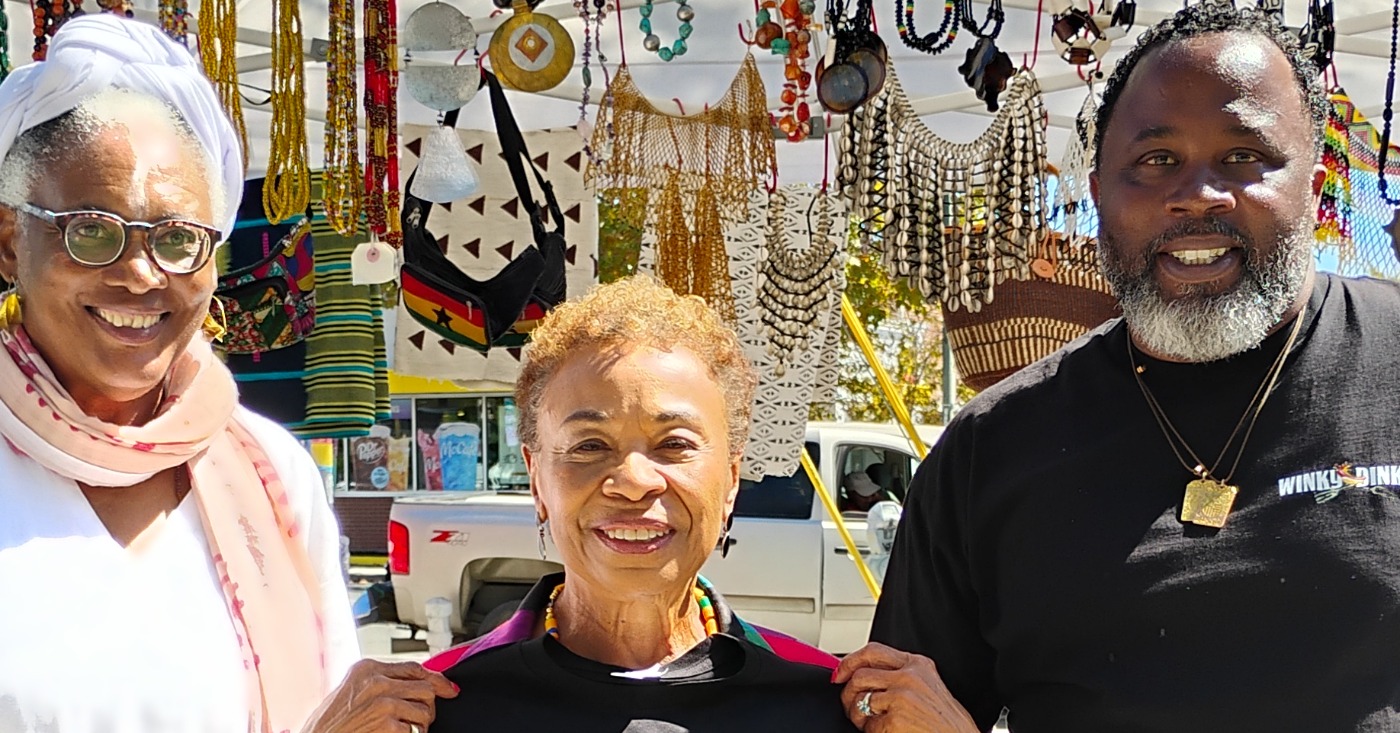
Mayor Barbara Lee stops by to support vendors, Winky Dinky Dogs owner Tyranny Allen
A streamlined Oakland Black-Eyed Pea Festival took place on Sat. Sept. 12 in the lower Temescal neighborhood on the blocked off street that connect Shattuck and Telegraph avenues.
An early start brought together vendor regulars from festival partner, the Freedom Farmers’ Market, and vendors who have supported the festival at its previous location at Marston Campbell Park.
Wanda Ravernell, the festival producer/director was on the verge of cancelling the festival because of funding limitations in May before reaching out to Elaine Smith, president of Farms to grow, Inc., which supervisors the market.
From its start in 2014, the festival has focused on the traditions of African American culture through music, food and art. That emphasis included fresh food vendors, particularly growers of African American legacy crops like black-eyed peas, yams, watermelon, collard greens and okra, which all originate in Africa.
To Fresno farmer Will Scott of Scott Family Farms, the Freedom Farmers’ Market allows him to bring those crops to the inner city – and support the nutrition of African Americans.
Shortly after the festival opened Saturday morning with prayers and salutes to the ancestors by Wakan Wiya Two-Spirit Drum and Awon Ohun Omnira, led M. Zamora and Otobaji Stewart respectively, 86-year-old Scott, the son of a sharecropper, announced that he will put other endeavors aside to dedicate the rest of his life to raise those foods.
Smith shared that Farms to Grow assists Black farmers in helping them overcome one of their main impediments to success – distribution – while creating alliances to help Black people maintain farmland and make it prosperous for younger generations to keep farming and farmland in the family.
As the morning progressed to afternoon, a steady stream of visitors drifted from booth to booth, chatting with vendors and each other.
Scott noted that a market day like this was what he was accustomed to in his youth, where the market was not just about buying things but also a place for valuable social exchange.
The social aspect became even pronounced shortly after midday when Oakland Mayor Barbara Lee stopped by to shop and visit with some of the vendors, including Ellen Bimpeh of Sankofa, and Ravernell who was selling T-shirts designed by Stewart.
Lee is also a fan of Winky Dinky Dogs, an eatery owned by Tyranny Allen whose second brick-and-mortar venture further anchors a hub of businesses at that corner.
As he has in previous years, Andre Thierry of Accordion Soul, closed the festival with a 90-minute set that brought young and the young-at-heart on their feet to dance in a line or as impromptu couples.
And, surprisingly, the man Allen refers to as the mayor of 45th Street, came out on cane and chair to sit by the curb in the sun and listen to music reminiscent of his Louisiana roots. His appearance seemed to echo Scott’s observance about the market: to bring people together.
The Freedom Farmers’ Market is located at 4521 Telegraph Avenue in Oakland and is open on the second and fourth Saturdays of each month until Nov. 14. For more information and to apply to be a vendor, go to https://www.farmstogrow.org/freedomfarmersmarket

Commentary
Neighborhood Empowerment Day in Deep East Oakland Brings Community Together After Recent Tragedy
Hosted by the 40×40 Council, the free, family-friendly resource fair featured health and wellness services, workshops, children’s activities, food, giveaways and local Black-owned businesses. Residents also connected with community organizations working to strengthen East Oakland.
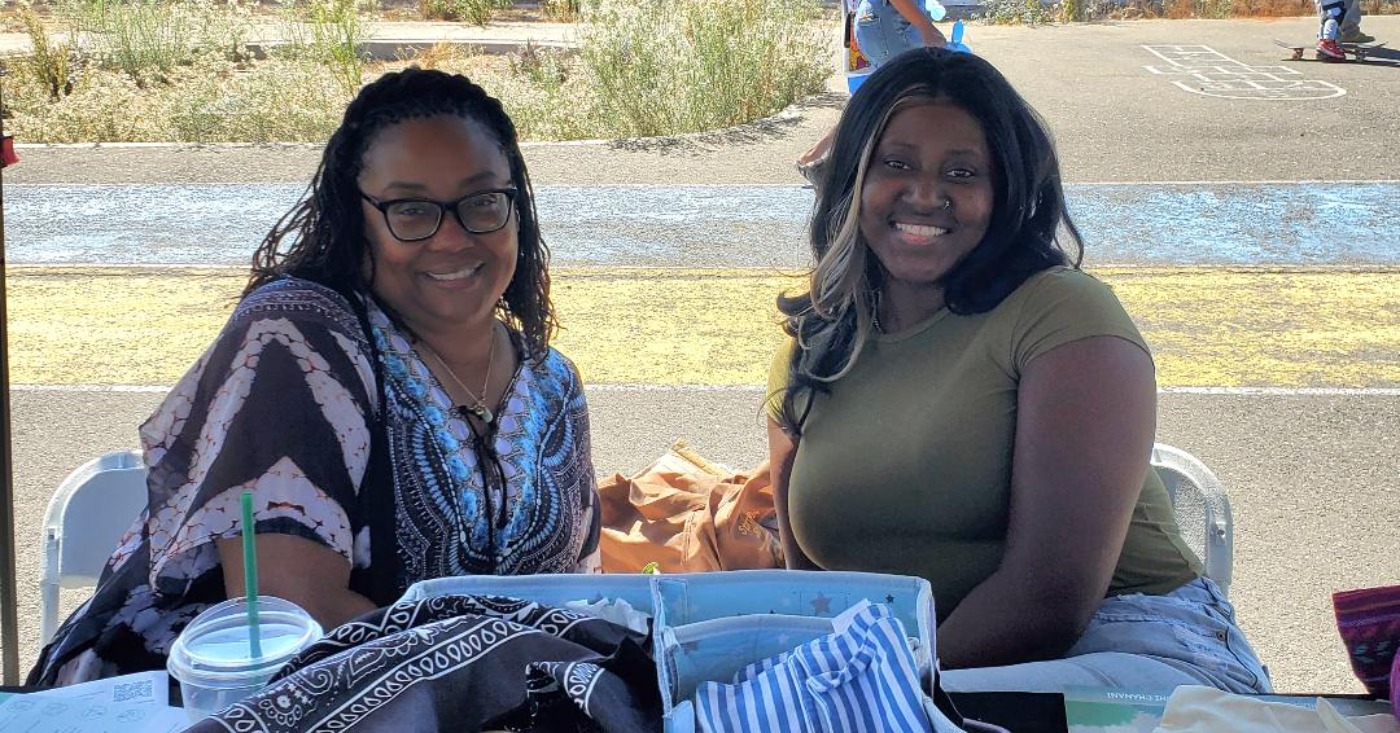
Families, residents and community organizations gathered at the Parker Community Resource Center on Saturday, Sept. 12, for the 40×40 Neighborhood Empowerment Day, transforming the site of a recent tragedy into a space for healing, resources, connection and joy.
Hosted by the 40×40 Council, the free, family-friendly resource fair featured health and wellness services, workshops, children’s activities, food, giveaways and local Black-owned businesses. Residents also connected with community organizations working to strengthen East Oakland.
The gathering came six weeks after a fatal shooting occurred at the Ney Avenue center on July 31. The violence happened shortly before 9 a.m. on the campus of the adult education center and claimed the life of 25-year-old Kimarii McLemore. A second person was injured.
McLemore was attending what was supposed to be her final day in an adult education carpentry class. The shooting deeply affected her family and traumatized students, staff members and residents who had viewed the center as a safe place where community members could pursue education, career training and a better future.
Neighborhood Empowerment Day offered residents an opportunity to return to the center in a spirit of unity and reclaim the space as an important neighborhood resource.
“Reclaiming the space after a tragedy means creating opportunities for people to gather, connect, experience joy and feel a sense of community once again,” said Tim Zenor-Davis, program manager at Roots Community Health. “After a trauma occurs, we see what happened, we acknowledge its impact, and we are continuing to show up.”
Throughout the afternoon, children and families participated in activities while residents received information about health, wellness and other community services. The event also gave local entrepreneurs and service providers an opportunity to connect with the community.
Complimentary meals included grilled burgers and tacos while a DJ played popular music.
Guests received blood pressure and eye-sight checks. A space to exercise on yoga mats was provided while headphones with guided meditation offered a moment to slow down and reflect.
The 40×40 Council includes the Black Cultural Zone, Brotherhood of Elders Network, East Oakland Youth Development Center and Roots Community Health. Together, the organizations have worked to address community violence and the deeper systemic conditions that have affected generations of East Oakland residents.
The council’s work has extended beyond responding to individual tragedies. As part of the broader Rise East initiative, the collaborative has focused on reversing decades of economic disinvestment, systemic poverty, health disparities and the displacement of Black legacy residents.
The 40×40 area stretches from Seminary Avenue to the San Leandro border and from MacArthur Boulevard to the Bay. More than 30,000 Black residents live within the area, which contains Oakland’s largest concentration of Black residents.
Organizers said the area has continued to demonstrate resilience despite experiencing community violence, declining investment and a significant life-expectancy gap compared with wealthier parts of the region.
The council seeks to help reshape East Oakland into a vibrant, multigenerational community where Black residents can remain, return, heal, prosper and build power.
Commentary
Community Action Group ‘Friends of Zakiya’ Ask Sheriff for Time
“Friends and Neighbors of Zakiya,” a community group of more than 60 neighbors, friends and community activists, is standing strong with Jendayi. The group holds weekly vigils every Tuesday from 6 p.m.-7p.m. at Jendayi’s residence at 3614 Randolph Ave. in Oakland.
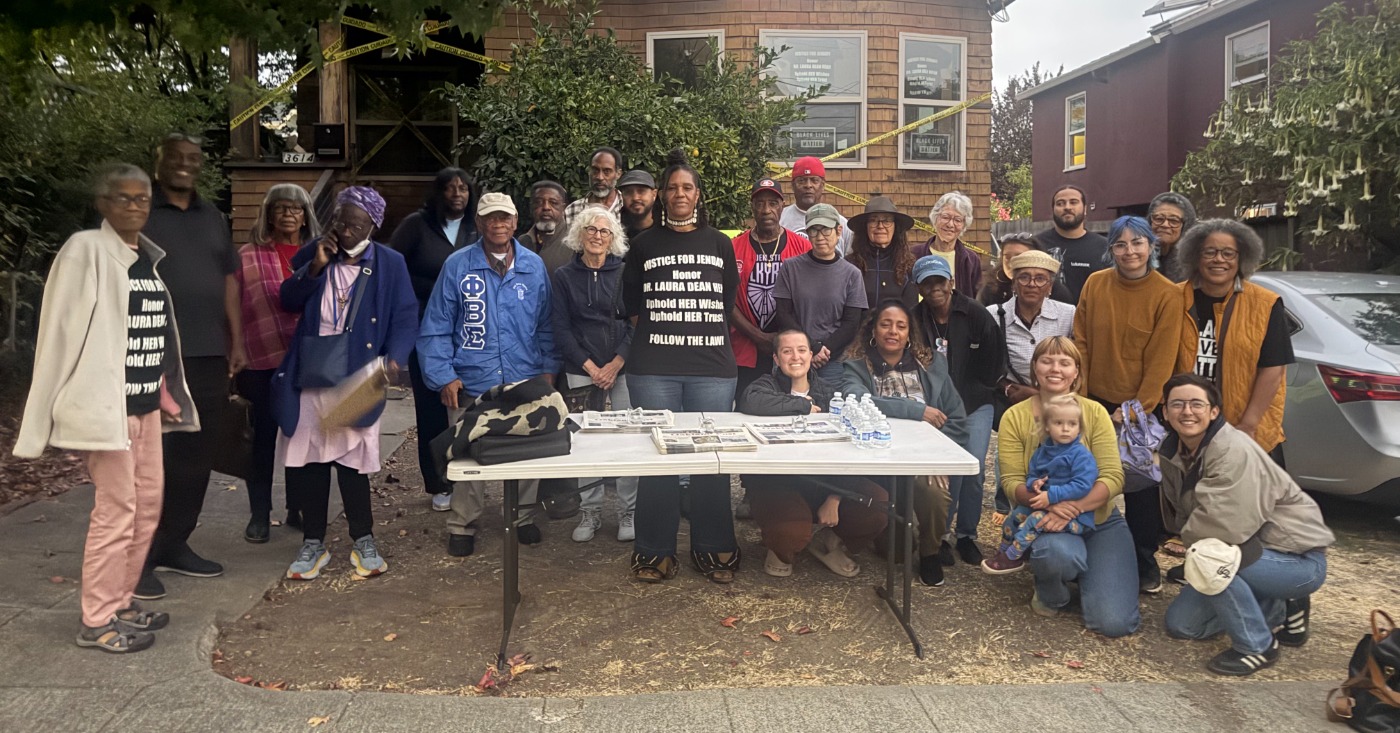
Zakiya Jendayi received good news Monday, Sept. 14, when the appellate court ruled in her favor in the Hamlin v. Jendayi case, agreeing to hear the case on its merits regarding her motion to have Judge Sandra K. Bean’s ruling invalidated based upon Laura Dean Head’s living trust.
The bad news is that, at the time of this writing, the Sheriff’s Department was scheduled to evict Jendayi from her home yesterday.
“Friends and Neighbors of Zakiya,” a community group of more than 60 neighbors, friends and community activists, is standing strong with Jendayi. The group holds weekly vigils every Tuesday from 6 p.m.-7p.m. at Jendayi’s residence at 3614 Randolph Ave. in Oakland.
The group is asking the community to join them and to make calls to Congresswoman Lateefah Simon, Attorney General Rob Bonta, Sheriff Yesenia Sanchez and DA Ursula Jones Dickson to stop what they deem the illegal eviction of Jendayi from her home of 13 years.
“I would hope that the Sheriff listens because, unlike the courts, my friends and neighbors have read the transcripts and seen for themselves the 42 findings that result in 35 false, six misleading, and one that is an error, which unbelievably the appeals court upheld.” says Jendayi. “With this new appeal, the court quite possibly will return my home to me, and so this makes no sense. The Sheriff is threatening to move forward to remove me before my appeal is heard.”
“This makes no sense,” says group member Rev. Raymond Langford. “She’s not a criminal, and she’s never had a criminal record. This situation has been horribly impactful on her physical and mental health. She’s now medically compromised due to all this stress, and all we’re asking for is time to see if the courts are in error. She should be given the opportunity for the appeal to be heard. That’s called justice, nothing more, nothing less.”.
Friends and Neighbors of Zakiya are organizing future protest actions to secure more time for Jendayi. They will be seen in front of the offices of Bonta, Simon and Sanchez, demanding that she have the opportunity for her case to be heard.
The Post is asking that the public join Friends and Neighbors of Zakiya and use the information listed to join in this fight for justice.
Friends and Neighbors of Zakiya asks you to sign the petition by activating the QR code below to enact a stay in Jendayi’s pending eviction from her home and to pursue a full and independent investigation into the ruling that invalidated Dr. Head’s trust.




Oakland Mayor Reads to Children at Bookout Block Party at Marcus Books Store

Tradition Comes to the Streets in 11th Annual Black-Eyed Pea Festival at the Freedom Farmers Market

Attorney General Rob Bonta Continues Opposition to President Trump’s Tariff Regime

Neighborhood Empowerment Day in Deep East Oakland Brings Community Together After Recent Tragedy

Community Action Group ‘Friends of Zakiya’ Ask Sheriff for Time

Oakland Launches Aerbits Program to Identify, Report Abandoned Trash

Mayor Lee Announces $1 Million Kaiser Permanente Grant for Pilot Program to Address Homelessness, Clean Up Public Spaces throughout Oakland

Alameda County DA Ursula Jones Dickson Says Key to Optimal Use of DA’s Office Is Knowledge

Oakland Post: Week of September 16 – 22, 2026

NFL: Week Two Recap | Jalen Hurts did not fold; Caleb Williams exits game with injury

The Complete Negotiation Framework — Every Stage, Every Tactic, Every Win

Mazda CX-90 Luxury: Heated Seats & Premium Comfort! #shorts

Car Dashboard Glare: Avoid This Distraction! #shorts

Mazda CX-90 Safety: All Driver Assistance Features Explained #shorts

Subaru Outback: 19-Inch Wheels & 8.8″ Ground Clearance! #shorts

Department of Homeland Security Demands California Secretary of State Shirley N. Weber Scrub Voter Rolls

“The Power to See Threats Sooner”: Gov. Newsom, Safety Officials Showcase California’s Investments in Hi-Tech Wildfire Prevention

California Sen. Padilla Joins Colleagues to Introduce Bill Imposing Term Limits on Supreme Court Justices

Less Affluent School Districts, Including Sacramento City, Face Threat of State Takeover

Car Wash Workers Cope with Lingering Impacts of ICE Raids

ESSAY: California Can Close Its Colorectal Cancer Gap

As Part of Your Back-to- School Checklist, Vaccinate

Oakland ‘Port Serves as a Powerful Engine for Good Jobs and Economic Development

Gov. Newsom Announces $109.6 Million in Funding for 278 Supportive Homes in Bakersfield, Contra Costa, Sacramento and Fresno

California Hispanic Chambers of Commerce Unveils: ‘Powering the Future’ Theme for 47th Annual Statewide Convention

Congresswoman Simon Demands Investigation into Trump’s Abuse of Emergency Powers for Coal Export Terminal in West Oakland

Four Candidates, Including Incumbent Barbara Lee, Qualify for Oakland Mayor’s Race

Oakland Post: Week of August 12 – 18, 2026

From Blueprint to Breakthrough: Tackling Affordable Housing in Oakland

Oakland Observes Black August with Block Parties, Film Showings, Workshops

The Conversation With Al McFarlane 6/23/26

Media Monday 6/22/26

LIVE! ASK ALMA! — TUES. 6.23.26 7PM EST

Car Buying Secrets: 4 Hidden Checks Before You Sign!

Is This 550 HP Charger Worth YOUR Money? AutoNetwork Review

Celebrating Juneteenth – Frederick Douglass on education and resistance

LIVE! — ASK ALMA! — TUES. 6.19.26 7PM EST

Hyundai Ioniq 5 Parking, Safety, and 360 View #shorts

2025 Ioniq 5 New Wiper & Powerful Performance! #shorts

Electric SUV Range: Is 259 Miles Enough? #shorts

EV Charging: How Fast Can You Charge an Electric Vehicle? #shorts

Biometric Cooling… Messaging Seats…Come on! 2025 Infiniti QX80 Autograph 4WD

Charged Up: Witness the Magic of a Fully Electric Car! #shorts

Range Rover Sport PHEV Included…: See What’s Inside This Luxury SUV! #shorts

Invisible Hood View: Perfect Parking with X-Ray Vision! #shorts
-

 Commentary3 weeks ago
Standoff for Justice: Our Homes Are Worth Fighting For
-

 Activism3 weeks ago
Oakland Post: Week of August 26 – September 1, 2026
-

 Business3 weeks ago
Gubernatorial Candidate Steve Hilton Blasts California New Tire Rules; Newsom Hits Back
-

 Business3 weeks ago
Frontier Airlines’ Return to Oakland Airport Brings Flights, Jobs and Opportunity
-

 Business3 weeks ago
Chef Sharon Lee Blends Culinary Excellence, Education and Empowerment
-

 Education3 weeks ago
Gov. Newsom’s Latest Appointees Include Sacramento Advocate for Formerly Incarcerated Students; State’s New Tech Chief
-

 Business3 weeks ago
Oakland Coliseum Project Opens Door for Small Businesses to Build Bigger
-

 Community3 weeks ago
Big City Mayors Ask for “Yes” Vote on Housing Bond Measure; Conservatives Say “No”
