
City Government
New Poll of Voters Shows Councilmember Rebecca Kaplan Leading in Mayor’s Race
Mayor Libby Schaaf rated unfavorably by 54% of voters, while only 37% were favorable

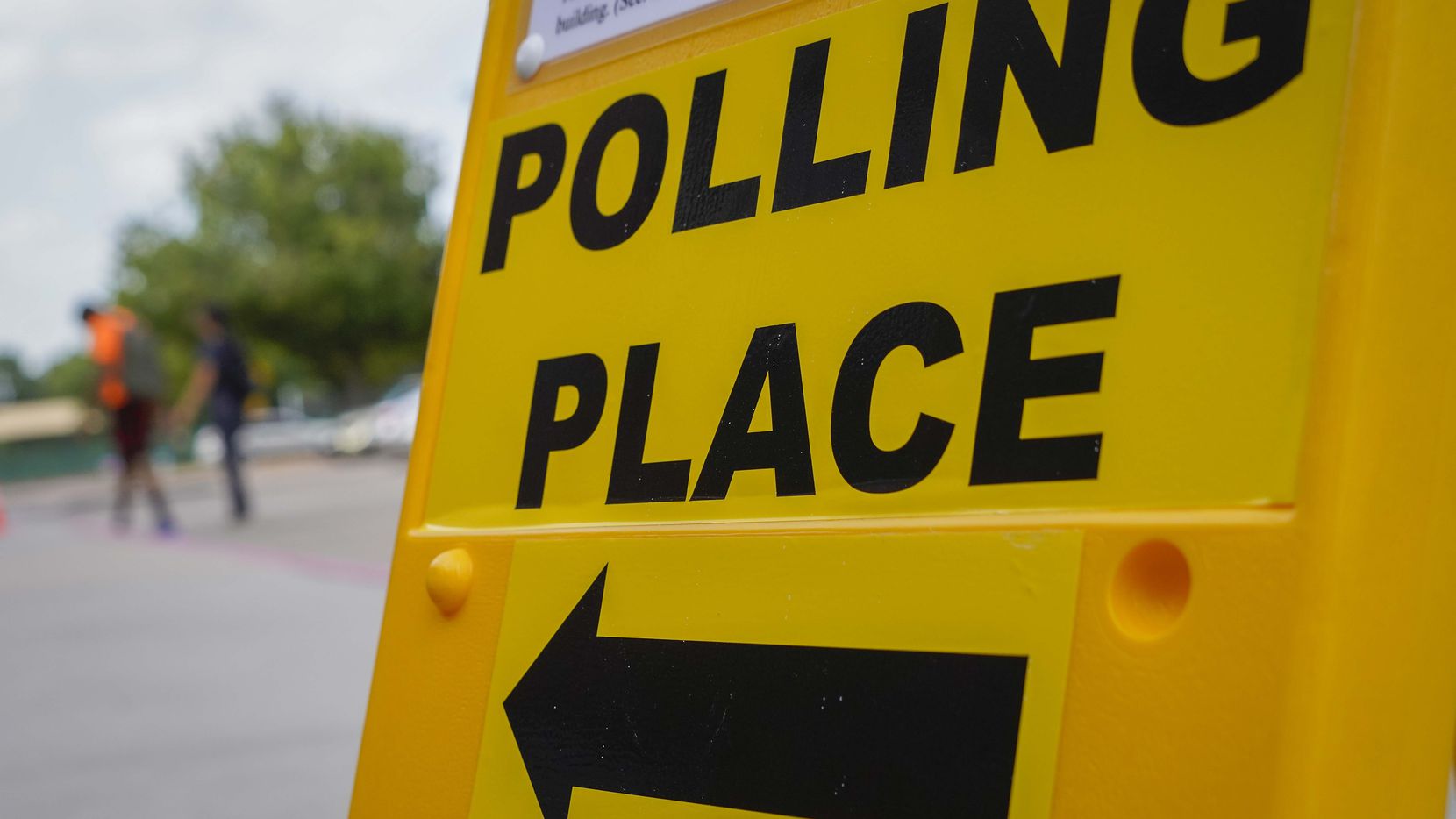
A new professionally conducted poll of local voters indicates that more than a year before the November 2022 election, Oakland residents are deeply unhappy with the direction their city is going. Many voters are already backing City Councilmember Rebecca Kaplan, who significantly leads in a field of 10 potential mayoral candidates, the only one with double-digit first-place votes.
Kaplan received 14% of first place votes and adding in those who gave her their second-choice votes, 20% of the voters want Kaplan as mayor, according to the poll conducted on October 16-18.
Councilmember Loren Taylor came in second in the poll with 9% of first-choice votes and 2% of second-choice votes – for a total of 11% of the vote.
Former City Councilmember Ignacio De La Fuente came in third with 7% of first- and second-place votes, while Councilmember Sheng Thao came in fourth, with a total of 6% of first- and second-place votes.
None of the other candidates reached more than 4% of total first- and second-choice votes, including Councilmember Treva Reid, Port Commissioner Ces Butner, small business owner Derreck Johnson, youth development consultant Greg Hodge, community advocate Ken Houston and Oakland developer Phil Tagami.
“This is a base line poll, and most voters are undecided, (but) they have strong thoughts about homelessness, crime, housing affordability and what to do about crime. They also had strong thoughts about the mayor,” said Gregory McConnell, president and CEO of the Jobs and Housing Coalition, which commissioned the poll and released the results to the media.
The poll was conducted by David Binder Research, with a sample size of 400, with a +/- 4.9% margin of error.
While most voters (62%) are undecided about who they will vote for so far from Election Day, they do have strong feelings about the major issues facing the city and have negative opinions about the leadership of outgoing Mayor Schaaf, who is in her second term and cannot run again.
Of all the issues facing the city and its residents, three stood out by far: Homelessness/panhandling with 49%; Crime/Public Safety with 47% and Affordable Housing/Cost of Rents with 23% voters. Illegal/dumping/Trash in streets came in fourth with 9%.
Nineteen other issues, including jobs, police brutality, gentrification, and government corruption, were chosen as a “major issue” by single digit percentages of voters.
Voters were unenthusiastic about the Schaaf’s job performance. Giving her a favorable rating were 37% of voters, while 54% gave her an unfavorable rating. Further, in a direct question – “Overall, do you approve or disapprove of the job Libby Schaaf is doing as mayor?” – nearly 60% of voters disapproved or strongly disapproved of her performance.
The unfavorable rating for the Oakland City Council is also high.
Asked if they would vote to re-elect Schaaf if she could legally run again, only 25% said they would reelect her, while 58% said they would “replace” her.
Further, in a question about whether voters would be more likely to vote for or against a candidate endorsed by Schaaf, 26% they would be more likely to vote for a candidate endorsed by her and 35% would be “less likely” or “much less likely” to support that candidate.
By comparison, Kaplan’s favorability rating was 41% favorable and 35% unfavorable.
Another question posed a list of priorities that the next mayor might embrace, and voters were asked to indicate whether championing these issues would make the voters more likely or less likely to vote for that candidate.
Reducing homelessness received the highest rating with 93% saying more likely, while 82% said they would more likely support a candidate who makes housing more affordable, and 59% they want a mayor who protects industrial jobs.
The demographics of the people polled were: 11% Latino, 35% white, 34% Black and 11% Asian. Ages were; 24% under 35; 20% ranging from 35-44; 16% ranging from 45-54; 16% in the 55-64 range; and 25% over 65.
The Oakland Post’s coverage of local news in Alameda County is supported by the Ethnic Media Sustainability Initiative, a program created by California Black Media and Ethnic Media Services to support community newspapers across California.







Activism
Oakland Post: Week of April 8 – 14, 2026
The printed Weekly Edition of the Oakland Post: Week of April 8 – 14, 2026


To enlarge your view of this issue, use the slider, magnifying glass icon or full page icon in the lower right corner of the browser window.

Activism
Oakland Post: Week of April 1 – 7, 2026
The printed Weekly Edition of the Oakland Post: Week of April 1 – 7, 2026
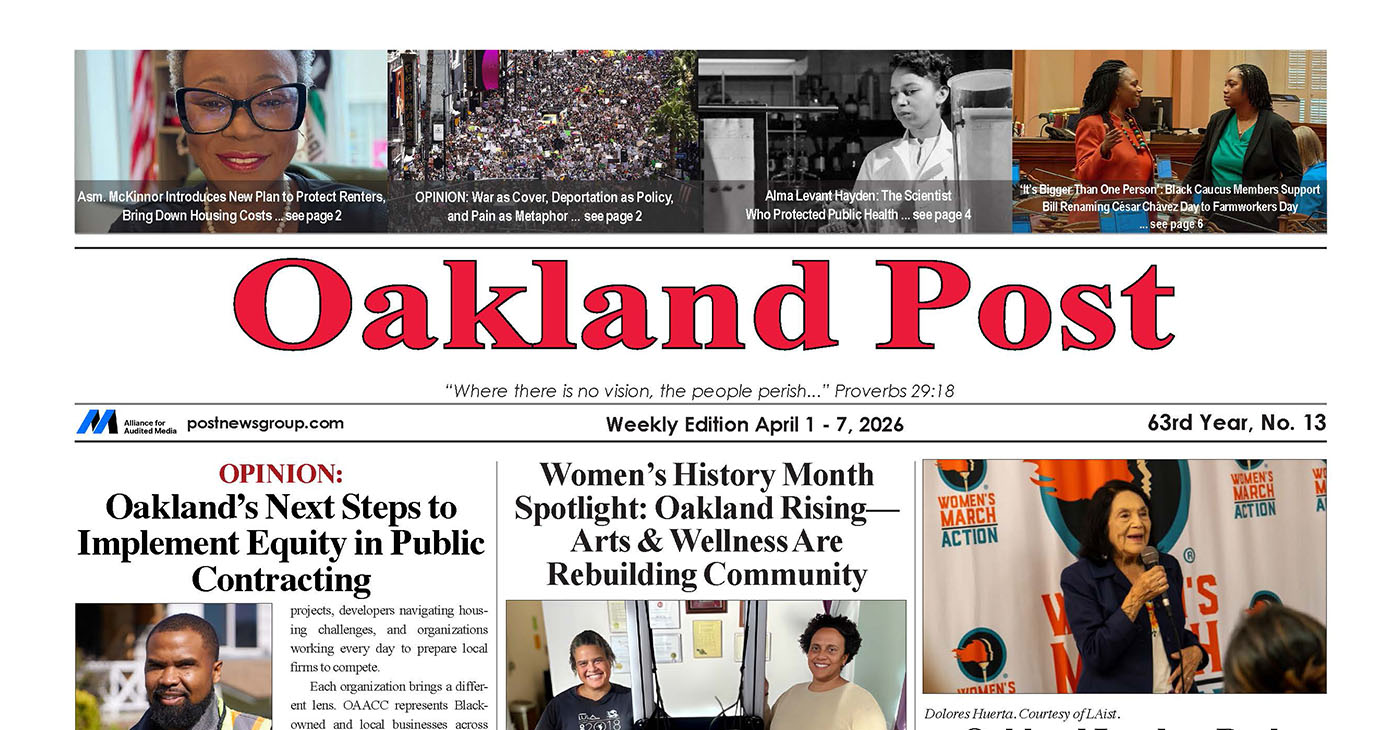
To enlarge your view of this issue, use the slider, magnifying glass icon or full page icon in the lower right corner of the browser window.
Activism
Oakland Post: Week of March 18 – 24, 2026
The printed Weekly Edition of the Oakland Post: Week of March 18 – 24, 2026

To enlarge your view of this issue, use the slider, magnifying glass icon or full page icon in the lower right corner of the browser window.


WORK FROM HOME
Home-based business with potential monthly income of $10K+ per month. A proven training system and website provided to maximize business effectiveness. Perfect job to earn side and primary income. Contact Lynne for more details: Lynne4npusa@gmail.com 800-334-0540


Oakland Post: Week of April 8 – 14, 2026

Oakland Post: Week of April 1 – 7, 2026

Black Artists in America, Installation Three Wraps at the Dixon Gallery and Gardens

Grief, Advocacy, and Education: A Counselor Reflects on Black Maternal Health

Future of Florida’s Black History Museum in Limbo

New Research Shows the Many Benefits of Early Learning

South Hampton K-8 Students Among Top 10 Finalists for Samsung’s ‘Solve for Tomorrow’ Competition

Cuba: No Negotiation with US on the President or Political System

Brooklyn Academy of Music Names Jamaican-Born Tamara McCaw as President

Trinidad & Tobego – U.S. Launches WhatsApp Channel for American Citizens in the Country

Oakland Post: Week of March 18 – 24, 2026

AI Innovation vs. Ethics and Environmental Impact

AI, Web3, and Digital Reparations

What If You Owned Your AI Agent?

Season 7, Episode 3 – January Reporter’s Roundtable 📱

Reflecting on Black History Milestones in Birmingham AL

Oakland Post: Week of February 25 – March 3, 2026

Oakland Post: Week of March 4 – 10, 2026

PRESS ROOM: NBA Hall of Fame Nominee Terry Cummings Joins 100 Black Men of DeKalb County to Launch Victory & Values Initiative

Trump’s MAGA Allies are Creating Executive Order Plan to Steal the 2026 Midterms
Oakland Post: Week of March 18 – 24, 2026

Oakland Post: Week of March 11 -17, 2026

Poll Shows Support for Policies That Help Families Afford Child Care

OP-ED: One Hundred Years of Black Workers Telling the Truth

Financial Wellness and Mental Health: Managing Money Stress in College

Woman’s Search for Family’s Roots Leads to Ancestor John T. Ward – A Successful Entrepreneur and Conductor on the Underground Railroad

COMMENTARY: Women of Color Shape Our Past and Future
Brooklyn Academy of Music Names Jamaican-Born Tamara McCaw as President

PRESS ROOM: Civil Rights TV Launches in Selma as the World’s First 24/7 Civil Rights Television Network
New Research Shows the Many Benefits of Early Learning

Hyundai Ioniq 5 Parking, Safety, and 360 View #shorts

2025 Ioniq 5 New Wiper & Powerful Performance! #shorts

Electric SUV Range: Is 259 Miles Enough? #shorts

EV Charging: How Fast Can You Charge an Electric Vehicle? #shorts

Biometric Cooling… Messaging Seats…Come on! 2025 Infiniti QX80 Autograph 4WD

Charged Up: Witness the Magic of a Fully Electric Car! #shorts

Range Rover Sport PHEV Included…: See What’s Inside This Luxury SUV! #shorts

Invisible Hood View: Perfect Parking with X-Ray Vision! #shorts

AI Is Reshaping Black Healthcare: Promise, Peril, and the Push for Improved Results in California

ESSAY: Technology and Medicine, a Primary Care Point of View

Sanctuary Cities

The RESISTANCE – FREEDOM NOW

STATE OF THE PEOPLE: Freddie

ECONOMIC BOYCOTT DAY!!!!!

I told You So
-
 Activism3 weeks ago
Oakland Post: Week of March 18 – 24, 2026
-
 Activism4 weeks ago
Oakland Post: Week of March 11 -17, 2026
-
 Advice4 weeks ago
Financial Wellness and Mental Health: Managing Money Stress in College
-
 #NNPA BlackPress3 weeks ago
Brooklyn Academy of Music Names Jamaican-Born Tamara McCaw as President
-
 #NNPA BlackPress3 weeks ago
New Research Shows the Many Benefits of Early Learning
-
 #NNPA BlackPress3 weeks ago
Grief, Advocacy, and Education: A Counselor Reflects on Black Maternal Health
-
 #NNPA BlackPress3 weeks ago
Future of Florida’s Black History Museum in Limbo
-
 #NNPA BlackPress3 weeks ago
Black Artists in America, Installation Three Wraps at the Dixon Gallery and Gardens
