
Government
NAREB Takes Fight for Black Homeownership to Congressional Hearing
WASHINGTON INFORMER — The rate of Black homeownership in America – now at 41.1 percent, according to 2019 census numbers – is even lower than it was when the Fair Housing Act was signed into law 51 years ago on April 11, 1968.

By Hazel Trice Edney

The rate of Black homeownership in America – now at 41.1 percent, according to 2019 census numbers – is even lower than it was when the Fair Housing Act was signed into law 51 years ago on April 11, 1968.
This means Black homeownership is 32.1 percentage points lower than that of Whites, which stands at 73.2 percent. It also means Black homeownership is 6.3 percentage points lower than that of Latino-Americans, which stands at 47.4 percent.
These are just a few of the facts presented to a recent Congressional hearing by homeownership advocates. The hearing, held by the House Finance Committee’s Subcommittee on Housing, Community Development and Insurance, was the first modern day hearing of its kind — intended to discover the barriers to homeownership for people of color.
“Federal housing regulators and agencies have aggressively pursued lending practices and policies that make access to homeownership more challenging for Black Americans. It is against this backdrop that I give my testimony,” Jeff Hicks, president/CEO of the National Association of Black Real Estate Brokers (NAREB), testified to lawmakers at the hearing. “Our nation has a very complicated and checkered history with providing equal and equitable access to homeownership to Black Americans. At the end of World War II, when Black Americans sacrificed their lives for the cause of freedom, dignity and human rights, the United States federal government created an economic divide between Blacks and Whites.”
Hicks described how Black veterans and their families were “denied the multigenerational, enriching impact of home ownership and economic security that the G.I. Bill conferred on a majority of White veterans, their children, and their grandchildren.”
He concluded that the “unequal implementation of the G.I. Bill, along with federal government policies and practices at the Federal Housing Administration (FHA), including the redlining of Black neighborhoods, were leveled against Black veterans” while at the same time the government financed the construction of suburbs and provided subsidized mortgage financing for Whites-only. This scenario “set the stage for today’s wealth and homeownership gap statistics,” Hicks said.
The hearing, led by Housing Subcommittee Chair Rep. Lacy Clay (D-Mo.), marked the anniversary of the passage of the Fair Housing Act (FHA), signed into law one week after the April 4 assassination of Dr. Martin Luther King Jr.
President Lyndon B. Johnson described the road to the 1968 passage as a “long and stormy trip” after it failed three times. Together, the testimony of the 72-year-old NAREB — the oldest organization represented — and the string of witnesses at the 21st century congressional hearing, revealed that the storm is not nearly over.
“We have not simply failed to make progress; we are losing ground. And we cannot continue to go backward,” Alanna McCargo, vice president for Housing Finance Policy, Urban Institute, stressed the urgency of the moment.
The Urban Institute was founded by President Johnson in 1968 to focus on “the problems of America’s cities and their people and to inform social and economic policy interventions that would help fight the War on Poverty,” she described.
The witnesses gave facts and anecdotes describing why new legislation and homeownership policies are needed. Among the proposals:
The passage of The American Dream Down Payment Savings Plan, a proposal with bipartisan support, which would allow prospective homebuyers to save money in an authorized account, where the savings could grow and be removed for the specified purpose of a tax-free down payment for purchasing a home.
A fairer mortgage and underwriting process in which borrowers meet a minimum threshold for approval and all interest rates and costs are the same for everyone; regardless of race; including loan level equality, approval rates, pricing and terms for borrowers — without adjustments for neighborhoods, zip codes or census tracts.
Accountability for non-bank financial institutions such as the examination their lending practices to ensure fair, equitable, and non-discriminatory origination, pricing, and terms. This would also include greater accountability and modernization of the Community Reinvestment Act to eliminate loopholes that limit access to mortgage credit to existing and potential Black homeowners.
Overall promotion of homeownership as a High Priority for Public Policymakers.
Equal and equitable access to mainstream mortgage credit as prospective Black homeowners have been trapped in predatory mortgage schemes or by an absolute denial of access to home loans.
Historically unequal access to credit for people of color was repeated as a key problem during the hearing.
“Wide access to credit is critical for building family wealth, closing the racial wealth gap, and for the housing market overall, which in turn, contributes significantly to our overall economy,” Nikitra Bailey, executive vice president of the Center for Responsible Lending, told the Committee. “Today’s hearing is a good step toward acknowledging this history and presents the potential to create opportunities to address it.”
The other four witnesses were Joseph Nery, president, National Association of Hispanic Real Estate Professionals; Carmen Castro, managing housing counselor, Housing Initiative Partnership; Joanne Poole, liaison for the National Association of Realtors and Joel Griffith, research fellow, Financial Regulations, The Heritage Foundation.
Bi-partisan lawmakers on the subcommittee listened intently then fired questions and remarks.
When Rep. Al Green (D-Texas) asked the witnesses to raise their hands if they “believe that invidious discrimination has been a significant reason for the inability for African-Americans to achieve wealth in this country … to this very day,” all seven witnesses extended their hands into the air.
“I’m grateful that you’ve done this because we’ve been trying to build a record to let the world know that we still have discrimination,” Green said. “Our original sin was discrimination. To be more specific racism … institutionalized racism.”
Chairman Clay saw eye to eye with the witnesses.
“It is clear by the evidence in front of us that 51 years later, there is still much work to be done to promote and assure fair housing in America,” he said, adding that Congress must bear the responsibility to end the discrimination largely because of its failure to continue to make and maintain fair housing policies.
“Although many private actors were complicit, research has shown that the government played a significant role,” Clay said.
Rep. Maxine Waters, chair of the House Financial Services Committee, which oversees the Housing Subcommittee, pressed the lawmakers, saying many of the oppressive policies are still used by banks and are “taken for granted.”
Waters described interest rates that are so high that homeowners – paying both interest and principal – have faced foreclosure because they can no longer afford the loan. She also described banks that won’t do loan modifications until two payments are missed making it difficult to catch up on the payments.
“We need to scrub this market and all the rules and practices and come up with a laundry list of what we think needs to be taken out of the way,” Waters said.
The congressional hearing was held on launch day for NAREB’s 2019 Spring Policy Conference May 8. NAREB, founded to fight for civil rights in order to win economic justice for its members and the people they serve, has set a goal of at least two million new Black homeowners within five years. They view working with Congress as their next best hope.
“Together with Congress, we must overcome the discrimination that continues to limit Black homeownership,” Hicks said. “The reason for this “dismal reality,” as stated in NAREB’s most recent SHIBA (State of Housing in Black America) report, is “that Blacks have never enjoyed equal and equitable access to mainstream mortgage credit. Rather, Black families attempting to become homeowners have largely been trapped in a vicious cycle of predatory mortgage schemes or by an absolute denial of access to home loans…We need to vigorously renew the importance of homeownership to all families, regardless of their race or ethnicity.”
This article originally appeared in the Washington Informer.











Activism
Oakland Post: Week of September 30 – October 6, 2026
The printed Weekly Edition of the Oakland Post: Week of September 30 – October 6, 2026


To enlarge your view of this issue, use the slider, magnifying glass icon or full page icon in the lower right corner of the browser window.

Community
Asm. Corey Jackson Announces Launch of 24-Hour Childcare in His District
Assemblymember Corey Jackson has secured $2 million in state funding for a proposed childcare special district in Moreno Valley and Perris. This funding aims to establish a system providing 24-hour, seven-day-a-week childcare, which would be California’s first special district focused solely on childcare. The initiative seeks to address the area’s designation as a “childcare desert” and high costs for working families. The funding will cover startup, planning, and formation costs for the district. Read more about the specifics of this groundbreaking initiative.

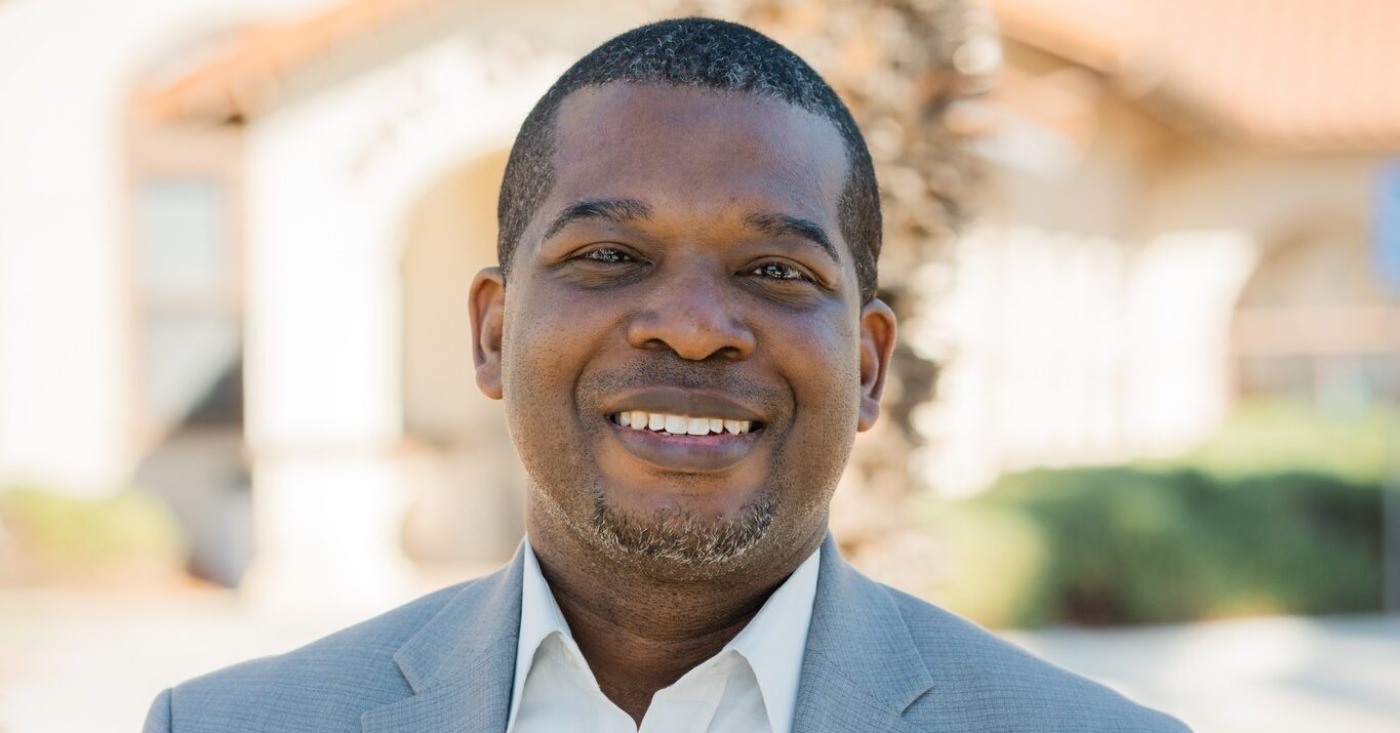
Assemblymember Corey Jackson (D-Moreno Valley) has secured $2 million in state funding to launch a proposed childcare special district serving families in Moreno Valley and Perris, paving the way for a system designed to provide childcare 24 hours a day, seven days a week.
The Moreno Valley-Perris Childcare Special District would be the first special district in California focused specifically on childcare, according to Jackson’s office. The state funding will cover startup, planning, and formation costs and help the district meet requirements set by the Riverside Local Agency Formation Commission, or LAFCO.
The proposed district would coordinate a mixed-delivery childcare system that could include home-based and center-based care. The goal is to provide universal childcare for families who work overnight, early morning, or other nontraditional shifts.
Jackson’s office says Moreno Valley is a certified “childcare desert,” with licensed childcare spaces available for only 15% of children with working parents. Infant care in Moreno Valley averages $2,776 a month, or about 35.7% of median household income. In Perris, licensed infant care can cost more than 60% of an individual worker’s gross median earnings, according to the assemblymember’s office.
“Securing this $2 million in startup funding is a monumental victory for the working-class families of Moreno Valley and Perris who have been trapped in a childcare desert for far too long,” Jackson said.
The proposal follows Jackson’s unsuccessful effort to establish the district through Assembly Bill 2083. The legislation would have created the district as a dependent special district covering Moreno Valley, Perris and their spheres of influence, with Riverside LAFCO responsible for reviewing its formation and boundaries.
The new funding allows the district’s formation to move forward without requiring mandatory contributions from local school districts and other stakeholders, according to Jackson’s office. His spokesperson, Daniel Peeden, said Jackson hopes the district can be operating by 2028.
The proposal has faced questions from some local officials. Moreno Valley City Councilmember Ed Delgado, who is running against Jackson for the 60th Assembly District seat, said he supports affordable childcare but questioned how the proposed district would operate and how much it would ultimately cost.
“Basically, he didn’t have a plan. We didn’t see a plan,” Delgado said, adding that officials had questions about operating costs, insurance and eligibility.
“It’s going to take a lot more than $2 million to create a special district to provide affordable childcare,” Delgado said.
Delgado has suggested working with existing childcare centers to subsidize costs for local families rather than creating a new agency.
Jackson’s office says the program will lower barriers to “workforce participation” and reduce “affordability anxiety” for young families. This landmark District is poised to trigger a virtuous cycle of economic upward mobility and long-term regional prosperity in the 60th Assembly District, his office added.

Economy
Poll: Becerra Widens His Lead Over Hilton; Californians Split on Wealth Tax
A new Public Policy Institute of California poll shows Democrat Xavier Becerra leads Republican Steve Hilton by 22 points in California’s governor’s race, with 60% of likely voters supporting Becerra compared to 38% for Hilton. The September survey also reveals Californians are closely divided on a proposed one-time tax on billionaires, with 52% of likely voters in favor of Proposition 40. Affordability issues are a major factor for voters. Read more to learn about the poll’s additional findings on voter sentiment.

Democrat Xavier Becerra holds a 22-point lead over Republican Steve Hilton in California’s governor’s race, while voters remain closely divided over a proposed one-time tax on billionaires, according to a new Public Policy Institute of California poll.
The September PPIC survey found that 60% of likely voters support Becerra, compared with 38% for Hilton. His lead is actually narrower than it was in July, when he led Hilton 61% to 36%.
Becerra leads among independent voters, with 57% supporting him compared with 38% for Hilton. Party loyalty remains strong, with 93% of Democratic likely voters backing Becerra and 92% of Republicans supporting Hilton.
Hilton leads in the Central Valley, where 52% of likely voters support him compared with 46% for Becerra.
Affordability remains a major factor: 65% of likely voters say candidates’ plans to address cost-of-living issues are “very important” to their vote.
“Affordability continues to be top of mind for Californians when considering their choice for governor,” said Mark Baldassare, PPIC Statewide Survey director and Miller Chair in Public Policy.

The poll also found a narrow split over Proposition 40, a proposed one-time tax of up to 5% on taxpayers with assets exceeding $1 billion. Fifty-two percent of likely voters said they would vote yes, while 46% said they would vote no.
Support for the wealth tax varies sharply by party. Seventy-two percent of Democrats favor Proposition 40, compared with 46% of independents and 21% of Republicans.
Two competing measures also drew majority support. Fifty-one percent back Proposition 41, while 54% support Proposition 42, both of which could affect the wealth-tax proposal.
The findings come as Californians express broader frustration with the state’s political direction. Seventy-one percent of likely voters expect bad economic times in California over the next year.
“Californians are clearly grumpy and aren’t enamored with any particular political party or movement,” Baldassare said.
The survey interviewed 1,745 California adults, including 1,103 likely voters, from Sept. 4-10. The margin of error for likely voters is plus or minus 3.8 percentage points.



Listening as a Lifeline: A Doula’s Witness to Black Maternal Health

New Protections for Ticket Buyers: Gov. Newsom Signs Assemblymember Isaac Bryan’s Bill

‘We Don’t Talk Trash — We Pick Up Trash!’

Zakiya Jendayi Arrested, Locked Out of Home by Sheriff’s Deputies

Oakland Post: Week of September 30 – October 6, 2026

Asm. Corey Jackson Announces Launch of 24-Hour Childcare in His District

IN MEMORIAM: The Rev. Leon “Sonny” Clark, Longtime Orange County Pastor and Community Leader, Dies at 72

Poll: Becerra Widens His Lead Over Hilton; Californians Split on Wealth Tax

From Historic Memories to New Possibilities: Oakland Celebrates Coliseum 60

County Office of Education Says OUSD Finances Are Getting Healthier, Materially Stronger

LIVE FREE Sunday Dinner Brings Faith, Fellowship and Civic Conversation to Oakland

Remembering Chauncey Bailey as Student Journalists Face Threats to Truth-Telling

BLACspace Cooperative Invites Bay Area to Experience Oakland’s Black Cultural Ecosystem Through a BLAC Map Tour + Party

In Wake of Death on Doorstep, Williams Chapel Baptist Church Calls for Better Care, Funding for Unhoused

Oakland Centenarian Nuna McKee Honored!

Standoff for Justice: Our Homes Are Worth Fighting For

Oakland Post: Week of August 26 – September 1, 2026

Frontier Airlines’ Return to Oakland Airport Brings Flights, Jobs and Opportunity

Gubernatorial Candidate Steve Hilton Blasts California New Tire Rules; Newsom Hits Back

Chef Sharon Lee Blends Culinary Excellence, Education and Empowerment

Jackie Wright Champions Bay Area Stories, Filmmakers and Cultural Institutions

Oakland Coliseum Project Opens Door for Small Businesses to Build Bigger

Big City Mayors Ask for “Yes” Vote on Housing Bond Measure; Conservatives Say “No”

Misnamed ‘Parent’ PAC Seeks to Influence Oakland School Board Elections

Gov. Newsom’s Latest Appointees Include Sacramento Advocate for Formerly Incarcerated Students; State’s New Tech Chief

Longtime BWOPA Member Brendalyn Goodall Appointed to California Workforce Development Board

Gov. Newsom Signs Law Shielding Immigration Aid Workers From Doxing Threats

Secretary of State Shirley N. Weber Urges Californians to Vote Early as Voter ID Battle Intensifies

Oakland Post: Week of September 2 – 8, 2026

IN MEMORIAM: Dolly Parton Dead at 80 — How She Built a Legacy of Love and Earned Her Place in Black Culture

The Conversation With Al McFarlane 6/23/26

Media Monday 6/22/26

LIVE! ASK ALMA! — TUES. 6.23.26 7PM EST

Car Buying Secrets: 4 Hidden Checks Before You Sign!

Is This 550 HP Charger Worth YOUR Money? AutoNetwork Review

Celebrating Juneteenth – Frederick Douglass on education and resistance

LIVE! — ASK ALMA! — TUES. 6.19.26 7PM EST

Hyundai Ioniq 5 Parking, Safety, and 360 View #shorts

2025 Ioniq 5 New Wiper & Powerful Performance! #shorts

Electric SUV Range: Is 259 Miles Enough? #shorts

EV Charging: How Fast Can You Charge an Electric Vehicle? #shorts

Biometric Cooling… Messaging Seats…Come on! 2025 Infiniti QX80 Autograph 4WD

Charged Up: Witness the Magic of a Fully Electric Car! #shorts

Range Rover Sport PHEV Included…: See What’s Inside This Luxury SUV! #shorts

Invisible Hood View: Perfect Parking with X-Ray Vision! #shorts
-
 Community3 weeks ago
Misnamed ‘Parent’ PAC Seeks to Influence Oakland School Board Elections
-
 Activism4 weeks ago
Oakland Post: Week of September 2 – 8, 2026
-

 Community3 weeks ago
Richmond Tiny House Village Farm & Garden Set to Open Gates on Sept. 26
-

 Activism3 weeks ago
Oakland Post: Week of September 9 – 15, 2026
-

 Black History3 weeks ago
Latest Massacre in Haiti Reveals Cruelty U.S. Deportations
-

 Black History3 weeks ago
OPINION: Nolan Wells’ Death One of Several Signifying Racial Terror Lives on in U.S. South
-

 Community3 weeks ago
Democratic Clubs Interview Candidates for Oakland School Board
-

 Business2 weeks ago
Mayor Lee Announces $1 Million Kaiser Permanente Grant for Pilot Program to Address Homelessness, Clean Up Public Spaces throughout Oakland

1 Comment