
Activism
Minority Environmental Justice Groups Want to Connect to Millions in EPA Funding for California
The California Environmental Justice Alliance (CEJA) says the programs they have in place to restore decades of environmental devastation and neglect in minority communities can play a key role in achieving the state and federal green goals to enforce regulations and distribute resources more fairly and equitably.

By Lila Brown, California Black Media
Environmental justice advocates in California petitioned Gov. Gavin Newsom this past summer, asking the state to direct a portion of the millions in federal and state dollars California is investing in cleaning and greening communities to Black and other minority organizations.
The California Environmental Justice Alliance (CEJA) says the programs they have in place to restore decades of environmental devastation and neglect in minority communities can play a key role in achieving the state and federal green goals to enforce regulations and distribute resources more fairly and equitably.
“There’s systemic racism that we are trying to dismantle that is beyond the usual American concepts of environmentalism and there’s a lot of interrelated and intersecting issues that we’re trying to fix on the ground, Mari Rose Taruc, CEJA’s energy director, told California Black Media.
Taruc says environmental groups recognizing the harm done to communities of color in the past — and their implication on the local level — is a critical part of the environmental justice movement.
“Environmental justice was born out of the Civil Rights Movement, and that is to the credit of Black organizers that came out of the South to raise consciousness of environmental pollution and destruction of dumping grounds primarily located in BIPOC communities,” she said.
CEJA is a coalition of the 10 biggest environmental justice organizations that coordinate efforts to protect the health and well-being of Black, Indigenous, Latino, and Asian Pacific Islander communities in California. The organization also develops programs and raises money to tackle some of the new challenges communities are facing due to the climate crisis.
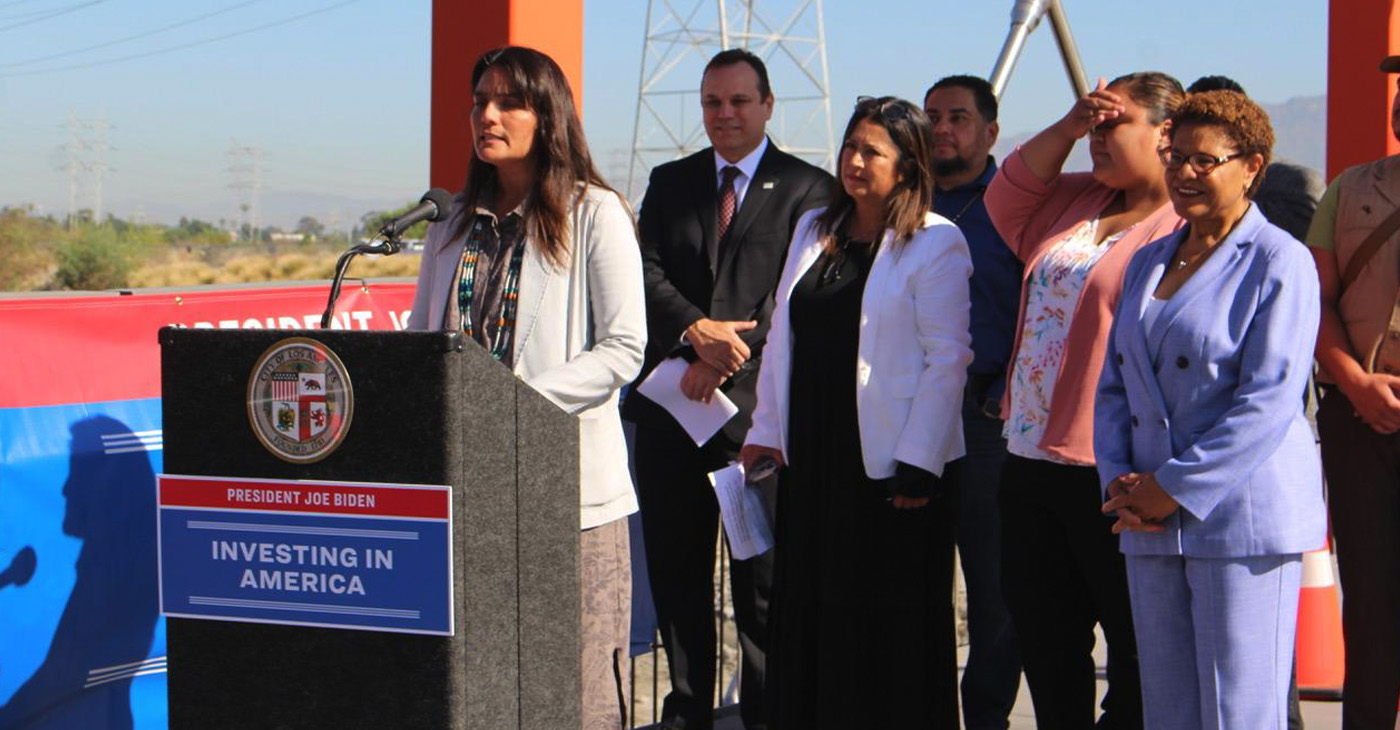
In July, Environmental Protection Agency (EPA) Regional Administrator Martha Guzman presented $2 million to Los Angeles Mayor Karen Bass to revitalize the Taylor Yard along the Los Angeles River, turning a former freight railyard into urban green space.
The project reinforces President Biden’s goal for environmental justice to restore the damage that has been done from previous administrations ranging from decades of neglect to the lack of enforcement as it pertains to environmental laws, regulations, and policies.
Historically, railyards contaminated nearby ground and waters with petroleum and other dangerous contaminants.
Guzman spoke with California Black Media about policies that led to disadvantaged and low-income communities being the areas where toxic and hazardous wastes were disposed, as opposed to more affluent neighborhoods.
“This can be traced to many of our origins, be it slavery or the taking of indigenous lands here in the West,” she said. “We see where all these facilities are, and we know that race is the largest determinant of pollution.”
Guzman says the Biden administration is keeping equity and environmental justice front of mind.
“We have to invest in these communities because we have to be intentional about dealing with those generations of neglect and land use decisions that led to a disparate impact to our communities,” says Guzman who leads the EPA efforts to protect public health and the environment for the Pacific Southwest region spanning Arizona, California, Hawaii, Nevada, the U.S. Pacific Islands territories, and 148 Tribal Nations.
The investment strategy, she says, intends to heal legacy issues and now the EPA’s No. 1 priority is enforcement.
According to Bass’ office, the City of Los Angeles plans to restore this site as part of a greater L.A. River initiative to restore ecosystems and habitats, form walkable trails along 52 miles of the river, and create easy access points for residents to enjoy what the river has to offer.
Throughout California, EPA awarded $9,299,566 in total funding from the Fiscal Year 2023 Brownfields Multipurpose, Assessment, Revolving Loan Fund, and Cleanup (MARC) Grant Funding through 12 separate grants.
According to the EPA, a brownfield is a property, the expansion, redevelopment, or reuse of which may be complicated by the presence or potential presence of a hazardous substance, pollutant or contaminant. It is estimated that there are more than 450,000 brownfields in the U.S.
“This funding provides unprecedented resources and highlights how President Biden’s Investing in America agenda and the Bipartisan Infrastructure Law are delivering environmental and economic benefits for California,” according to a press release from Guzman’s office.
The EPA is investing nearly $100 billion nationwide to deliver clean water and clean air, advance our transition to clean transportation, and enact environmental justice (EJ), especially in communities that have been disadvantaged and underserved, many of which are low-income communities or communities of color.
In addition, President Biden’s Executive Order 14008 — Tackling the Climate Crisis at Home and Abroad announced Justice40, which mandates that at least 40% of the benefits of specific federal programs — including brownfields and those created by BIL and IRA — must flow to disadvantaged communities. In April 2022, EPA committed to meeting and exceeding this mandate.
Taruc says CEJA has not received any of the EPA funds, but the organization continues to find opportunities for different organizations throughout the state to be able to connect to funding programs focused on environmental justice.
One of the ways that CEJA ensures communities are recipients of funds is through programs such as “Solar for All” so that low-income households receive solar panels to improve their homes and lower their fossil fuel consumption, which reduces emissions.
Taruc says one focus of CEJA is ensuring people — particularly disadvantaged minorities who have been disproportionately impacted — live in safe and clean environments.
“Most environmental justice groups believe we should not build housing next to oil drilling sites and there should be a buffer zone of where you build new housing. We’ve been fighting to close these oil wells because housing should be built in places that are not only affordable but safe,” Taruc concluded.










Activism
Oakland Post: Week of April 1 – 7, 2026
The printed Weekly Edition of the Oakland Post: Week of April 1 – 7, 2026

To enlarge your view of this issue, use the slider, magnifying glass icon or full page icon in the lower right corner of the browser window.
Activism
Oakland Post: Week of March 18 – 24, 2026
The printed Weekly Edition of the Oakland Post: Week of March 18 – 24, 2026

To enlarge your view of this issue, use the slider, magnifying glass icon or full page icon in the lower right corner of the browser window.
Activism
Oakland Post: Week of March 11 -17, 2026
The printed Weekly Edition of the Oakland Post: Week of March 11 – 17, 2026

To enlarge your view of this issue, use the slider, magnifying glass icon or full page icon in the lower right corner of the browser window.


WORK FROM HOME
Home-based business with potential monthly income of $10K+ per month. A proven training system and website provided to maximize business effectiveness. Perfect job to earn side and primary income. Contact Lynne for more details: Lynne4npusa@gmail.com 800-334-0540


Oakland Post: Week of April 1 – 7, 2026

Black Artists in America, Installation Three Wraps at the Dixon Gallery and Gardens

Grief, Advocacy, and Education: A Counselor Reflects on Black Maternal Health

Future of Florida’s Black History Museum in Limbo

New Research Shows the Many Benefits of Early Learning

South Hampton K-8 Students Among Top 10 Finalists for Samsung’s ‘Solve for Tomorrow’ Competition

Cuba: No Negotiation with US on the President or Political System

Brooklyn Academy of Music Names Jamaican-Born Tamara McCaw as President

Trinidad & Tobego – U.S. Launches WhatsApp Channel for American Citizens in the Country

Oakland Post: Week of March 18 – 24, 2026

AI Innovation vs. Ethics and Environmental Impact

AI, Web3, and Digital Reparations

What If You Owned Your AI Agent?

Season 7, Episode 3 – January Reporter’s Roundtable 📱

Season 7, Episode 3 – January Reporter’s Roundtable

Reflecting on Black History Milestones in Birmingham AL

CITY OF SAN LEANDRO STATE OF CALIFORNIA PUBLIC WORKS DEPARTMENT ENGINEERING DIVISION NOTICE TO BIDDERS FOR ANNUAL STREET OVERLAY/REHABILITATION 2019-21 – PHASE III

Oakland Post: Week of February 18 – 24, 2026

Oakland Post: Week of February 25 – March 3, 2026

PRESS ROOM: NBA Hall of Fame Nominee Terry Cummings Joins 100 Black Men of DeKalb County to Launch Victory & Values Initiative

Trump’s MAGA Allies are Creating Executive Order Plan to Steal the 2026 Midterms

Oakland Post: Week of March 4 – 10, 2026

Chase Oakland Community Center Hosts Alley-Oop Accelerator Building Community and Opportunity for Bay Area Entrepreneurs

U.S. manufacturing rebounds – how foundry services are adapting to rising demand

Poll Shows Support for Policies That Help Families Afford Child Care

OP-ED: One Hundred Years of Black Workers Telling the Truth

Advancements in solar technology that are changing the way we power the world

Oakland Post: Week of March 11 -17, 2026

Woman’s Search for Family’s Roots Leads to Ancestor John T. Ward – A Successful Entrepreneur and Conductor on the Underground Railroad

COMMENTARY: Women of Color Shape Our Past and Future

Hyundai Ioniq 5 Parking, Safety, and 360 View #shorts

2025 Ioniq 5 New Wiper & Powerful Performance! #shorts

Electric SUV Range: Is 259 Miles Enough? #shorts

EV Charging: How Fast Can You Charge an Electric Vehicle? #shorts

Biometric Cooling… Messaging Seats…Come on! 2025 Infiniti QX80 Autograph 4WD

Charged Up: Witness the Magic of a Fully Electric Car! #shorts

Range Rover Sport PHEV Included…: See What’s Inside This Luxury SUV! #shorts

Invisible Hood View: Perfect Parking with X-Ray Vision! #shorts

AI Is Reshaping Black Healthcare: Promise, Peril, and the Push for Improved Results in California

ESSAY: Technology and Medicine, a Primary Care Point of View

Sanctuary Cities

The RESISTANCE – FREEDOM NOW

STATE OF THE PEOPLE: Freddie

ECONOMIC BOYCOTT DAY!!!!!

I told You So
-
 Activism4 weeks ago
Oakland Post: Week of March 4 – 10, 2026
-
 Activism3 weeks ago
Oakland Post: Week of March 11 -17, 2026
-
 #NNPA BlackPress4 weeks ago
Woman’s Search for Family’s Roots Leads to Ancestor John T. Ward – A Successful Entrepreneur and Conductor on the Underground Railroad
-
 #NNPA BlackPress4 weeks ago
COMMENTARY: Women of Color Shape Our Past and Future
-

 Advice3 weeks ago
Financial Wellness and Mental Health: Managing Money Stress in College
-

 #NNPA BlackPress4 weeks ago
Advocates Raise Alarm Over ICE Operation, MOU and Detention Risks in Baltimore County
-
 Activism2 weeks ago
Oakland Post: Week of March 18 – 24, 2026
-

 #NNPA BlackPress4 weeks ago
Pete Buttigieg to Join Mayor Randall Woodfin for Community Town Hall in Birmingham
