
Bay Area
Mayor Thao Proposes New Budget that Avoids Layoffs and Protects Oakland City Services
Mayor Sheng Thao this week released her “One Oakland” Fiscal Year (FY) 2023-2025 Proposed Budget. Despite a massive two-year deficit of $360 million, the budget proposal closes the gap and makes needed investments in community priorities while streamlining city government.


The proposal closes a $360 million two-year deficit while investing in affordable housing, infrastructure, and early childhood education.

By Post Staff
Mayor Sheng Thao this week released her “One Oakland” Fiscal Year (FY) 2023-2025 Proposed Budget. Despite a massive two-year deficit of $360 million, the budget proposal closes the gap and makes needed investments in community priorities while streamlining city government.
“We inherited the largest deficit in Oakland’s history, but thanks to the ingenuity and hard work of our City staff, we have found a way to not only close that gap, but actually lay the foundation for Oakland to be stronger in the future,” said Thao.
“We had to make some tough choices in this budget, but in the end, we not only avoided catastrophic closures and cuts, we made real investments in our shared future,” said Thao. “This is a roadmap to weathering this crisis, making us more resilient to future challenges.”
Though the city’s General Purpose Fund faces a large deficit, other revenue sources do not. The proposed budget leverages these funding sources to make significant investments, including:
- The largest investment in affordable housing in Oakland’s history:The proposal allocates over $200 million over two years for affordable housing.
- Expansion of early childhood education:Utilizing federal, state, and local funds would allow for expansion of hours and services at Oakland’s Head Start and Early Head Start program.
- Infrastructure improvements:The budget proposes more than $106 million to build, repair and upgrade parks, recreation facilities, libraries, storm drains, and non-road infrastructure, including $87 million for street repaving.
- Safer streets:More than $9.1million will be directed to calm traffic, improve intersection safety and provide safe routes near schools to help reduce traffic violence and save lives. This includes $3.2 million for bike and pedestrian plans.
- Reimagining public safety:The proposals continue city efforts to ‘civilianize’ certain functions of the Oakland Police Department by moving responsibility for Internal Affairs investigations from OPD to the Community Police Review Agency, allowing police investigators to be transferred to critical community safety units.
- Information technology: The proposal adds $10 million to upgrade and harden cybersecurity protections.

Nikki Fortunato Bas.

Carroll Fife
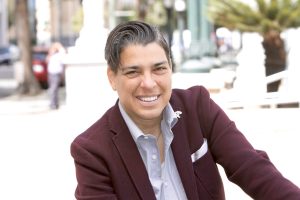
Rebecca Kaplan.

Kevin Jenkins.
Other changes would consolidate and streamline departments to make government more effective and efficient.
Homelessness services would be merged with the Housing & Community Development Department for improved coordination.
Intergenerational family support programs provided by Parks, Recreation and Youth Development Department and Human Services Department will be combined into a new Department of Children, Youth and Families to provide more seamless services for families.
The Department of Economic & Workforce Development will be merged into the Department of Planning, Building, and Economic Development to provide a streamlined approach to housing production and major project development.
Releasing a press statement Monday, Council President Nikki Fortunato Bas and her budget team, including Councilmembers Carroll Fife, Kevin Jenkins, and Rebecca Kaplan, commended Thao for her plan to achieve a balanced budget while avoiding layoffs, maintaining critical services, and making record investments in affordable housing.
“We are very pleased to see the largest investment in affordable housing in Oakland’s history — $200 million over two years,” said Council President Bas. “Affordable housing is Oakland residents’ top priority, and we will finally make progress creating housing that’s accessible to very low-income and working families.”
“Oaklanders want results, and the proposed reorganization is a smart strategy to cut the bureaucracy and make government deliver,” said Fife. “I’ve called for the integration of Oakland’s housing and homelessness programs, together with my colleagues. (These changes) will help us focus on actually housing our unsheltered neighbors.”
“The mayor’s budget builds on the foundation the Council put in place to create a holistic community safety system,” said Councilmember and Public Safety Chair Rebecca Kaplan.
“This plan advances the work that I initiated with our community by expanding alternative crisis response through the Fire Department’s MACRO program,” Kaplan said. “It also continues critical violence prevention programs and civilianizes Internal Affairs investigations so those officers get out onto our streets.”
“Unlike past budget deficits, there are no federal bailouts this time,” said Councilmember and Finance Chair Kevin Jenkins. “I appreciate that the mayor used every possible tool to close the deficit and maintain current City of Oakland employees — from the hiring slowdown announced in March to freezing vacancies and attrition.”
Oakland city workers represented by SEIU Local 1021, IFPTE Local 21, IAFF Local 55, and IBEW Local 1245 have released a joint statement in support of the mayor’s proposal.
“We applaud the mayor for balancing a historic deficit while protecting essential city services, preventing layoffs, and making the largest investment in affordable housing in Oakland’s history, the unions’ statement said.
“While we understand brownouts in fire services are a reality, we hope that as the budget improves, we focus on restoring services for residents,” said firefighter and paramedic Zac Unger, IAFF Local 55 President.
“The decision to balance the budget by freezing some vacant positions instead of laying off city workers is a critical one to protect services for residents,” said lead electrician Michael Patterson, IBEW Local 1245 chief steward.
“Many city workers are currently doing the jobs of two or three people. The mayor’s budget proposal is a major step towards addressing the understaffing crisis so that we can deliver better services to residents,” said recreation center director Angelica Lopez, chapter treasurer of SEIU Local 1021. “As we move forward with the budget process, ensuring that there are no service cuts for residents and no impact on filled positions must be major priorities for all of us.”
The City Council held a special meeting May 3 where Mayor Thao presented her budget proposal. Councilmembers will host Community Budget Forums between May 17 and June 5. On June 14 at 4:00 p.m., City Council will hold a special meeting to hear the Council President’s Budget Amendments and any additional amendments from Councilmembers.
The City Council must approve a balanced budget by June 30.













Activism
Oakland Post: Week of September 30 – October 6, 2026
The printed Weekly Edition of the Oakland Post: Week of September 30 – October 6, 2026

To enlarge your view of this issue, use the slider, magnifying glass icon or full page icon in the lower right corner of the browser window.
Activism
Oakland Post: Week of September 23 – 29, 2026
The printed Weekly Edition of the Oakland Post: Week of September 23 – 29, 2026

To enlarge your view of this issue, use the slider, magnifying glass icon or full page icon in the lower right corner of the browser window.
Activism
Oakland Post: Week of September 16 – 22, 2026
The printed Weekly Edition of the Oakland Post: Week of September 16 – 22, 2026

To enlarge your view of this issue, use the slider, magnifying glass icon or full page icon in the lower right corner of the browser window.



Listening as a Lifeline: A Doula’s Witness to Black Maternal Health

New Protections for Ticket Buyers: Gov. Newsom Signs Assemblymember Isaac Bryan’s Bill

‘We Don’t Talk Trash — We Pick Up Trash!’

Zakiya Jendayi Arrested, Locked Out of Home by Sheriff’s Deputies

Oakland Post: Week of September 30 – October 6, 2026

Asm. Corey Jackson Announces Launch of 24-Hour Childcare in His District

IN MEMORIAM: The Rev. Leon “Sonny” Clark, Longtime Orange County Pastor and Community Leader, Dies at 72

Poll: Becerra Widens His Lead Over Hilton; Californians Split on Wealth Tax

From Historic Memories to New Possibilities: Oakland Celebrates Coliseum 60

County Office of Education Says OUSD Finances Are Getting Healthier, Materially Stronger

LIVE FREE Sunday Dinner Brings Faith, Fellowship and Civic Conversation to Oakland

Remembering Chauncey Bailey as Student Journalists Face Threats to Truth-Telling

BLACspace Cooperative Invites Bay Area to Experience Oakland’s Black Cultural Ecosystem Through a BLAC Map Tour + Party

In Wake of Death on Doorstep, Williams Chapel Baptist Church Calls for Better Care, Funding for Unhoused

Oakland Centenarian Nuna McKee Honored!

Standoff for Justice: Our Homes Are Worth Fighting For

Oakland Post: Week of August 26 – September 1, 2026

Frontier Airlines’ Return to Oakland Airport Brings Flights, Jobs and Opportunity

Gubernatorial Candidate Steve Hilton Blasts California New Tire Rules; Newsom Hits Back

Chef Sharon Lee Blends Culinary Excellence, Education and Empowerment

Jackie Wright Champions Bay Area Stories, Filmmakers and Cultural Institutions

Misnamed ‘Parent’ PAC Seeks to Influence Oakland School Board Elections

Oakland Coliseum Project Opens Door for Small Businesses to Build Bigger

Big City Mayors Ask for “Yes” Vote on Housing Bond Measure; Conservatives Say “No”

Gov. Newsom’s Latest Appointees Include Sacramento Advocate for Formerly Incarcerated Students; State’s New Tech Chief

Longtime BWOPA Member Brendalyn Goodall Appointed to California Workforce Development Board

Gov. Newsom Signs Law Shielding Immigration Aid Workers From Doxing Threats

Secretary of State Shirley N. Weber Urges Californians to Vote Early as Voter ID Battle Intensifies

Oakland Post: Week of September 2 – 8, 2026

IN MEMORIAM: Dolly Parton Dead at 80 — How She Built a Legacy of Love and Earned Her Place in Black Culture

The Conversation With Al McFarlane 6/23/26

Media Monday 6/22/26

LIVE! ASK ALMA! — TUES. 6.23.26 7PM EST

Car Buying Secrets: 4 Hidden Checks Before You Sign!

Is This 550 HP Charger Worth YOUR Money? AutoNetwork Review

Celebrating Juneteenth – Frederick Douglass on education and resistance

LIVE! — ASK ALMA! — TUES. 6.19.26 7PM EST

Hyundai Ioniq 5 Parking, Safety, and 360 View #shorts

2025 Ioniq 5 New Wiper & Powerful Performance! #shorts

Electric SUV Range: Is 259 Miles Enough? #shorts

EV Charging: How Fast Can You Charge an Electric Vehicle? #shorts

Biometric Cooling… Messaging Seats…Come on! 2025 Infiniti QX80 Autograph 4WD

Charged Up: Witness the Magic of a Fully Electric Car! #shorts

Range Rover Sport PHEV Included…: See What’s Inside This Luxury SUV! #shorts

Invisible Hood View: Perfect Parking with X-Ray Vision! #shorts
-
 Community3 weeks ago
Misnamed ‘Parent’ PAC Seeks to Influence Oakland School Board Elections
-
 Activism4 weeks ago
Oakland Post: Week of September 2 – 8, 2026
-

 Community3 weeks ago
Richmond Tiny House Village Farm & Garden Set to Open Gates on Sept. 26
-

 Activism3 weeks ago
Oakland Post: Week of September 9 – 15, 2026
-

 Black History3 weeks ago
Latest Massacre in Haiti Reveals Cruelty U.S. Deportations
-

 Black History3 weeks ago
OPINION: Nolan Wells’ Death One of Several Signifying Racial Terror Lives on in U.S. South
-

 Community3 weeks ago
Democratic Clubs Interview Candidates for Oakland School Board
-

 Business2 weeks ago
Mayor Lee Announces $1 Million Kaiser Permanente Grant for Pilot Program to Address Homelessness, Clean Up Public Spaces throughout Oakland
