
Bay Area
Local Leaders, Activists Angered as State Enforces Permanent School Closings
“There needs to be a concerted effort to do more than complaint about this,” he said. “There is no contention that the district is incompetent to govern its own affairs. The trusteeship should be ended.”



Dan Siegel
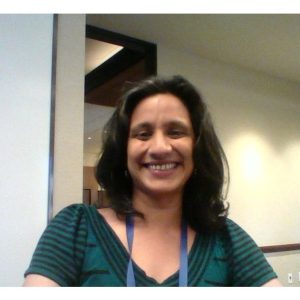
Nirali Jani
A number of Oakland community leaders and activists are calling for removing the Oakland Unified School District’s state-imposed trustee and the semi-private Fiscal Crisis Management and Assistance Team (FCMAT), which are enforcing a regime of austerity budgets and the closure of flatland, neighborhood public schools.
The state trustee, Chris Learned, recently came to a public school board meeting to say he would “stay” or rescind a school board decision if the board went ahead with a vote to halt the closing of schools in predominately Black neighborhoods. In the face of the threat, the board majority withdrew the disputed language.
“As a homeowner, I pay three OUSD parcel taxes: Measure N, Measure G1 and Measure G. Why am I paying parcel taxes to Oakland schools so FCMAT can turn around and tell the district to close them,” said Brian Crowell, an activist and member of the Oakland Education Association, speaking in an interview to the Oakland Post.
“Where were FCMAT and the trustee when (former Superintendent) Antwan Wilson was blowing through the budget a few years ago? They were silent and complicit.”
Crowell continued: “Now all of a sudden, FCMAT is raising its profile after the board threatened to stop closing schools. Now, they want to exercise oversight. They aren’t protecting students. They need to be audited and dismantled.”
The state overseers, who have never been audited or held to account, have been overseeing Oakland since 2003, requiring the district to lay off countless employees and closing as many as 20 schools, though unable to point to any evidence that school closings save money.
In the 2003 takeover, the state imposed a receiver, who usurped the power of the superintendent and the school board and unilaterally spent a $100 million state loan, which the district did not ask for and did not need. At the time, the district had about a $37 million deficit but also had sufficient money in a restricted fund, which it could lend itself to cover the debt.
The state did not allow OUSD to lend itself this money, though the practice was common in other districts, thereby ensuring state domination, which has continued to this day.
In 2009, receivership ended and the authority of the board was reinstated largely due to the work of former Mayor Ron Dellums and then Assemblyman Sandré Swanson. However, the state trustee and the authority to overrule school board decisions has remained in place.
Carroll Fife, a member of the Oakland City Council and a public-school parent, told the Oakland Post that FCMAT and the trustee are part of the structures that perpetuate educational harm to Oakland students.
“They are part of the structure that keeps repeating the same outcomes for our students,” she said.
“They see public education as a cash cow, something that’s commodified. They see it as a market to be exploited,” Fife said.
Fife said the district should create a Department of Race and Equity, similar to what Desley Brooks was able to enact in the city while she was on the City Council. With such a department, OUSD would examine the race and equity implications of its decisions, rather than enacting “the extreme opposite” like the school closings advocated by FCMAT and the trustee.
Civil rights attorney Dan Siegel was formerly OUSD’s legal counsel and later a school board member. He was on the board in 2003 when the state took over the district.
“The effort has not been made by the local legislative delegation to get the state to back off,” Siegel told the Oakland Post. “There is a behind-the-scenes power structure that has the ability to come in and upset local decisions. It has the ability to overrule decisions they disagree with.”
“It’s discriminatory that state government and the people in power treat Oakland as second–class (citizens),” he said. “Like in other districts, why can’t the board be trusted to make those decisions?”
“There needs to be a concerted effort to do more than complain about this,” he said. “There is no contention that the district is incompetent to govern its own affairs. The trusteeship should be ended.”
Nirali Jani, an education professor at Holy Names University and former OUSD teacher, has examined the role of FCMAT and its role as an enforcer of economic austerity in districts across the state.
“FCMAT does not have public oversight. It is a semi-private, extra–governmental organization that receives state funding” she said, arguing that FCMAT has done nothing positive although the district has spent millions of dollars to support the FCMAT’s staff.
With nearly two decades of FCMAT’s operations in Oakland, the district is still being asked to close schools and cut its budget, even though OUSD is receiving over $200 million in federal stimulus funds, she said.













Activism
Oakland Post: Week of September 23 – 29, 2026
The printed Weekly Edition of the Oakland Post: Week of September 23 – 29, 2026


To enlarge your view of this issue, use the slider, magnifying glass icon or full page icon in the lower right corner of the browser window.

Activism
Oakland Post: Week of September 16 – 22, 2026
The printed Weekly Edition of the Oakland Post: Week of September 16 – 22, 2026

To enlarge your view of this issue, use the slider, magnifying glass icon or full page icon in the lower right corner of the browser window.
Activism
Oakland Post: Week of September 9 – 15, 2026
The printed Weekly Edition of the Oakland Post: Week of September 9 – 15, 2026

To enlarge your view of this issue, use the slider, magnifying glass icon or full page icon in the lower right corner of the browser window.



Asm. Corey Jackson Announces Launch of 24-Hour Childcare in His District

IN MEMORIAM: The Rev. Leon “Sonny” Clark, Longtime Orange County Pastor and Community Leader, Dies at 72

Poll: Becerra Widens His Lead Over Hilton; Californians Split on Wealth Tax

From Historic Memories to New Possibilities: Oakland Celebrates Coliseum 60

County Office of Education Says OUSD Finances Are Getting Healthier, Materially Stronger

LIVE FREE Sunday Dinner Brings Faith, Fellowship and Civic Conversation to Oakland

Remembering Chauncey Bailey as Student Journalists Face Threats to Truth-Telling

BLACspace Cooperative Invites Bay Area to Experience Oakland’s Black Cultural Ecosystem Through a BLAC Map Tour + Party

In Wake of Death on Doorstep, Williams Chapel Baptist Church Calls for Better Care, Funding for Unhoused

Oakland Centenarian Nuna McKee Honored!

Caribbean Nations Produce Action Plan Calling for UK Reparations Over Slavery

Oakland Post: Week of September 23 – 29, 2026

Doulas Are Helping Black California Moms Navigate Pregnancy–Even as High Mortality Rates Persist

Newsom Signs Addictive Social Media Law to Protect Kids

On Your November Ballot: Prop 38 Would Allocate $8.4 Billion to Immunology and Immunotherapy Funding

Less Affluent School Districts, Including Sacramento City, Face Threat of State Takeover

ESSAY: California Can Close Its Colorectal Cancer Gap

California Hispanic Chambers of Commerce Unveils: ‘Powering the Future’ Theme for 47th Annual Statewide Convention

Four Candidates, Including Incumbent Barbara Lee, Qualify for Oakland Mayor’s Race

Oakland Post: Week of August 12 – 18, 2026

From Blueprint to Breakthrough: Tackling Affordable Housing in Oakland

Oakland Observes Black August with Block Parties, Film Showings, Workshops

COMMENTARY: Why Local School Tax Measure G1 Will Not Be on the November Ballot

Standoff for Justice: Our Homes Are Worth Fighting For

Returning to Its Roots, the Oakland Black-Eyed Pea Festival Partners with the Freedom Farmers Market Sept. 12

Oakland Post: Week of August 26 – September 1, 2026

NPRC Scores First Advocacy Victory: David Shaw Finally Gets His Wish to ‘Go Home’

Frontier Airlines’ Return to Oakland Airport Brings Flights, Jobs and Opportunity

Gubernatorial Candidate Steve Hilton Blasts California New Tire Rules; Newsom Hits Back

Chef Sharon Lee Blends Culinary Excellence, Education and Empowerment

The Conversation With Al McFarlane 6/23/26

Media Monday 6/22/26

LIVE! ASK ALMA! — TUES. 6.23.26 7PM EST

Car Buying Secrets: 4 Hidden Checks Before You Sign!

Is This 550 HP Charger Worth YOUR Money? AutoNetwork Review

Celebrating Juneteenth – Frederick Douglass on education and resistance

LIVE! — ASK ALMA! — TUES. 6.19.26 7PM EST

Hyundai Ioniq 5 Parking, Safety, and 360 View #shorts

2025 Ioniq 5 New Wiper & Powerful Performance! #shorts

Electric SUV Range: Is 259 Miles Enough? #shorts

EV Charging: How Fast Can You Charge an Electric Vehicle? #shorts

Biometric Cooling… Messaging Seats…Come on! 2025 Infiniti QX80 Autograph 4WD

Charged Up: Witness the Magic of a Fully Electric Car! #shorts

Range Rover Sport PHEV Included…: See What’s Inside This Luxury SUV! #shorts

Invisible Hood View: Perfect Parking with X-Ray Vision! #shorts
-
 Business4 weeks ago
Frontier Airlines’ Return to Oakland Airport Brings Flights, Jobs and Opportunity
-
 Business4 weeks ago
Gubernatorial Candidate Steve Hilton Blasts California New Tire Rules; Newsom Hits Back
-
 Business4 weeks ago
Chef Sharon Lee Blends Culinary Excellence, Education and Empowerment
-

 Black History4 weeks ago
Jackie Wright Champions Bay Area Stories, Filmmakers and Cultural Institutions
-

 Community4 weeks ago
Big City Mayors Ask for “Yes” Vote on Housing Bond Measure; Conservatives Say “No”
-

 Education4 weeks ago
Gov. Newsom’s Latest Appointees Include Sacramento Advocate for Formerly Incarcerated Students; State’s New Tech Chief
-

 Business4 weeks ago
Oakland Coliseum Project Opens Door for Small Businesses to Build Bigger
-

 Community2 weeks ago
Misnamed ‘Parent’ PAC Seeks to Influence Oakland School Board Elections
