
California Black Media
L.A. Pilot Program Addressing Asian American Hate Could Be California Model
Californians who are Asian American or Pacific Islanders (AAPI) were the targets of an escalated number of hate crimes and hate incidents during the COVID-19 pandemic. Many AAPI people, particularly the elderly, reported being too scared to leave their homes. Others experienced firsthand hateful incidents stemming from deep-rooted prejudices and stereotypes — such as verbal or physical assaults in public.


By McKenzie Jackson, California Black Media
Californians who are Asian American or Pacific Islanders (AAPI) were the targets of an escalated number of hate crimes and hate incidents during the COVID-19 pandemic.
Many AAPI people, particularly the elderly, reported being too scared to leave their homes. Others experienced firsthand hateful incidents stemming from deep-rooted prejudices and stereotypes — such as verbal or physical assaults in public. Yet, too many of them were hesitant to voice their emotions, according to Yu Wang, an associate marriage and family therapist at the Asian Pacific Counseling and Treatment Center in Los Angeles.
“A space for healing is critically needed,” Wang said, also noting that some Asian cultures don’t put a heavy emphasis on sharing feelings and vulnerabilities. “It makes it difficult to talk about experiences related to racism. Also, many of us lack to the language to express emotions, which exacerbates feelings of isolation and fear.”
The Asian/Pacific Islanders (AAPI) Equity Alliance in collaboration with other Asian American community groups recently launched the Healing Our People through Engagement (HOPE) pilot program in Los Angeles County geared at healing racial trauma experienced by Asian American community members by providing healing spaces and reducing isolation. Based on the successes of the initiative, supporters and organizers believe the “culturally centered” program could become a model for other cities around the state.

Ethnic Media Services hosted an hourlong Zoom press conference on the last day of May, which was AAPI Heritage Month, to allow HOPE program facilitators and allies the opportunity to provide details of the initiative to the media.
HOPE is a healing space for five distinct Asian American communities — Cambodian, Chinese, Filipino, Japanese, and Korean — created to make sense of their experiences with racism and recent surges in hate crimes. The psychology of the program is radical healing, a framework that has aided Black people in dealing with years of prejudice-caused trauma. HOPE is funded by a grant from the California Department of Social Services.
More than 11,000 stories of hate have been reported to the California-based online resource, Stop AAPI Hate, since 2020.
AAPI Managing Director of Programs Michelle Sewrathan Wong called HOPE vital and said Asian Americans endured episodes of brutality on a scale not seen in generations.
“They were scapegoated by politicians for transmission of COVID-19, targeted for violent physical attacks, made to feel unsafe and unwelcome in their own communities and bullied and ridiculed by neighbors and strangers,” she stated.
HOPE opened healing spaces in Los Angeles County that offer six two-hour sessions conducted in groups by facilitators, who are staff from partner community organizations.
DePaul University Associate Professor of Psychology Dr. Anne Saw said the radical healing framework promotes healing over coping.
“Healing may be lifelong because racism is ongoing, yet a program like ours reminds people of the cultural, community, family, and individual strengths they have to resist racism,” Saw said. We believe that healing in a group can be more powerful than an individual engaging in healing on their own because of the support they receive.”
This resource is supported in whole or in part by funding provided by the State of California, administered by the California State Library in partnership with the California Department of Social Services and the California Commission on Asian and Pacific Islander American Affairs as part of the Stop the Hate program. To report a hate incident or hate crime and get support, go to CA vs Hate.









Activism
Oakland Post: Week of March 18 – 24, 2026
The printed Weekly Edition of the Oakland Post: Week of March 18 – 24, 2026
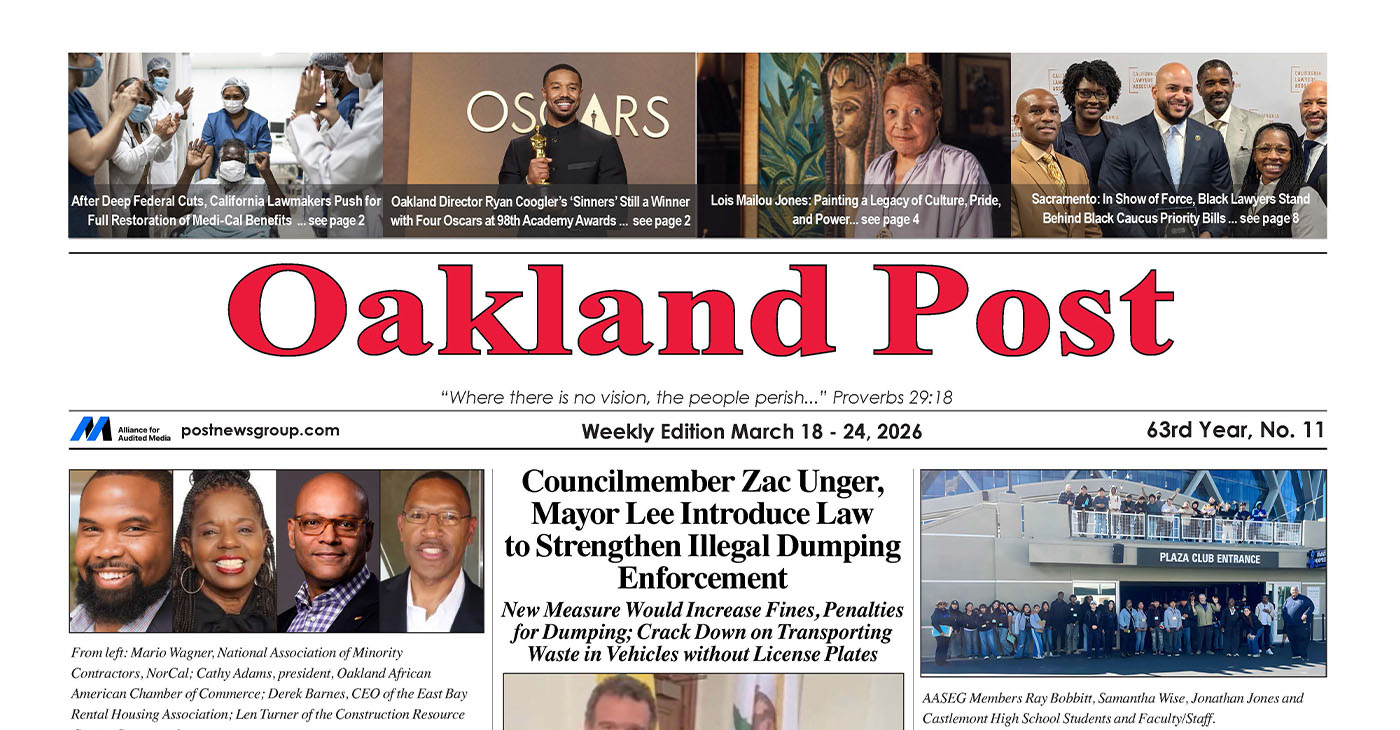
To enlarge your view of this issue, use the slider, magnifying glass icon or full page icon in the lower right corner of the browser window.
Activism
Oakland Post: Week of March 11 -17, 2026
The printed Weekly Edition of the Oakland Post: Week of March 11 – 17, 2026
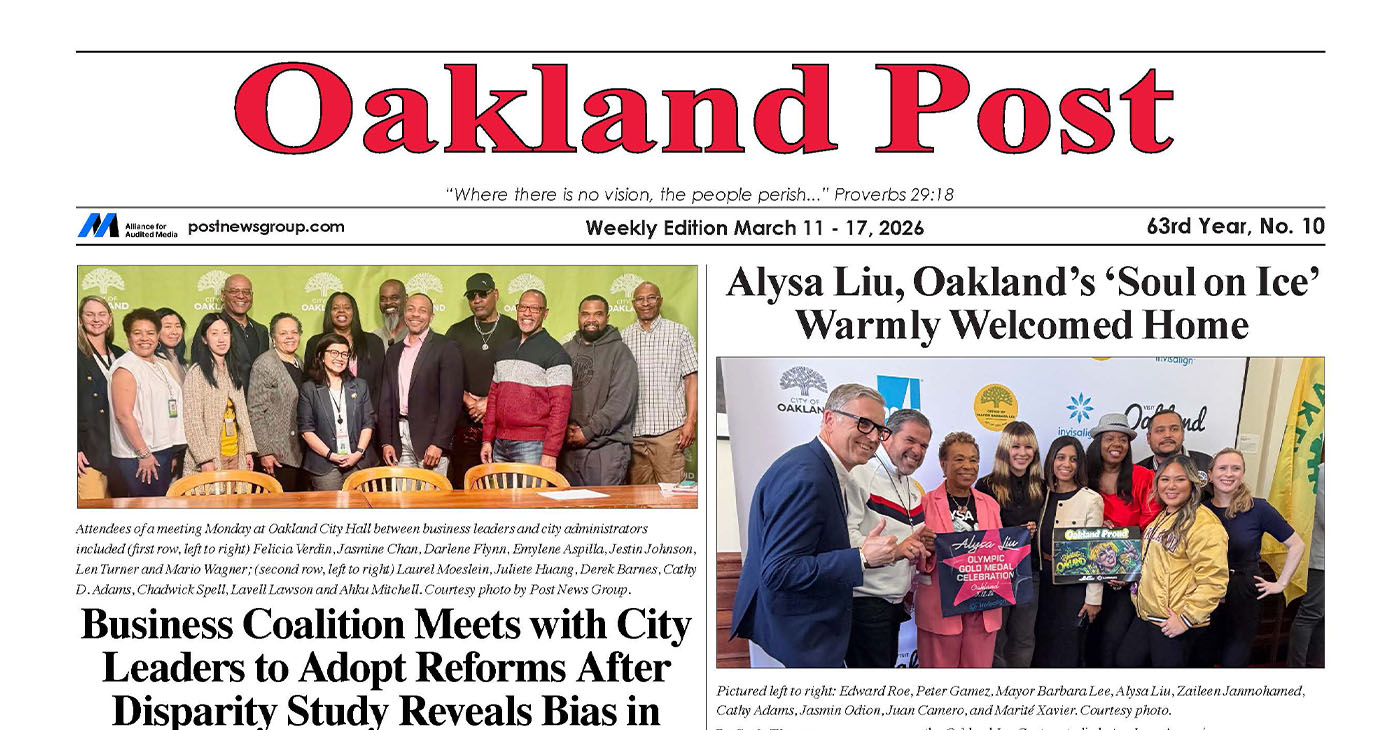
To enlarge your view of this issue, use the slider, magnifying glass icon or full page icon in the lower right corner of the browser window.
Activism
Oakland Post: Week of March 4 – 10, 2026
The printed Weekly Edition of the Oakland Post: Week of March 4 – 10, 2026

To enlarge your view of this issue, use the slider, magnifying glass icon or full page icon in the lower right corner of the browser window.

WORK FROM HOME
Home-based business with potential monthly income of $10K+ per month. A proven training system and website provided to maximize business effectiveness. Perfect job to earn side and primary income. Contact Lynne for more details: Lynne4npusa@gmail.com 800-334-0540


Black Artists in America, Installation Three Wraps at the Dixon Gallery and Gardens

Grief, Advocacy, and Education: A Counselor Reflects on Black Maternal Health

Future of Florida’s Black History Museum in Limbo

New Research Shows the Many Benefits of Early Learning

South Hampton K-8 Students Among Top 10 Finalists for Samsung’s ‘Solve for Tomorrow’ Competition

Cuba: No Negotiation with US on the President or Political System

Brooklyn Academy of Music Names Jamaican-Born Tamara McCaw as President

Trinidad & Tobego – U.S. Launches WhatsApp Channel for American Citizens in the Country

Oakland Post: Week of March 18 – 24, 2026

AI Innovation vs. Ethics and Environmental Impact

AI, Web3, and Digital Reparations

What If You Owned Your AI Agent?

Season 7, Episode 3 – January Reporter’s Roundtable 📱

Season 7, Episode 3 – January Reporter’s Roundtable

AI, Media, and Power | Part 2, Real-World Impacts and Tradeoffs

Discrimination in City Contracts

Oakland Post: Week of February 11 – 17, 2026

Reflecting on Black History Milestones in Birmingham AL

Rising Optimism Among Small And Middle Market Business Leaders Suggests Growth for California

CITY OF SAN LEANDRO STATE OF CALIFORNIA PUBLIC WORKS DEPARTMENT ENGINEERING DIVISION NOTICE TO BIDDERS FOR ANNUAL STREET OVERLAY/REHABILITATION 2019-21 – PHASE III

Oakland Post: Week of February 18 – 24, 2026

PRESS ROOM: NBA Hall of Fame Nominee Terry Cummings Joins 100 Black Men of DeKalb County to Launch Victory & Values Initiative

Oakland Post: Week of February 25 – March 3, 2026

U.S. manufacturing rebounds – how foundry services are adapting to rising demand

Trump’s MAGA Allies are Creating Executive Order Plan to Steal the 2026 Midterms

OP-ED: One Hundred Years of Black Workers Telling the Truth

Advancements in solar technology that are changing the way we power the world

Chase Oakland Community Center Hosts Alley-Oop Accelerator Building Community and Opportunity for Bay Area Entrepreneurs

PRESS ROOM: Civil Rights TV Launches in Selma as the World’s First 24/7 Civil Rights Television Network

Poll Shows Support for Policies That Help Families Afford Child Care

Hyundai Ioniq 5 Parking, Safety, and 360 View #shorts

2025 Ioniq 5 New Wiper & Powerful Performance! #shorts

Electric SUV Range: Is 259 Miles Enough? #shorts

EV Charging: How Fast Can You Charge an Electric Vehicle? #shorts

Biometric Cooling… Messaging Seats…Come on! 2025 Infiniti QX80 Autograph 4WD

Charged Up: Witness the Magic of a Fully Electric Car! #shorts

Range Rover Sport PHEV Included…: See What’s Inside This Luxury SUV! #shorts

Invisible Hood View: Perfect Parking with X-Ray Vision! #shorts

AI Is Reshaping Black Healthcare: Promise, Peril, and the Push for Improved Results in California

ESSAY: Technology and Medicine, a Primary Care Point of View

Sanctuary Cities

The RESISTANCE – FREEDOM NOW

STATE OF THE PEOPLE: Freddie

ECONOMIC BOYCOTT DAY!!!!!

I told You So
-
 #NNPA BlackPress4 weeks ago
Reflecting on Black History Milestones in Birmingham AL
-
 #NNPA BlackPress4 weeks ago
PRESS ROOM: NBA Hall of Fame Nominee Terry Cummings Joins 100 Black Men of DeKalb County to Launch Victory & Values Initiative
-
 Activism4 weeks ago
Oakland Post: Week of February 25 – March 3, 2026
-
 #NNPA BlackPress4 weeks ago
Trump’s MAGA Allies are Creating Executive Order Plan to Steal the 2026 Midterms
-
 #NNPA BlackPress4 weeks ago
OP-ED: One Hundred Years of Black Workers Telling the Truth
-
 #NNPA BlackPress4 weeks ago
Poll Shows Support for Policies That Help Families Afford Child Care
-

 Activism3 weeks ago
Oakland Post: Week of March 4 – 10, 2026
-

 #NNPA BlackPress3 weeks ago
Woman’s Search for Family’s Roots Leads to Ancestor John T. Ward – A Successful Entrepreneur and Conductor on the Underground Railroad
