
Bay Area
Khalieghya Dandie-Evans, Richmond’s Liver Transplant Recipient, Chosen to Ride the 2020 ‘Donate Life’ Float at the Rose Bowl Parade

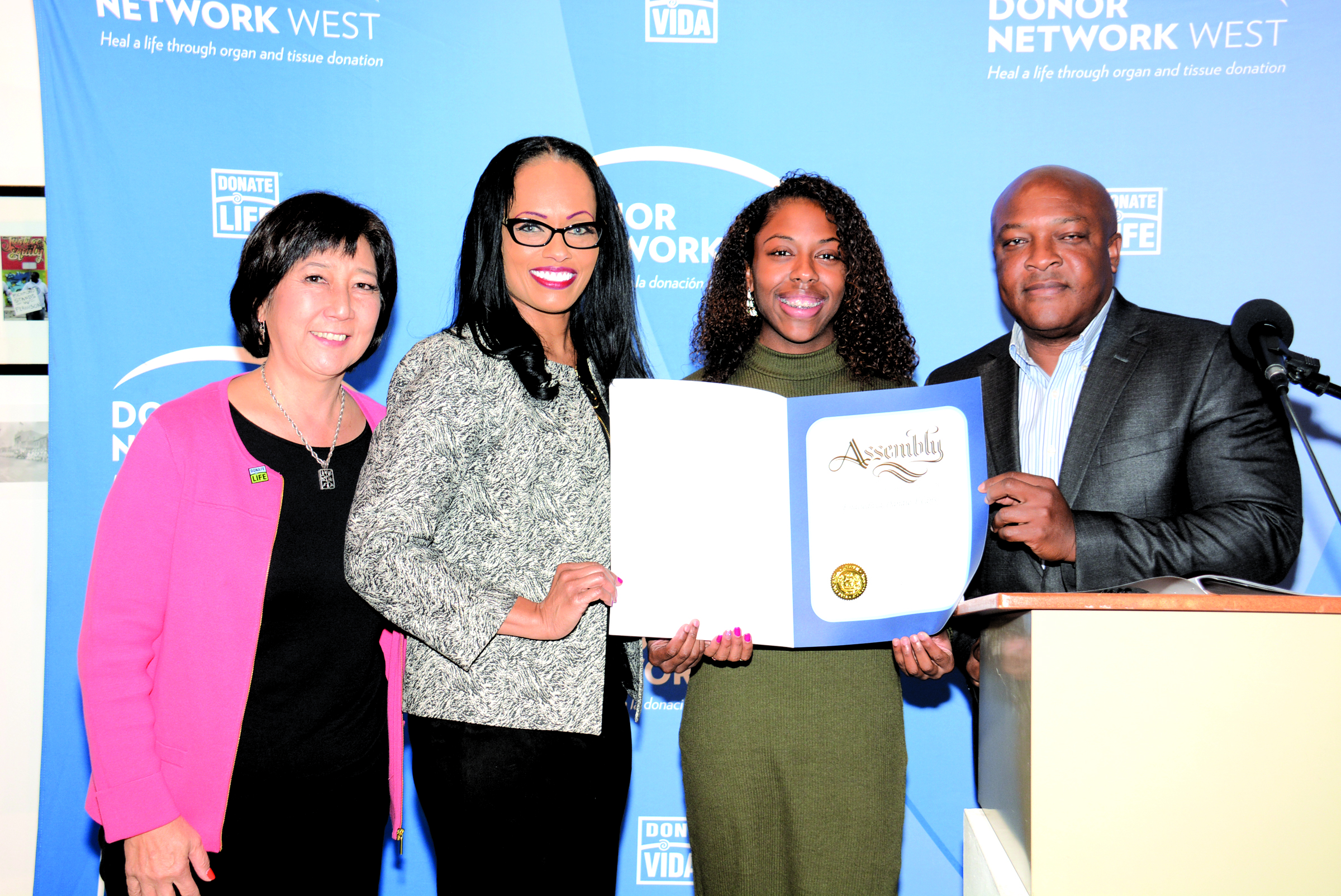
This story was written by La’Tanya Dandie, who is the mother of Khalieghya, the liver transplant recipient.
Khalieghya Dandie-Evans is the chosen one. As the 2020 Donate Life Float rider in the 131st Rose Parade in Pasadena on New Year’s Day she is at the top of her world. The float the Richmond resident will ride in is called “Light in the Darkness.”
The float will be adorned with thousands of roses from all over the country, each representing an individual donor or transplant recipient, as well as 44 memorial portraits made of flowers of deceased organ, eye and tissue donors.
The title is appropriate given Dandie-Evans’ rocky start in life. Born prematurely and diagnosed with Biliary Atresia — a disease that scars the liver and causes bile to build up — Dandie-Evans faced death at 5 months old.
Although she has no memory of it, Dandie-Evans is familiar with the story. She needed a liver transplant in order to survive. Her father matched, but he declined and other donors with her blood type were rare. After less than a month on the waiting list for a transplant, Dandie-Evans had become so sick and weak that doctors warned her mother that they would have only hours before she would be removed from the recipient list.

Stricken with the thought and pain of losing a child La’Tanya went home to discuss the decision with her other three children, Kevin 11, Kristopher 10 and Kheyaira 5. But before she could do it, she was awakened by an early morning call. A 4-year-old boy with the same blood type as Dandie-Evans had drowned in Fresno and was registered as an organ donor. “Please get back here and help us prepare, “Little Khalieghya,” they advised. That night, Aug. 6, 2002, Dandie- Evans underwent a 12-hour transplant surgery at Stanford’s Lucile Packard Children’s Hospital.
Now a lively 17-year-old senior at Oakland Military Institute who plays softball and other sports, Dandie-Evans nevertheless struggles with her condition. She has high blood pressure, junior arthritis, hearing loss and dermatomyositis and takes 17 pills twice a day to thwart organ rejection. Over the years she has been hospitalized several times for reactions to medications, kidney failure and multiple surgeries to remove her tonsils and adenoids and breast tumors caused by the immunosuppressive medications.
In her speech at the Richmond Historic Museum where she received a Certificate of Recognition from Assemblywoman Buffy Wicks’ office, the Rose Parade honoree also told of her hopes: Despite missing weeks of school, she’s on track to graduate with honors in 2020 and has dreams of working as a therapist for children on the autism spectrum.
“I live a happy, active life, I smile and tell corny jokes,” Dandie-Evans said. “I got a second chance at life because a family said “Yes” (to registering their son as an organ donor).”
Having a transplant was not going to control Khalieghya’s life. I didn’t know how to treat her any differently than I treated my other children. I didn’t give her excuses or any stops, and that’s what kept her alive, smiling, well and happy.
Dandie-Evans wants to promote organ donation especially in the African American/Black community. She believes not enough People of Color have this type of conversation to become educated about saving lives.
“We just don’t have enough people to say yes to donation,” said Cathy Koubek of Donor Network West. “With the Rose Parade and the national attention, we hope people will really take a moment to think about this and make the decision to become a donor.”
Dandie-Evans is a living example of why people should register as organ donors, said Koubek. As of July 2019, more than 113,000 people were on the national organ transplant waiting list, according to organdonor.gov; 20 people die each day waiting for an organ transplant.

To enlarge your view of this issue, use the slider, magnifying glass icon or full page icon in the lower right corner of the browser window.


To enlarge your view of this issue, use the slider, magnifying glass icon or full page icon in the lower right corner of the browser window.
Activism
Oakland Post: Week of September 30 – October 6, 2026
The printed Weekly Edition of the Oakland Post: Week of September 30 – October 6, 2026

To enlarge your view of this issue, use the slider, magnifying glass icon or full page icon in the lower right corner of the browser window.


Mayor Barbara Lee Holds Special State of the City Address in Deep East Oakland

Practitioners of African Traditional Spirituality Offer Ancestral Reverence Ritual Oct. 31

It’s Time to Lose Weight Before the Holidays

Trader Vic’s Returns to Its Oakland Roots

Oakland Coal Terminal Backed by Trump Would Be Bigger, Dirtier Than Promised, Says Report

Opponents Smear Effective African American Transit Director as Election Nears

Oakland Post: Week of October 14 – 20, 2026

OP-ED: The Black Church Writes AI’s Next Chapter

OP-ED: The Black Church Writes AI’s Next Chapter

WCCUSD Joins Statewide Organic School Food Purchasing Cooperative

Democrats, Community Groups Back Measure EE to Change How Oakland Is Governed

Four Tips to Help You Plan a Holiday “Staycation”

Veterans Housing Project Proposed for South Richmond
PRESS ROOM: Transformative Justice Coalition 2026 Voting Rights Champion Awards Reception ‘Yesterday Is Today: The Battle For Voting Rights

Mayor Lee Delivers 2026 State of the City Address: ‘Oakland Continues to Be on the Move’

Misnamed ‘Parent’ PAC Seeks to Influence Oakland School Board Elections

Listening as a Lifeline: A Doula’s Witness to Black Maternal Health

Poll: Becerra Widens His Lead Over Hilton; Californians Split on Wealth Tax

Oakland Post: Week of September 9 – 15, 2026

County Office of Education Says OUSD Finances Are Getting Healthier, Materially Stronger

Richmond Tiny House Village Farm & Garden Set to Open Gates on Sept. 26

Mayor Lee Announces $1 Million Kaiser Permanente Grant for Pilot Program to Address Homelessness, Clean Up Public Spaces throughout Oakland

Latest Massacre in Haiti Reveals Cruelty U.S. Deportations

Zakiya Jendayi Arrested, Locked Out of Home by Sheriff’s Deputies

OPINION: Nolan Wells’ Death One of Several Signifying Racial Terror Lives on in U.S. South

Doulas Are Helping Black California Moms Navigate Pregnancy–Even as High Mortality Rates Persist

BLACspace Cooperative Invites Bay Area to Experience Oakland’s Black Cultural Ecosystem Through a BLAC Map Tour + Party

Oakland Post: Week of September 16 – 22, 2026

Democratic Clubs Interview Candidates for Oakland School Board

Oakland People’s Arms Embargo Coalition Demands End to Military Shipments Thru Oakland

The Conversation With Al McFarlane 6/23/26

Media Monday 6/22/26

LIVE! ASK ALMA! — TUES. 6.23.26 7PM EST

Car Buying Secrets: 4 Hidden Checks Before You Sign!

Is This 550 HP Charger Worth YOUR Money? AutoNetwork Review

Celebrating Juneteenth – Frederick Douglass on education and resistance

LIVE! — ASK ALMA! — TUES. 6.19.26 7PM EST

Hyundai Ioniq 5 Parking, Safety, and 360 View #shorts

2025 Ioniq 5 New Wiper & Powerful Performance! #shorts

Electric SUV Range: Is 259 Miles Enough? #shorts

EV Charging: How Fast Can You Charge an Electric Vehicle? #shorts

Biometric Cooling… Messaging Seats…Come on! 2025 Infiniti QX80 Autograph 4WD

Charged Up: Witness the Magic of a Fully Electric Car! #shorts

Range Rover Sport PHEV Included…: See What’s Inside This Luxury SUV! #shorts

Invisible Hood View: Perfect Parking with X-Ray Vision! #shorts
-
 Black History3 weeks ago
Listening as a Lifeline: A Doula’s Witness to Black Maternal Health
-
 Economy4 weeks ago
Poll: Becerra Widens His Lead Over Hilton; Californians Split on Wealth Tax
-
 Business4 weeks ago
County Office of Education Says OUSD Finances Are Getting Healthier, Materially Stronger
-
 Lead Story3 weeks ago
Zakiya Jendayi Arrested, Locked Out of Home by Sheriff’s Deputies
-
 Black History4 weeks ago
Doulas Are Helping Black California Moms Navigate Pregnancy–Even as High Mortality Rates Persist
-
 Art4 weeks ago
BLACspace Cooperative Invites Bay Area to Experience Oakland’s Black Cultural Ecosystem Through a BLAC Map Tour + Party
-
 Business4 weeks ago
From Historic Memories to New Possibilities: Oakland Celebrates Coliseum 60
-
 Community4 weeks ago
Asm. Corey Jackson Announces Launch of 24-Hour Childcare in His District
