
Bay Area
Jorge Lerma Projected Winner of OUSD District 5 School Board Seat
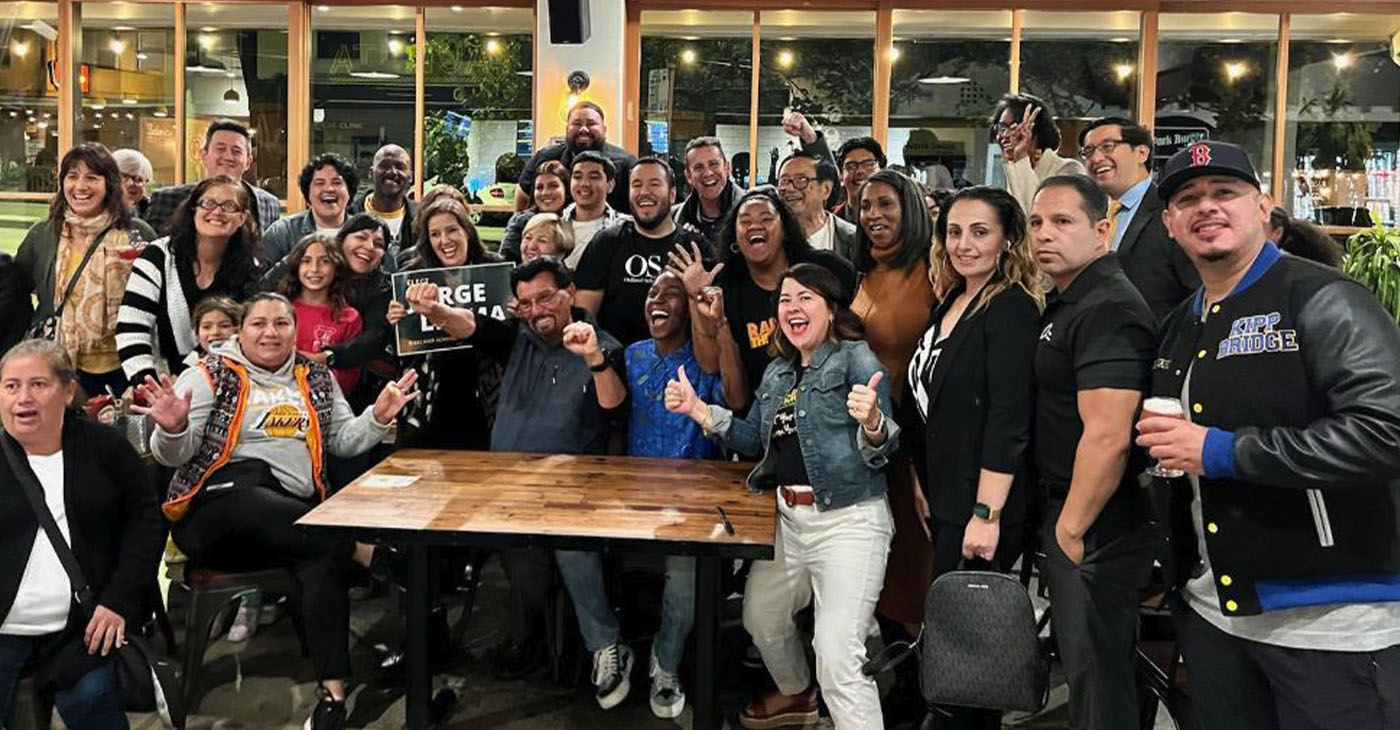
Lerma described a full house at the Paulista Brazilian Kitchen and Taproom where he and community members gathered to celebrate the campaign effort before the results were officially announced. Priests, firefighters, and ice cream vendors were all in attendance that night, which Lerma says shows the diversity of people who believe in what he’s doing.

By Magaly Muñoz
Post Staff
Oakland native Jorge Lerma was leading the vote with 62% of the ballots cast for the District 5 (D5) school board seat for Oakland Unified School District (OUSD) as of Wednesday morning. Only about 9% of eligible voters participated in the election.
An update on the votes is expected from the Alameda County Registrar of Voters on Thursday, and they will continue counting mail-in ballots that are received up to one week after Election Day. Certification of election results takes up to 30 days.
For several months, Lerma and Sasha Ritzie-Hernandez, had been in a fierce competition for the vacant seat after current school board president Mike Hutchinson stepped down earlier this year to represent District 4.
“I’m giddy and feeling very positive, but at the same time I’m very aware that this is an extremely serious moment in my life and in the life of this community,” Lerma said in a phone call to the Post the morning after the election.
Lerma described a full house at the Paulista Brazilian Kitchen and Taproom where he and community members gathered to celebrate the campaign effort before the results were officially announced. Priests, firefighters, and ice cream vendors were all in attendance that night, which Lerma says shows the diversity of people who believe in what he’s doing.
He said he knew he was going to have to fight hard because Ritzie-Hernandez had more access to money and interest groups. However, he believed that his extensive experience and deep-rooted connections in Oakland compensated for what he lacked in those areas.
Lerma has been involved in OUSD for 34 years as a teacher, principal, and administrator. He has long been an advocate for quality education and social justice, even fighting for these rights alongside the late civil rights activist Cesar Chavez.
Sam Davis, District 1 OUSD director, said Lerma’s extensive career in early childhood education and his fight to get more resources for students of color is what makes him the best representative of D5.
“He’s just been in the fight for students and supporting more services, especially for Latino students, for so long. And so, we’re just really grateful that he’s willing to step up and take on this role,” Davis said.
Davis mentioned the state takeover of OUSD in 2003, during which schools were closed in order to consolidate funds to pay off the district’s debt, and said Lerma was at the frontlines fighting for the schools to stay open. Davis stated that’s the kind of experience that the board needs.
“For me, his passion and commitment to this work and the fact you know, as most of us being Latinos and also immigrants, education is really the only pathway that we have to change our circumstances and he has been a consistent champion of that,” said Karely Ordaz, the chief of staff for The Unity Council.
Ordaz said Lerma unknowingly had an unintentional yet profound impact on her and her family’s lives with his creation of Centro Infantíl de la Raza, Fruitvale’s first bilingual, bicultural preschool.
While Ordaz was too old to attend the school, her sister and mom greatly benefited from it. The school offered her sister a cost-free environment for growth and it gave her mother an opportunity to participate in the education system.
She added that Lerma’s passion for encouraging students of color and their families to prioritize education from an early stage is why she’s happy to support him. Lerma understands that early intervention and support are crucial to producing the outcomes that people want to see.
“His win means Oakland wins,” Ordaz stated.
Lerma said the time to start working is now and that the first step is bringing healing to the community. It’s essential to set aside differences and drama because “we have children in Oakland that need to be educated.”
He stated that he’s going to set aside his personal opinions examine every issue with the aim of bettering the community collaboration with his fellow board members.
He explained that his first objective is to is to find out why there is such a large disparity in student learning based on where they go to school and identify what can be done to turn that around quickly.
“I don’t want words anymore; I want to practice. That’s always been the model for me. I don’t like to make promises, I like to deliver results.”










Activism
Oakland Post: Week of September 23 – 29, 2026
The printed Weekly Edition of the Oakland Post: Week of September 23 – 29, 2026


To enlarge your view of this issue, use the slider, magnifying glass icon or full page icon in the lower right corner of the browser window.

Activism
Oakland Post: Week of September 16 – 22, 2026
The printed Weekly Edition of the Oakland Post: Week of September 16 – 22, 2026

To enlarge your view of this issue, use the slider, magnifying glass icon or full page icon in the lower right corner of the browser window.
Activism
Oakland Post: Week of September 9 – 15, 2026
The printed Weekly Edition of the Oakland Post: Week of September 9 – 15, 2026

To enlarge your view of this issue, use the slider, magnifying glass icon or full page icon in the lower right corner of the browser window.



Asm. Corey Jackson Announces Launch of 24-Hour Childcare in His District

IN MEMORIAM: The Rev. Leon “Sonny” Clark, Longtime Orange County Pastor and Community Leader, Dies at 72

Poll: Becerra Widens His Lead Over Hilton; Californians Split on Wealth Tax

From Historic Memories to New Possibilities: Oakland Celebrates Coliseum 60

County Office of Education Says OUSD Finances Are Getting Healthier, Materially Stronger

LIVE FREE Sunday Dinner Brings Faith, Fellowship and Civic Conversation to Oakland

Remembering Chauncey Bailey as Student Journalists Face Threats to Truth-Telling

BLACspace Cooperative Invites Bay Area to Experience Oakland’s Black Cultural Ecosystem Through a BLAC Map Tour + Party

In Wake of Death on Doorstep, Williams Chapel Baptist Church Calls for Better Care, Funding for Unhoused

Oakland Centenarian Nuna McKee Honored!

Caribbean Nations Produce Action Plan Calling for UK Reparations Over Slavery

Oakland Post: Week of September 23 – 29, 2026

Doulas Are Helping Black California Moms Navigate Pregnancy–Even as High Mortality Rates Persist

Newsom Signs Addictive Social Media Law to Protect Kids

On Your November Ballot: Prop 38 Would Allocate $8.4 Billion to Immunology and Immunotherapy Funding

Standoff for Justice: Our Homes Are Worth Fighting For

Oakland Post: Week of August 26 – September 1, 2026

Frontier Airlines’ Return to Oakland Airport Brings Flights, Jobs and Opportunity

Gubernatorial Candidate Steve Hilton Blasts California New Tire Rules; Newsom Hits Back

Chef Sharon Lee Blends Culinary Excellence, Education and Empowerment

Jackie Wright Champions Bay Area Stories, Filmmakers and Cultural Institutions

Big City Mayors Ask for “Yes” Vote on Housing Bond Measure; Conservatives Say “No”

Oakland Coliseum Project Opens Door for Small Businesses to Build Bigger

Gov. Newsom’s Latest Appointees Include Sacramento Advocate for Formerly Incarcerated Students; State’s New Tech Chief

Misnamed ‘Parent’ PAC Seeks to Influence Oakland School Board Elections

Longtime BWOPA Member Brendalyn Goodall Appointed to California Workforce Development Board

Gov. Newsom Signs Law Shielding Immigration Aid Workers From Doxing Threats

Secretary of State Shirley N. Weber Urges Californians to Vote Early as Voter ID Battle Intensifies

From Palestine to Oakland: Seeds for Liberation Examines Shared Struggles for Freedom

IN MEMORIAM: Dolly Parton Dead at 80 — How She Built a Legacy of Love and Earned Her Place in Black Culture

The Conversation With Al McFarlane 6/23/26

Media Monday 6/22/26

LIVE! ASK ALMA! — TUES. 6.23.26 7PM EST

Car Buying Secrets: 4 Hidden Checks Before You Sign!

Is This 550 HP Charger Worth YOUR Money? AutoNetwork Review

Celebrating Juneteenth – Frederick Douglass on education and resistance

LIVE! — ASK ALMA! — TUES. 6.19.26 7PM EST

Hyundai Ioniq 5 Parking, Safety, and 360 View #shorts

2025 Ioniq 5 New Wiper & Powerful Performance! #shorts

Electric SUV Range: Is 259 Miles Enough? #shorts

EV Charging: How Fast Can You Charge an Electric Vehicle? #shorts

Biometric Cooling… Messaging Seats…Come on! 2025 Infiniti QX80 Autograph 4WD

Charged Up: Witness the Magic of a Fully Electric Car! #shorts

Range Rover Sport PHEV Included…: See What’s Inside This Luxury SUV! #shorts

Invisible Hood View: Perfect Parking with X-Ray Vision! #shorts
-
 Community2 weeks ago
Misnamed ‘Parent’ PAC Seeks to Influence Oakland School Board Elections
-

 Activism3 weeks ago
Oakland Post: Week of September 2 – 8, 2026
-

 Community2 weeks ago
Richmond Tiny House Village Farm & Garden Set to Open Gates on Sept. 26
-

 Black History2 weeks ago
OPINION: Nolan Wells’ Death One of Several Signifying Racial Terror Lives on in U.S. South
-

 Black History2 weeks ago
Latest Massacre in Haiti Reveals Cruelty U.S. Deportations
-

 Activism2 weeks ago
Oakland Post: Week of September 9 – 15, 2026
-

 Community2 weeks ago
Democratic Clubs Interview Candidates for Oakland School Board
-

 Featured2 weeks ago
‘Ready to See These Bills Become Law’: Sen. Weber’s Package of 15 Bills Advance to Gov. Newsom’s Desk
