
Op-Ed
Jobs Nightmare in Baltimore ’Hood


By Julianne Malveaux
NNPA Columnist
What happens to a dream deferred?
Does it dry up
like a raisin in the sun?
Or fester like a sore –
And then run?
Does it stink like rotten meat?
Or crust and sugar over –
Like a syrupy sweet
Maybe it just sags
like a heavy load.
Or does it explode?
When Langston Hughes wrote of a dream deferred in his 1951 poem, “Harlem,” he captured the frustration of a people who had deferred dreams and swallowed hope time and again. Were he writing the poem today, he might have titled it Sandtown, highlighting the neighborhood that was home to Freddie Gray.
Sandtown-Winchester is described as blighted and neglected, an urban food dessert, defined as people living more than a mile from a supermarket or large grocery store, with a population that is mostly poor and unemployed. According to the website fusion.net, more incarcerated people come from the Sandtown census tract than anywhere else in Maryland.
Freddie Gray and his sisters won a 2008 lawsuit against a landlord that had high levels of toxic lead paint on the walls. Four years later, in 2012, more than 7 percent of infants and children under six had elevated blood lead levels.

The data about Sandtown at least partly explain the frustration, anger, and uprisings that have happened in the wake of the murder of Freddie Gray. People who are ignored can watch their dreams dry up or sag, or, as in the case of Baltimore, they can simply explode.
I won’t make excuses for the destruction of property, but if the young people who took it to the streets were Bostonians during the 1773 Tea Party, they may have been described as patriots. Instead, protesters were described as “thugs and criminals,” with at least one news anchor confusing her news reading work for commentary, described the protesters as “idiots.”
When I saw the protestors throwing rocks at police officers, and saw flames rising from the streets, I thought of the uprisings that took place after the assassination of Dr. Martin Luther King, Jr. Frustrated and angry people took it to the streets then, destroying billions of dollars worth of property. Some of the areas that burned in 1968 took decades to recover from the violence. At the same time, the uprisings riveted attention to blighted inner cities and to the poverty and unemployment that too many residents experienced.
More than half of the young African Americans who want to work can’t find a job. The numbers are higher in Sandtown. The situation might be improved if Jobs Corps programs were more available to Sandtown residents. There are two Job Corps locations in Maryland (and 125 in the nation), but the Jobs Corps has been under scrutiny and constantly being threatened with extinction.
Job Corps offers a free education and training program that helps low-income young people (16-24) earn a high school diploma or GED, learn about careers, and find employment. Established in 1964 as part of the Economic Opportunity Act, it was reauthorized in 1998 as part of the Workforce Investment Act. About 60,000 people are trained by Job Corps each year; 60 percent of them find work when they finish the program; another 15 percent choose to continue their education.
Job Corps has cost between $1.5 and $1.7 billion in each of the past 10 years, with appropriations rising between 2005 and 2011, then falling after 2012. Congress says its FY 2015 budget will increase defense spending and cut domestic spending by about $14 billion. They’ll cut prekindergarten education, medical research, and job training. Does that mean cuts to Job Corps? What does that mean to Sandtown? Is joblessness a heavy load? Will it explode?
Congressman Elijah Cummings (D-Md.) said that the demonstrations after Freddie Gray’s funeral could have happened anywhere. Indeed, in addition to the Baltimore protests, there have been demonstrations in Philadelphia, New York, Chicago, Washington, D.C. and other cities. Just as the killing of Michael Brown ignited people who lived hundreds of miles away from Ferguson, Mo., so has the killing of Freddie Gray reverberated all over the nation as people wait to learn how a man’s spine could break while he was in police custody.
No matter the outcome of the investigation, people in areas such as Sandtown desperately need employment, and the Job Corps can be one way to create that employment. Federal or state employment programs could train skilled crafts workers – painters, electricians, and others – to revive Sandtown. Congress is eager to cut programs like Job Corps, yet these programs provide an important public benefit.
Many will call for police accountability, for body cameras, and for other police reforms. Given the growing body count of young Black men (and women) who are too frequently killed by law enforcement officers, such reform makes sense. At the same time, training people for jobs, and finding jobs for them provides a dream instead of deferring one. There should be no conversation about Freddie Gray and Baltimore policing without a conversation about job creation.
Julianne Malveaux is an author and economist. She can be reached at www.juliannemalveaux.com.
###










Advice
Financial Wellness and Mental Health: Managing Money Stress in College
While everyone’s financial situation is unique, several common sources of stress have the potential to strain your financial health. These include financial and economic uncertainty, existing debts, unexpected expenses, and mental or physical health changes. Financial stress may differ from situation to situation, but understanding the factors contributing to yours may help you begin to craft a plan for your unique circumstances.

Sponsored by JPMorganChase
As a college student, managing financial responsibilities can be stressful.
If you’ve found yourself staying up late thinking about your finances or just feeling anxious overall about your financial future, you’re not alone. In one survey, 78% of college students who reported financial stress had negative impacts on their mental health, and 59% considered dropping out. While finances can impact overall stress, taking steps to manage your finances can support your mental, emotional and physical well-being.
When it comes to money, the sources of stress may look different for each student, but identifying the underlying causes and setting goals accordingly may help you feel more confident about your financial future.
Consider these strategies to help improve your financial wellness and reduce stress.
Understand what causes financial stress
While everyone’s financial situation is unique, several common sources of stress have the potential to strain your financial health. These include financial and economic uncertainty, existing debts, unexpected expenses, and mental or physical health changes. Financial stress may differ from situation to situation, but understanding the factors contributing to yours may help you begin to craft a plan for your unique circumstances.
2. Determine your financial priorities
Start by reflecting on your financial priorities. For students this often includes paying for school or paying off student loans, studying abroad, saving for spring break, building an emergency fund, paying down credit card debt or buying a car. Name the milestones that are most important to you, and plan accordingly.
3. Create a plan and stick to it

While setting actionable goals starts you on the journey to better financial health, it’s essential to craft a plan to follow through. Identifying and committing to a savings plan may give you a greater sense of control over your finances, which may help reduce your stress. Creating and sticking to a budget allows you to better track where your money is going so you may spend less and save more.
4. Pay down debt
Many students have some form of debt and want to make progress toward reducing their debt obligations. One option is the debt avalanche method, which focuses on paying off your debt with the highest interest rate first, then moving on to the debt with the next-highest interest rate. Another is the debt snowball method, which builds momentum by paying off your smallest debt balance, and then working your way up to the largest amounts.
5. Build your financial resilience
Some financial stress may be inevitable, but building financial resilience may allow you to overcome obstacles more easily. The more you learn about managing your money, for instance, the more prepared you’ll feel if the unexpected happens. Growing your emergency savings also may increase resilience since you’ll be more financially prepared to cover unexpected expenses or pay your living expenses.
6. Seek help and support
Many colleges have resources to help students experiencing financial stress, like financial literacy courses or funds that provide some assistance for students in need. Talk to your admissions counselor or advisor about your concerns, and they can direct you to sources of support. Your school’s counseling center can also be a great resource for mental health assistance if you’re struggling with financial stress.
The bottom line
Financial stress can affect college students’ health and wellbeing, but it doesn’t have to derail your dreams. Setting smart financial goals and developing simple plans to achieve them may help ease your stress. Revisit and adjust your plan as needed to ensure it continues to work for you, and seek additional support on campus as needed to help keep you on track.
JPMorgan Chase Bank, N.A. Member FDIC
© 2026 JPMorgan Chase & Co.

Sponsored by J.P. Morgan Wealth Management
We are in the midst of a seismic shift in wealth. This phenomenon, often referred to as the “Great Wealth Transfer,” describes the unprecedented movement of assets from the Baby Boomer generation to their heirs – an estimated $105 trillion by 2048. And women are poised to inherit most of this.
J.P. Morgan Wealth Management’s 2025 Investor Study found that women are not only set to receive significant wealth – they’re actively working to build it on their own. Ninety-three percent of women surveyed who are expecting an inheritance aren’t relying on it to reach their goals.
Here are a few tips for women to consider in their wealth-building journey:
Create a financial roadmap
A detailed, well thought out plan is important. J.P. Morgan’s study found that 90% of those surveyed with a plan feel confident about reaching their financial goals, compared to 49% without one.
Your plan should reflect your unique goals, priorities and circumstances. Consider your investment horizon and risk tolerance, and remember to revisit your plan regularly as life evolves.
Are you saving up for goals like buying a house, sending your kids off to college or retiring early? Where do you want to be in the next five, ten or twenty years? Everyone’s financial situation is unique, so it’s important to think about these questions and build a plan that is unique to your life.
Women tend to live longer than men on average. Many take career breaks or care for family members, which can influence long-term planning. It’s important to adjust your strategy with these factors in mind.
Where to start with investing
Don’t let misconceptions hold you back. Starting to invest doesn’t require a large sum, and beginning early can be beneficial. The earlier you start, the more time your money has to potentially grow over the years. Understand your overall financial situation, set clear goals and develop a long-term plan.
It’s important to also make sure you’re covered for unexpected expenses that come up before you start to invest. Build up a cash emergency fund, typically enough to cover three to six months of expenses, and pay down any high-interest debt.
Taking charge of your finances
The good news is that women are taking charge of their finances. J.P. Morgan’s research found that 75% of women respondents make financial decisions with their partner or take the lead themselves. For those who have a spouse or partner, it’s important for each person in the relationship to play an active role in the process.
Building wealth can be empowering for many women. The same survey found that 73% of women respondents said money gives them “security,” while 64% of Gen Z and Millennial women associated it with “freedom.”
The power of having a team
Some people find it helpful to work with a financial advisor, so you don’t have to tackle things alone. An advisor can help you craft a plan tailored to your needs and keep you on track throughout your lifelong financial journey. If you expect to receive an inheritance, you should also consult with estate planning and tax professionals.
No matter where you are on your wealth-building path, education is key. It’s so important to be an informed investor, and there are plenty of resources out there to help. You can find a library of free educational resources at chase.com/theknow.
As the landscape of wealth continues to evolve, women have a unique opportunity to shape their financial futures and those of generations to come. By staying informed and planning ahead, women have the tools to help them confidently navigate the Great Wealth Transfer and set themselves up for financial freedom.
The views, opinions, estimates and strategies expressed herein constitutes the author’s judgment based on current market conditions and are subject to change without notice, and may differ from those expressed by other areas of J.P. Morgan. This information in no way constitutes J.P. Morgan Research and should not be treated as such. You should carefully consider your needs and objectives before making any decisions. For additional guidance on how this information should be applied to your situation, you should consult your advisor.
JPMorgan Chase & Co., its affiliates, and employees do not provide tax, legal or accounting advice. You should consult your own tax, legal and accounting advisors before engaging in any financial transaction.
Advice
Rising Optimism Among Small And Middle Market Business Leaders Suggests Growth for California
“Business leaders across the Pacific region continue to demonstrate a unique blend of resilience and forward-thinking, even in the face of ongoing economic uncertainty,” said Brennon Crist, Managing Director and Head of the Pacific Segment, Commercial Banking, J.P. Morgan. “Their commitment to innovation and growth is evident in the way they adapt to challenges and seize new opportunities. It’s this spirit that keeps our region at the forefront of business leadership and progress. We look forward to helping our clients navigate all that’s ahead in 2026.”

Sponsored by JPMorganChase
Business optimism is returning for small and midsize business leaders at the start of 2026, fueling confidence and growth plans.
The 2026 Business Leaders Outlook survey, released in January by JPMorganChase reveals a turnaround from last June, when economic headwinds and uncertainty about shifting policies and tariffs caused some leaders to put their business plans on hold.
Midsize companies, who often find themselves more exposed to geopolitical shifts and policy changes, experienced a significant dip in business and economic confidence in June of 2025. As they have become more comfortable with the complexities of today’s environment, we are seeing optimism rebounding in the middle market nationwide – an encouraging sign for growth, hiring, and innovation. Small businesses, meanwhile, maintained steady optimism throughout 2025, but they aren’t shielded from domestic concerns. Many cited inflation and wage pressures as the top challenges for 2026 and are taking steps to ensure their businesses are prepared for what’s ahead.
“Business leaders across the Pacific region continue to demonstrate a unique blend of resilience and forward-thinking, even in the face of ongoing economic uncertainty,” said Brennon Crist, Managing Director and Head of the Pacific Segment, Commercial Banking, J.P. Morgan. “Their commitment to innovation and growth is evident in the way they adapt to challenges and seize new opportunities. It’s this spirit that keeps our region at the forefront of business leadership and progress. We look forward to helping our clients navigate all that’s ahead in 2026.”
Overall, both small and midsize business leaders are feeling more confident to pursue growth opportunities, embrace emerging technologies and, in some cases, forge new strategic partnerships. That bodes well for entrepreneurs in California. Here are a few other key findings from the Business Leaders Outlook about trends expected to drive activity this year:
- Inflation remains the top concern for small business owners. Following the 2024 U.S. presidential election, many anticipated a favorable business environment. By June 2025, however, that feeling shifted amid concerns about political dynamics, tariffs, evolving regulations and global economic headwinds.
Going into 2026, 37% of respondents cited inflation as their top concern. Rising taxes came in second at 27% and the impact of tariffs was third at 22%. Other concerns included managing cash flow, hiring and labor costs.
- For middle market leaders, uncertainty remains an issue. Almost half (49%) of all midsize business leaders surveyed cited “economic uncertainty” as their top concern – even with an improved outlook from a few months ago. Revenue and sales growth was second at 33%, while tariffs and labor both were third at 31%.
- And tariffs are impacting businesses costs. Sixty-one percent of midsize business leaders said tariffs have had a negative impact on the cost of doing business.
- Despite challenges, leaders are bullish on their own enterprises. Though the overall outlook is mixed, 74% of small business owners and 71% of middle market companies are optimistic about their company’s prospects for 2026.
- Adaption is the theme. For small business owners surveyed across the U.S., responding to continuing pressures is important in 2026. Building cash reserves (47%), renegotiating supplier terms (36%) and ramping up investments in marketing and technology are among the top priorities.
- Big plans are on the horizon. A majority midsized company leaders expect revenue growth this year, and nearly three out of five of (58%) plan to introduce new products or services in the coming year, while 53% look to expand into new domestic and/or international markets. Forty-nine percentsay they’re pursuing strategic partnerships or investments.
The bottom line
Rebounding optimism among U.S. business leaders at the start of the year is setting the stage for an active 2026. With business leaders looking to implement ambitious growth plans that position themselves for the future, momentum in California could be beneficial for leaders looking to launch, grow or scale their business this year.


WORK FROM HOME
Home-based business with potential monthly income of $10K+ per month. A proven training system and website provided to maximize business effectiveness. Perfect job to earn side and primary income. Contact Lynne for more details: Lynne4npusa@gmail.com 800-334-0540


Black Artists in America, Installation Three Wraps at the Dixon Gallery and Gardens

Grief, Advocacy, and Education: A Counselor Reflects on Black Maternal Health

Future of Florida’s Black History Museum in Limbo

New Research Shows the Many Benefits of Early Learning

South Hampton K-8 Students Among Top 10 Finalists for Samsung’s ‘Solve for Tomorrow’ Competition

Cuba: No Negotiation with US on the President or Political System

Brooklyn Academy of Music Names Jamaican-Born Tamara McCaw as President

Trinidad & Tobego – U.S. Launches WhatsApp Channel for American Citizens in the Country

Oakland Post: Week of March 18 – 24, 2026

AI Innovation vs. Ethics and Environmental Impact

AI, Web3, and Digital Reparations

What If You Owned Your AI Agent?

Season 7, Episode 3 – January Reporter’s Roundtable 📱

Season 7, Episode 3 – January Reporter’s Roundtable

AI, Media, and Power | Part 2, Real-World Impacts and Tradeoffs

Reflecting on Black History Milestones in Birmingham AL

CITY OF SAN LEANDRO STATE OF CALIFORNIA PUBLIC WORKS DEPARTMENT ENGINEERING DIVISION NOTICE TO BIDDERS FOR ANNUAL STREET OVERLAY/REHABILITATION 2019-21 – PHASE III

Oakland Post: Week of February 18 – 24, 2026

Oakland Post: Week of February 25 – March 3, 2026

PRESS ROOM: NBA Hall of Fame Nominee Terry Cummings Joins 100 Black Men of DeKalb County to Launch Victory & Values Initiative

Trump’s MAGA Allies are Creating Executive Order Plan to Steal the 2026 Midterms

U.S. manufacturing rebounds – how foundry services are adapting to rising demand

Oakland Post: Week of March 4 – 10, 2026

Chase Oakland Community Center Hosts Alley-Oop Accelerator Building Community and Opportunity for Bay Area Entrepreneurs

Poll Shows Support for Policies That Help Families Afford Child Care

OP-ED: One Hundred Years of Black Workers Telling the Truth

Advancements in solar technology that are changing the way we power the world

Woman’s Search for Family’s Roots Leads to Ancestor John T. Ward – A Successful Entrepreneur and Conductor on the Underground Railroad

PRESS ROOM: Civil Rights TV Launches in Selma as the World’s First 24/7 Civil Rights Television Network

COMMENTARY: Women of Color Shape Our Past and Future

Hyundai Ioniq 5 Parking, Safety, and 360 View #shorts

2025 Ioniq 5 New Wiper & Powerful Performance! #shorts

Electric SUV Range: Is 259 Miles Enough? #shorts

EV Charging: How Fast Can You Charge an Electric Vehicle? #shorts

Biometric Cooling… Messaging Seats…Come on! 2025 Infiniti QX80 Autograph 4WD

Charged Up: Witness the Magic of a Fully Electric Car! #shorts

Range Rover Sport PHEV Included…: See What’s Inside This Luxury SUV! #shorts

Invisible Hood View: Perfect Parking with X-Ray Vision! #shorts

AI Is Reshaping Black Healthcare: Promise, Peril, and the Push for Improved Results in California

ESSAY: Technology and Medicine, a Primary Care Point of View

Sanctuary Cities

The RESISTANCE – FREEDOM NOW

STATE OF THE PEOPLE: Freddie

ECONOMIC BOYCOTT DAY!!!!!

I told You So
-
 Activism4 weeks ago
Oakland Post: Week of March 4 – 10, 2026
-
 #NNPA BlackPress4 weeks ago
Woman’s Search for Family’s Roots Leads to Ancestor John T. Ward – A Successful Entrepreneur and Conductor on the Underground Railroad
-
 #NNPA BlackPress4 weeks ago
COMMENTARY: Women of Color Shape Our Past and Future
-

 #NNPA BlackPress4 weeks ago
OP-ED: NNPA Launches 2026 “Leadership Matters” Video Series
-
 Activism2 weeks ago
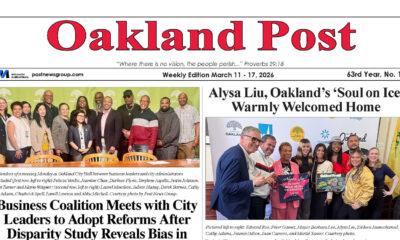
Oakland Post: Week of March 11 -17, 2026
-

 #NNPA BlackPress4 weeks ago
Advocates Raise Alarm Over ICE Operation, MOU and Detention Risks in Baltimore County
-

 #NNPA BlackPress4 weeks ago
Pete Buttigieg to Join Mayor Randall Woodfin for Community Town Hall in Birmingham
-

 Advice2 weeks ago
Financial Wellness and Mental Health: Managing Money Stress in College
