
Berkeley
Islamophobia: A Well-Funded American “Fear” Industry


Hatem Bazian
By Hatem Bazian
In 2011, the Center for American Progress published a groundbreaking report, “Fear, Inc.: The Roots of the Islamophobia Network in America,” which managed to expose for the first time the funding sources behind the bigotry producing Islamophobic industry, the individuals responsible and the effective strategies that made it possible to impact the mainstream.
The report managed to shift the focus and correctly highlighted the infrastructure behind the growing Islamophobia phenomena and provided empirical evidence that until then was only theorized.
The “Fear Inc.” authors identified seven foundations that provided a total of $42.6 million between 2001 and 2009 to fund organizations and individual spreading anti-Muslim bigotry in the country.
What the report clearly documented is that, rather than there being a large grouping and widespread anti-Muslim popular movement, the researchers discovered a small network of organizations, scholars and activists that are well-funded and committed to misinformation, machination and bigoted rhetoric.
The 2011 report concluded that “the efforts of a small cadre of funders and misinformation experts were amplified by an echo chamber of the religious right, conservative media, grassroots organizations, and politicians who sought to introduce a fringe perspective on
On Feb. 11, 2015 CAP released “Fear Inc. 2.0,” the second installment in the series, which builds upon the initial research and provides deeper analysis of the Islamophobia network and the current themes utilized in targeting the American Muslim community.
The report examines Islamophobia within the religious right and the ability of groups to increasingly deploy “anti-Islamic rhetoric” and to “push this…discourse into mainstream GOP politics.”
The religious right and the Republican party has an acute Islamophobia problem, with grassroots activists increasingly at ease in expressing anti-Muslim statements. Certainly, debates about national security and terrorism are legitimate topics, but among religious-right activists and sections of the Republican party, Islamophobic discourse has become connected to the broader cultural wars, with a distinct messianic and clash-of-civilizations rhetoric.
In chapter two of “Fear Inc. 2.0, ” the report examines the 2014 Values Voter Summit, pointing out that the gathering “heard from many of the architects and amplifiers of the Islamophobia network.”
Speakers at the VVS made sure to emphasize that we are at war with Islam.
What is clear is that the religious right has made Islamophobia and anti-Muslim bigotry a major rallying point for activists across the country and deploying it within a broader political strategy.
One key element of this strategy, according to the report, is the national anti-Sharia campaign led by David Yerushalmi, “the lawyer responsible for the movement and who drafted the model…legislation used by activists across the country,” with the expressed goal “to shape public attitude and is not about legal substance.”
The report cites Yerushalmi’s own framing of the issue in a New York Times 2011 interview: “If this thing passed in every state without any friction, it would not have served its purpose…The purpose was to get people asking this question, ‘What is Shariah?’”
What we have in the anti-Sharia legislation and targeting Democratic and civil-society leaders is an electoral strategy that seeks to monetize Islamophobia into votes at the ballot box and o influence elections outcome moving forward.
Attempts to influence elections with Islamophobic content were front and center in the 2008 elections, when the Clarion Fund spent about $17 million to send 28 million copies of the documentary “Obsession, Radical Islam’s War Against the West” as an insert in Sunday newspapers, just days before the elections, to voters in swing states; this propagated the idea that Candidate Obama should not be trusted, and the constant speculation that he is a closet Muslim.
A similar strategy was unleashed in the 2010 midterm elections, focusing on the “Ground Zero Mosque,” a term coined by the Islamophobia network and then amplified through the conservative media.
Wedge issues are very critical pieces in campaign strategists’ tool chest. Islamophobia and targeting American Muslims create the needed framing, focusing on national security and threat to the “homeland,” which puts liberal Democrats on the defensive while pushing independent voters into supporting rightwing Republican candidates even though it might be against their economic and political interests.
The Islamophobia network agenda in the U.S. is connected to a broader electoral strategy. “Demographics in the United States are changing rapidly” was an important reason for some on the political right to opt for a divisive strategy, write Prof. Saeed A. Khan and Alejandrop J. Beutel in their recently released report, “Manufacturing Bigotry: A State-by-State Legislative Effort to Pushback Against 2050 by Targeting Muslims and Other Minorities,” published by The Institute of Social Policy and Understanding.
Hatem Bazian is a senior lecturer of Near Eastern studies and Ethnic Studies at UC Berkeley.






Activism
Black Repertory Group Needs Volunteers to Help Shape the Next Generation of Artists and Leaders
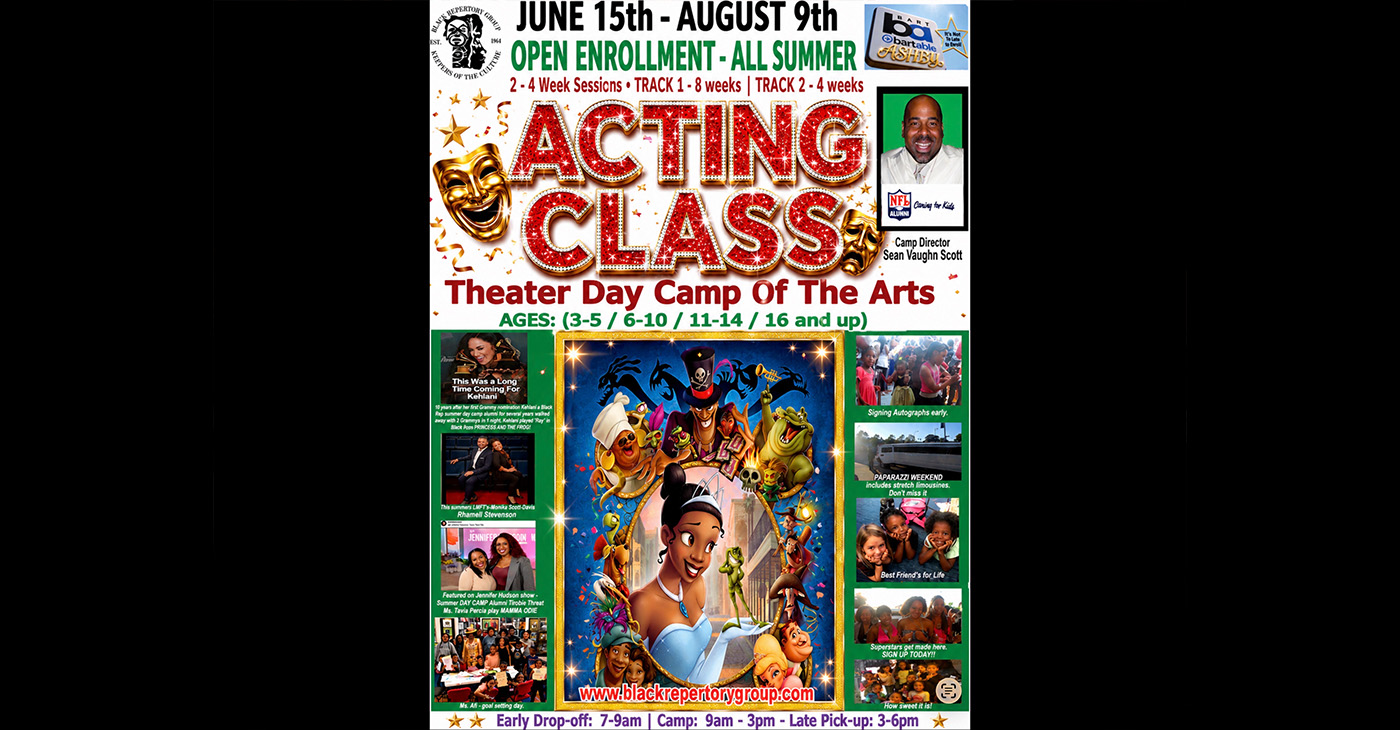
Legendary performers such as Whoopi Goldberg and Danny Glover worked with and were inspired by BRG’s founders. More recently, Grammy award-winning artist Kehlani attended the Black Repertory Group Summer Day Camp for several years.
By Sean Vaughn Scott, Special to The Post
For more than 60 years, the Black Repertory Group (BRG) has changed lives through the arts.
Founded in 1964 by educators and visionaries Birel L. Vaughn and Nora Vaughn, BRG has become one of America’s oldest continuously operating Black theater institutions. For generations, it has preserved culture, developed talent, and provided opportunities for young people to discover their voices and their potential.
The results speak for themselves.
Legendary performers such as Whoopi Goldberg and Danny Glover worked with and were inspired by BRG’s founders. More recently, Grammy award-winning artist Kehlani attended the Black Repertory Group Summer Day Camp for several years.
Long before international recognition, Kehlani performed on the BRG stage. During a summer day camp production of “Princess and da Frog,” she portrayed Ray, the lovable firefly whose light guided others through the darkness. Her journey is proof that today’s camper may become tomorrow’s artist, entrepreneur, educator, or leader.
Located at 3201 Adeline St. in Berkeley, BRG continues that mission through its Youth Summer Day Camp of the Arts.
BRG is currently accepting applications and maintains an open enrollment program. Students may enroll throughout the summer as space permits and immediately become part of the BRG family.
We are also proud to be a multicultural opportunity program, welcoming children and families from all backgrounds, cultures, and communities. Through theater, music, dance, public speaking, visual arts, technical theater, and leadership development, students gain confidence, discipline, creativity, and lifelong skills.
As our programs grow, so does our need for volunteers.
We are seeking community members to assist with youth mentoring, registration, costumes, set construction, painting, props, ushering, photography, social media, marketing, technical theater, and fundraising activities. Whether you volunteer for a few hours or throughout the season, your support directly impacts the lives of young people.
BRG also partners with churches, civic organizations, alumni associations, fraternities, sororities, and community groups through theater party fundraisers, group sales, and buy-out performances. These partnerships have helped organizations raise funds while supporting arts and cultural programming.
The theater also serves as the home of the Berkeley NAACP Chapter, which meets every second Saturday of the month from 1 to 3 p.m.
For more than six decades, the Black Repertory Group has remained committed to one belief: every child deserves an opportunity to shine.
The next great artist may already be among us.
The next Kehlani may already be walking through our doors.
We invite you to volunteer, enroll, participate, and become part of the legacy.
For more information please go to www.blackrepertorygroup.com, call (510) 652-2120, or email info@blackrepertorygroup.com
Sean Vaughn Scott is the director of the Black Repertory Group.
Bay Area
UC Berkeley Named Top Public University in the U.S. and No. 7 in the World by ‘U.S. News’
Berkeley has been consistently awarded the distinction of the U.S.’s top public university since the Best Global Universities list was first published in 2014. “A strong position in the Best Global Universities rankings recognizes a school’s profound commitment to world-class research and cross-border academic excellence,” said LaMont Jones, managing editor for education at U.S. News.
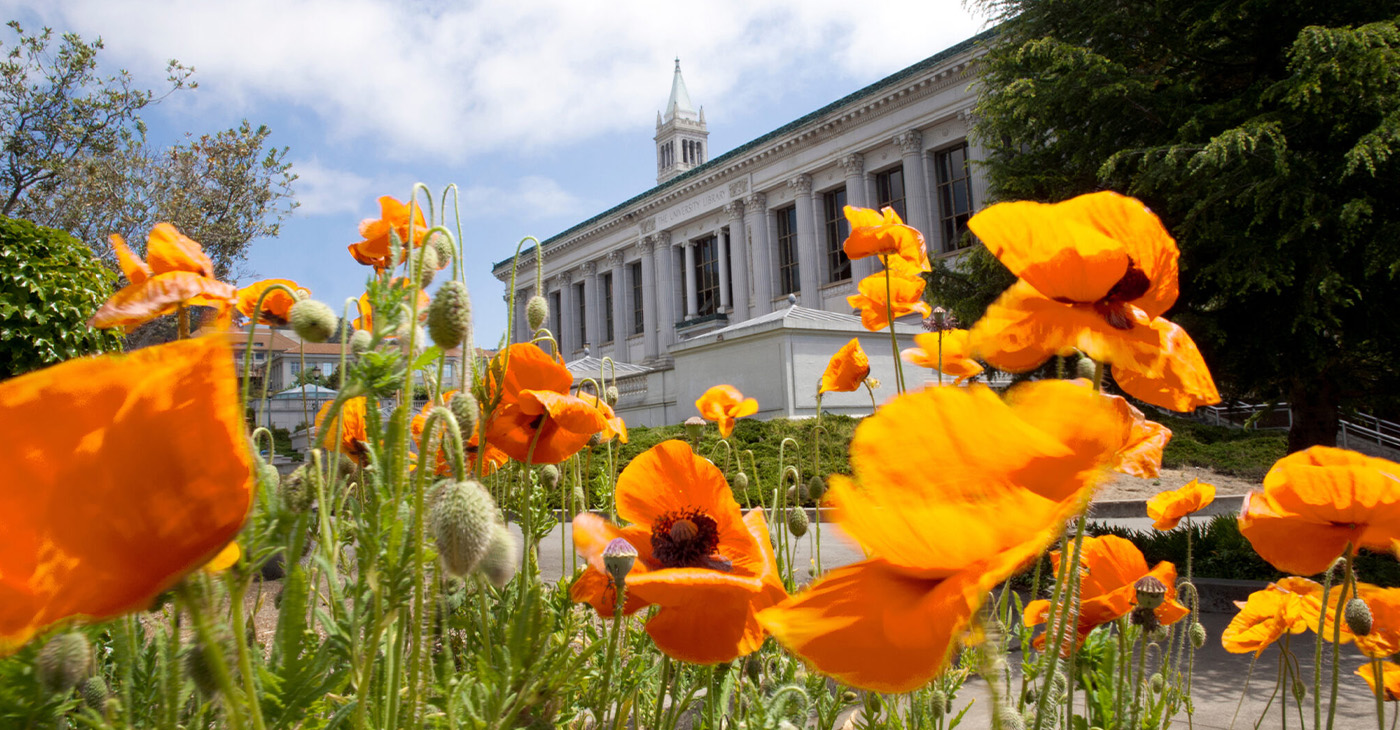
The 2026 Best Global Universities rankings evaluated 2,250 research institutions from more than 100 countries
By Lila Thulin
U.S. News & World Report has ranked UC Berkeley No. 7 in its 2026 list of the best global universities, which assesses more than 2,250 research institutions worldwide.
Berkeley also claimed the honor of top public university in the U.S.
Released on Monday, the list evaluates universities from more than 100 countries on 13 metrics such as global and research reputation (as reported by academics and peers) and number of highly cited scholarly papers.
Berkeley has been consistently awarded the distinction of the U.S.’s top public university since the Best Global Universities list was first published in 2014.
“A strong position in the Best Global Universities rankings recognizes a school’s profound commitment to world-class research and cross-border academic excellence,” said LaMont Jones, managing editor for education at U.S. News.
The rankings also assess a university’s strength in various subject areas; these assessments are separate from U.S. News’ 2026 Best Graduate Programs rankings released in April.
This year, Berkeley was named in the top three nationally in seven subject areas – environment/ecology, ecology, water resources, physics, computer science, chemistry, and engineering – and in the top five for a total of 17 subjects. Subject rankings are based heavily on scholarly publications and citations as well as reputation.

In September, U.S. News also released its 2026 Best Colleges list, in which Berkeley was also named the No. 1 public institution among American universities.
That honor joins other accolades judging campus to be the best public university in the country, such as those from Forbes, The Wall Street Journal and Times Higher Education.
Arts and Culture
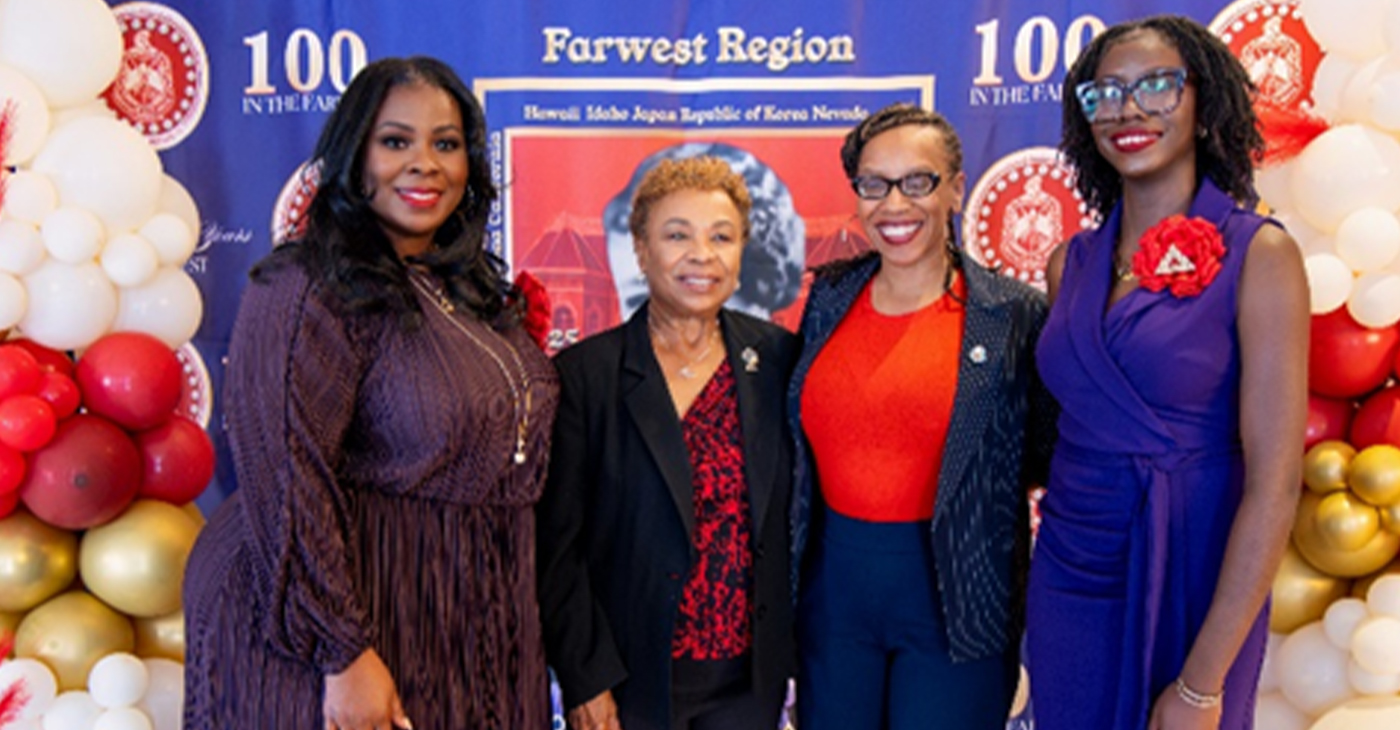
Farwest Region Deltas Celebrate Centennial With “September Breakfast” Honoring Vivian Osborne Marsh
The region was established in 1925 under the leadership of Vivian Osborne Marsh, who became its first Regional Director. Marsh was a pioneering scholar and civic leader, earning recognition as the first Black woman to receive both a bachelor’s and a master’s degree in anthropology from UC Berkeley.
By Antoinette Porter
Hundreds of members of Delta Sigma Theta Sorority, Inc., and their guests gathered at the Martin Luther King Jr. Student Union at the University of California, Berkeley, to mark the 100th anniversary of the sorority’s Farwest Region.
The region was established in 1925 under the leadership of Vivian Osborne Marsh, who became its first Regional Director. Marsh was a pioneering scholar and civic leader, earning recognition as the first Black woman to receive both a bachelor’s and a master’s degree in anthropology from UC Berkeley.
Marsh went on to serve as Delta Sigma Theta’s 7th National President, where she launched the sorority’s National Library Project to expand access to books in underserved Black communities in the South. During her presidency, the organization also became a prominent voice in the civil rights movement, lobbying Congress to pass anti-lynching legislation.
Bak in the Bay Area, Marsh devoted her career to advancing educational opportunities, mentoring young people, and strengthening community life. That commitment continues to shape the region, which supports initiatives in education, social justice, and economic development. Current projects include raising scholarship funds for students at Historically Black Colleges and Universities, voter education campaigns, and health and wellness programs.
A century after its founding, the Farwest Region of Delta Sigma Theta remains active across California and other western states, carrying forward Marsh’s vision of service and advocacy.



Asm. Corey Jackson Announces Launch of 24-Hour Childcare in His District

IN MEMORIAM: The Rev. Leon “Sonny” Clark, Longtime Orange County Pastor and Community Leader, Dies at 72

Poll: Becerra Widens His Lead Over Hilton; Californians Split on Wealth Tax

From Historic Memories to New Possibilities: Oakland Celebrates Coliseum 60

County Office of Education Says OUSD Finances Are Getting Healthier, Materially Stronger

LIVE FREE Sunday Dinner Brings Faith, Fellowship and Civic Conversation to Oakland

Remembering Chauncey Bailey as Student Journalists Face Threats to Truth-Telling

BLACspace Cooperative Invites Bay Area to Experience Oakland’s Black Cultural Ecosystem Through a BLAC Map Tour + Party

In Wake of Death on Doorstep, Williams Chapel Baptist Church Calls for Better Care, Funding for Unhoused

Oakland Centenarian Nuna McKee Honored!

Caribbean Nations Produce Action Plan Calling for UK Reparations Over Slavery

Oakland Post: Week of September 23 – 29, 2026

Doulas Are Helping Black California Moms Navigate Pregnancy–Even as High Mortality Rates Persist

Newsom Signs Addictive Social Media Law to Protect Kids

On Your November Ballot: Prop 38 Would Allocate $8.4 Billion to Immunology and Immunotherapy Funding

Standoff for Justice: Our Homes Are Worth Fighting For

Oakland Post: Week of August 26 – September 1, 2026

Frontier Airlines’ Return to Oakland Airport Brings Flights, Jobs and Opportunity

Gubernatorial Candidate Steve Hilton Blasts California New Tire Rules; Newsom Hits Back

Chef Sharon Lee Blends Culinary Excellence, Education and Empowerment

Jackie Wright Champions Bay Area Stories, Filmmakers and Cultural Institutions

Big City Mayors Ask for “Yes” Vote on Housing Bond Measure; Conservatives Say “No”

Oakland Coliseum Project Opens Door for Small Businesses to Build Bigger

Gov. Newsom’s Latest Appointees Include Sacramento Advocate for Formerly Incarcerated Students; State’s New Tech Chief

Misnamed ‘Parent’ PAC Seeks to Influence Oakland School Board Elections

Longtime BWOPA Member Brendalyn Goodall Appointed to California Workforce Development Board

Gov. Newsom Signs Law Shielding Immigration Aid Workers From Doxing Threats

Secretary of State Shirley N. Weber Urges Californians to Vote Early as Voter ID Battle Intensifies

From Palestine to Oakland: Seeds for Liberation Examines Shared Struggles for Freedom

IN MEMORIAM: Dolly Parton Dead at 80 — How She Built a Legacy of Love and Earned Her Place in Black Culture

The Conversation With Al McFarlane 6/23/26

Media Monday 6/22/26

LIVE! ASK ALMA! — TUES. 6.23.26 7PM EST

Car Buying Secrets: 4 Hidden Checks Before You Sign!

Is This 550 HP Charger Worth YOUR Money? AutoNetwork Review

Celebrating Juneteenth – Frederick Douglass on education and resistance

LIVE! — ASK ALMA! — TUES. 6.19.26 7PM EST

Hyundai Ioniq 5 Parking, Safety, and 360 View #shorts

2025 Ioniq 5 New Wiper & Powerful Performance! #shorts

Electric SUV Range: Is 259 Miles Enough? #shorts

EV Charging: How Fast Can You Charge an Electric Vehicle? #shorts

Biometric Cooling… Messaging Seats…Come on! 2025 Infiniti QX80 Autograph 4WD

Charged Up: Witness the Magic of a Fully Electric Car! #shorts

Range Rover Sport PHEV Included…: See What’s Inside This Luxury SUV! #shorts

Invisible Hood View: Perfect Parking with X-Ray Vision! #shorts
-
 Community3 weeks ago
Misnamed ‘Parent’ PAC Seeks to Influence Oakland School Board Elections
-

 Activism4 weeks ago
Oakland Post: Week of September 2 – 8, 2026
-

 Community3 weeks ago
Richmond Tiny House Village Farm & Garden Set to Open Gates on Sept. 26
-

 Activism3 weeks ago
Oakland Post: Week of September 9 – 15, 2026
-

 Black History3 weeks ago
Latest Massacre in Haiti Reveals Cruelty U.S. Deportations
-

 Black History3 weeks ago
OPINION: Nolan Wells’ Death One of Several Signifying Racial Terror Lives on in U.S. South
-

 Community3 weeks ago
Democratic Clubs Interview Candidates for Oakland School Board
-

 Business2 weeks ago
Mayor Lee Announces $1 Million Kaiser Permanente Grant for Pilot Program to Address Homelessness, Clean Up Public Spaces throughout Oakland
