
Black History
Inspired by MLK to make difference through love: Clara Ester
NASHVILLE PRIDE — That day at the Lorraine Motel shaped her ministry.

By Joe Lovino
“I have come to grips many, many, many years ago that only through love can we make a difference,” said United Methodist deaconess Clara Ester.
“We can actually change things if we love.”
Ester learned this important lesson from the Rev. Martin Luther King, Jr., leader of the Civil Rights Movement in the United States.
“Love takes a lot of effort and work,” Ester said, “but that’s the way God wants us to go, and that was the life that Dr. King led.”
“Being clergy he knew the importance of love,” Ester said, “and he wanted to deal with major issues and concerns that people were going through in a justice way. But he did it through love and nonviolence. That was his life.”
Growing up in Centenary Methodist Episcopal Church in Memphis, Tennessee, then pastored by civil rights leader Rev. James Lawson, Ester saw a connection between King and her faith.
“He led the life and stood up for things like Jesus did when he was on earth,” she said. “The marginalized people were the people Jesus hung out with. People that were not your favorite folks to be around were folks you found Jesus with. Dr. King stood up and spoke out for the same marginalized people. He tried to change structures that would make that world better.”
Ester hadn’t always seen things that way. “I had a lot of hate within me when I saw how people could be treated,” she said. Love and nonviolence seemed a slow way to affect change.
“I was a junior in college,” Ester said. “I heard both sides. But being young, 19 or 20 years old, I wanted everything to end as rapidly as possible.”
On the evening of April 4, 1968, things changed. Ester had just arrived at the Lorraine Motel when King came out of his room and started talking to people in the parking lot. A shot rang out. King’s assassination was a turning point for Ester.
“Witnessing his death, seeing him on that balcony, hearing him the night before say: ‘I may not get there with you, but we as a people will make it to the Promised Land.’ Recognizing more and more about his commitment to the nonviolent process. There was something about being over his body that said, ‘You need to change your hate. You need to love.’”
Reflecting on the call to love our neighbors, Ester references Jesus’ parable of the Good Samaritan where a man is mugged and left by the side of the road (Luke 10:25-37). Two religious leaders approach, and Jesus’ first listeners would have expected them to be the people to do something—but they each cross the street to avoid the injured man. The third person who comes down the road is a Samaritan.
This is not the person anyone would have expected to help out. The gospel of John tells us “Jews and Samaritans didn’t associate with each other” (John 4:9). Yet in Jesus’ story the Samaritan goes to extraordinary lengths to care for this stranger.
After concluding the parable, Jesus tells those who’ve head the story, “Go and do likewise.” On the balcony that day, Ester heard that same call.
“Witnessing his death made me recognize that I had a responsibility not to ever step over anybody, or walk on the other side of the road. If there were people that I was aware of on the path that I was going, I had a God-assigned responsibility to reach out and try to help make their world better.
“That’s where we all should be. If we all did that through love and compassion, we would be living in a greater society than we live in today.”
Immediately following King’s assassination, Ester left college. She went to Marks, Mississippi to work on the second Poor People’s Campaign, a march from Mississippi to Washington, D.C. planned by King. Marks was chosen because it was considered “the poorest town in the poorest county of the poorest state in the nation” (Mississippi Stories).
Later, Ester would return to school and finish her degree. She served as a deaconess in The United Methodist Church, working for people in need throughout her career. In 2006, she retired as executive director of Dumas Wesley Community Center, a mission institution in Mobile, Alabama supported by the United Methodist Women. Today Ester serves as national vice president of the United Methodist Women.
That day at the Lorraine Motel shaped her ministry.
“This man was willing to love until this moment when a bullet took his life. He was willing to work and stand up and fight in a nonviolent way,” she said. “That was the least that I could do.
“After that, it was strictly nothing but, ‘What can I do to help somebody else? What can I do to make life better? What can I do or what can I give to change the narrative of what’s taking place in this person’s life today?’ It was a turning point in my personal life for me to reflect on the direction I could have been in, and the direction I needed to go.”
This article originally appeared in the Nashville Pride.










Activism
Oakland Post: Week of March 18 – 24, 2026
The printed Weekly Edition of the Oakland Post: Week of March 18 – 24, 2026

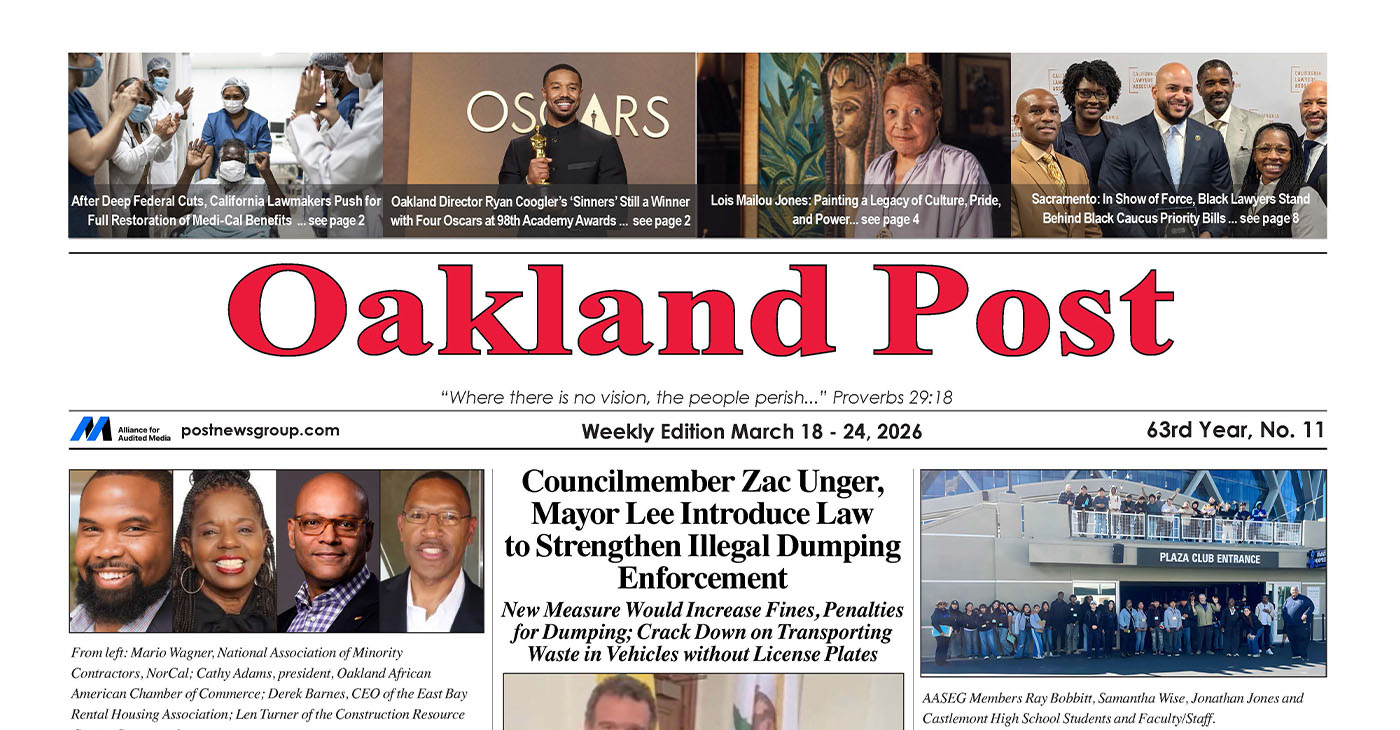
To enlarge your view of this issue, use the slider, magnifying glass icon or full page icon in the lower right corner of the browser window.

Activism
Oakland Post: Week of March 11 -17, 2026
The printed Weekly Edition of the Oakland Post: Week of March 11 – 17, 2026
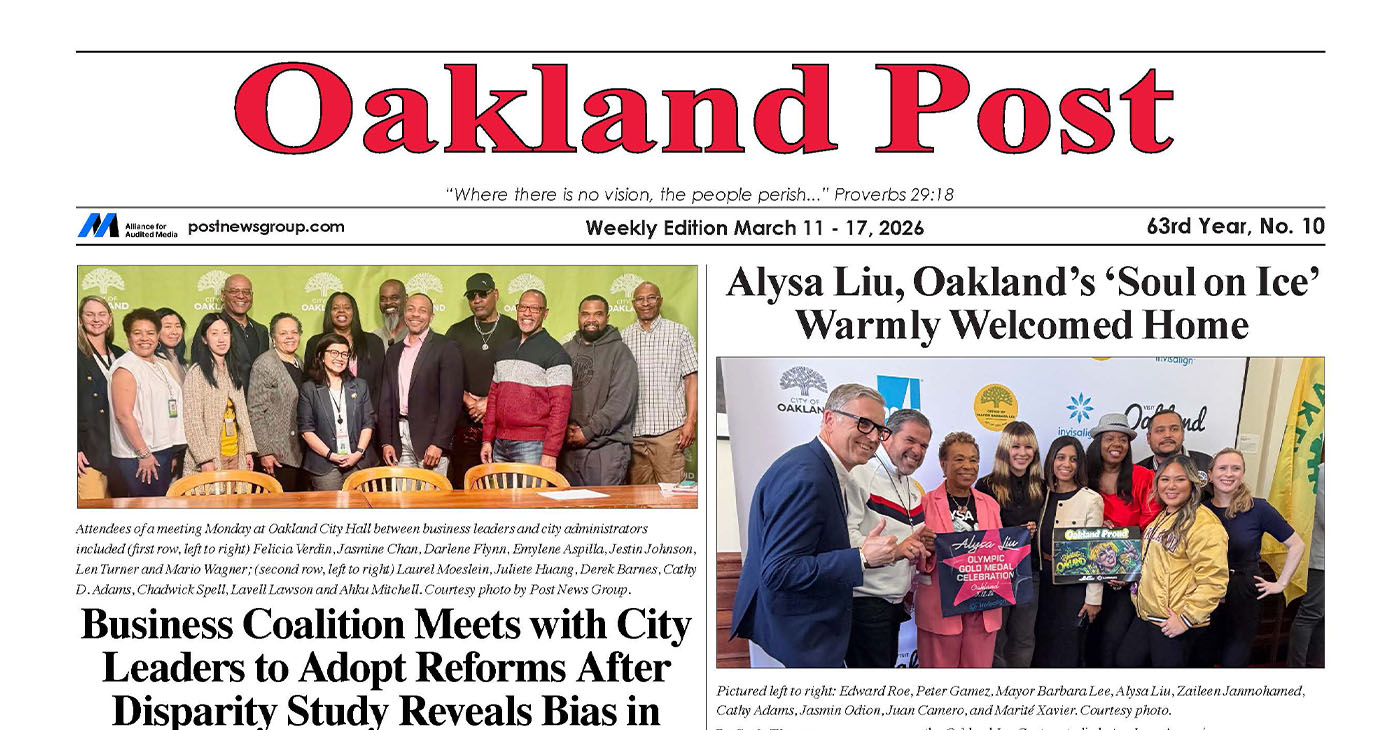
To enlarge your view of this issue, use the slider, magnifying glass icon or full page icon in the lower right corner of the browser window.
Activism
Oakland Post: Week of March 4 – 10, 2026
The printed Weekly Edition of the Oakland Post: Week of March 4 – 10, 2026

To enlarge your view of this issue, use the slider, magnifying glass icon or full page icon in the lower right corner of the browser window.

WORK FROM HOME
Home-based business with potential monthly income of $10K+ per month. A proven training system and website provided to maximize business effectiveness. Perfect job to earn side and primary income. Contact Lynne for more details: Lynne4npusa@gmail.com 800-334-0540


Black Artists in America, Installation Three Wraps at the Dixon Gallery and Gardens

Grief, Advocacy, and Education: A Counselor Reflects on Black Maternal Health

Future of Florida’s Black History Museum in Limbo

New Research Shows the Many Benefits of Early Learning

South Hampton K-8 Students Among Top 10 Finalists for Samsung’s ‘Solve for Tomorrow’ Competition

Cuba: No Negotiation with US on the President or Political System

Brooklyn Academy of Music Names Jamaican-Born Tamara McCaw as President

Trinidad & Tobego – U.S. Launches WhatsApp Channel for American Citizens in the Country

Oakland Post: Week of March 18 – 24, 2026

AI Innovation vs. Ethics and Environmental Impact

AI, Web3, and Digital Reparations

What If You Owned Your AI Agent?

Season 7, Episode 3 – January Reporter’s Roundtable 📱

Season 7, Episode 3 – January Reporter’s Roundtable

AI, Media, and Power | Part 2, Real-World Impacts and Tradeoffs

Oakland Post: Week of February 11 – 17, 2026

Reflecting on Black History Milestones in Birmingham AL

CITY OF SAN LEANDRO STATE OF CALIFORNIA PUBLIC WORKS DEPARTMENT ENGINEERING DIVISION NOTICE TO BIDDERS FOR ANNUAL STREET OVERLAY/REHABILITATION 2019-21 – PHASE III

Oakland Post: Week of February 18 – 24, 2026

PRESS ROOM: NBA Hall of Fame Nominee Terry Cummings Joins 100 Black Men of DeKalb County to Launch Victory & Values Initiative

Oakland Post: Week of February 25 – March 3, 2026

Trump’s MAGA Allies are Creating Executive Order Plan to Steal the 2026 Midterms

U.S. manufacturing rebounds – how foundry services are adapting to rising demand

OP-ED: One Hundred Years of Black Workers Telling the Truth

Advancements in solar technology that are changing the way we power the world

Chase Oakland Community Center Hosts Alley-Oop Accelerator Building Community and Opportunity for Bay Area Entrepreneurs

Poll Shows Support for Policies That Help Families Afford Child Care

Oakland Post: Week of March 4 – 10, 2026

PRESS ROOM: Civil Rights TV Launches in Selma as the World’s First 24/7 Civil Rights Television Network

Ghana Mourns a Son of the African World

Hyundai Ioniq 5 Parking, Safety, and 360 View #shorts

2025 Ioniq 5 New Wiper & Powerful Performance! #shorts

Electric SUV Range: Is 259 Miles Enough? #shorts

EV Charging: How Fast Can You Charge an Electric Vehicle? #shorts

Biometric Cooling… Messaging Seats…Come on! 2025 Infiniti QX80 Autograph 4WD

Charged Up: Witness the Magic of a Fully Electric Car! #shorts

Range Rover Sport PHEV Included…: See What’s Inside This Luxury SUV! #shorts

Invisible Hood View: Perfect Parking with X-Ray Vision! #shorts

AI Is Reshaping Black Healthcare: Promise, Peril, and the Push for Improved Results in California

ESSAY: Technology and Medicine, a Primary Care Point of View

Sanctuary Cities

The RESISTANCE – FREEDOM NOW

STATE OF THE PEOPLE: Freddie

ECONOMIC BOYCOTT DAY!!!!!

I told You So

-
 #NNPA BlackPress4 weeks ago
Poll Shows Support for Policies That Help Families Afford Child Care
-
 Activism4 weeks ago
Oakland Post: Week of March 4 – 10, 2026
-

 #NNPA BlackPress3 weeks ago
Woman’s Search for Family’s Roots Leads to Ancestor John T. Ward – A Successful Entrepreneur and Conductor on the Underground Railroad
-

 #NNPA BlackPress4 weeks ago
OP-ED: NNPA Launches 2026 “Leadership Matters” Video Series
-

 #NNPA BlackPress3 weeks ago
Advocates Raise Alarm Over ICE Operation, MOU and Detention Risks in Baltimore County
-

 #NNPA BlackPress3 weeks ago
COMMENTARY: Women of Color Shape Our Past and Future
-

 #NNPA BlackPress3 weeks ago
Pete Buttigieg to Join Mayor Randall Woodfin for Community Town Hall in Birmingham
-
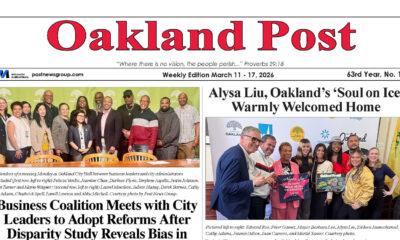
 Activism2 weeks ago
Oakland Post: Week of March 11 -17, 2026
