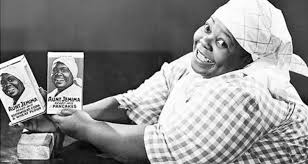
Many consider the term “Aunt Jemima” disparaging and offensive, stereotyping Black women as subservient. But Nancy Green (1834–1923), the living trademark for Aunt Jemima’s self-rising flour, parlayed the image into a successful corporate career despite her humble beginnings.
Green was born into slavery in Montgomery County, Ky. She cooked for the family of her owner, a judge, and served as a nurse for his two sons. It was after moving to Chicago that Green began to master her cooking skills, one that would eventually secure her financial future for life.
Despite popular belief, the famous Aunt Jemima recipe was not a creation of Green’s. In 1889, Charles Underwood and Chris Rutt, a St. Joseph, Mo., newspaperman, purchased the Pearl Milling Company. The pair had the idea of developing and packaging a ready-mixed, self-rising pancake flour and began working on it almost immediately. Because the food industry was highly competitive, a creative brand for the product was needed, one that would make them stand out.
That same year, Rutt had attended a vaudeville show. There, a blackface performer dressed in an apron and bandanna headband performed a tune entitled “Aunt Jemima.” Rutt then had the idea to call the pancake flour after Aunt Jemima. Within a year though, Rutt and Underwood went broke and were forced to sell the flour formula to the R.T. Davis Milling Company.
Davis began an immediate search for a Black woman to become the living trademark for his product. At 56, Green was discovered in Chicago. The Aunt Jemima Pancake Mix was subsequently introduced in St. Joseph, Mo.
In 1893, the Davis Milling Company began to promote the Aunt Jemima image at Chicago’s World’s Columbian Exposition (World’s Fair). There Green, as Aunt Jemima, demonstrated the pancake mix and served thousands of pancakes. Event-goers loved her personality, storytelling, and her cooking. Her exhibition booth drew so many people that special policemen were assigned to keep the crowds moving. More than 50,000 orders were taken that day, and expo officials awarded Green a medal and certificate for her showmanship. Proclaimed “Pancake Queen,” Green had proven to be the ideal living trademark.
Green was signed to a lifetime contract, traveling on promotional tours all over the country. Pancake flour sales increased, and pancakes were no longer considered exclusively for breakfast.
Although Green’s pancakes have maintained their popularity, her name often is forgotten as a woman who was born into the horrors of slavery, yet turned a localized flour business into a thriving national enterprise and racial stereotypes into symbols of friendliness, hospitality, and prosperity. She was one of the first African American women hired as a corporate representative.
Still, some continue criticize Green and label her as the stereotypical Black mammy, while overlooking her individual courage, determination, and talent.
Green maintained her position until she was killed in a car crash in Chicago in 1923. The Davis Company also ran into money problems, and the Quaker Oats Company purchased the Aunt Jemima Mills in 1925.

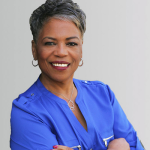
Tamara Shiloh
Tamara Shiloh has published the first two books in her historical fiction chapter book series,
Just Imagine…What If There Were No Black People in the World is about African American inventors, scientists and other notable Black people in history. The two books are
Jaxon’s Magical Adventure with Black Inventors and Scientists and
Jaxon and Kevin’s Black History Trip Downtown. Tamara Shiloh has also written a book a picture book for Scholastic,
Cameron Teaches Black History, that will be available in June, 2022.
Tamara Shiloh’s other writing experiences include: writing the Black History column for the Post Newspaper in the Bay area, Creator and Instruction of the black History Class for Educators a professional development class for teachers and her non-profit offers a free Black History literacy/STEM/Podcast class for kids 3d – 8th grade which also includes the Let’s Go Learn Reading and Essence and tutorial program. She is also the owner of the Multicultural Bookstore and Gifts, in Richmond, California,
Previously in her early life she was the /Editor-in-Chief of
Desert Diamonds Magazine, highlighting the accomplishments of minority women in Nevada; assisting with the creation, design and writing of a Los Angeles-based, herbal magazine entitled
Herbal Essence; editorial contribution to
Homes of Color; Editor-in-Chief of
Black Insight Magazine, the first digital, interactive magazine for African Americans; profile creations for sports figures on the now defunct PublicFigure.com; newsletters for various businesses and organizations; and her own Las Vegas community newsletter,
Tween Time News, a monthly publication highlighting music entertainment in the various venues of Las Vegas.
She is a member of:
- Society of Children’s Book Writers and Illustrators (SCBWI)
- Richmond Chamber of Commerce
- Point Richmond Business Association
- National Association of Professional Women (NAPW)
- Independent Book Publishers Association (IPBA)
- California Writers Club-Berkeley & Marin
- Richmond CA Kiwanis
- Richmond CA Rotary
- Bay Area Girls Club
Tamara Shiloh, a native of Northern California, has two adult children, one grandson and four great-grand sons. She resides in Point Richmond, CA with her husband, Ernest.
www.multiculturalbookstore.com