
Activism
How Four California Cities Are Approaching Reparations for Black Residents
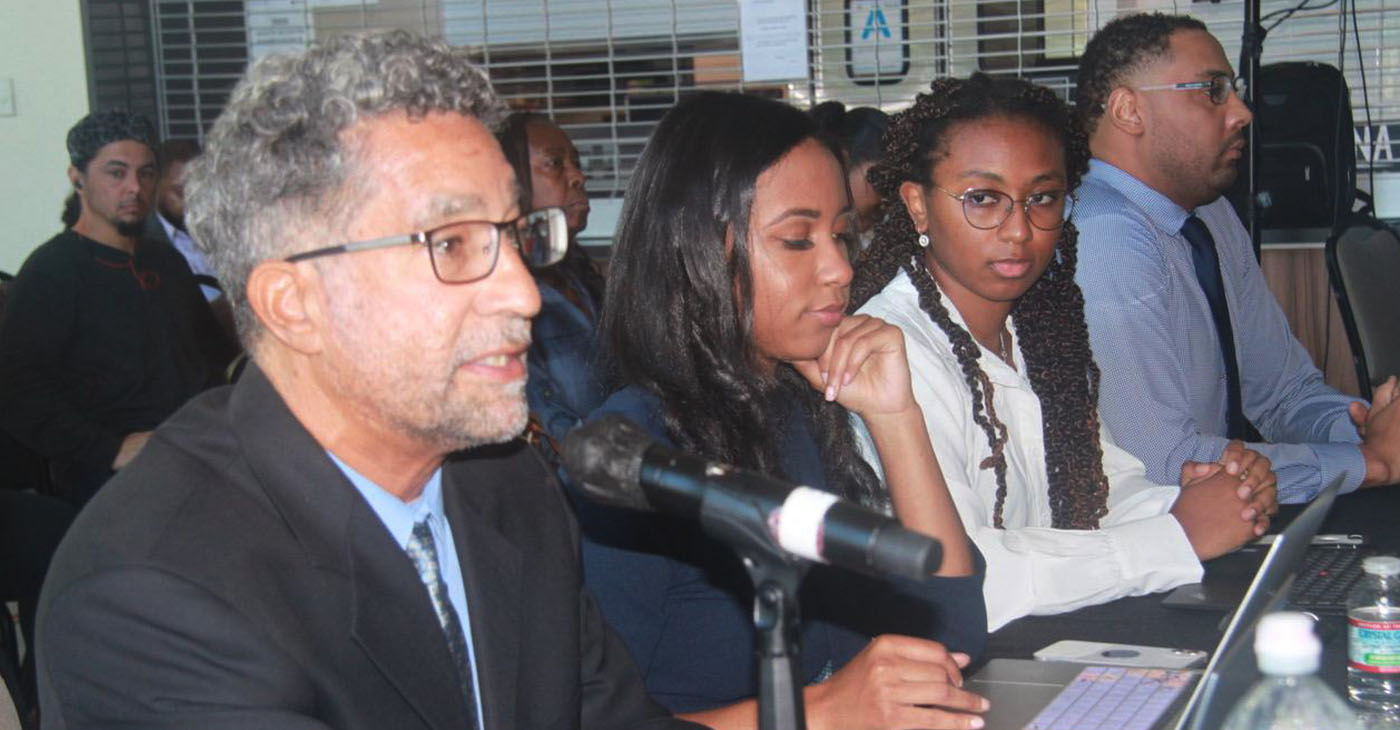
The California Reparations Task Force to Study and Develop Reparation Proposals for African Americans will hold its last in-person meeting on June 29 in Sacramento. The meeting will take place in the First Floor Auditorium of the March Fong Eu Secretary of State Building, located at 1500 11th Street. The task force will submit its final report to the California Legislature. If approved, California could become the first state to provide reparations to the descendants of enslaved Black Americans.

By Antonio Ray Harvey
California Black Media
The California Reparations Task Force to Study and Develop Reparation Proposals for African Americans will hold its last in-person meeting on June 29 in Sacramento.
The meeting will take place in the First Floor Auditorium of the March Fong Eu Secretary of State Building, located at 1500 11th Street.
The task force will submit its final report to the California Legislature. If approved, California could become the first state to provide reparations to the descendants of enslaved Black Americans.
Task force vice-chairperson Rev. Amos Brown said the state Legislature must “do the right thing” before leaving San Francisco for a speaking engagement in Jackson, Miss., to recognize the 60th anniversary of NAACP field secretary Medgar Evers assassination on June 12, 1963.
“It’s now time for some deliberate action,” said Brown, the pastor of Third Street Baptist Church in San Francisco. “If they don’t provide support action, or forms of reparations in this nation, and in this state, they will be giving credence to bigotry, racism, and inhumanity towards Black folks.”
During the past 24 months, while the state reparations task force held public hearings and listened to expert testimony to uncover historic wrongdoings and discriminatory policies against descendants of enslaved Blacks in order to determine appropriate compensation, some cities in California started their own reparations efforts.
In June 2021, the city of Los Angeles established the Reparations Advisory Commission (RAC), a seven-member task force comprised of activists, academicians, attorneys, racial justice advocates, and more. It is supported by Los Angeles’ Civil + Human Rights and Equity Department’s Office of Racial Equity.
The RAC advises the city on the formation of a reparations pilot program for Californians who are descendants of enslaved Black Americans in the Los Angeles area, according to Khansa T. “Friday Jones” Jones-Muhammad, a member of the commission. The RAC provides recommendations for the format, function, and goals of the initiative, including strategies and opportunities to seek public or private funding.
In April, RAC hosted its first in-person forum at the California African American Museum.
“African Americans in Los Angeles are overrepresented in homelessness and underrepresented in generational wealth. It is the result of a system that has denied African Americans the ability to fully exercise their God-given liberties,” said RAC Chairperson Michael Lawson at the meeting.
Lawson is the CEO and president of the L.A. Urban League.
“The closure needed is a mutual recognition of the wrongs that have been meted upon the members of the victimized community. I am grateful to everyone who joined us as we take this step forward together,” he added.
In December 2020, the San Francisco Board of Supervisors passed an ordinance establishing the 15-member San Francisco African American Reparations Advisory Committee (AARAC).
Over the course of two years, AARAC developed a San Francisco Reparations Plan that addresses institutional and city-sanctioned wrongdoings against Black communities in San Francisco.
AARAC specifically focuses on improving different aspects of Black life, including education, housing, workforce development, economic opportunities, financial stability, small businesses, access to public transit, and food security.
The committee is committed to reducing violence, addressing health disparities and preventing over-criminalization of African Americans.
In March, AARAC presented to the San Francisco Board of Supervisors more than 100 recommendations, including a proposal to pay each qualifying Black city resident a one-time lump sum reparation payment of $5 million.
In an interview with San Francisco’s KRON 4 News on March 24, Eric McDonnell, the chairperson of AARAC, stated that the recommendations are an estimation of the atrocities experienced by Black Americans.
“Our task (AARAC) was to do the appraisal, and it’s the city’s task to determine, based upon recommendations, what they decide to adopt,” McDonnell said.
In 2020, after the murder of George Floyd, San Diego established the Department of Race and Equity (DRE) to address disparities experienced by individuals in the city.
This initiative was led by San Diego City Councilmember Monica Montgomery-Steppe, who is a member of the state’s reparations task force.
Last year, the city of Sacramento began developing a municipal reparations initiative committed to “truth telling and trust building” called the Sacramento Centered on Racial Equity (SCORE) plan.
SCORE is designed to interrupt patterns and processes rooted in dominant cultural patterns that perpetuate systemic racism and racial hierarchy within the city.
Betty Williams, president of the Sacramento branch of the NAACP, praised the work SCORE has started but she wants to further expand discussions on reparations for the Sacramento Black community.
“I want an outreach team to go out in the community to ask the critical question: ‘Do you want a (reparations) task force and what should it look like?’” Williams told California Black Media.
“That’s the discussion I’ve had with Mayor (Darrell) Steinberg on how to put something like this together. It’s not just monetary. Education, housing, small business — all of those things should be part of the recommendations and of what reparations should look like for Black Sacramentans.”






Activism
Oakland Post: Week of March 18 – 24, 2026
The printed Weekly Edition of the Oakland Post: Week of March 18 – 24, 2026
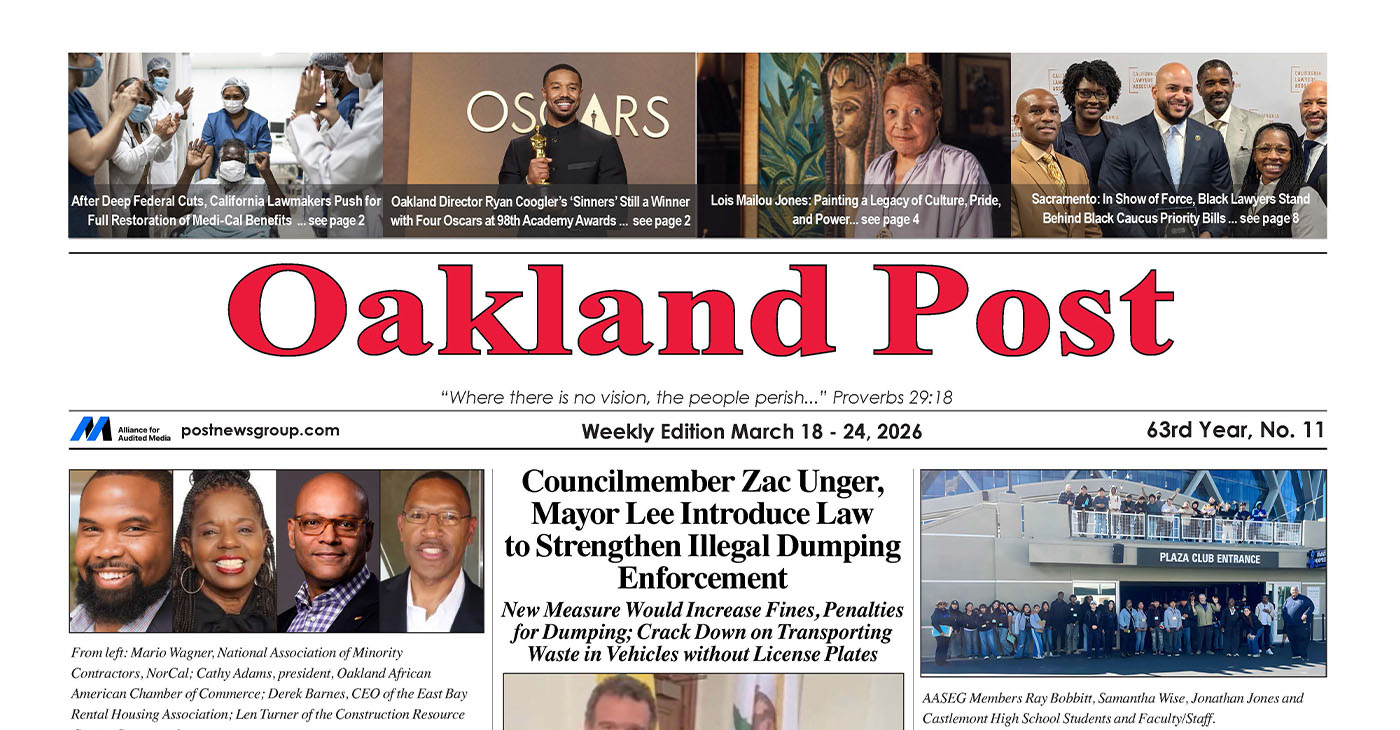
To enlarge your view of this issue, use the slider, magnifying glass icon or full page icon in the lower right corner of the browser window.
Activism
Oakland Post: Week of March 11 -17, 2026
The printed Weekly Edition of the Oakland Post: Week of March 11 – 17, 2026
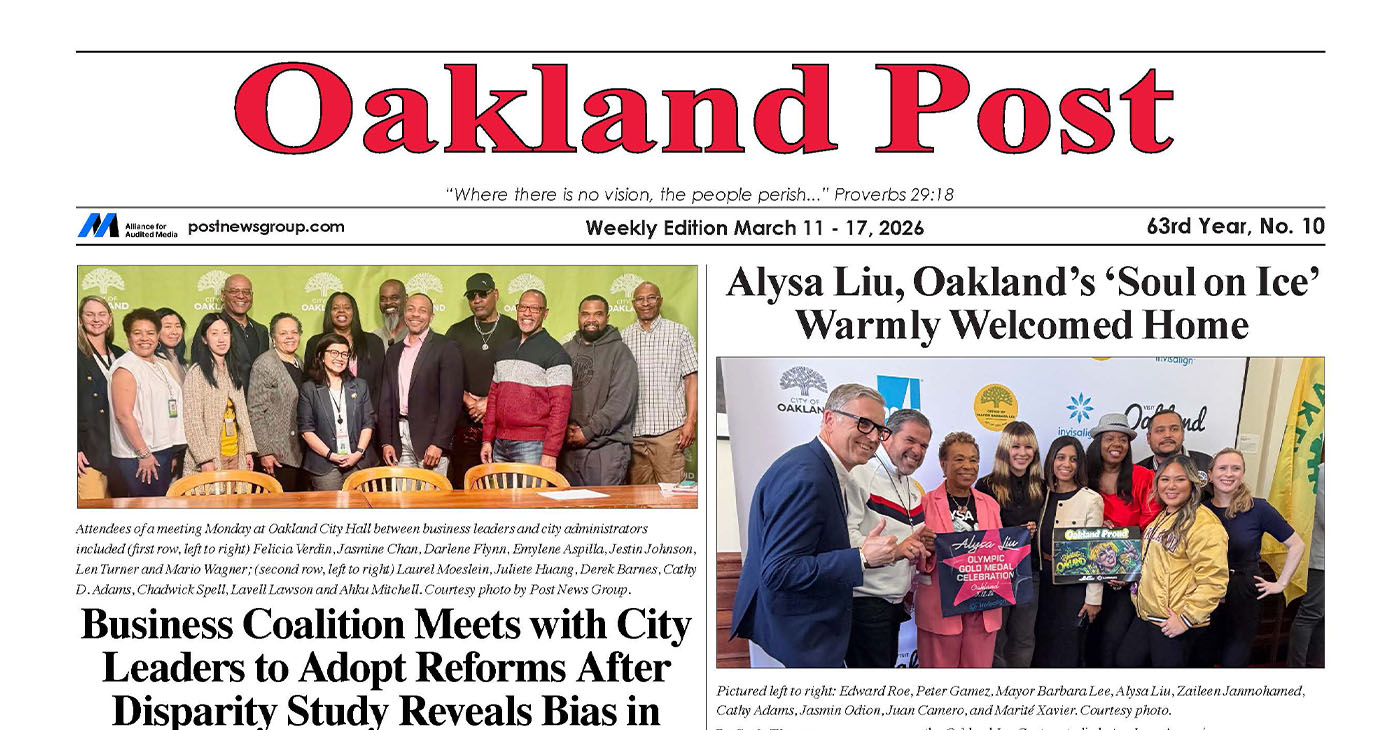
To enlarge your view of this issue, use the slider, magnifying glass icon or full page icon in the lower right corner of the browser window.
Activism
Oakland Post: Week of March 4 – 10, 2026
The printed Weekly Edition of the Oakland Post: Week of March 4 – 10, 2026

To enlarge your view of this issue, use the slider, magnifying glass icon or full page icon in the lower right corner of the browser window.


WORK FROM HOME
Home-based business with potential monthly income of $10K+ per month. A proven training system and website provided to maximize business effectiveness. Perfect job to earn side and primary income. Contact Lynne for more details: Lynne4npusa@gmail.com 800-334-0540


Black Artists in America, Installation Three Wraps at the Dixon Gallery and Gardens

Grief, Advocacy, and Education: A Counselor Reflects on Black Maternal Health

Future of Florida’s Black History Museum in Limbo

New Research Shows the Many Benefits of Early Learning

South Hampton K-8 Students Among Top 10 Finalists for Samsung’s ‘Solve for Tomorrow’ Competition

Cuba: No Negotiation with US on the President or Political System

Brooklyn Academy of Music Names Jamaican-Born Tamara McCaw as President

Trinidad & Tobego – U.S. Launches WhatsApp Channel for American Citizens in the Country

Oakland Post: Week of March 18 – 24, 2026

AI Innovation vs. Ethics and Environmental Impact

AI, Web3, and Digital Reparations

What If You Owned Your AI Agent?

Season 7, Episode 3 – January Reporter’s Roundtable 📱

Season 7, Episode 3 – January Reporter’s Roundtable

AI, Media, and Power | Part 2, Real-World Impacts and Tradeoffs

Oakland Post: Week of February 11 – 17, 2026

Reflecting on Black History Milestones in Birmingham AL

CITY OF SAN LEANDRO STATE OF CALIFORNIA PUBLIC WORKS DEPARTMENT ENGINEERING DIVISION NOTICE TO BIDDERS FOR ANNUAL STREET OVERLAY/REHABILITATION 2019-21 – PHASE III

Oakland Post: Week of February 18 – 24, 2026

Oakland Post: Week of February 25 – March 3, 2026

PRESS ROOM: NBA Hall of Fame Nominee Terry Cummings Joins 100 Black Men of DeKalb County to Launch Victory & Values Initiative

Trump’s MAGA Allies are Creating Executive Order Plan to Steal the 2026 Midterms

U.S. manufacturing rebounds – how foundry services are adapting to rising demand

OP-ED: One Hundred Years of Black Workers Telling the Truth

Oakland Post: Week of March 4 – 10, 2026

Chase Oakland Community Center Hosts Alley-Oop Accelerator Building Community and Opportunity for Bay Area Entrepreneurs

Poll Shows Support for Policies That Help Families Afford Child Care

Advancements in solar technology that are changing the way we power the world

PRESS ROOM: Civil Rights TV Launches in Selma as the World’s First 24/7 Civil Rights Television Network

Woman’s Search for Family’s Roots Leads to Ancestor John T. Ward – A Successful Entrepreneur and Conductor on the Underground Railroad

Hyundai Ioniq 5 Parking, Safety, and 360 View #shorts

2025 Ioniq 5 New Wiper & Powerful Performance! #shorts

Electric SUV Range: Is 259 Miles Enough? #shorts

EV Charging: How Fast Can You Charge an Electric Vehicle? #shorts

Biometric Cooling… Messaging Seats…Come on! 2025 Infiniti QX80 Autograph 4WD

Charged Up: Witness the Magic of a Fully Electric Car! #shorts

Range Rover Sport PHEV Included…: See What’s Inside This Luxury SUV! #shorts

Invisible Hood View: Perfect Parking with X-Ray Vision! #shorts

AI Is Reshaping Black Healthcare: Promise, Peril, and the Push for Improved Results in California

ESSAY: Technology and Medicine, a Primary Care Point of View

Sanctuary Cities

The RESISTANCE – FREEDOM NOW

STATE OF THE PEOPLE: Freddie

ECONOMIC BOYCOTT DAY!!!!!

I told You So
-
 Activism4 weeks ago
Oakland Post: Week of March 4 – 10, 2026
-
 #NNPA BlackPress3 weeks ago
Woman’s Search for Family’s Roots Leads to Ancestor John T. Ward – A Successful Entrepreneur and Conductor on the Underground Railroad
-

 #NNPA BlackPress4 weeks ago
OP-ED: NNPA Launches 2026 “Leadership Matters” Video Series
-

 #NNPA BlackPress3 weeks ago
Advocates Raise Alarm Over ICE Operation, MOU and Detention Risks in Baltimore County
-

 #NNPA BlackPress3 weeks ago
COMMENTARY: Women of Color Shape Our Past and Future
-

 #NNPA BlackPress3 weeks ago
Pete Buttigieg to Join Mayor Randall Woodfin for Community Town Hall in Birmingham
-
 Activism2 weeks ago
Oakland Post: Week of March 11 -17, 2026
-

 #NNPA BlackPress4 weeks ago
PRESS ROOM: PMG and Cranbrook Horizons-Upward Bound Launch Journey Fellowship Cohort 2
