
Bay Area
Homelessness Committee and Advocates Urge City to Stop Confiscating Unhoused People’s Belongings
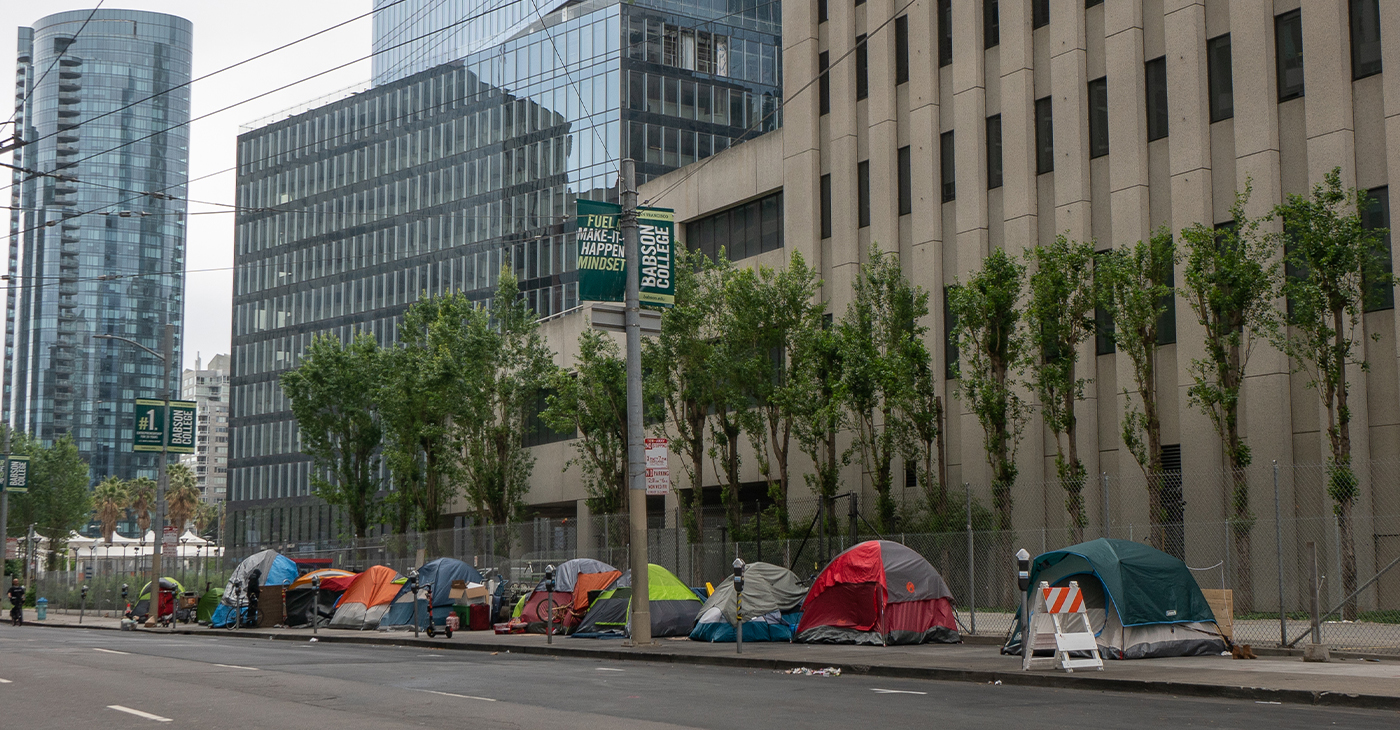
Encampment sweeps are not a new method of action to evict people from living and sleeping on the streets in San Francisco. However, recent reports indicate that city staff are not following proper policy, exacerbating the problems for unhoused people. Homeless advocates and allies held a press conference on Thursday at City Hall, condemning staff workers for destroying people’s property during encampment evictions and asking officials to ensure that important documents and medication are not being stripped from these individuals.

By Magaly Muñoz
Encampment sweeps are not a new method of action to evict people from living and sleeping on the streets in San Francisco. However, recent reports indicate that city staff are not following proper policy, exacerbating the problems for unhoused people.
Homeless advocates and allies held a press conference on Thursday at City Hall, condemning staff workers for destroying people’s property during encampment evictions and asking officials to ensure that important documents and medication are not being stripped from these individuals.
“By destroying the very items that could help people regain stability, the city is not just punishing people for being poor, but actively making it harder for them to escape homelessness,” Jennifer Friedenbach, executive director of the Coalition on Homelessness, said.
Friedenbach criticized the city for not fixing their housing problem or finding new ways to shelter people, instead they are further adding to the harm of the “humanitarian crisis that San Francisco is facing.”
The press conference was held before the monthly Homelessness Oversight Commission (HOC) meeting, where commissioners discussed a draft resolution to submit to city staff highlighting the importance of not separating people from their items as this might cause further distress.
The resolution lists ssential items that workers should be cautious of not destroying or throwing away including medical documents and medication, work permits, identification, and survival gear, such as blankets or tents.
City policy instructs workers to “bag and tag” items left behind after an encampment sweep. These items are labeled by Public Works and kept at their operations yard for 90 days before being discarded.
But according to several reports and videos of the sweeps, the city has not always followed this policy and has on numerous occasions thrown away people’s medications or tents, leaving individuals without their essentials.
During the meeting, commissioners suggested adding school records and family related support items, such as diapers, to the resolution because of the increasing number of families living on the streets.
Virginia Taylor, senior policy advisor for Safe & Sound, said 531 families are waiting for housing in San Francisco. Many of these families are living out of their cars or in RVs, yet the city has limited safe parking spots where people can situate themselves.
Along with not throwing out people’s belongings, advocates are also continuing to ask the city to stop the encampment sweeps because all they are accomplishing is moving unhoused folks block to block without solving the root problem of lack of consistent housing.
“We need urgent action, more family shelter beds, a stop to vehicle sweeps, expanded safe parking programs and housing solutions that keep our multi-generational families together. Our children’s futures depend on it. Let’s build a San Francisco where no family falls through the crack and every child has the opportunity to thrive,” Taylor said.
Speakers referenced the RV sweep conducted in early August on Zoo Road, where dozens of people, many of them non-English speaking immigrants, were asked to leave the parking lot or else their vehicles would be towed and they would be cited.
While people were offered shelter beds or housing vouchers, some worried about where they would stay while the city processed their applications. This drew criticism of San Francisco’s method of not always having immediate options for people yet continuing to sweep unhoused folks with nowhere to go.
Commissioners of HOC agreed that the city is not trying to exacerbate the issue and the resolution is one of many steps to ensure that there are no setbacks in the progress to ending homelessness in San Francisco.
The HOC will approve the resolution at a later meeting once amendments and changes are made.














Activism
Oakland Post: Week of April 1 – 7, 2026
The printed Weekly Edition of the Oakland Post: Week of April 1 – 7, 2026
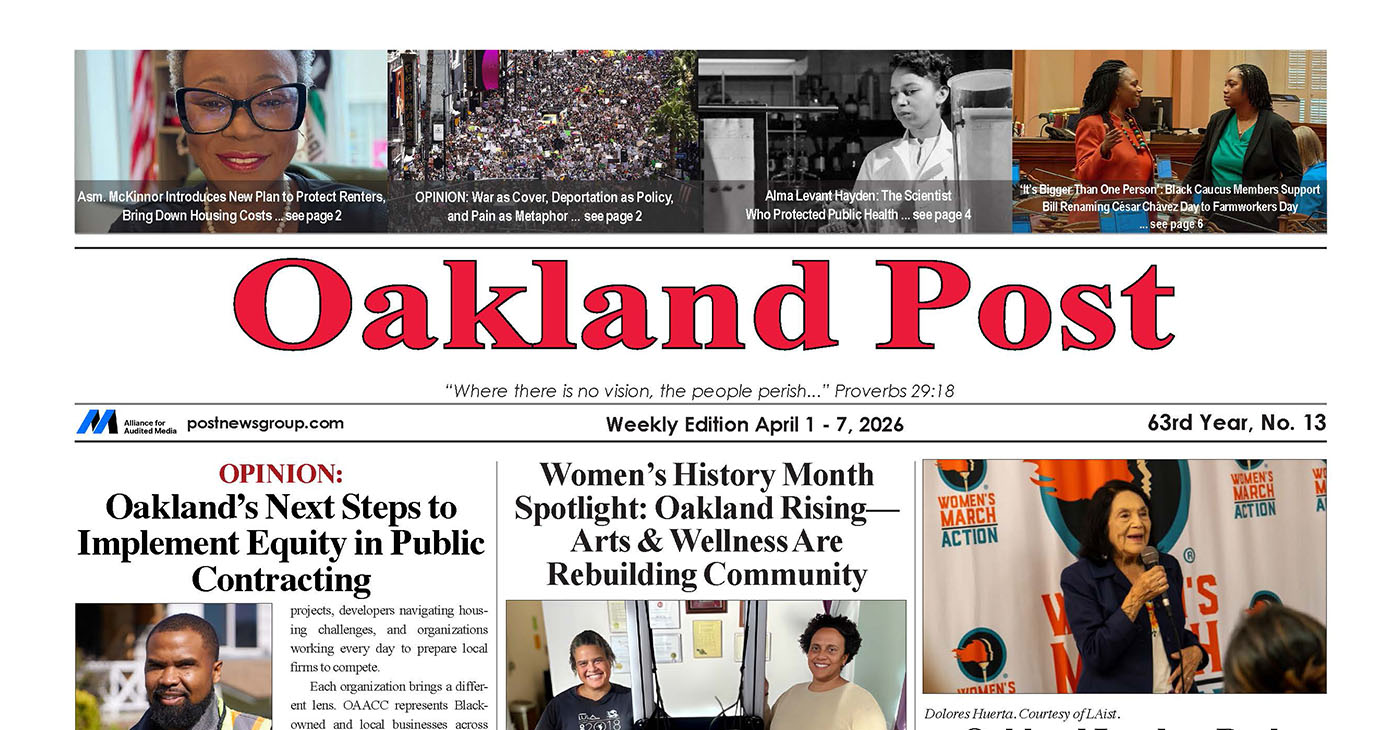
To enlarge your view of this issue, use the slider, magnifying glass icon or full page icon in the lower right corner of the browser window.
Activism
Oakland Post: Week of March 18 – 24, 2026
The printed Weekly Edition of the Oakland Post: Week of March 18 – 24, 2026

To enlarge your view of this issue, use the slider, magnifying glass icon or full page icon in the lower right corner of the browser window.
Activism
Oakland Post: Week of March 11 -17, 2026
The printed Weekly Edition of the Oakland Post: Week of March 11 – 17, 2026
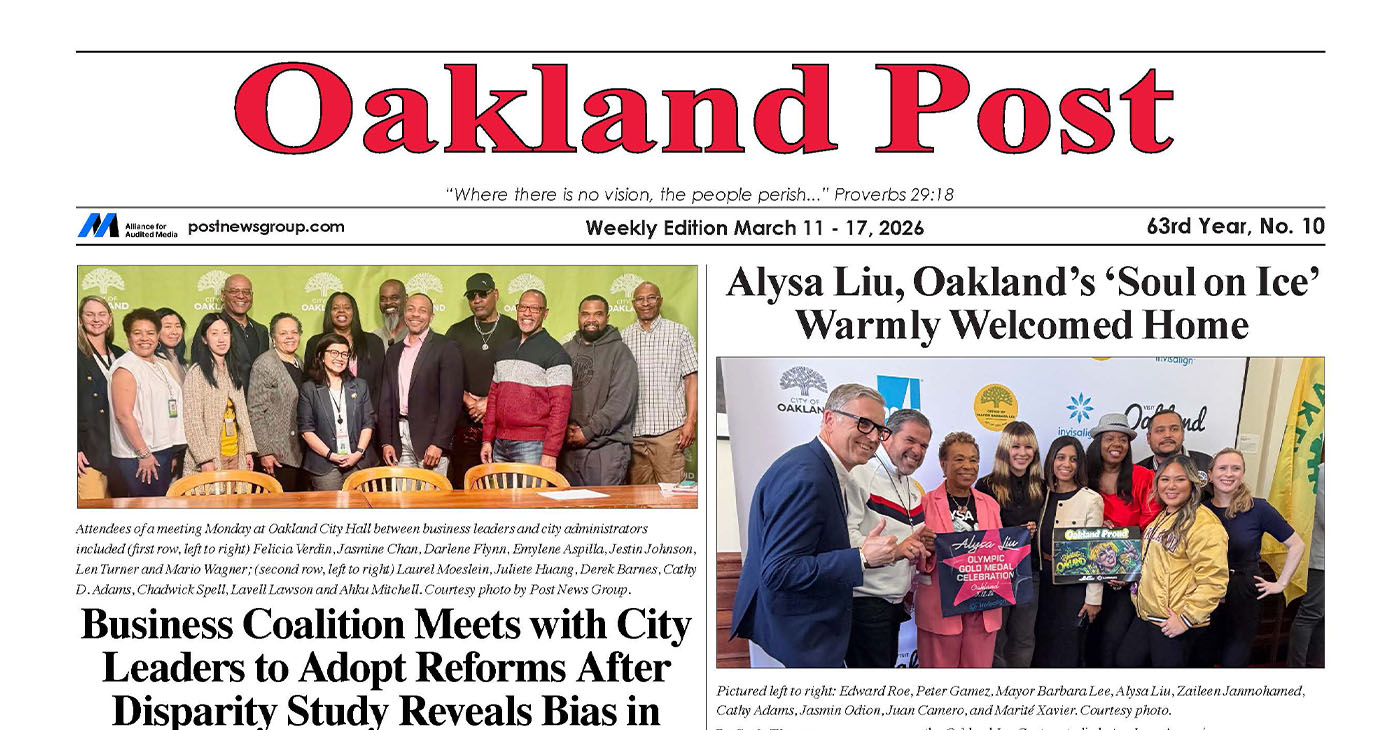
To enlarge your view of this issue, use the slider, magnifying glass icon or full page icon in the lower right corner of the browser window.

WORK FROM HOME
Home-based business with potential monthly income of $10K+ per month. A proven training system and website provided to maximize business effectiveness. Perfect job to earn side and primary income. Contact Lynne for more details: Lynne4npusa@gmail.com 800-334-0540


Oakland Post: Week of April 1 – 7, 2026

Black Artists in America, Installation Three Wraps at the Dixon Gallery and Gardens

Grief, Advocacy, and Education: A Counselor Reflects on Black Maternal Health

Future of Florida’s Black History Museum in Limbo

New Research Shows the Many Benefits of Early Learning

South Hampton K-8 Students Among Top 10 Finalists for Samsung’s ‘Solve for Tomorrow’ Competition

Cuba: No Negotiation with US on the President or Political System

Brooklyn Academy of Music Names Jamaican-Born Tamara McCaw as President

Trinidad & Tobego – U.S. Launches WhatsApp Channel for American Citizens in the Country

Oakland Post: Week of March 18 – 24, 2026

AI Innovation vs. Ethics and Environmental Impact

AI, Web3, and Digital Reparations

What If You Owned Your AI Agent?

Season 7, Episode 3 – January Reporter’s Roundtable 📱

Season 7, Episode 3 – January Reporter’s Roundtable

Reflecting on Black History Milestones in Birmingham AL

Oakland Post: Week of February 25 – March 3, 2026

PRESS ROOM: NBA Hall of Fame Nominee Terry Cummings Joins 100 Black Men of DeKalb County to Launch Victory & Values Initiative

Oakland Post: Week of March 4 – 10, 2026

Trump’s MAGA Allies are Creating Executive Order Plan to Steal the 2026 Midterms

U.S. manufacturing rebounds – how foundry services are adapting to rising demand

Poll Shows Support for Policies That Help Families Afford Child Care

Oakland Post: Week of March 11 -17, 2026

OP-ED: One Hundred Years of Black Workers Telling the Truth

Advancements in solar technology that are changing the way we power the world
Oakland Post: Week of March 18 – 24, 2026

Woman’s Search for Family’s Roots Leads to Ancestor John T. Ward – A Successful Entrepreneur and Conductor on the Underground Railroad

Financial Wellness and Mental Health: Managing Money Stress in College

COMMENTARY: Women of Color Shape Our Past and Future

PRESS ROOM: Civil Rights TV Launches in Selma as the World’s First 24/7 Civil Rights Television Network

Hyundai Ioniq 5 Parking, Safety, and 360 View #shorts

2025 Ioniq 5 New Wiper & Powerful Performance! #shorts

Electric SUV Range: Is 259 Miles Enough? #shorts

EV Charging: How Fast Can You Charge an Electric Vehicle? #shorts

Biometric Cooling… Messaging Seats…Come on! 2025 Infiniti QX80 Autograph 4WD

Charged Up: Witness the Magic of a Fully Electric Car! #shorts

Range Rover Sport PHEV Included…: See What’s Inside This Luxury SUV! #shorts

Invisible Hood View: Perfect Parking with X-Ray Vision! #shorts

AI Is Reshaping Black Healthcare: Promise, Peril, and the Push for Improved Results in California

ESSAY: Technology and Medicine, a Primary Care Point of View

Sanctuary Cities

The RESISTANCE – FREEDOM NOW

STATE OF THE PEOPLE: Freddie

ECONOMIC BOYCOTT DAY!!!!!

I told You So

-
 Activism3 weeks ago
Oakland Post: Week of March 11 -17, 2026
-
 Activism2 weeks ago
Oakland Post: Week of March 18 – 24, 2026
-
 Advice3 weeks ago
Financial Wellness and Mental Health: Managing Money Stress in College
-
 #NNPA BlackPress2 weeks ago
Brooklyn Academy of Music Names Jamaican-Born Tamara McCaw as President
-
 #NNPA BlackPress2 weeks ago
Grief, Advocacy, and Education: A Counselor Reflects on Black Maternal Health
-

 Advice3 weeks ago
Women & Wealth: Tips for Navigating Your Lifelong Financial Journey
-
 #NNPA BlackPress2 weeks ago
New Research Shows the Many Benefits of Early Learning
-
 #NNPA BlackPress2 weeks ago
Trinidad & Tobego – U.S. Launches WhatsApp Channel for American Citizens in the Country
