
Politics
Hispanic Leaders Want GOP Field to Condemn Trump’s ‘Idiocy’


In this June 30, 2015, photo, Republican presidential candidate Donald Trump waves as he arrives at a house party in Bedford, N.H. Hispanic leaders are warning of harm to Republican White House hopes unless the partys presidential contenders do more to condemn Trump, whos refusing to apologize for calling Mexican immigrants rapists and drug dealers. (AP Photo/Jim Cole)
STEVE PEOPLES, Associated Press
WASHINGTON (AP) — Hispanic leaders are bristling at the largely tepid response by Republican presidential candidates to Donald Trump’s characterization of Mexican immigrants as rapists and drug dealers.
Several 2016 contenders have brushed off Trump’s comments while others have ignored them. Marco Rubio, a Florida senator who is Hispanic, denounced them as “not just offensive and inaccurate, but also divisive,” after declining for two weeks to address the matter directly. Another Hispanic in the race, Ted Cruz, said Trump is “terrific,” ”brash” and “speaks the truth.”
It’s an uncomfortable moment for Republicans, who want more votes from the surging Latino population.
And it could be a costly moment if more candidates don’t go beyond their Donald-will-be-Donald response and condemn him directly, said Alfonso Aguilar, a Republican who leads the American Principles Project’s Latino Partnership.
“The time has come for the candidates to distance themselves from Trump and call his comments what they are: ludicrous, baseless and insulting,” Aguilar said. “Sadly, it hurts the party with Hispanic voters. It’s a level of idiocy I haven’t seen in a long time.”
So far, Trump has paid less of a political price than a commercial one.
The leading Hispanic television network, Univision, has backed out of televising the Miss USA pageant, a joint venture between Trump and NBC, which also cut ties with Trump. On Wednesday, the Macy’s department store chain, which carried a Donald Trump menswear line, said it was ending its relationship with him. Other retailers are facing pressure to follow suit.
In his speech last month marking his entry into the Republican race, Trump said Mexican immigrants are “bringing drugs. They’re bringing crime. They’re rapists. And some, I assume, are good people.”
The businessman has refused to back down, although he insists his remarks were misconstrued.
“My statements have been contorted to seem racist and discriminatory,” he wrote in a message to supporters on Thursday. “What I want is for legal immigrants to not be unfairly punished because others are coming into America illegally, flooding the labor market and not paying taxes.” His original comments, though, did not make a distinction between Mexicans who came to U.S. legally and those here illegally.
His rhetoric may resonate with some of the Republican Party’s most passionate voters, who have long viewed illegal immigration as one of the nation’s most pressing problems. But the 2016 contest brings opportunity for the party to make inroads with Hispanics, with several Latino candidates and a former Florida governor, Jeb Bush, who has deep Latino ties and speaks Spanish and hasn’t been shy about using it in the campaign.
Even so, Bush has said little more about Trump’s comments than that they were “wrong.”
“Maybe we’ll have a chance to have an honest discussion about it onstage,” Bush said last weekend while campaigning in Nevada, referring to Republican presidential debates.
Rev. Gabriel Salguero, president of the National Latino Evangelical Coalition, is paying keen attention to how the candidates respond to Trump’s “xenophobic rhetoric.”
“We’re listening very, very closely, not just what candidates say but what they don’t say — the sins of commission and the sins of omission,” he said.
Among 2016 contenders:
—New Jersey Gov. Chris Christie called Trump’s comments “wholly inappropriate.” But in a subsequent radio interview, he said Trump is “a really wonderful guy (who’s) always been a good friend.”
—Former Texas Gov. Rick Perry said: “I don’t think Donald Trump’s remarks reflect the Republican Party.”
—Cruz said he likes Trump and thinks NBC “is engaging in political correctness” in breaking ties with him.
—Rubio said the next president “needs to be someone who brings Americans together — not someone who continues to divide.”
—Wisconsin Gov. Scott Walker, former Arkansas Gov. Mike Huckabee, former technology executive Carly Fiorina and retired neurosurgeon Ben Carson have been silent.
Not since the 2004 re-election campaign of President George W. Bush has a Republican presidential candidate earned as much as 40 percent of the Hispanic vote. Mitt Romney got a dismal 27 percent in the 2012 contest against President Barack Obama.
___
Associated Press writers Ken Thomas in Washington, Hillel Italie in New York and Jill Colvin in Ashland, New Hampshire, contributed to this report.
Copyright 2015 The Associated Press. All rights reserved. This material may not be published, broadcast, rewritten or redistributed.









Activism
Oakland Post: Week of March 18 – 24, 2026
The printed Weekly Edition of the Oakland Post: Week of March 18 – 24, 2026
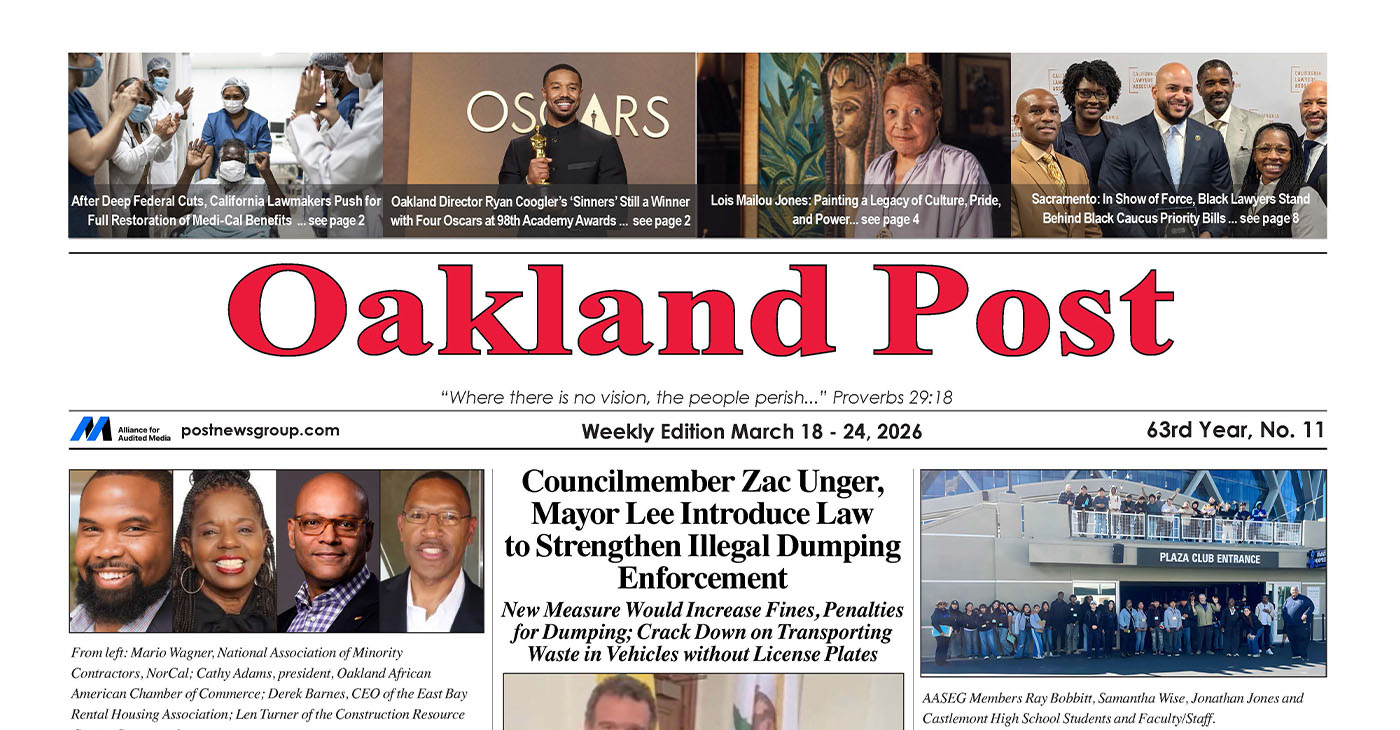
To enlarge your view of this issue, use the slider, magnifying glass icon or full page icon in the lower right corner of the browser window.
Activism
Oakland Post: Week of March 11 -17, 2026
The printed Weekly Edition of the Oakland Post: Week of March 11 – 17, 2026
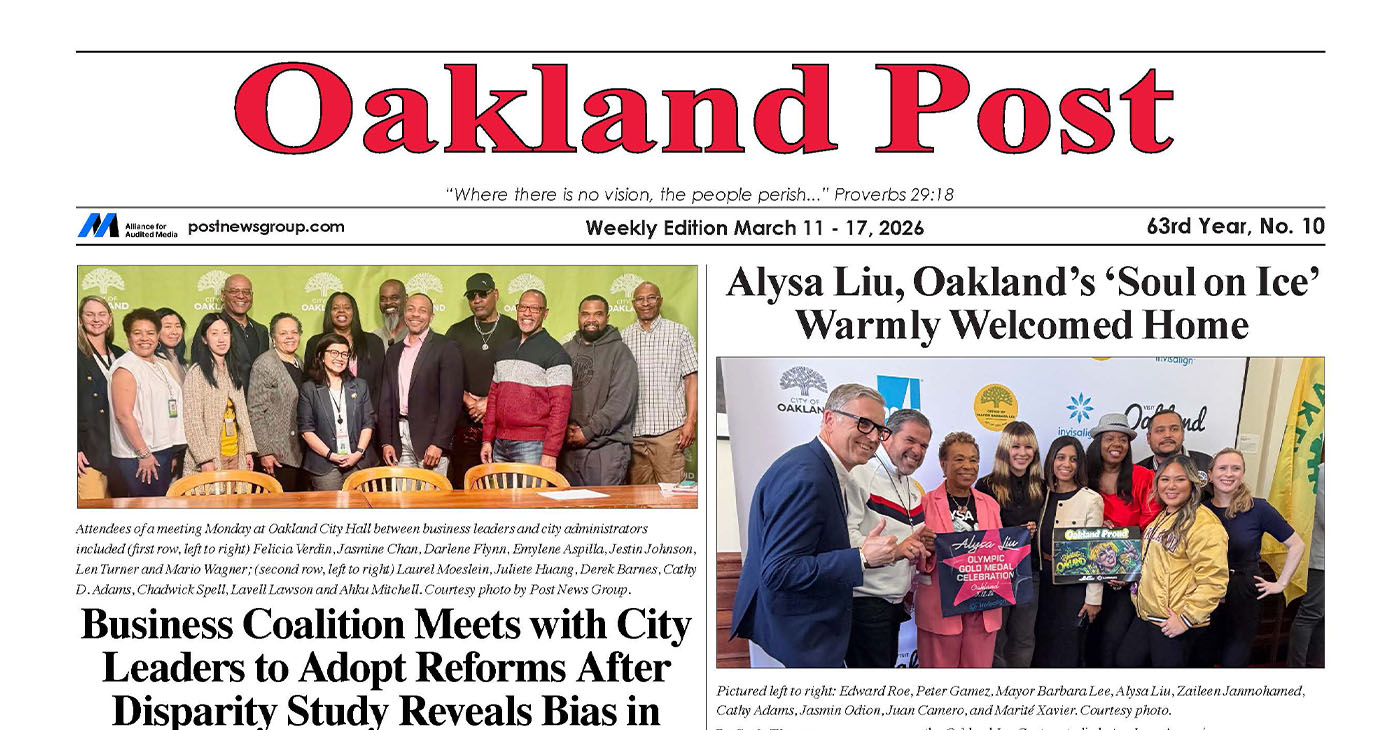
To enlarge your view of this issue, use the slider, magnifying glass icon or full page icon in the lower right corner of the browser window.
Activism
Oakland Post: Week of March 4 – 10, 2026
The printed Weekly Edition of the Oakland Post: Week of March 4 – 10, 2026

To enlarge your view of this issue, use the slider, magnifying glass icon or full page icon in the lower right corner of the browser window.


WORK FROM HOME
Home-based business with potential monthly income of $10K+ per month. A proven training system and website provided to maximize business effectiveness. Perfect job to earn side and primary income. Contact Lynne for more details: Lynne4npusa@gmail.com 800-334-0540


Black Artists in America, Installation Three Wraps at the Dixon Gallery and Gardens

Grief, Advocacy, and Education: A Counselor Reflects on Black Maternal Health

Future of Florida’s Black History Museum in Limbo

New Research Shows the Many Benefits of Early Learning

South Hampton K-8 Students Among Top 10 Finalists for Samsung’s ‘Solve for Tomorrow’ Competition

Cuba: No Negotiation with US on the President or Political System

Brooklyn Academy of Music Names Jamaican-Born Tamara McCaw as President

Trinidad & Tobego – U.S. Launches WhatsApp Channel for American Citizens in the Country

Oakland Post: Week of March 18 – 24, 2026

AI Innovation vs. Ethics and Environmental Impact

AI, Web3, and Digital Reparations

What If You Owned Your AI Agent?

Season 7, Episode 3 – January Reporter’s Roundtable 📱

Season 7, Episode 3 – January Reporter’s Roundtable

AI, Media, and Power | Part 2, Real-World Impacts and Tradeoffs

Discrimination in City Contracts

Oakland Post: Week of February 11 – 17, 2026

Reflecting on Black History Milestones in Birmingham AL

Rising Optimism Among Small And Middle Market Business Leaders Suggests Growth for California

CITY OF SAN LEANDRO STATE OF CALIFORNIA PUBLIC WORKS DEPARTMENT ENGINEERING DIVISION NOTICE TO BIDDERS FOR ANNUAL STREET OVERLAY/REHABILITATION 2019-21 – PHASE III

Oakland Post: Week of February 18 – 24, 2026

PRESS ROOM: NBA Hall of Fame Nominee Terry Cummings Joins 100 Black Men of DeKalb County to Launch Victory & Values Initiative

Oakland Post: Week of February 25 – March 3, 2026

Trump’s MAGA Allies are Creating Executive Order Plan to Steal the 2026 Midterms

U.S. manufacturing rebounds – how foundry services are adapting to rising demand

OP-ED: One Hundred Years of Black Workers Telling the Truth

Advancements in solar technology that are changing the way we power the world

Chase Oakland Community Center Hosts Alley-Oop Accelerator Building Community and Opportunity for Bay Area Entrepreneurs

Poll Shows Support for Policies That Help Families Afford Child Care

PRESS ROOM: Civil Rights TV Launches in Selma as the World’s First 24/7 Civil Rights Television Network

Hyundai Ioniq 5 Parking, Safety, and 360 View #shorts

2025 Ioniq 5 New Wiper & Powerful Performance! #shorts

Electric SUV Range: Is 259 Miles Enough? #shorts

EV Charging: How Fast Can You Charge an Electric Vehicle? #shorts

Biometric Cooling… Messaging Seats…Come on! 2025 Infiniti QX80 Autograph 4WD

Charged Up: Witness the Magic of a Fully Electric Car! #shorts

Range Rover Sport PHEV Included…: See What’s Inside This Luxury SUV! #shorts

Invisible Hood View: Perfect Parking with X-Ray Vision! #shorts

AI Is Reshaping Black Healthcare: Promise, Peril, and the Push for Improved Results in California

ESSAY: Technology and Medicine, a Primary Care Point of View

Sanctuary Cities

The RESISTANCE – FREEDOM NOW

STATE OF THE PEOPLE: Freddie

ECONOMIC BOYCOTT DAY!!!!!

I told You So
-
 Activism4 weeks ago
Oakland Post: Week of February 25 – March 3, 2026
-
 #NNPA BlackPress4 weeks ago
Poll Shows Support for Policies That Help Families Afford Child Care
-

 Activism3 weeks ago
Oakland Post: Week of March 4 – 10, 2026
-

 #NNPA BlackPress3 weeks ago
Woman’s Search for Family’s Roots Leads to Ancestor John T. Ward – A Successful Entrepreneur and Conductor on the Underground Railroad
-

 #NNPA BlackPress3 weeks ago
OP-ED: NNPA Launches 2026 “Leadership Matters” Video Series
-

 #NNPA BlackPress3 weeks ago
Advocates Raise Alarm Over ICE Operation, MOU and Detention Risks in Baltimore County
-

 #NNPA BlackPress3 weeks ago
COMMENTARY: Women of Color Shape Our Past and Future
-

 #NNPA BlackPress3 weeks ago
Pete Buttigieg to Join Mayor Randall Woodfin for Community Town Hall in Birmingham
